Month: August 2020

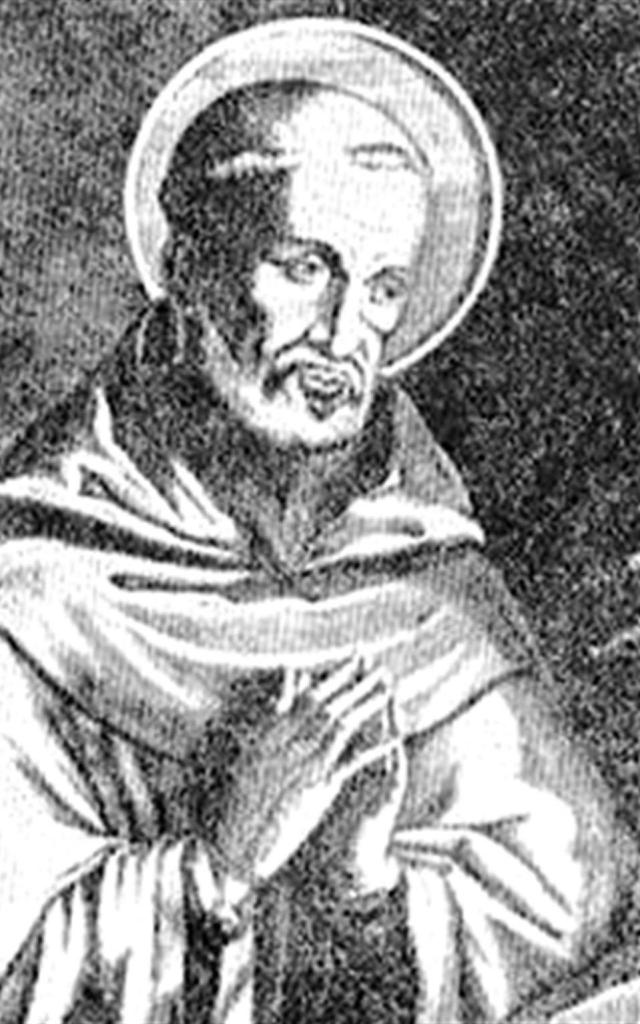
St Bernard of Clairvaux – a simple, holy and prayerful life

St Bernard of Clairvaux | feast day August 20th

Bernard was born in 1191 near Dijon in Burgundy. His family were wealthy and had great social standing. Bernard is said to have been a shy boy but he also became known  as studious and meditative. With the advantages of his birth and upbringing it was expected that he would make a career with status and wealth as its motive but under the influence of his mother, who was granted visions about his future, he became attracted to a very different way of life. He became a monk and entered the Cistercian monastery at Cîteaux. Here he followed a life of simplicity, holiness and prayer which he combined with a deep ministry towards others.

As he became more drawn to the spirituality of the Cistercian Order, he felt called to spread the Cistercian influence and way to God and it is thought that he founded over 150 new monasteries all over Europe. He spread the vision of God’s love in Christ Jesus and became renowned as a preacher of God’s Word. Martin Luther was to say of him:
Bernard is superior to all the doctors in his sermons, even to Augustine himself, because he preaches Christ most excellently.’

His spiritual renewal of the church also spilled over into the world in general because he knew that the spiritual side of our lives involves us in being influential in the way society is shaped. The more involved Christians are in the world, including working for change and seeking to influence Governments to a greater integrity and honesty which leads to everyone working for the common good, the more our society becomes God-centred.

For All the Saints’ (prayers and readings for Saints’ Days published by the Anglican Church in Canada) puts it this way:
“He used his influence to renew in his own age the ageless thirst for that love which is above all other loves which God ‘has poured into our hearts through the Holy Spirit.

In his writings he expanded on his understanding of this love. In his Treatise On the Love of God, Bernard wrote:

“God deserves of us all our love which knows no bounds. This is the first thing to understand. The reason is because God was the first to love. God, who is so great, loves us so much; he loves us freely, poor pathetic worthless creatures though we be. This is which is why I insist that our love for God should know no bounds. And since love given to God is given to the One who is infinite and without boundary, what measure or boundary could we make anyway .…. the reason, then, for our loving God is God. He is the initiator of our love and its final goal.”

In order to help us to enjoy that, Bernard wrote a number of poems, some of which were translated from the Latin and set to music. Many of us will know St Bernard without realizing it. There is a strong belief (though not totally agreed) that the hymn O Sacred Head, sore wounded  is by him and certainly, the hymn, Jesus the very thought of thee, (translated from the Latin by Edward Caswell ) is from a poem by St Bernard. It is sung to a number of tunes though the most usual is St Agnes by John Bacchus Dykes. Today we sing 4 or 5 verses but the original Latin poem “Jesu dulcis memoria” had 50 verses! Caswell selected verses 1-4 and verse 40. There is a beautiful rendition on YouTube sung by Brigham Young University and the Church of the Latter Day Saints. (dated 2013)

Jesus, the very thought of thee
with sweetness fills the breast;
but sweeter far thy face to see,
and in thy presence rest.

No voice can sing, no heart can frame,
nor can the memory find,
a sweeter sound than Jesus’ Name,
the Saviour of mankind.

O hope of every contrite heart,
O joy of all the meek,
to those who fall, how kind thou art:
how good to those who seek!

But what to those who find? Ah, this
nor tongue nor pen can show;
the love of Jesus, what it is,
none but who love him know.

Jesus, our only joy be thou,
as thou our prize wilt be;
in thee be all our glory now,
and through eternity.

Words
Bernard of Clairvaux
trans. Edward Caswall, 1849
Music
St. Agnes | Metzler’s Redhead | St. Botolph Bawley | Windsor (Rhythmic) | Dalehurst   CM

Bernard of Clairvaux lived deeply within the love of God and his journey to heaven and the Lord he loved was on 20th August 1153.

Almighty and everlasting God,
You kindled the flame of your love
in the heart of your servant Bernard,
so that he became a shining light
in the midst of your Church.
Kindle in us such faith ,
that by deeds of love
we may show forth the light of Christ
and rouse this present age to desire your perfect beauty;
through Him who lives and reigns with You and the Holy Spirit,
one God, now and for ever.
Amen.


Rodin’s ‘Cathedral’ as an Icon of Prayer

Years ago, when in my late teens, I was encouraged in my Christian faith by a handful of good and faithful Christians. They took an interest in me and patiently answered my questions about all manner of things to do with God, the Church and the Christian faith. One of them, whom I came to regard as my mentor, gave me a sepia card with a photograph on it. She had bought it in Paris in the mid-1930s. It was a picture of Rodin’s ‘Cathedral’. At the time I kept it in my bible and its meaning for me didn’t emerge until many years later.

‘Prayer is our Love Affair with God’
Mother Mary Clare SLG

The Cathedral | Rodin

Sydney Evans, the former Dean of King’s College, London, preached a sermon in the parish where I served as a curate on the subject of ‘Hands’. He referred to the sculpture by Rodin and later on I was pointed towards another sermon, preached by Michael Stancliffe when he became Dean of Winchester.  Again, it took Rodin’s Cathedral as its illustration.

When, later still, I made my first visit to Paris, I was taken to the top of the Montparnasse Tower from which it is possible to look down on the city. I searched hard and found what I was looking for. Before any visit to Notre Dame, The Louvre or the Eiffel Tower, there was something I had to see.

I made my way to the Rodin Museum and very soon I was standing in front of the exquisite statue of ‘The Cathedral’. I was amazed how tiny it was in comparison to many of Rodin’s other Sculptures. Rodin carved it in 1908, one of his later works.

It is of two hands emerging from the same base but it is unusual in that if you try to place your own hands as these are, you can’t do it – because both are right hands. The shape and poise of those hands form a kind of gothic arch and this gave Rodin the suggestion for its title. He had a passion for Gothic architecture and he combined this with his passion for modelling hands which, in his view were so expressive, capable of displaying so many human emotions.

In this work the sensuality which was such a feature of his life combined with the spiritual, avoiding that divorce that people often make, and the hands taper into a gesture of prayer.

What is important in looking at these hands is to see the gentleness and sensitivity in which they are reaching towards each other. They are not about to grip each other heartily. They are reaching towards each other but they don’t actually touch. The sculpture is held together by a connecting piece of stone but there is space between the fingers – the suggestion of almost meeting and the tantalizing thought that they might not. It is poised in that split second before connection is made and one could expect the fingers to gently intertwine. They are in the act of exploration. However, it is an exploration charged with vulnerability because they just might not connect. One or other might actually withdraw

Yet, overriding this is the much stronger image that the Cathedral presents of an exploration which is movement towards each other rather than away so  I see in Rodin’s hands the hands of two lovers who are about to touch and caress.  We catch them in that final moment of rather shy, exploration which will end in fingers intertwined – hands touching, holding.

It speaks to me of prayer.
Prayer in which both the one who prays and God are drawn in an act of love towards each other. E.M.Forster’s saying, ‘Only Connect’ is pertinent here. Prayer is when we connect with God and our hearts open in love to the one who always loves us. Only connect, in love.

According to a lovely nun I once knew, – the late Mother Mary Clare of The Sisters of the Love of God (SLG) – real prayer is like a love affair with God. In ‘Encountering the Depths’ she wrote this:

“Prayer is essentially […] a love affair with God, not schemes or techniques or ways of prayer, but the most direct, open approach of each one of us as a person to God our creator, redeemer and sanctifier. This is something beyond all methods and ideas. We are seeking God himself, not thoughts about him, nor about ourselves in relation to him. Prayer is an adventure at the end of which we stand face to face before the living God; not in a vague way in a place we call heaven, but in the here and now of our lives, by, with, and in Christ, as we are made part of his prayer and his offering to the Father through the power of the Holy Spirit.”

For me, this adventure of love is one of the powerful messages of Rodin’s, Cathedral. There is the suggestion of longing and loving which we need to constantly re-discover if our prayer is to remain fresh, real and a sign of the love by which we are held in God and through which we seek to become love.


  • ‘Encountering the depths’, by the late Mother Mary Clare is available from the SLG Press,  Convent of the Incarnation, Fairacres, Parker Street, Oxford Ox4 1TB.
    Though it is available from other suppliers, buying it from SLG ensures they benefit totally from the sale. See their website on Google.

A pondering from Pagli

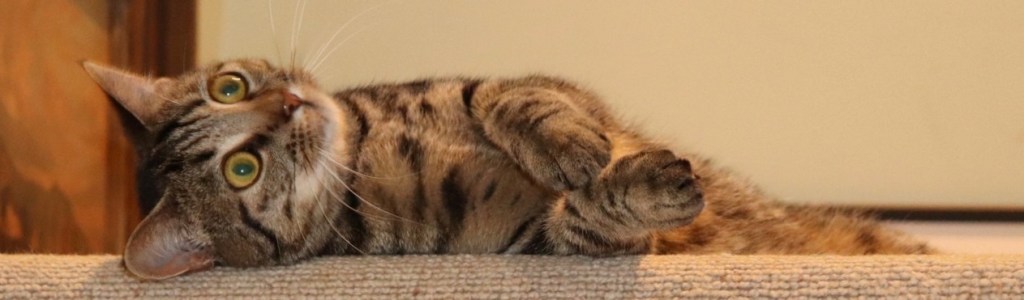
photo | Lynn Hurry

The story of the Guru and the Cat.

A holy man or guru was devoted to prayer. However, when he knelt to worship each evening, the monastery cat would get in the way and distract him. So he ordered that the cat be tied up during evening worship.

After the guru died, the cat continued to be tied up during evening worship and when the cat died, another cat was bought so that it could be duly tied up during evening worship.

Much later, learned theological books were written by the guru’s disciples on the religious and liturgical significance of tying up a cat while worship is performed.

Adapted from Anthony de Mello, The Song of the Bird ,
(Image; Reprint edition, 1984) page 63.

Sometimes a simple and pragmatic action does not need to be justified by learned discussion.
It just is.