Month: June 2022

Give us hearts of love and compassion

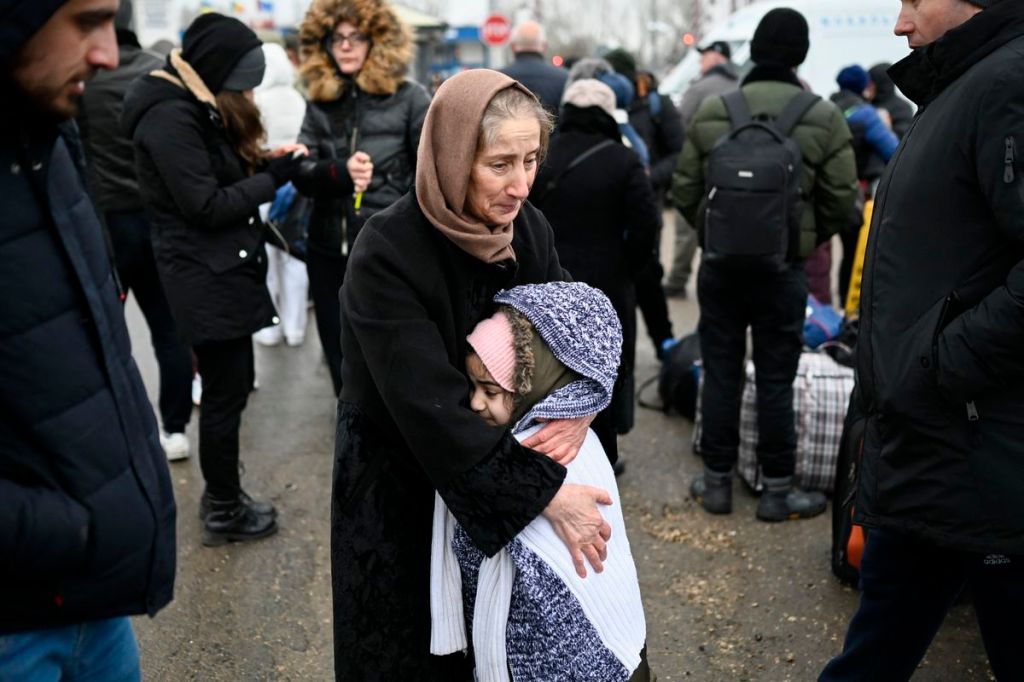
A woman hugs a girl as refugees from Ukraine wait for a transport at the Moldova-Ukrainian
border’s checkpoint near the town of Palanca.  Nikolay Doychinov/AFP via Getty Images

Once again Refugees seeking safety and asylum in Britain are in the news.
Ms Patel, the Home Secretary, is heading up a plan to send unwanted refugees to Rwanda. This is without consultation with those involved – the refugees who are vulnerable and who have already suffered so much.

Senior Bishops of the Church of England, led by the Archbishops of Canterbury and York recently had a joint letter published in the Times newspaper.
In case you haven’t seen or just heard snippets and adverse media comment, here is what they said.

Bishops’ letter to The Times on the Rwanda asylum policy

14/06/2022

All of the current Lords Spiritual have signed a letter to The Times voicing alarm about the Government’s plan to send asylum seekers to Rwanda.
They wrote:

Sir,

Whether or not the first deportation flight leaves Britain for Rwanda, this policy should shame us as a nation. Rwanda is a brave country recovering from catastrophic genocide. The shame is our own, because our Christian heritage should inspire us to treat asylum seekers with compassion, fairness and justice, as we have for centuries. Those to be deported to Rwanda have had no chance to appeal, or reunite with family in Britain. They have had no consideration of their asylum claim, recognition of their medical or other needs, or any attempt to understand their predicament.

Many are desperate people fleeing unspeakable horrors. Many are Iranians, Eritreans and Sudanese citizens, who have an asylum grant rate of at least 88 per cent. These are people Jesus had in mind as he said when we offer hospitality to a stranger, we do it for him. They are the vulnerable that the Old Testament calls us to value. We cannot offer asylum to everyone, but we must not outsource our ethical responsibilities, or discard international law — which protects the right to claim asylum.

We must end the evil trafficking; many churches are involved in fighting this evil. This needs global co-operation across every level of society. To reduce dangerous journeys to the UK we need safe routes: the church will continue to advocate for them. But deportations — and the potential forced return of asylum seekers to their home countries — are not the way. This immoral policy shames Britain. 


The Most Rev Justin Welby, Archbishop of Canterbury; the Most Rev Stephen Cottrell, Archbishop of York; the Right Rev Dame Sarah Mullally, Bishop of London; the Right Rev Paul Butler, Bishop of Durham; the Right Rev David Urquhart, Bishop of Birmingham; the Right Rev John Inge, Bishop of Worcester; the Right Rev Christopher Cocksworth, Bishop of Coventry; the Right Rev Steven Croft, Bishop of Oxford; the Right Rev James Newcome, Bishop of Carlisle; the Right Rev Alan Smith,  Bishop of St Albans; the Right Rev Donald Allister, Bishop of Peterborough; the Right Rev Stephen Conway, Bishop of Ely; the Right Rev Christopher Chessun, Bishop of Southwark;  the Right Rev Nicholas Baines, Bishop of Leeds; the Right Rev Rachel Treweek, Bishop of Gloucester; the Right Rev Martin Warner, Bishop of Chichester; the Right Rev Vivienne Faull, Bishop of Bristol; the Right Rev Libby Lane, Bishop of Derby; the Right Rev Julian Henderson, Bishop of Blackburn; the Right Rev David Walker, Bishop of Manchester; the Right Rev Guli Francis-Dehqani, Bishop of Chelmsford; the Right Rev Robert Atwell, Bishop of Exeter; the Right Rev Andrew Watson, Bishop of Guildford; the Right Rev Martin Seeley, Bishop of St Edmundsbury & Ipswich; the Right Rev Paul Williams, Bishop of Southwell & Nottingham

[Source: Church of England official website]
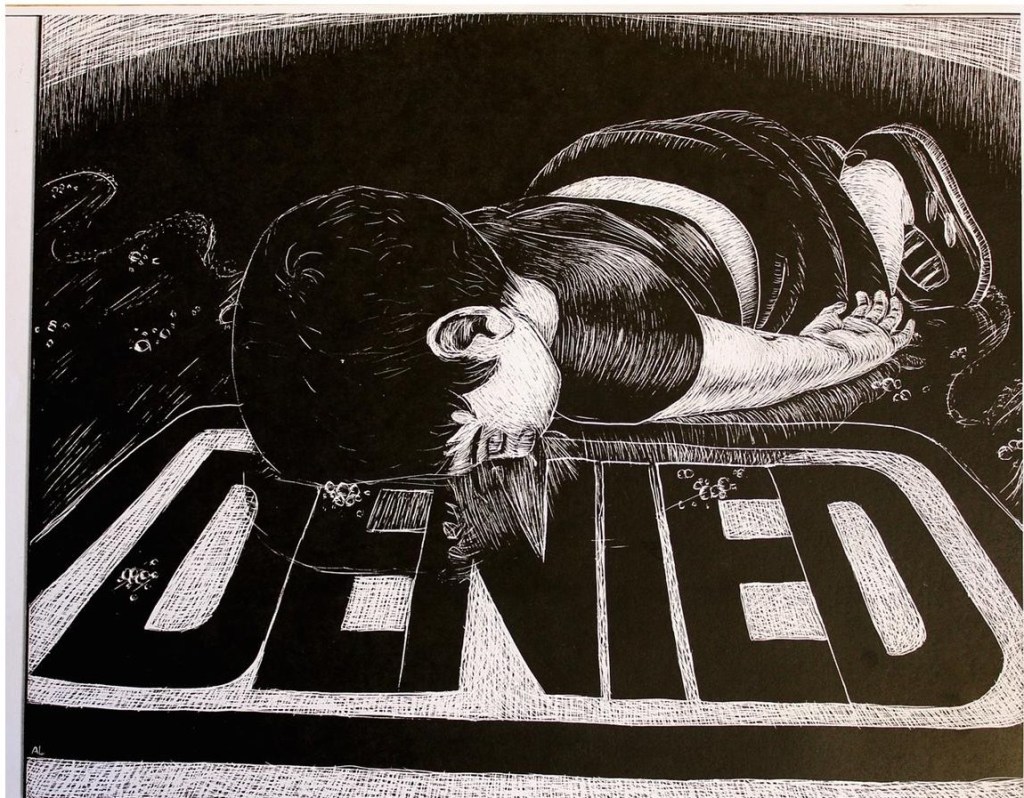
 

A PRAYER for Refugees

Give Us Hearts

God of love and compassion: may we always recognize your spirit:

  • in the refugee family, seeking safety from violence;
  • in the migrant worker, bringing food to our tables;
  • in the asylum-seekers, seeking justice for their families;
  • in the unaccompanied child, travelling in a dangerous world.

Give us hearts that break open whenever our brothers and sisters turn to us.
Give us hearts that no longer turn deaf to their voices in times of need;

Give us eyes to recognize a moment for grace instead of a threat.
Give us voices that fail to remain silent but which decide instead to advocate prophetically.
Give us hands that reach out in welcome, but also in work, for a world of justice until all homelands are safe and secure.
Bless us, O Lord…

– Fr. Dan Hartnett S.J.
Lead me to the secret place

The Revd Lynn Hurry reflects on coping with change and finding our true worth (our ‘Place’) in the heart of God.

As we go through life things change don’t they…and at times I think we have all had that thought where we feel we don’t know our place anymore.
It’s often a thought that accompanies all the significant  changes in our lives.
Such changes may include:
The end of a relationship;
Changes in a family relationship such as the birth of a child, or a sibling;
Moving home, especially to a new area;
Change of job; Unemployment;
Retirement;
death of a loved one or partner

There are also the changes to do with ageing such as when our bodies get tired, old, or we are unwell. Coping with the change of getting old, we might think “Where is my place in a society that emphasises youth, beauty, health, get up and go, etc?” 
We even describe our spiritual or emotional lives by saying “I’m in a bad place right now.”
What it shows though, is that we seem to intuitively know that there is another place, a better place.
Regardless of how the changes of life come about, it seems they leave us wondering, “Where is my place in life?”

But there’s something we often overlook and that is, we need to remind ourselves that our life begins and ends in God.We need to remember that God created us and breathed His own life into us as He breathed us into existence.
God chose each one of us to be filled with divine breath, God’s divine life.
This shapes our lives and our understanding of what life is really about.

If we forget that, we are in danger of living our lives in the ways that other people think we should.
Too often we can strive to live a life based on what others think of us. Or we can live a life in such a way that others notice us. We can end up trying to please others more than anything else.
In our spiritual life we might do things that others may see as religious and so seem a bit ‘holier than thou’. Remember what Jesus said about those who lived that kind of life. They were in danger of practicing false piety and even, hypocrisy.

But it may be that none of this is deliberate.
This is us trying to find a place on the outside instead of on the inside. Yet when that happens our place in life changes according to the opinions of someone other than our God.

This week we have remembered Evelyn Underhill, a teacher of what it means to Worship and to live an interior life rather than an external one.
She understood from personal experience how easy it is to replace God with something far lesser and more shallow. Self-centred living is about living on the surface.
But Jesus is calling us again and again to search for the interior life which involves living  life from the inside out.
He is asking us to move from the outer world to the inner world.

So if we are to break our dependency on others to help us find our place, then the secret prayer, fasting, etc, is not about how we do them but where.
In that secret place with God then we are learning to stop depending on others to give us our identity or place in life.
In the secret place we see that our identity, who we are, is who we are in God. It’s the interior life as opposed to the showy one for others!
It reminds me once more of that beautiful George Appleton prayer about being taken deeper into God. That secret place within.

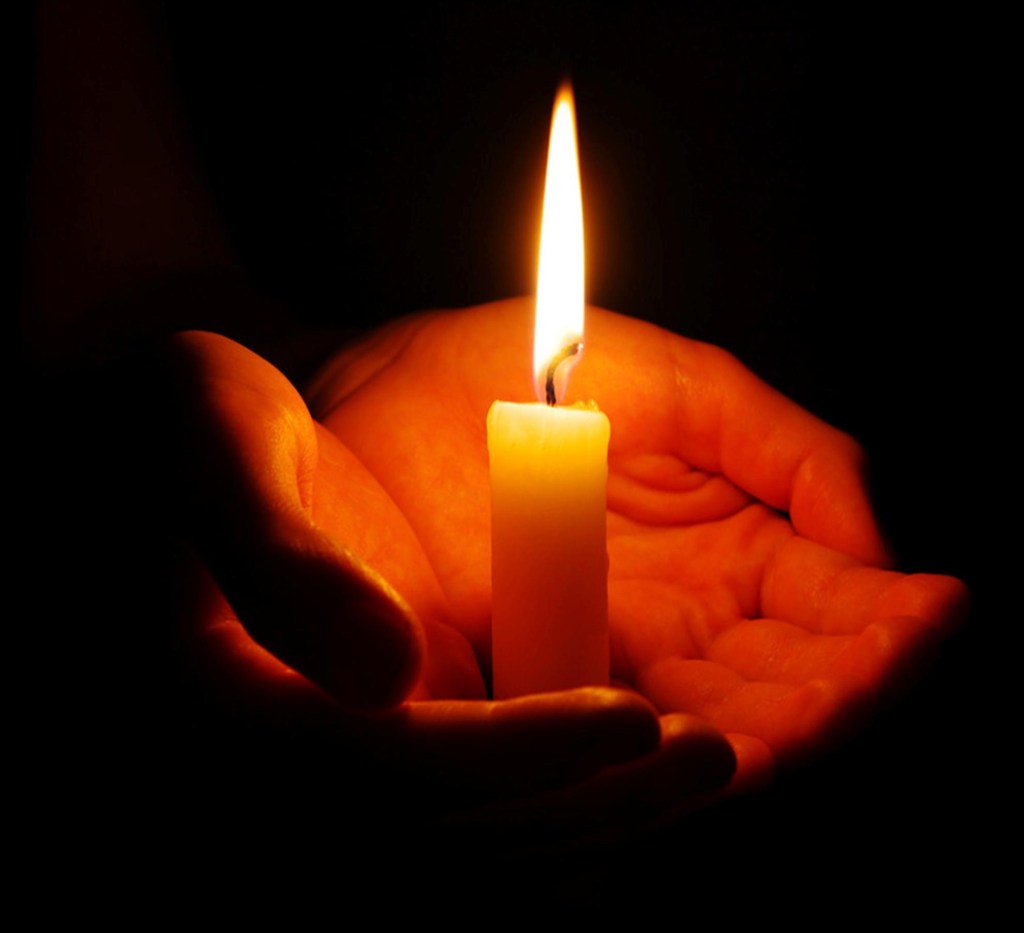
Give me a candle of the spirit, O God
as I go down into the deep of my
own being
Show me the hidden things. Take me
down to the spring of my life, and
tell me my nature and my name.

Give me freedom to grow so that I
may become my true self – the
fulfillment of the seed which you
planted in me at my making.

Out of the deep I cry unto thee, O God.
Amen

And so despite the disappointments in our lives we are, we always have been, and we always will be the beloved children of God.
And so, it follows that  repentance,  prayer, reading and meditating on God’s holy Word, receiving the Blessed Sacrament, taking regular time out with God are the journey back to our place.
These are the practices that point us to that secret place where God resides within.

And this secret place is where we truly find the faithfulness of God to us and encounter also the promise,
therefore, of resurrected life.

Lynn Hurry

Sing the joy of summer

My dear friend Lynn has been out in the Latton Vicarage Garden with her camera.
She sent me this photo of a newly born baby blue tit.

Next door they are having a baby. It may even have arrived. I heard baby noises earlier. That may, however, be the newly born twins who live in the flat at the end of the garden. It certainly isn’t the baby due soon at the end of the row. We are looking forward to welcoming into our little neighbourhood as we nurture them with our prayers, just as we do for the baby blue tit.

Whatever, it’s about new life, bursting forth in the life of plants and trees animals and birds.
The animal kingdom is at its most joyous and the birds are trying out their summer symphony.
There is a feeling that, despite the vortex of darkness in our world, there are signs of hope, of light, of a new joy coming alive on the earth.

Lynn sums it up in the choice of Psalm verse from Psalm 84.

My heart sings for joy to the living God.
Even the sparrow finds a home,
and the swallow a nest for herself, 
where she may rear her young at your altar,

my king and my God. 
Happy are those who live in your house, ever singing your praise. 

Psalm 84

You may well know this little ditty by Elizabeth Cheney
Said the robin to the sparrow,          
‘I should really like to know,
Why these anxious human beings
Rush about and worry so.’      

     
Said the sparrow to the robin,
‘Friend I think that it must be,
That they have no Heavenly Father,
Such as cares for you and me.
 

As you look at the birds around you and hear them, I hope you might let them remind you how much your heavenly Father cares for you and will provide for you. It is a good thing indeed to hear the symphony of the birds. God is conducting their voices. He wants to add ours to the orchestra of nature which plays the music of God’s presence. Of this we are a part.
We are invited to sing for joy, ever singing his praise.

Thank you Lynn for sharing this with us.
[Mr G]

Thrice Holy

TRISAGION (a posh word on Trinity Sunday and yo be used anywhere)

Sometimes, as people are often quick to remind me, a lot of hymns contain obscure or archaic phrases that keep us guessing about the meaning. For years I sang the hymn for the feast of St. Michael, ’Stars of the morning’, which contains the word ‘Trisagion’, without fully knowing its meaning. The New English Hymnal helpfully explains that this word means ‘a hymn to the Thrice-Holy God’ and is therefore a praise of God the Holy Trinity.

Holy God,
Holy and strong,
Holy and immortal,
have mercy upon us. “
(or, for personal use – ‘me’)

It is one of the most ancient and well-used of Christian prayers, ranking alongside the famous Jesus Prayer in popularity. The spirituality of countless Christians has been formed by using simple, short and effective prayers like this one. The Trisagion is used prominently in Eastern Orthodox churches but is also becoming more popular again. In the Church of England it is the prayer which ends the Litany.

It is a good prayer of personal devotion because it centres us on God who creates, redeems and sustains us. These three actions can be attributed to the three facets of God as Father (Creator); Son (Redeemer) and Holy Spirit (Sustainer/Enlivener). Thus by praying this short but profound prayer we are taken to the very heart of God’s actions in our lives. As we think over the wonderful things God has done for us, and goes on doing, we can realise his immense care and love for us. We can also marvel that God who is Almighty actually bothers about us. Like Isaiah, in Chapter 6, we behold God’s glory. (The Trisagion draws its inspiration from verse 3—”Holy, Holy, Holy is the Lord of hosts; the whole earth is full of his glory.)

 When faced with the Majesty and Glory of God, Isaiah was reminded that he was a ‘man of unclean lips’.  Like Him, before God, we are imperfect and in need of God’s forgiveness and mercy. So the Trisagion ends with a plea for mercy—like the Kyrie and the Jesus prayer. In claiming God’s mercy and forgiveness upon our lives we are also seeking his protection. Faith teaches us that God never withholds his mercy and love from those who seek him.

Finally, of course, the prayer is about God’s grandeur. Whilst God is always accessible to us, He is also greater than anything we can conceive. To be reminded of this is very important for us. It puts us in our place!

But we must also remember that our real place is secure – in God’s heart.

[Mr G]