Month: March 2023

World Wildlife Day

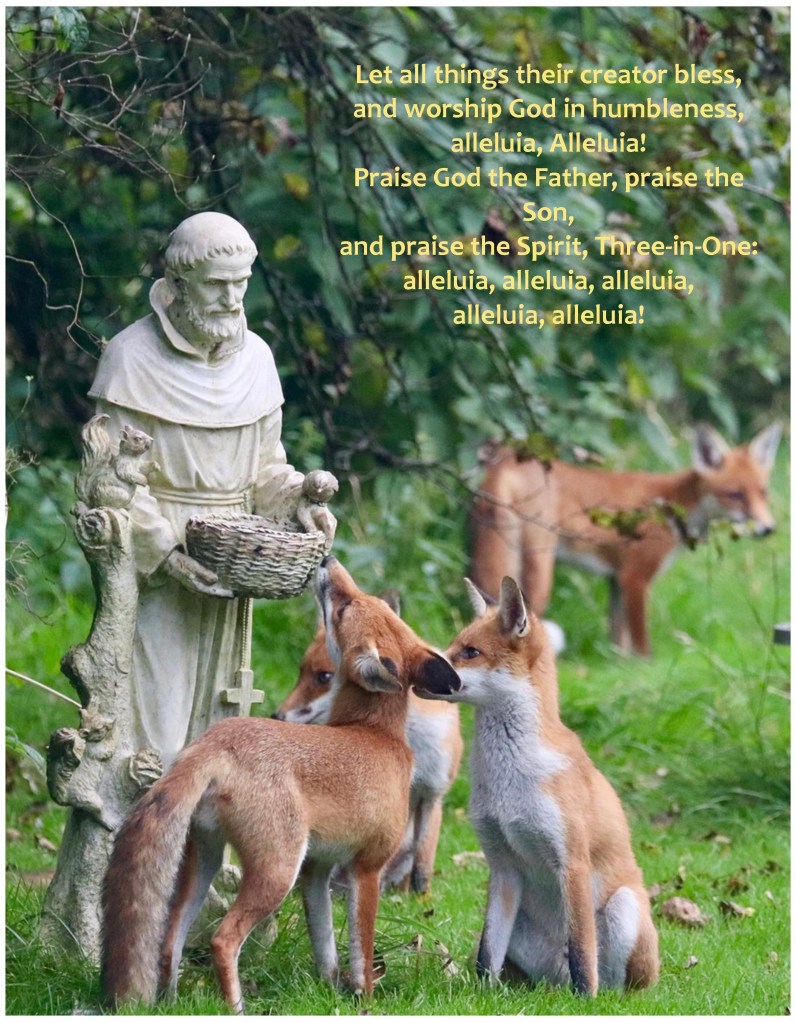
The foxes of Latton visit their Patron, St Francis. Photo by Lynn Hurry

World Wildlife day

World Wildlife day was held on March 3rd.

The Secretary-General of the United Nations, António Guterres, wrote this:

On World Wildlife Day, we reflect on our responsibility to protect the magnificent diversity of life on our planet. And we recognize our abject failure.
Human activities are laying waste to once-thriving forests, jungles, farmland, oceans, rivers, seas, and lakes. One million species teeter on the brink of extinction, due to habitat destruction, fossil fuel pollution and the worsening climate crisis. We must end this war on nature. 

The good news is that we have the tools, the knowledge, and the solutions. This year marks the 50th anniversary of the Convention on International Trade in Endangered Species, which has helped protect thousands of plants and animals. And last year’s agreement on the Kunming-Montreal Global Biodiversity Framework marked an important step towards putting our planet on a path to healing. 

As this year’s theme – ‘Partnerships for Wildlife Conservation’ – highlights, we need to work across governments, civil society, and the private sector to turn commitment into action. And we need much bolder actions now to cut emissions, accelerate renewables, and build climate resilience.  
Throughout, we need to place the voices of local communities and indigenous people – our world’s most effective guardians of biodiversity – front and centre. 

Today and every day, let us all do our part to preserve natural habitats and build a thriving future for all living beings. 

António Guterres Secretary-General, United Nations
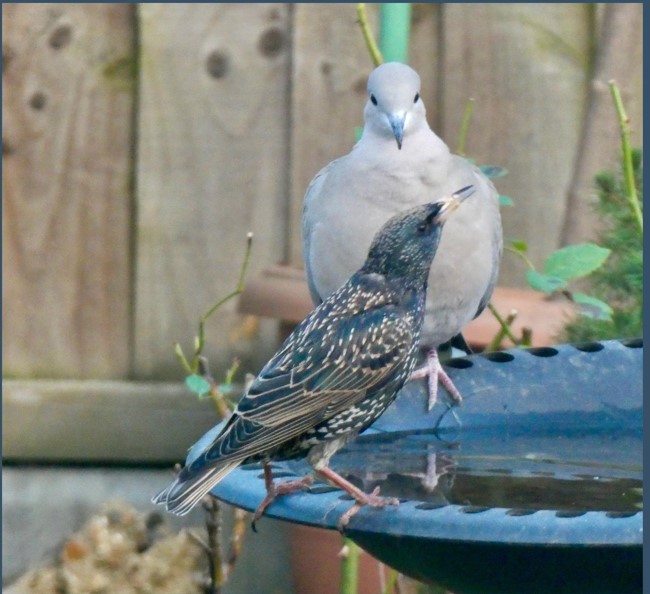
photo: Joyce Smith

As we know, there are huge issues affecting Planet Earth right now and much of what we face feels overwhelming. However many feel a sense of responsibility and a desire to work for a real change. Some of us recognise that we are stewards under God for the well-being of creation. For too long  the understanding from the Book of Genesis that humankind have dominion over all the earth, has been interpreted has given us a God-given right to dominate all creatures on the earth and to exploit creation for our own ends. ‘Dominion’ means, rather, Stewardship and Responsibility. Ultimately it involves Accountability to God even if there are many who don’t accept that duty.
Some of us may think that whilst we accept that responsibility, there is very little we can do. How can each of us make any difference?

I am always heartened by this little story:

A little sparrow laid on its back with its legs in the air. Another sparrow walked past and asked the sparrow on his back what it was doing. The little one replied that it had heard that the sky was going to fall in and thought that it should try and help hold it up.
The other sparrow laughed and said, “You’re only a little sparrow with little legs. How can you hold up the whole sky?
The sparrow laid on the floor with its legs in the air, said:
“I know, but one does what one can.”

Whenever we feed the birds in our garden, nurture our plants, take care of our domestic pets, feed and water wild animals and little but significant things such as that, then we are ‘doing what we can’ and it makes a big difference.
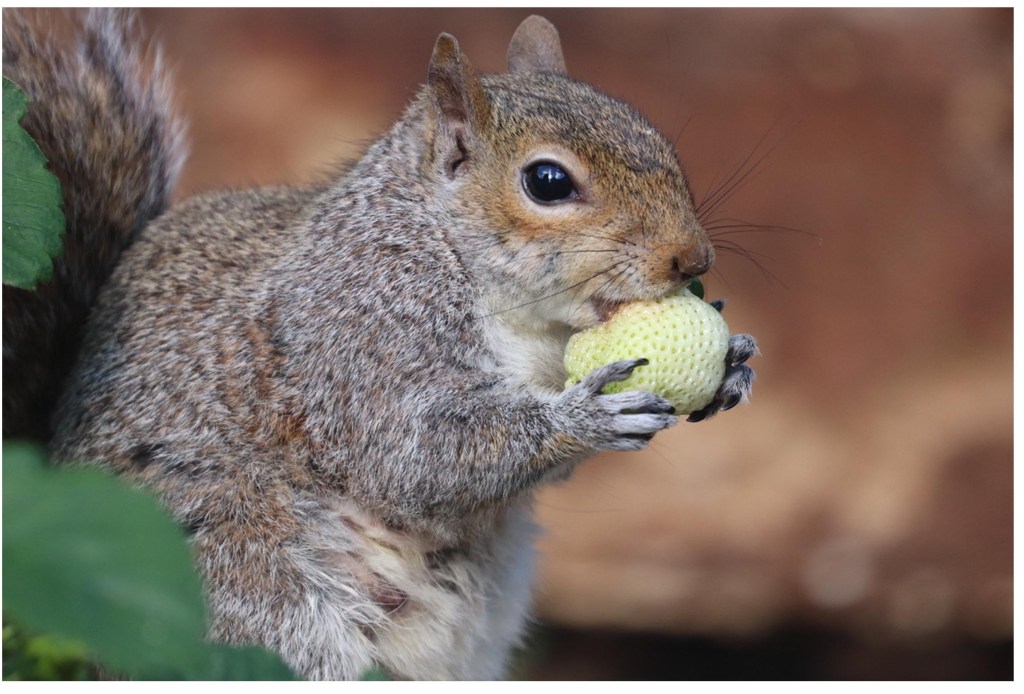
Sqirrel helping herself to Vicarage not quite ripe strawberries! Photo: Lynn Hurry

Heavenly Father,
You have taught us, through your servant St Francis,
That all creation is your handiwork.
Grant us your grace that we may
Exercise wise stewardship of this Earth;
Tread lightly upon it;
And cherish its resources;
That our children may enjoy its riches, throughout all generations,
And your name be glorified through all that you have made.
Amen.

Rt Revd David Walker
Bishop of Manchester

Photo: Gill Henwood

God’s Gypsy

these stunning Daffodils are the work of my artist friend, Kay Gibbons. They remind us that the Daffodil is the National Flower of Wales and an emblem of St David (Dewi) , Patron Saint of Wales

Today, March 1st, the Church celebrates St. David’s day though perhaps not as boisterously as some Welsh may do! He is, after all the Patron Saint of Wales.
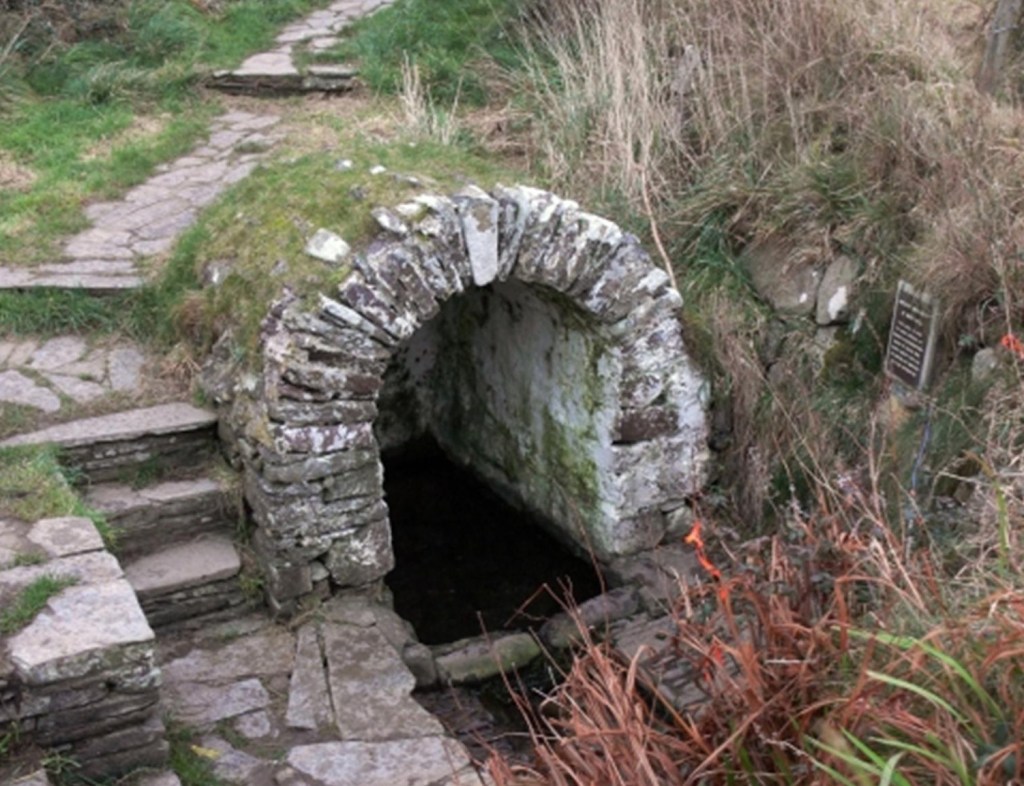
I once had a memorable visit to St. David’s, the highlight of which was a cliff-top walk which led to St. Non’s Well (St. Non was David’s mother). The well is reputedly where David was baptized and today it is still flowing gently and pilgrims strew flowers on its waters.

David himself was very fond of water – the only liquid he drank, except the wine of the Eucharist. He and his followers were known as the Aquati because of this. Perhaps, too, David’s affinity with water stems from the legend which surrounds his birth. He is said to have been born in the midst of a terrific thunderstorm!
St. Non, David’s mother, was the daughter of a local chieftain and she is said to have been made pregnant (perhaps even by force) by Prince Sant of the royal house of Ceredigion. Some say he was King.
Whatever the circumstance of the pregnancy, Sant seems to have tried to make amends by renouncing his kingdom after David’s birth and following the life of a hermit.

As a Christian leader David has been described as an athlete of the spiritual life who pressed himself to the limits of human endurance.  However, what he expected of himself he did not demand of others whom he treated with deep compassion, especially the poor and the sick. 
On his deathbed, his monks gathered around him and he spoke his final words to them and it is these which mark him out as a man of holiness whose heart was touched by God. This is what he said:

Brothers and Sisters, be happy and keep your faith and your belief, and do the little things that you have heard and seen me do.”

The little things which characterized David’s own approach to life were (a) to respect others and have a deep care for the poor; (b) to live in lowliness, which can be read as meekness and humility and thus  live a life of simplicity, never expressing oneself arrogantly  and (c) be at home to others.  This is about practicing the deeply held monastic ideal of hospitality in which Christ is recognized in everyone. 
Not a bad thing our world today, where so many are ill-treated, isolated and ignored.  Loneliness is one of the great diseases of our time and hospitality which recognizes people’s worth as carriers of the image of Christ ,would do much to relieve this. 
These little things are undergirded and fed by prayer and by being present for the breaking of bread at the Eucharist; and reading scripture; He also set great store on hospitality.
One of David’s early biographers with a personal knowledge of him said that he was constantly feeding a multitude of orphans, wards, widows, needy, sick, feeble and pilgrims. 

Drawing on the example David set, a modern writer on Welsh Spirituality, Patrick Thomas wrote:

“In any community apparently insignificant acts of habitual kindness and self-forgetfulness which display a fundamental respect and love for others can generate stability, unity and wholeness.  On the other hand, acts of unkindness or contempt, however superficially trivial, can quickly lead to the disintegration of a society as feuds develop and are fuelled by an unwillingness to forgive.”

Insignificant acts of kindness which takes us outside ourselves is at the heart of what David meant when he spoke of doing the little things. 
These ‘little’ things are the bedrock on which faith is built. Neglect of them leads to spiritual deprivation. Attention to them leads to faith expressed joyfully. It is the little things we do in Christ’s name which matter most.
Mother Teresa of Calcutta expressed much the same thing when she said that she and her sisters didn’t do great things but rather little things with a great love. St. David would have approved of that.

Encouraged by St David we might practice a truth that whenever we open the door to our hearts and show genuine love, acceptance and joy towards others, we can be sure of one thing – God will slip into our lives and make himself ‘at home’ with us.

St Non’s Well where David is said to have been baptized
Photo Mr G

A poem about St. David of Wales,
by David James Jones, who uses the Welsh pen name Gwenallt.

St. David

There is no barrier between two worlds in the Church.
The Church militant on earth
Is one with the Church triumphant in heaven,
And the saints are in this Church which is two in one.
They come to worship with us, our small congregation,
The saints our oldest ancestors
Who built Wales on the foundation
Of the Crib, the Cross and the Empty Tomb.
And they go out as before to travel their old ways
And to evangelize Wales.

I have seen Dewi going from shire to shire like the gypsy of God,
With the gospel and the altar in his caravan;
He came to us in the colleges and schools
To show us the purpose of learning.
He went down into the pit with the coal miners
And shone his lamp on the coal face.
He put on the goggles of the steel worker, and the short grey overall
And showed the Christian being purified like metal in the furnace.
He brought the factory people into his disreputable Church.

He carried the Church everywhere
Like a body with life and mind and will,
And he did small things and great.

He brought the Church into our homes,
Put the holy vessels on the kitchen table
With bread from the pantry and wine from the cellar,
And he stood behind the table like a tramp
So as not to hide from us the wonder of the sacrifice.
And after the Communion we had a talk round the fire
And he spoke to us of God’s natural order,
The person, the family, the nation and the society of nations
And the cross which prevents us from making any of them into a god.
He said that God had made our nation

[Gwenallt]