Month: June 2023

An Angel, catalyst for change

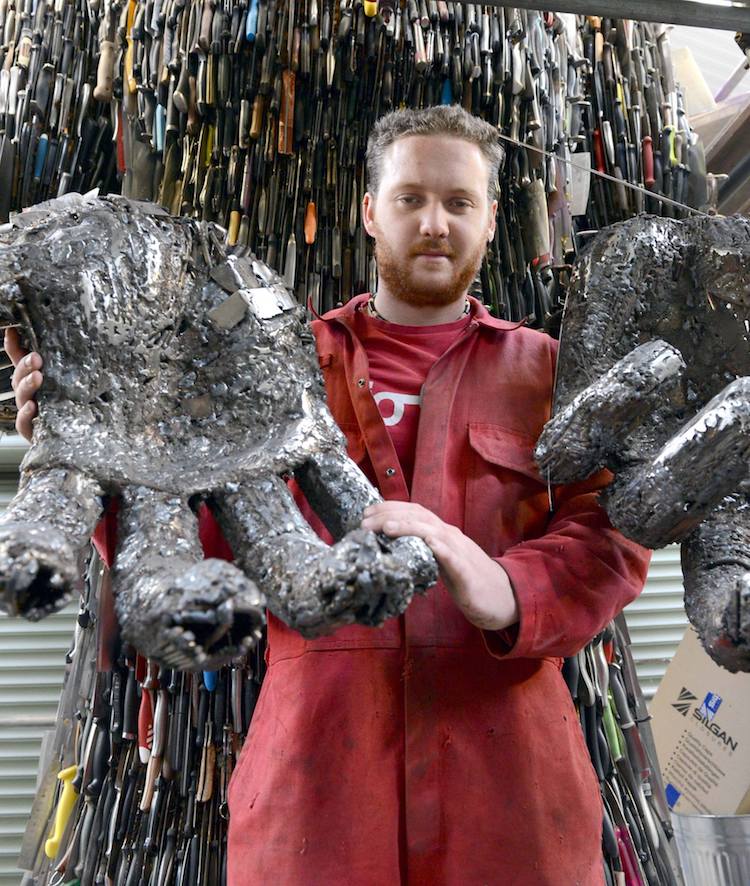
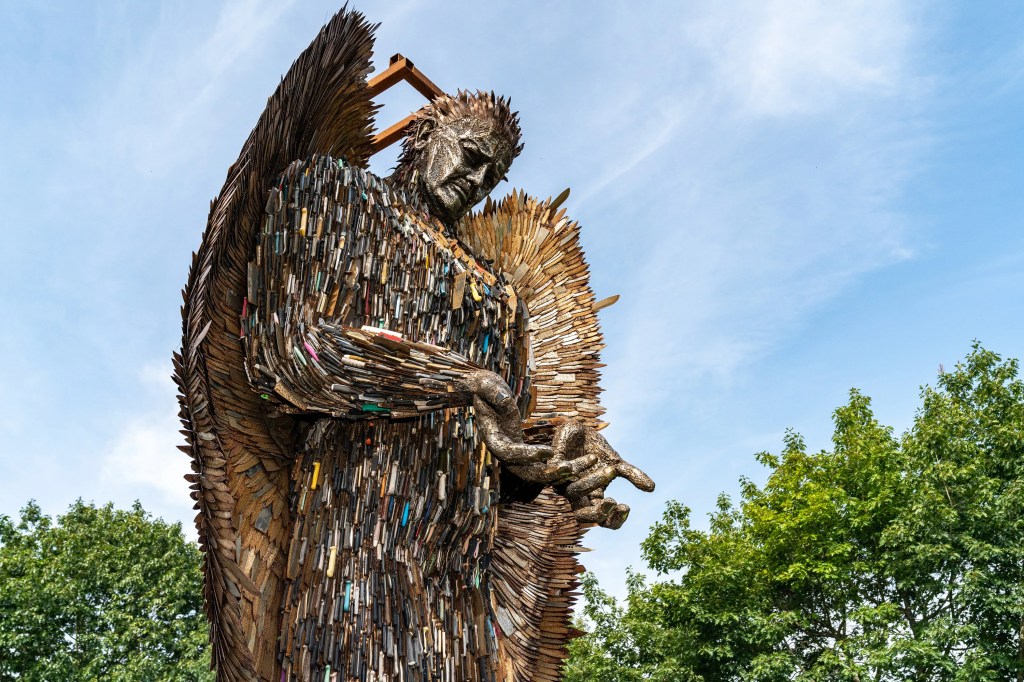
The Knife Angel on display at Chelmsford Park

The Knife Angel.

What is happening this week in Nottingham has brought home to us once again what our society continues to face with the tragedies of knife crime. Every week, almost every day in places like London, someone’s family is being destroyed by someone attacking and often killing a member of the family. Many are young people, a high proportion from an ethnic background. Whoever they are they are plunged into grief. It is a grief all the more distressing because there is rarely any reason for the action.
When I was searching for an appropriate prayer to pray for the young students and the faithful school caretaker approaching retirement – that is, Barnaby, Grace and Ian – I found a moving one which has come from the people and city of Nottingham.
I also became acquainted with the Knife Angel and a prayer associated with it, which I have put below.

The Knife Angel Project is an initiative of the National Youth Anti-Violence Tour & Programme.
It is a striking sculpture made from over 100,000 seized blades. Information linked with the Project says that: it was “specifically created to highlight the negative effects of violent behaviour whilst solidifying our critical need for social change. Not only does the Angel act as a catalyst for turning the tide on violent and aggressive behaviour, but it is also acts as a beautiful memorial designed to celebrate those lives who have been lost through these violent and thoughtless actions.”

The main goal is about educating and raising national awareness around anti-violence and anti-aggression.
That hope has been realised thanks to a co-operation between communities, police constabularies, local councils and the
Home Office.
Hundreds of thousands of knives have been removed from the streets of where the Angel has visited but its legacy continues far beyond the actual visits.
In the lead up to the creation of the Angel, the police had been organizing ‘knife banks’ and holding amnesties to remove as many knives out of circulation where they could no harm. No one was assisting and they had to pay for this initiative themselves. National Youth Anti-Violence Tour & Programme, with its special expertise were able to help. They were able to set up and help pay for the creation of over 200 banks!
You can learn more about the work by reading their website.

The idea of the Knife Angel followed on from the collecting of the knives.

Knife Angel Objectives

National Youth Anti-Violence Group say that ,
Since the Knife Angel’s very conception, we have always had a singular objective in mind – to bring about social change. The Knife Angel was always intended to educate children, young people and adults about the harmful effects that violent behaviour has on communities all across our nation. It has also helped to raise better awareness, helped those carrying knives to renounce violence as a solution for solving disputes, and encouraged leading bodies to create better initiatives to turn the tide on aggressive behaviour.  It symbolises a call for change whilst acting as a National Memorial for victims of knife crime and their loved ones.

The Sculpture is known as the National Monument against Violence and Aggression. The Knife Angel is a contemporary sculpture formed of 100,000 knives created by artist Alfie Bradley and the British Ironworks Centre based in Oswestry, England. It was in the form of an angel and it is 27ft (8.2 m) high. It was completed in 2018.
The construction was complex, involving sheet metal to form the basic shape. Alfie then worked through the collection of knives and weapons, very carefully, to determine what he had to work with. Each blade was blunted and sterilised before he could contemplate working with them. Each knife was carefully welded onto the form. Alfie then turned his attention to the most focal point of the angel, its wings. Each blade’s handle was removed and place on the wings to give a featherlike appearance.
Many of the blades contain inscriptions – in memory of loved ones who have died so violently; some asked for forgiveness; others were offered it. Some expressed disbelief and astonishment at the scale of what is happening on our streets.
But the Angel is more than functional. Many think it to be incredibly beautiful but it is more than a work of art. Those who made it possible state this as its legacy:
The Knife Angel is so much more than the artwork itself. We want to create a legacy that travels with and beyond the Angel’s presence. We want each hosting location to continue spreading awareness for anti-violence, and all that the Angel stands for, long after it has left their location. The Angel is a catalyst for nationwide change.

The ‘Angel’ is taking its message on its travels which began in Liverpool Cathedral.
Since then it has travelled far and wide, Birkenhead, Redcar, Newport, Gloucester Cathedral, Slough, Guildford Cathedral, Crewe, Nuneaton, Lichfield, Harlow in Essex …. And so the journey with its message goes on. The impetus for it all can be summed her by a saying of Helen Keller:

“Alone, we can do so little; together, we can do so much”
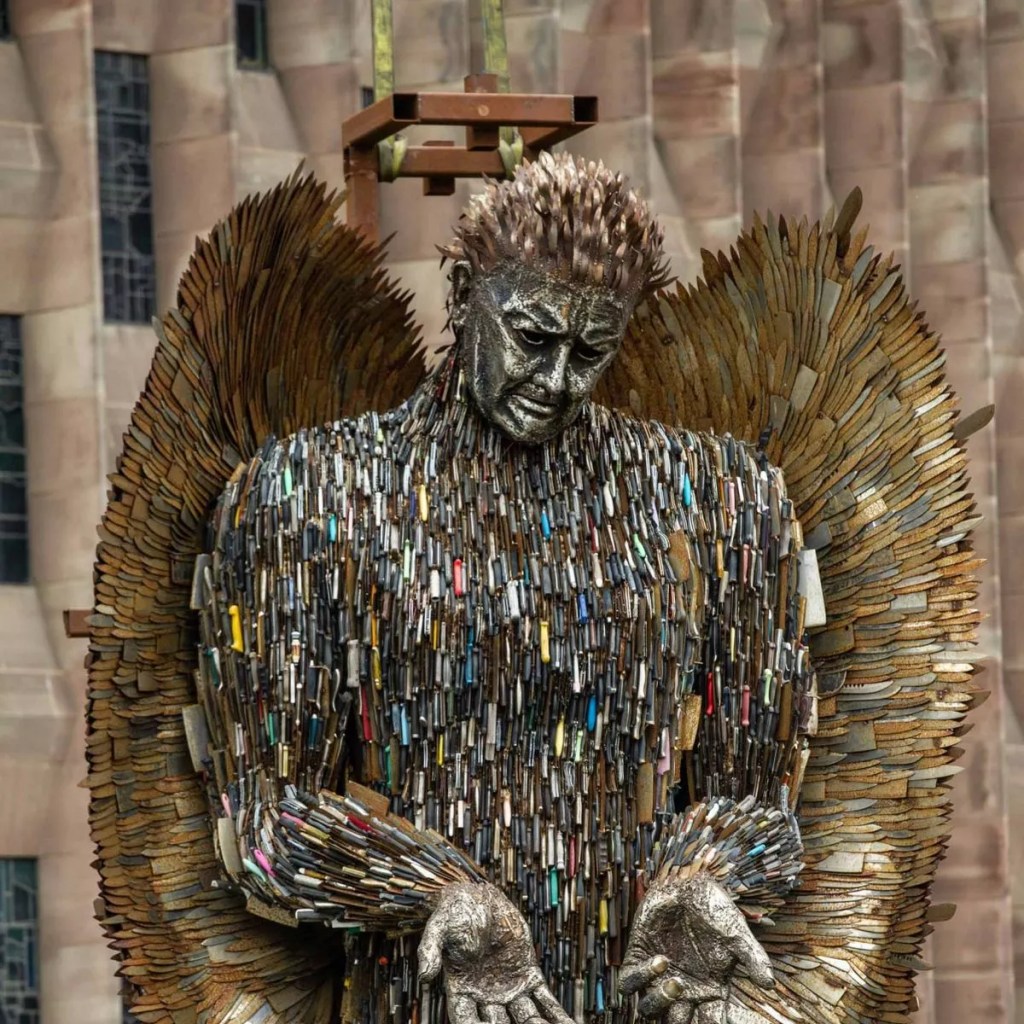
Outside Coventry Cathedral

Knife Angel prayer

Loving God, you call us to turn our swords into ploughshares, and our spears into pruning hooks.
Begin your work of transformation in all whose lives are overshadowed by knife crime,
Replacing violence with peace,  grief with consolation, fear with your perfect love.
Where communities are broken, send your Holy Spirit to heal.
And show us how we can join in your great work of reconciliation,
As you  mend and restore all things

​Through Jesus Christ our Lord
Amen
Alfie Bradley

Taking Leave

Icon, St Colmba takes leave of his horse. copyright, Monastery of St. Macarius the Great

One of the stories about Columba is that he had a much loved horse. On the day that St. Columba was going to die, his horse approached him and knew he was about to lose his dear friend and so the horse begins to weep and they share some time of grief together. This story was told by Adamnan, 9th Abbot of Iona, in his  Life of St. Columba

Taking Leave.

It had been hard to say goodbye to Erin.
With heavy heart Columba followed the voice of God
calling him through the words of Finnian the wise.
It was long ago now when the seas, rushing to and fro,
took him and companions to a place of new beginnings.
It was a penance.
As he crossed the dark waters
he inhabited a dark place of his soul and wept.
Beloved Erin, out of view but still deep settled in his heart.

That had been long ago now.
On this blessed isle, watched over by angels,
the Good News of Christ had been taken to foreign parts.
Gospel seed scattered and rooted in heart after heart,
blossoming in soul upon soul.
Holy men of Iona, led by the sinner saint,
opened souls to become guest-houses of the Spirit,;
opened eyes to see visions of eternity;
opened lives to pilgrimage with Christ on a joyful pathway of faith,
building cairns of joy and forgiveness.
Waymarks by which to experience the generous, freely-given
love of God.

Columba gathered now at the final waymark.
It was over now for him, though his saintly tale
would go on inspiring many.
But now, on the hill where they dwelt, the angels waited.
Soon it would be time.

And then she came, as he rested by the millstone.
A flurry of white, like the milk she often carried
from cowshed to refectory table.
She knelt in quiet homage, laying her head on his bosom.
This pack horse had, by Columba’s love discovered a greater love
God had for all creatures.

Sighing deeply, she knew that her master would soon leave.
Wailing, she sang her funeral dirge,
whilst the dear brother attending sought to chase her away.
Columba stayed his hand.
“Let her be. She is fond of me. Let her grieve
and pour out her great need.
The Creator has revealed to her what you have yet to perceive.”
Raising frail hand, he blessed her.
Sadly, but comforted, she left him, seeing perhaps,in the corner of her tearful eyes, myriad angels
waiting to take him, no longer to Erin
but with great joy, to eternity.

[Mr G. St Columba’s Day 2023]

Nova Kakhovka

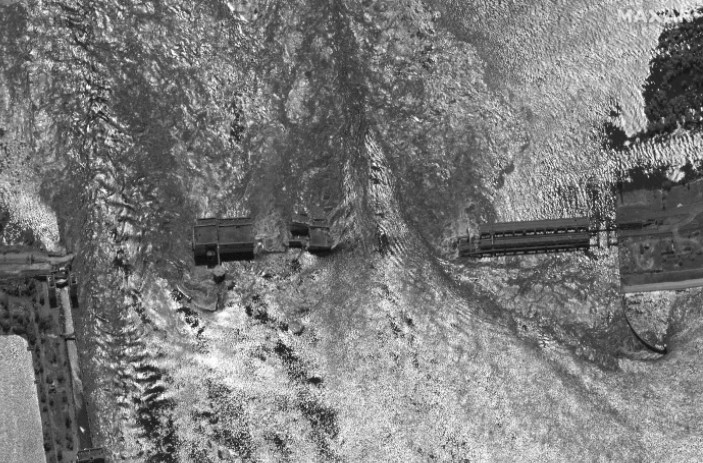
Nova Kakhovka dam : satellite image, Maxar technologies

Prayer in the face of destruction of Nova Kakhovka dam

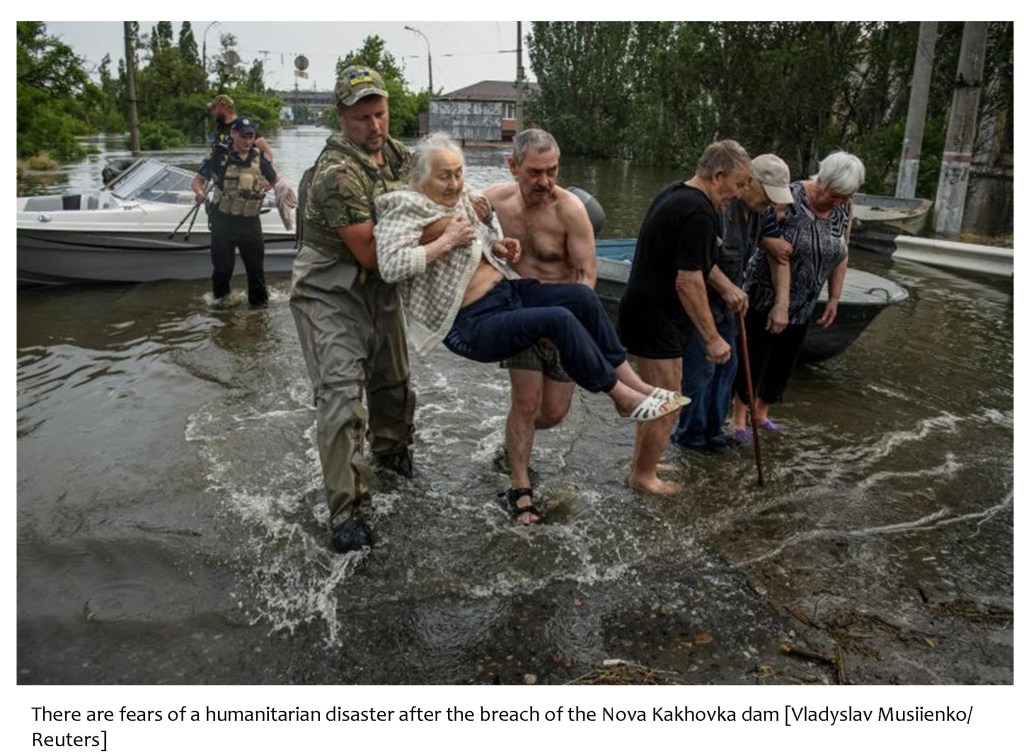
With humanitarian and ecological disasters still unfolding, it is already clear that tens of thousands of people have been deprived of drinking water, many are homeless, crops are ruined, land mines have been displaced, and the stage is set for long-term electricity shortages. Evacuation efforts are under way – about 3,000 have fled so far – amid a sense of despair as people try to wade through the rising floodwaters to safer locations. (Aljazeera)

Please pray for people to be saved, for rescuers and all who are helping to evacuate people.

Prayer for Kherson ( Херсо́н)and those parts of Ukraine which are flooding.

God, we pray for the  city of Kherson,
and the communities affected by the flooding caused by the attack
on the Nova Kakhovka dam.

Be with all those who have lost homes, livelihoods, and the things that sustain life;
farmers with destroyed crops, animals especially domestic pets abandoned; bewildered children and elderly;
those without pure drinking water and trying to cope with the destruction
caused by the wickedness and the evil of Mr Putinand those who, with him, commit crimes against humanity.

We pray for that other humanity, kind, caring and compassionate
who are involved in rescuing, sheltering, comforting all who are suffering.
For your blessing, Lord, on their unstinting and self-less actions.

In the face of all this mayhem, upheaval and despair,
May you be in the midst of all that pain,
upholding and sustaining your people in this time of great need.

Bless too, Mr Zelensky and all working with him as he faces more and more
difficulties in the face of which he must build up spirits and keep before his people
a vision which will one day be accomplished.
Sustain and uphold him and keep him safe.

Help us all, Lord, to hold in our hearts and our love those who are
stretching out their arms to us with hope and numbness.

Give us all the will to work for peace.
Lord, have mercy.
Amen

[Mr.G]

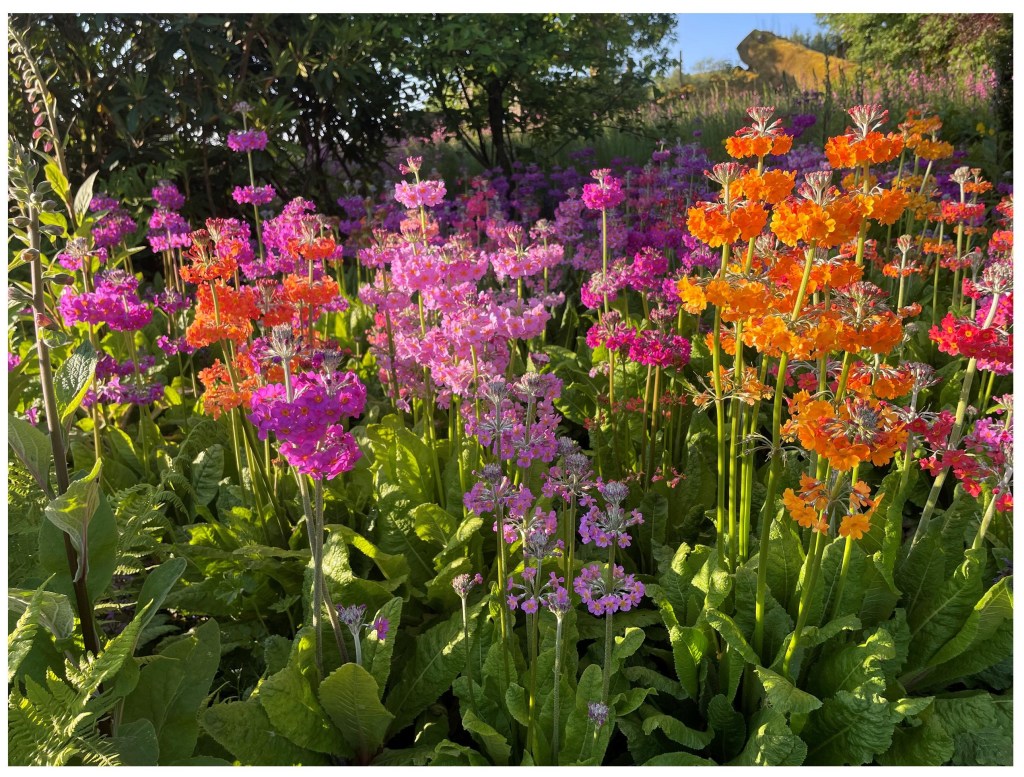
Painting with Flowers. Gertrude Jekyll

Candelabra Primulas, splashes of joyful colour. Photographed by my friend Gill Henwood, in the Lake District.
~ known to Gill’s grandsons as ‘rainbow flowers ~

Gertrude Jekyll Painting with flowers

The English National Trust announced last week that it had acquired Munstead Wood, the home of pioneering garden designer and horticulturalist, Gertrude Jekyll (pronounced Gee-Kil). Near Godalming in Surrey, Munstead Wood was her home until her death in 1932. The Trust, with help from the government, is beginning the task of restoring this gem of a garden and will open it to the public, hopefully, next year. Gertrude moved into the house in the 1890’s, first creating the 11 acre garden and then, with her friend and architect, Edward Lutyens’ help, renovating and developing the house.
The garden became the prototype of the Modern English Garden.From here she bred many new plants and ran a garden centre.
The National Trust’s, Andy Jasper said that “She became one of the most influential garden designers and transformed horticultural practice, collecting plants in Britain and Europe and introducing at least 30 new varieties into British gardens.”

She was born in November 1843 and developed skills as an horticulturalist, garden designer, craftswoman, photographer, writer and artist.She created over 400 gardens in the UK, Europe and the USA and was regarded as a prime influencer in gardening design.
Her partnership with Edward Lutyens was especially fruitful. Both were devotees of the Arts & Crafts movement and her designs were influenced by a subtle artistic approach to garden creation.
She is particularly known for the promotion of radiant colour and what is known as the brush-like strokes of her planting. This drew inspiration also from the art movement Impressionism and by the paintings of J M W Turner whom she greatly admired.
So early in her studies she became interested in the creative art of planting gardens in innovative colour schemes based on ensuring different parts of the garden evolved colourfully  during the differing seasons of the year. Her book,  Colour Schemes for the Flower Garden, first published in 1914, (many editions until 1988) offers advice on the use of colour which keeps the garden interesting throughout the year.
She believed very firmly that the most eye-catching part of a garden plant is its flower and “the most captivating element of a bloom is its colour.”

She pointed out in her book that “to plant and maintain a flower border, with a good scheme for colour, is by no means an easy thing that is commonly supposed.”
Her advice was worked out through painstaking planning and in cultivating her own garden. She accepted that there are often failures, but many great successes that make it all worthwhile.
She did not write just about big gardens like her own, which needed a team of gardeners. She said that the size of a garden has very little to do with its merit. “It is the size of the owner’s heart and brain and goodwill that will make the garden either delightful or dull.”
Her own garden reflected a love of art which was paramount and it became a kind of outdoor studio. “My garden is my workshop, my private study and place of rest.” It was, for her, a private healing place, a palette of colour which reflected her deep love of painting. In the latter part of her life, she suffered from failing sight which made painting more difficult.
Her garden became a consolation.

Her artistry, craftsmanship, garden design and planting schemes combined with her devotion to brightness and joy of colour were, according to Richard Bisgrove, writer of the 1988 preface of Colour Schemes, “humble  responses to the Grand Design, works of praise from a gardener who would have liked much more but was serenely satisfied and thankful for what she had.”
Perhaps that is important for any gardener though I am a great believer that there is always room for one more!

Sometimes it isn’t a design of ours, and many gardeners (if not all) are aware that Nature has its own rules and what can bring the greatest joy is the self-seeded plant which pops up in the ‘wrong’ place or a group of flowers which bloom where you least expect it, even in the midst of your own carefully  crafted design. Maybe it is in those moments that you can be led to recognize that gardening is always a partnership with Nature. . (I write as one of the founding and possibly, only, member of the Dandelion Appreciation Society!)

That can remind some of us that this is a deeper partnership with, our creator God .
I have heard many times the saying (the song?) that we are ‘closer to God in a garden than anywhere else on God’s earth.”
It can feel a bit twee or trite but it is a truth.
People like Gertrude Jekyll are pioneers in bring art and craft together, using skill and  understanding in planting and design and using an artist’s palette to sweep colour across the soil.
They also help us to create an outdoor room in which we can meet with God and also with friends in a quiet and restful way or which can be such a haven of peace that we are re-made by beauty and a sense of sharing in an act of love.
In this we are at-one with the earth yet being lifted towards heaven.

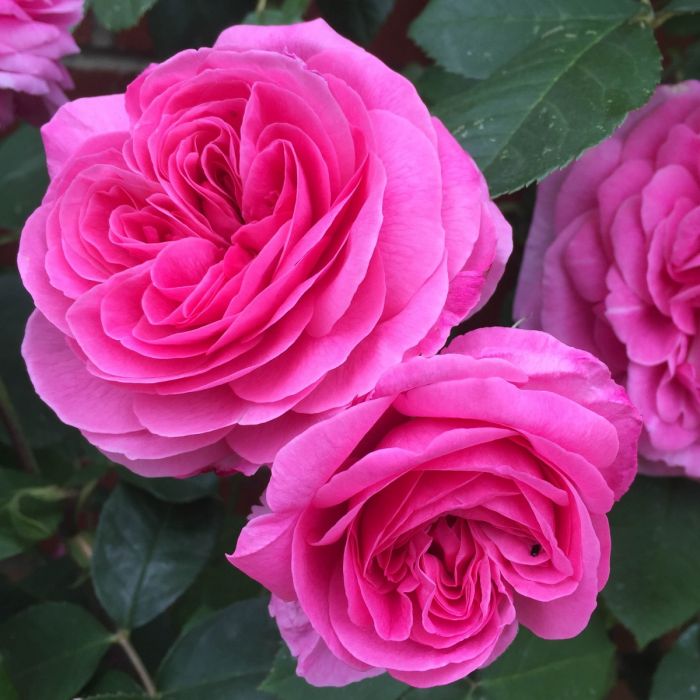
Gertrude Jekyll Rose (David Austin)
widely available

[Mr G]