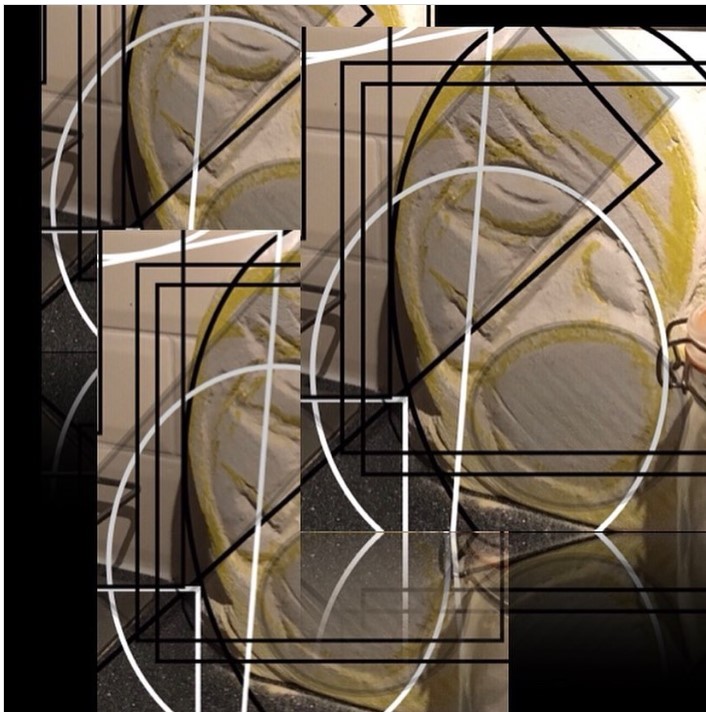
For reflection see the end of the piece below.
Today, August 15th, many Christians celebrate the Blessed Virgin Mary.
There are many interpretations of this festival and much that has been added to the simple picture given of her in the Bible. Theologically it can be argued that Mary is Primus Inter Pares – first among Equals amongst Christians. She is, of course, also Theotokos – God-bearer. This is what makes her so special a human being.
English Christianity has always had a special relationship with Mary, partly because of the Glastonbury legend that she came to England after the Resurrection and partly because a biblically-based Christianity cannot ignore her. There are more English churches dedicated to St. Mary than any other saint and even those not dedicated to her usually have a ‘Lady Chapel’ which takes its name from her.
The Mary of the Gospel has much to teach Christians about what it actually means to be a Christian. Take the Annunciation for example (Luke 2:26-38). We see her singled out by God for a very special purpose—the human instrument in God’s plan for the world’s salvation. A young maiden whose faith is deeply rooted in the Jewish tradition is confronted by an angel. His announcement didn’t initially thrill her and she tried to wriggle out of God’s plan with objections and a sense of being unworthy. However, God’s assurances were enough for her to accept her role with humility and obedience. Mary’s ‘Yes’ to God was hard won but total when it came. Her instinctive reaction was to turn things away from herself and when she visited her cousin Elizabeth she was greeted as a woman blessed among women. Mary immediately says the hymn of praise to God which we know as the Magnificat. All her thoughts are rooted in God and from the moment of the Incarnation through to the Crucifixion her concern is for the child she bore at God’s bidding. The best statues of her show her looking at the child in her arms pointing us to Jesus himself. This was her purpose.
Her humility, obedience, praise of God, love and dogged determination to see things through -The Crucifixion where she stood at the Cross when others fled- are all things that should mark out the Christian life. The Orthodox Church calls her ‘Theotokos’ – God-bearer. That is the role of every Christian—to bear Christ to the world. We can learn much from this gentle but at times fiesty, Lady who was truly ‘full of grace’ – praying that we might be too.
The art which heads this article is by my artist friend, Kay Gibbons. It is a work of stone. She was working the stone in garden but was making too much noise and dust. When she told me that she was covered in honey coloured stone dust I suggested that she might stand nicely on the 4th Plinth in Trafalgar Square, London! Pocketing that irreverent thought, we talked of the effect of bringing the sculpture into the kitchen. It has changed the perception. As Kay said, our perceptions are constantly changing. Here amongst the kitchen utensils this was true. Mary was, in effect, being rescued from being a figure out of reach (On a pedestal, as it were), into someone who was accessible. That accessibility brings us nearer to the heart of Jesus. It was St Teresa of Avila who coined the phrase, “God walks among the Pots & Pans.” So Mary emerges in our picture from kitchen artefacts. The white and black lines are traced outlines of chopping and draining boards, pan stands; Kilner jar, even tea bags. Mary is placed among ordinary things. This is not to downgrade her but rather the opposite. She is consecrating with God’s grace the ordinary to make them extraordinary, just as the simple maiden in Nazareth became herself extraordinary through God’s grace to make her mother of Jesus, Mother of God.
Kitchens are holy places where food is cooked and dishes are made clean. They are also often places where people gather at parties and converse. They have a community role. In Kay’s picture we see something of this and maybe your reflection will find much more.
There is never one way of regarding and contemplating God, Jesus, Mary or the Saints. Or, for that matter, the ordinary, extraordinary people we meet in prayer and in our lives.
In all, and in different ways, we experience the Grace of God at work
Hail Mary, Full of Grace,
Blessed are you among women,
Blessed are you among Christians,
Blessed is the fruit of your womb, Jesus.
[Mr G]
 Mr G's Ponderings