St Nicholas, kind, holy man, Feast day 6th December
Nicholas was a fourth-century bishop of Myra, a town in what is now southwestern Turkey, and we remember him because of the stories which have given him “a perpetual name for deeds of kindness on land and sea.” People of the Church held him in high honour from a very early date and many stories came to be told about him.
The most famous of these tells of his merciful generosity.
Once there were three sisters whose parents were so poor that they thought of selling them. Bishop Nicholas heard of the sisters’ plight and tossed three bags of gold onto their doorstep — thus providing them with dowries for marriage and saving them from a life of prostitution.
Another version of this story is that one day Nicholas heard about a rich man in Myra who lost all his money when his business failed. The man had three lovely daughters, all wishing to get married, but he had no money for their marriage. Besides, who would marry them since their father was such a failure? With nothing to eat, the man in desperation decided to sell one of his daughters into slavery. At least then the rest of them might survive. Before the first daughter was to be sold, Nicholas, with a small bag of gold in his hand, softly approached their house, and, tossing the gold through an open window, quickly vanished into the darkness.
The next morning, the father found a bag of gold lying on the floor next to his bed. He had no idea where it came from. The poor man fell to his knees and great tears came to his eyes. He thanked God for this beautiful gift. His spirits rose higher than they had been for a long time because someone had been so unexpectedly good to him. He arranged for his first daughter’s wedding and there was enough money left for the rest of them to live for almost a year. He often wondered who gave him the gold. By the end of the year, the money had run out and the father, again desperate and seeing no other way open, decided his second daughter must be sold. But Nicholas, hearing about it, came by night to their window and tossed in another bag of gold as before. The next morning the father rejoiced, and, thanking God, begged His pardon for losing hope. Each night afterwards the father watched by the window. As the year passed their money ran out again. In the dead of one night he heard quiet steps approaching his house and suddenly a bag of gold fell onto the floor. The father quickly ran out to catch the one who threw it there. He caught up with Nicholas and recognized him, for the young man came from a well-known family in the city. “Why did you give us the gold?” the father asked.
“Because you needed it,” Nicholas answered.
“But why didn’t you let us know who you were?” the man asked again. “Because it’s good to give and have only God know about it.”
Whichever story true, the good and kind deed became the reason why Nicholas is considered the special protector of children. In memory of his deed of mercy to the three sisters, the Dutch developed the custom of giving gifts to children on his feast-day, 6th December but there are so many similarities with the secular legend of Santa Claus, Nicholas became associated with Christmas. In Holland, where he is patron saint his day remains a festive one.
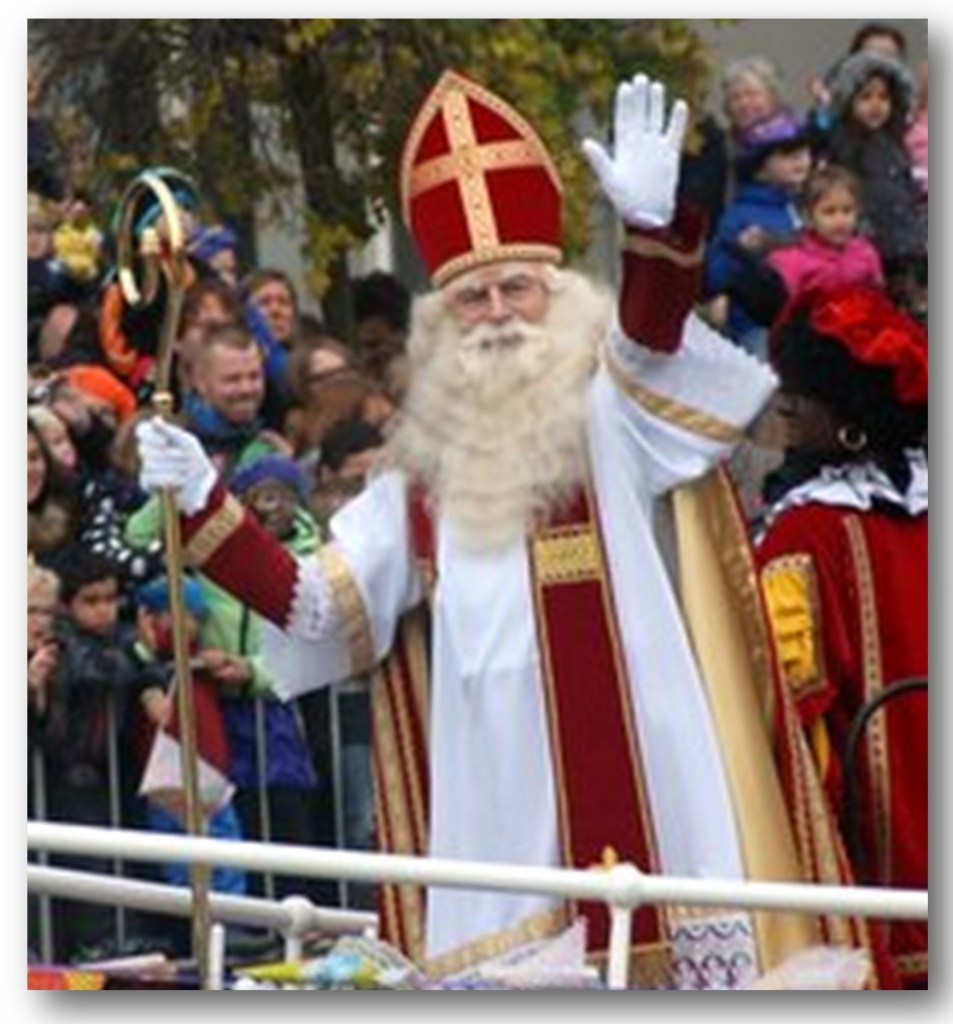
Sinterklaas often arrives in Amsterdam by canal boat when he is greeted by the children (and many adults too!).
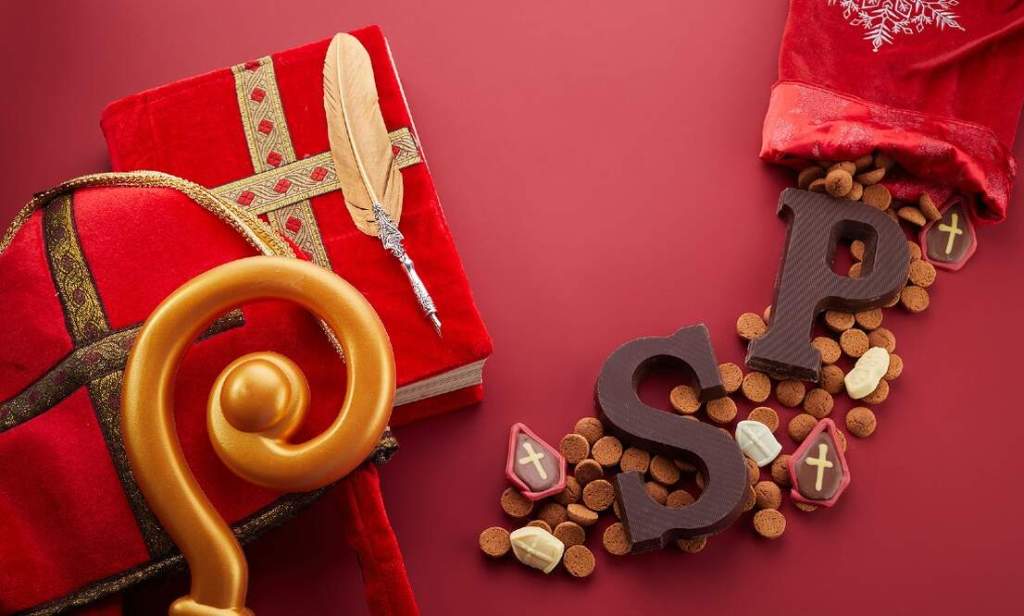
One of the customs associated with this day is the giving of chocolate letters. They are offered in every letter of the alphabet, in milk, dark and white chocolate. People are given letters in the alphabetical letter of their own name.
Another story tells how a company of seafarers were caught in a storm off the coast of Asia Minor. The waves were swamping their ship, and the mariners were nearly at their wits’ end when they remembered what they had heard about the bishop of Myra. Though he was still alive, the sailors cried out his name and implored his help. The legend says that Nicholas himself suddenly appeared in the rigging of their ship and calmed the storm, so that the ship and all who were in it came safely to port.
Nicholas is considered the patron saint of many other groups besides children and sailors. The common thread in all these claims on his heavenly protection is his legendary kindness to those in need — and his special care of those who follow his storied example by aiding the desperate, the needy, and the sick.
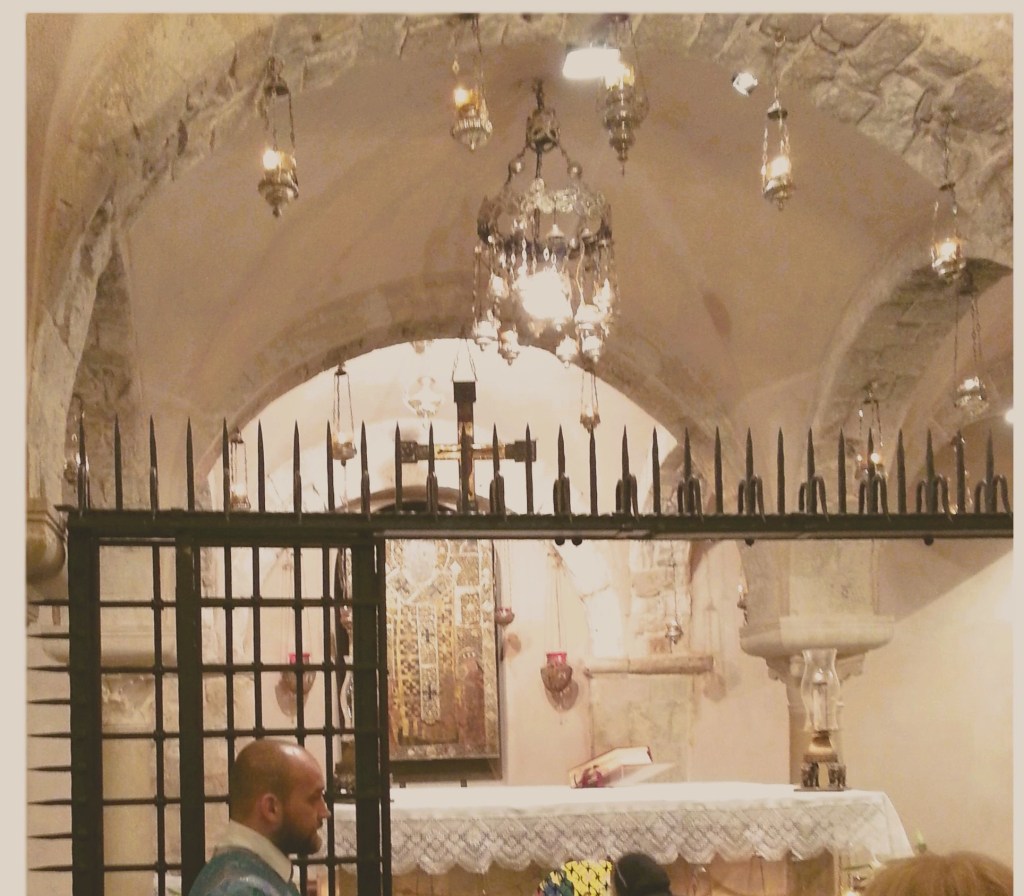
At first, the body of Nicholas was buried in Myra where he was bishop, but, in the 10th century, during a time of upheaval, sailors from Bari in Puglia, Southern Italy, removed his body and he is now buried in the Church of St. Nicholas, Bari. Many pilgrims visit his tomb in the Crypt which, unusually in a Roman Catholic Church, is tended by Easter Orthodox monks.
It is in the Netherlands, however, where he is much celebrated and it is a special day for the Dutch people.
O Lord our God, grant us so to cherish the example of your servant Nicholas,
that our offering may have justice as its consort and mercy as its sovereign.
We ask this in the Name of Jesus Christ the Lord.
[Mr G]
(some information is from ‘For all the Saints’ the Episcopal Church of Canada.
The second story of the gold given for the freedom of the three girls is adapted from Father Victor Hoagland, CP)
 Mr G's Ponderings