Month: May 2024

Corpus Christi

Hay bales and harvest. Norfolk. Photo by my friend, Julia Sheffield

Evelyn Underhill

In the first five decades of the twentieth century, Evelyn Underhill was, perhaps, one of the most widely read writers on prayer and the spiritual life. The first woman ever invited to give a series of lectures in religion at Oxford, she was a fellow of Kings College, London, and in 1938 received an honorary Doctor of Divinity degree from Aberdeen University. But it was as a retreat director and spiritual guide that she became best known and loved. This is her poem about Corpus Christi, celebrated by many Christians today. It is a Day of Thanksgiving for the gift of Jesus in the Holy Eucharist.

Corpus Christi
by Evelyn Underhill

Come, dear Heart!
The fields are white to harvest: come and see
As in a glass the timeless mystery
Of love, whereby we feed
On God, our bread indeed.
Torn by the sickles, see him share the smart
Of travailing Creation: maimed, despised,
Yet by his lovers the more dearly prized
Because for us he lays his beauty down—
Last toll paid by Perfection for our loss!
Trace on these fields his everlasting Cross,
And o’er the stricken sheaves the Immortal Victim’s crown.

From far horizons came a Voice that said,
‘Lo! from the hand of Death take thou thy daily bread.’
Then I, awakening, saw
A splendour burning in the heart of things:
The flame of living love which lights the law
Of mystic death that works the mystic birth.
I knew the patient passion of the earth,
Maternal, everlasting, whence there springs
The Bread of Angels and the life of man.

Now in each blade
I, blind no longer, see
The glory of God’s growth: know it to be
An earnest of the Immemorial Plan.
Yea, I have understood
How all things are one great oblation made:
He on our altars, we on the world’s rood.
Even as this corn,
Earth-born,
We are snatched from the sod;
Reaped, ground to grist,
Crushed and tormented in the Mills of God,
And offered at Life’s hands, a living Eucharist.

Dance for Joy

Isis dancing with Old Father Thames. Leaded glass sculpture by Kay Gibbons.
This panel has been produced in a ‘kintsugi’ fashion, after the Japanese art of bonding broken ceramics with gold.

Beauty in fracture.. Broken beauty...

A Poem for Trinity Sunday, selected by Piers Northam. Written by the Persian poet , Hafiz. (1325-1390) and gently amended by Piers to refer to the Three persons of the Trinity.
The invitation to ‘dance’ is based on an early Church theology of ‘perichoresis’ – rotation or circular movement (hence dance) within the relationship of the Father, Son and Holy Spirit (The Holy Trinity of God). The early Greek Theologians of the Church, led by St. Gregory Nazianzus – one of the Cappadocian Fathers- helped Christians to discover the relationship of pure love between the Father, the Son(Jesus) and the Holy Spirit. This Love energizes all that God has created as it pours itself in the sheer joy of life. It becomes a dance which carries us into the fullness of the joy of God and therefore leads us to see that love and joy at the heart of our own life. So we are invited to the dance of life in which we are encompassed with the swirling love of God.

Created for Joy – Hafiz

I sometimes forget
that I was created for joy.

My mind is too busy,
my heart too heavy
for me to remember
that I have been called to dance
the sacred dance of life.

I was created to smile,
to love,
to be lifted up
and to lift others up.

O Sacred Three
disentangle my feet
from all that ensnares.
Free my soul
that we might dance
– and that our dancing
might be contagious.

Breath. (Ruach)

photo: Sharon Tate Soberon

‘How do we know God?’ She asks.
‘We feel it inside us.’ says the child.
‘And what does it feel like?’
‘It feels like breath…’

It feels like breath:
the engendering, enlivening breath,
the rushing wind,
the gift of life…

This child,
just four years old,
speaks an ancient truth –
a truth not learnt
but lived.

She knows the One
who knit her together
in her mother’s womb:
recognises in a way
that can’t be taught.

Knows herself beloved.


Nowt nor summat !

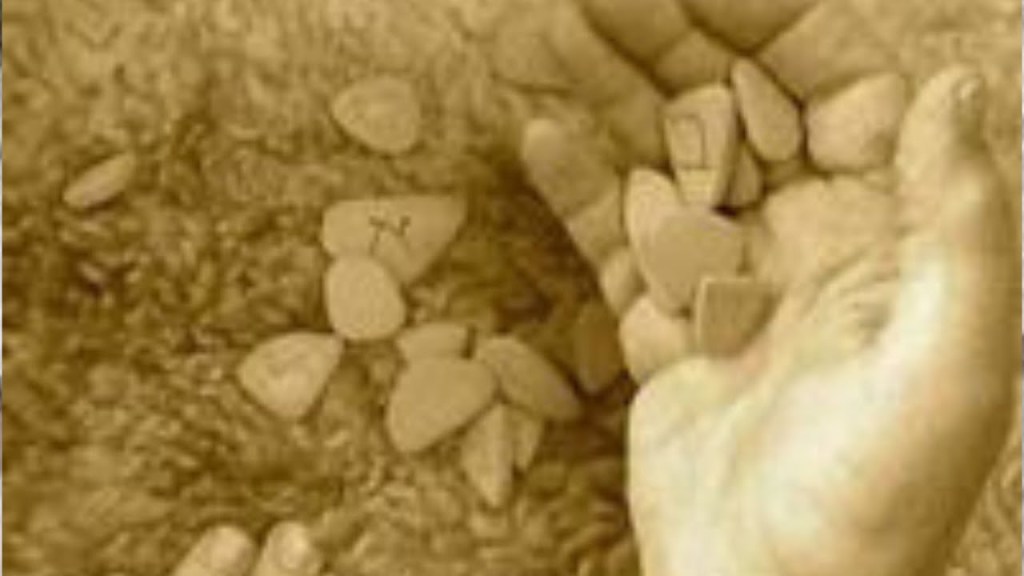
Casting Lots on St Matthias Day

nowt nor summat  

There is a saying in the North of England (some say it originates in Lancashire, others Yorkshire but I know where my money is!) – it’s neither nowt nor summat.
For the benefit of those not familiar with northern English dialect, it means that it is ‘neither one thing nor the other’.

It is very tempting to say this is what it feels like after Ascension which the Christian Church celebrated last Thursday.
At the feast of the Ascension We were led to the end of the Gospel of St Matthew when Jesus  gave his last instructions and final blessing to his followers. Then, before their very eyes, he disappeared into the heavens.
Jesus had told them that they were his witnesses and the task before them was to proclaim His Good News to all Nations. (Matthew 28: 16-end)
In the nowt nor summat time they were to wait until they have been clothed with power from on high (Luke 24: 49).  Jesus was, of course, referring to Pentecost when the power of God’s Spirit came upon them in the dramatic way Christians will remember next Sunday.

So we are between the Ascension and Pentecost. We are caught up in what I call a mathematical moment . From Easter Day to Ascension Day is 40 days. The same length as Lent. But Easter is the great Festival time of the Church so it must be the longest season, the ‘jubilee’ season of great rejoicing. So it has been given 50 days. The extra 10 days are those between last Thursday and next Sunday. So we are still in Eastertide!
So this is not quite the negative time I’m suggesting.

According to the New Testament the disciples, together with the women who were special to Jesus, returned from Mount Olivet to the upper room where they devoted themselves to prayer. They also attended to the matter of choosing a successor to Judas. Matthias (whose feast day is May 14th – today) was chosen by lot.
When I was younger I used to read in the Acts of the Apostles that the lot fell on Matthias! Not being familiar with this form of voting, I wondered, Did it hurt?

Through this sacred vote the disciples were thus ‘complete’ in the number of those who were destined to lead the infant Christian Church. (The sacred number 12 equating to the 12 tribes of Israel in the Old Testament.) The ‘ordination’ for this Leadership—their setting apart for the task, would come at Pentecost. For now they ‘waited’ and they prayed.
Those being ordained to the Church’s ministry today go into ‘retreat’ just before they are commissioned by the Holy Spirit.
The ‘nowt nor summat’  period is a time of getting oneself prepared. It is an inner activity in which God pours out his blessing. The importance of prayer as a time of being prepared by God for some work in His name cannot be over-emphasized. It is a time not of nowt nor summat but of expectant waiting. If God is to act through us, he needs us to be receptive to his Will, his plan. Which is why waiting in prayer is an important part of bringing a new and loving vision to a world (and a Church!) in great need.

I think in such moments of the lovely prayer of St. Teresa of Avila.

Christ has no body now on earth but yours;
no hands but yours; no feet but yours.
Yours are the eyes through which the compassion of Christ must look out on the world.
Yours are the feet with which He is to go about doing good.
Yours are the hands with which He is to bless His people.

Christ has no body now on earth but ours….

[Mr G]

PS>