Author: mrgsponderings

All are Welcome

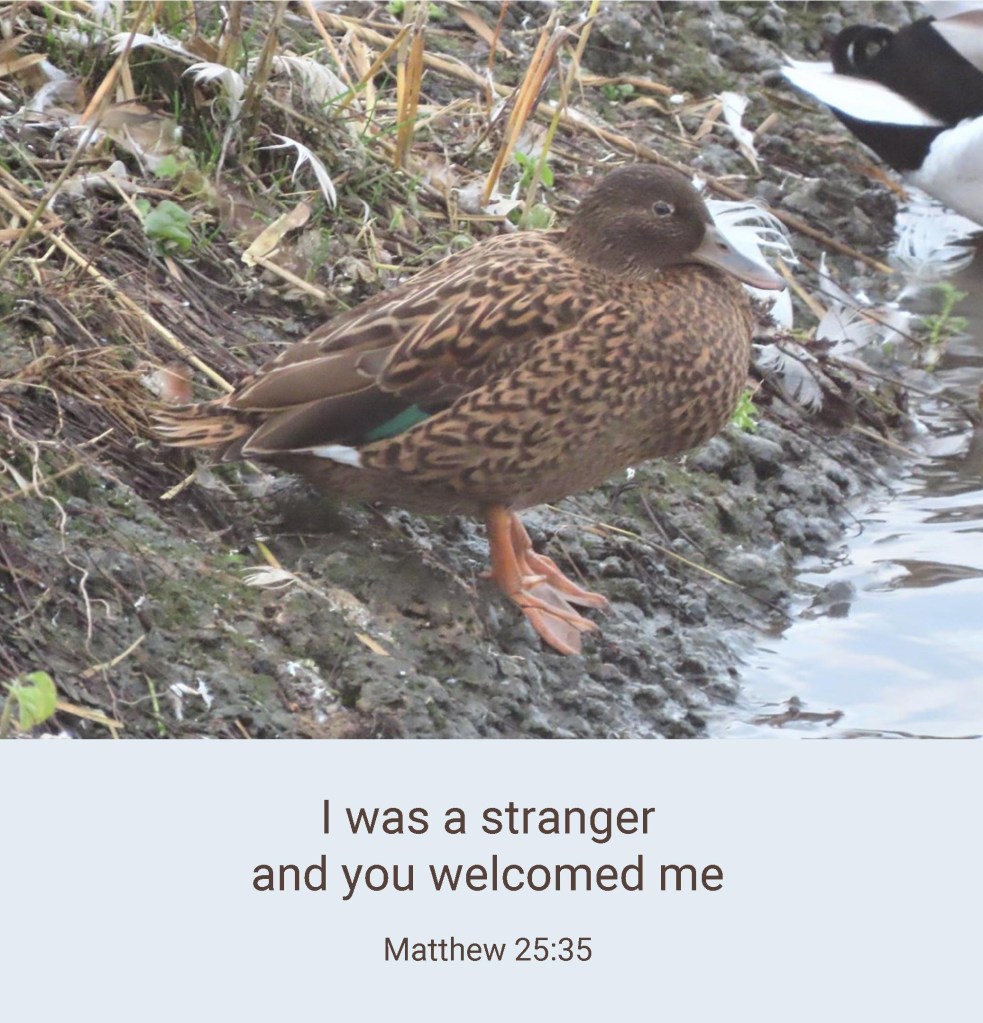
Joyce sent this picture tweet recently. She commented:
In spite of being a stranger, this lone Laysan Teal seems to have been accepted by the other waterfowl at Welney nature reserve.
It got me thinking about hospitality.

There is an ancient rune or poem about Celtic Hospitality which begins:

I saw a stranger yestere’en:
I put food in the eating place,
Drink in the drinking place,
Music in the listening place.

All this because the guest brings a blessing from God because, as the poem ends:

Often, often, often
Goes the Christ in the stranger’s guise.

The idea of seeing Christ Jesus in others, especially in strangers and visitors has its root in early church practice.  It was particularly central to the teaching of St. Benedict.
St. Benedict wrote a rule for living, for his monks, which has become enshrined in the practice of Benedictine communities and the wider Christian Church ever since.
Amongst the things he put into his rule, St. Benedict said this:

All visitors who call are to be welcomed as if they were Christ,
for he will one day say: I was a stranger and you took me in
(Mt 25).

Benedict then set down how guests should be received and how they should be treated. His teaching has its roots in ancient practice which was as much part of Judaism as it was Christianity. Both are doubtless mindful of what the epistle to the Hebrews calls entertaining angels unawares – without knowing it. (Hb 13:1). There is an echo here in the Old Testament story of Abraham’s hospitality to the three angels at the oak of Mamre in Genesis 18.

Seeing Christ in each other is something which ought to make a huge difference to how we treat each other.  St. Benedict in his rule cautions about self-centredness and offers hospitality towards others as an antidote to this. 

One of the stories about how we should treat others as if they were Christ is Luke 7: 36-50.  It begins with a Pharisee called Simon who seemingly offered hospitality to Jesus.  His motives however, were suspect and we quickly see that he had no intention of treating Jesus as the honoured guest.
In contrast a woman, who had the notoriety locally of being a sinner, entered the house bearing an alabaster jar, out of which she poured ointment and began to wash Jesus’ feet.  It was an act of profound love and honour, though the gathering greeted what she did in the kind of shock-horror which is the hallmark of certain kinds of so-called newspapers today!  Surely if he were a prophet, they began to murmur, he would know what kind of woman was touching him!
Whatever her sin, theirs was all the greater because they had failed in hospitality.  Jewish Law was extremely strict in how the stranger and visitor are to be received. From the time of Abraham onwards, great importance was attached to hospitality.  It is described as a sacred obligation. In biblical times, certain customs are attached to it such as providing water for washing the feet, greeting a guest with a kiss on both cheeks, offering olive oil mixed with spices to anoint the hair, all these demonstrated hospitality – loving strangers – in a practical way: which is why Benedict was careful to highlight hospitality in his Rule.
Jesus saw Simon’s hospitality as a complete sham and the self-righteous outpouring from his lips condemns him as a bigot whose religious practice is equally bogus.  By contrast the woman, says Jesus, has done much more than follow Jewish custom.  What she did came straight from her heart. She had, said Jesus, shown great love.  She demonstrated true hospitality and Jesus saw beyond what others saw in her.  He saw The Spirit at work in her heart.  

The final part of this story moves our attention away from the Pharisees towards the woman whom Jesus forgives, grants peace and makes whole.  Apart from being shown a lesson in true hospitality we are also reminded that Jesus has an inclusive view of humanity by which all who turn to God are accepted, blessed and made whole.  God who makes us in his image and in Jesus Christ restores that image within us, excludes no one from his Gospel net of love.  By implication, neither must we.
Equally, there is a warning here – if we fail to embrace others with loving hospitality then we condemn ourselves.  If we fail to see Christ in others then we are failing in our witness to His Good News of eternal love and salvation.  Our welcome of others must be authentic and real and lead to true loving openness as a Christian community.  As Benedict reminds us, at the heart of Christian hospitality is the recognition that all are of infinite value to God; all are precious and all are worthy of being treated lovingly.

Sometimes Christianity can appear harsh, judgemental and unloving. It can seem to be exclusive, unyielding and so righteous that it is off-putting.  Sometimes we can erect barriers which keep people out if they don’t fit into our own view of how things should be.  The trouble with barriers, of course, is that they not only keep people out – they imprison people within.  By the way he treats the woman who anointed his feet Jesus makes it quite plain that God’s saving love is available to all and none are excluded. It opens our lives and hearts to a deeper love and joy and acceptance of and by God that should be a great comfort to us.

It certainly seemed to be to the Laysan Teal.
Thank you Joyce for sharing.

[Mr. G]

‘Friend of the Bridegroom’

St John the Baptist, detail. Banner attributed to G F Bodley.
Parish of St John the Baptist, Epping. [photograph Mr. G]

A traditional theme on the Third Sunday of Advent is that of St. John the Baptist.
His part in the Christmas story began at the Visitation of The Blessed Virgin Mary to Elizabeth.
When Mary greeted Elizabeth, St Luke records that the babe in her womb (John) leapt for joy.
After a time of preparation in the wilderness, possibly among the desert people known as the Essenes, John obeyed the will of God and left the desert to fulfill his part in the story of Jesus.
Calling the people to repentance he prepared them for the Christ, who is Jesus.
His own followers were to leave him when Jesus began his ministry of loving salvation . His own story was to end in his death at the hands of King Herod. His legacy was that he would for all eternity be known as the ‘forerunner’, the one who pointed people to Jesus and who fulfilled the prophecy of who Jesus is and what he does. The ‘last’ of the prophets he was the proto-disciple, the herald of the Good News. Orthodox Christians give him a much warmer title. He is the friend of the Bridegroom.
It is to this deep and joyful friendship that we are called. Like John we are encouraged to point away from self and towards God. The more people turn their lives to God and away from self-centredness, the better our world will be. John the Baptist gives us the words to live by:
I must decrease and He (Jesus) must increase.

My friend, Joyce, has produced a book of  Reflections for Advent to Epiphany. This is her reflection for December 9th.

He himself was not the light,
but he came to testify to the light.

John the Baptist,
not the Light,
but pointing to the Light.
Pointing away from himself,
to the one to come.

John the Baptist,
a faithful witness,
showing the way,
in spite of the cost.

John the Baptist,
a wild man for Christ,
pushing the boundaries
beyond convention.

John the Baptist,
searching for the truth,
speaking the truth to power,
dying for the truth.

God our Father, thank you for the
faithful witness of your servant John.
Help us to reflect your light, so that we too,
may bear faithful  witness to you.

Reflection by Joyce Smith

Speak Lord

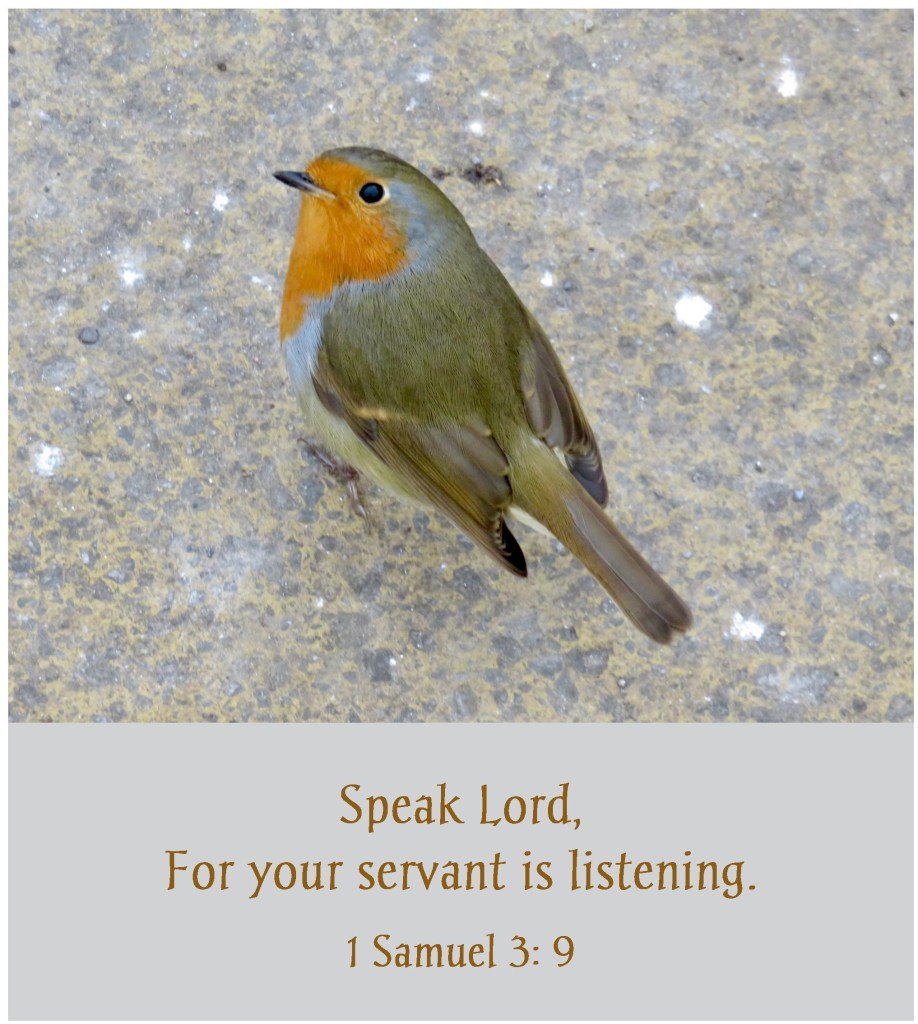
My friend Joyce has sent a new Picture Tweet. This is what she says

Dear Friends,

Amidst all the different noises at this time of year, I often find it difficult to hear God’s voice, but this little robin showed me what it was like to just be still and listen for a few minutes before he flew away.

With my love and prayers,
Joyce.

Here’s a short reflection from Simon Tugwell OP

Be Still and know that I am God
enter into the chamber of your heart.

There is the Kingdom of God.
in the utter stillness within.
From that depth comes human joy;
human love; human activity.
Relax into the assurance of
His love,
His care.

He has provided for our every moment.

(Simon Tugwell)

Little Gidding & Nicholas Ferrar

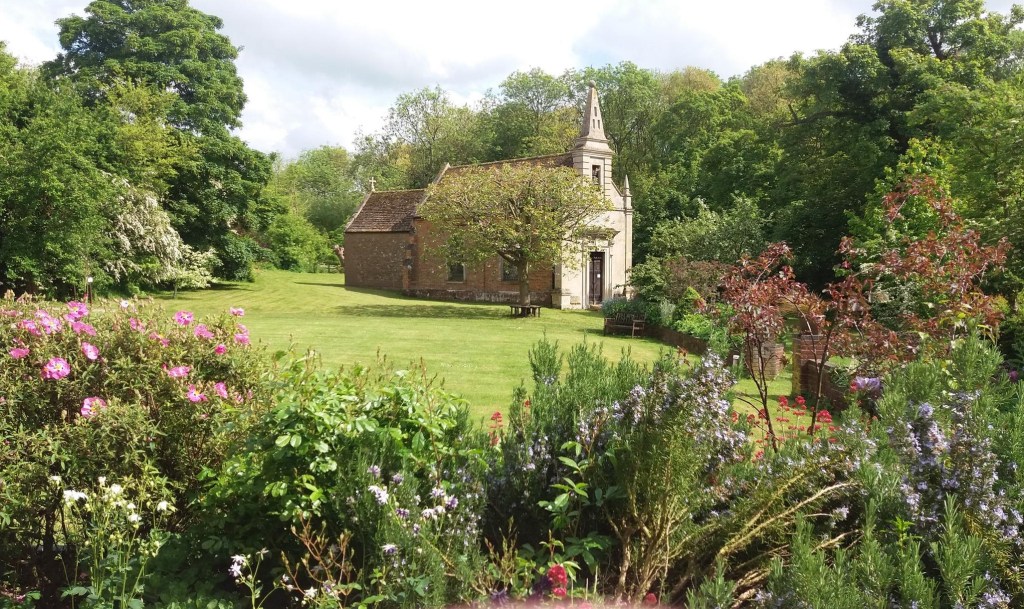
Little Gidding Church. Photo Mr.G.

You are here to kneel
Where prayer has been valid

These often quoted words about Prayer come from a poem by T. S. Eliot in a sequence known as the
Four Quartets.The poem is called Little Gidding  and it takes its name from a hamlet of that name in Cambridgeshire just north of Huntingdon.
It was here in 1625 that Nicholas Ferrar founded a community to live a life of prayer.The Church of England commemorates him this weekend (December 4th)

The community consisted mainly of his family who had lived in London as merchants with mixed success and fortunes. In 1625, an outbreak of the Plague led them to leave the city and move to Little Gidding.
But it wasn’t simply to escape the plague nor to escape bankruptcy.One reason they l;eft London was for the sake of Nicholas’s health.
The family were particularly drawn to a closer  walk with God and along with friends, sought a deeper life with God which was found by devoting themselves to worship and to prayer.
In the words of Isaiah they were waiting on God in order to receive salvation.

Waiting on God is at the heart of the Advent Call to all of us. We are called to be still and  seek to know Him as we prepare again to welcome the Christ Child into our hearts and minds and lives more fully – the surest sign we have of God’s Love for us.

The Ferrar family together with companions numbering about 40 set about creating, at Little Gidding, a Lay Community devoted to this waiting and watching for God and learning to be held and loved  by him.

When they arrived there, they found the church in a sorry state and their first task was to clean and repair the building, to make it fit for the worship of Almighty God.
Together, they then consecrated it with prayer.

This prayer was based on the 1552 Book of Common Prayer, known as the Prayer  Book of Edward the 6th. This had been compiled by Archbishop Cranmer.
From it the community prayed Morning and Evening Prayer together with reciting the Psalms. They also maintained ceaseless intercession.
They also set up a school for local children who, having learned the Psalms came on Sundays to recite those they had learned in church.
This was not quite a display of deep devotion it seems. For each recitation the children received a penny. Today we often ponder how we might grow our congregations.
Well, they always say the old ways are the best ways. Perhaps it’s time to re-introduce the Little Gidding Penny Service!

Nicholas Ferrar was made a Deacon by Bishop Laud but he had no desire or sense of call to be a priest.Those duties were performed by the Vicar of Great Gidding who, once a month came to preach a sermon and celebrate Holy Communion with the community.
He regularly led a round of devotions and taught people how to recite the Gospels.The community flourished in love and zeal, in holiness and kindness to all.

Nicholas died on the day after Advent Sunday 1637, at 1am in the morning, the usual time he rose to pray. He was buried at Little Gidding.
The Community continued for a time but it was in the midst of the political upheaval of the Civil War and whilst King Charles sought refuge at Little Gidding, it became an unsafe place for the Monarch.
The Puritans prevailed in the struggle and amidst sweeping changes in the practice of Anglicanism they eventually broke up a community that they feared was too demonstrative of faith. Yet another example of fear leading people to act irrationally and cruelly.

The Little Gidding community became a memory  but what they did achieve was the consecration of lives making God more accessible and, by their prayers they  made Little Gidding, Holy Ground.
If you visit it today you will sense immediately that this is indeed, as Eliot put it in his poem, a place where prayer has been valid. A place, in fact which touches hearts and raises joyful faith in the lives of the visitors.In simple quietness the little church stands as it has gone on standing as a beacon of prayer.
You cannot fail to sense that this is one of those thin places  as Celtic Christianity liked to call them, where the divide between heaven and earth is paper thin. It is easy to sense God’s presence and to reach out and be touched by him.

One of my criteria for whether a Church is worth joining is whether God can be found there easily. Is it, in other words, showing signs of being a thin place. It was easy to say yes to that at Little Gidding,
There is a stillness and holiness and tranquility which enfolds those who visit.
Over centuries it has borne witness to the love of God meeting the halting love of the human heart which reaches towards the Divine and is held.
Thin  Places are also places with corners to weep in, where filled with whatever need, you can be enfolded in the arms of God.

Thin Places are also places of intersection where, as Mother Mary Clare of the Sisters of the Love of God, put it, you can stand at that intersection where human pain, hurt and conflict meet and are held by the transforming love of God.
They are places of Transfiguration as well as spiritual affirmation.

Holy Places are also therefore,  places of real struggle because in seeking God we seek a reality which is not always peaceful but frequently  demanding.
We are called to walk with God in darkness as well as light; in pain as well as quiet joy; in struggle to make good in a world which constantly seeks to drag us down.

Living out our faith means we are to love and to care; to forgive and to seek forgiveness; to make peace and be made peaceful, and all those things we have to go through  if we are to understand the costly love God pours upon us; a love which though present since God created the world, comes, in Bethlehem, with a blaze of angelic light and a display of sheer glory – even if only a few saw it.

Advent today is not seen by many in its true meaning, but even in the lights and decorations and heightened expectations there is always a glimmer of the true Joy of Christmas.

None of it is bad. It just isn’t as good as it should or could be if focused in the right place.

Which is why we can draw inspiration from Nicholas Ferrar and those who kept God at the heart of things and for whom God in Jesus taught them the one thing we need to keep remembering.
To bring the Holiness of God before people and to light up lives with hope and kindness, love and mercy , there is a cost.

In the poem Little Gidding, T S Eliot coins a phrase,

  • Costing not less than everything,

This is a reminder that people like Nicholas Ferrar in places like Little Gidding, or us in our holy places understand that cost to be  everything.  Nothing is held back and Advent is when once again we take the spiritual pilgrimage through Bethlehem to Calvary.

This reminds us that the cost has already been paid – by God in Jesus Christ!

[Mr G]