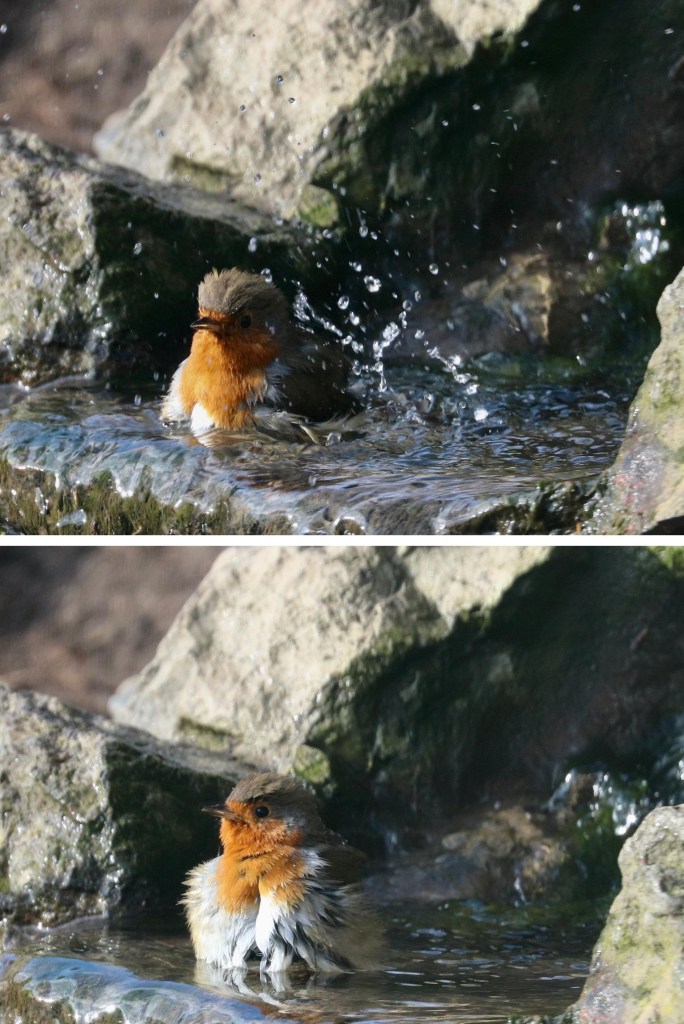
Photos by The Revd Lynn Hurry taken in thevicarage garden at St. Mary-at-Latton
These photos were taken by my friend Lynn when this baby Robin appeared in the Vicarage garden. Quickly availing itself of the facilities, there is something quite natural and carefree about the scene. Absolutely joyful!
Nature and the natural world have a way of showing us that God’s creation is something to be enjoyed and cherished.
If the Covid-19 pandemic has taught us anything it is about our own vulnerability and the fragility of our control over the earth. If we saw ourselves as stewards and guardians of our planet we would perhaps understand better that the Earth and all that is in it as pure ‘gift’. Maybe if we did our relationship with our world would be very different and much healthier.
The Earth Prayer
O GOD, we thank you for this earth, our home; for the wide sky and the blessed sun, for the ocean and streams, for the towering hills and the whispering wind, for the trees and green grass.
We thank you for our senses by which we hear the songs of birds, and see the splendour of fields of golden wheat, and taste autumn’s fruit, and rejoice in the feel of snow, and smell the breath of spring flowers.
GRANT US a heart opened wide to all this beauty; and save us from being so blind that we pass unseeing when even the common thorn bush is aflame with your glory.
This photograph was sent to me by my friend Lynn. We are not sure of the origin.
It is an unusual view of an earwig They may look dull—until they open theirwings, shimmering structures that expand 10-fold and lock without the use of muscles. Earwigs are usually reluctant to fly. Unlike most insects, a female earwig is a good mother. She lays 30-50 eggs and protects them through the winter. When they hatch, she feeds and tends the nymphs until they are able to fend for themselves. Despite their name, earwigs are unlikely to venture into a human ear!
Beauty Within
I do not just open myself to anyone.
I am cautious, even afraid that you may judge me
without knowing me.
That’s often the way in the human world too.
Yet, if we but have the patience to sit and go deep,
we meet people clothed in all their rich diversity.
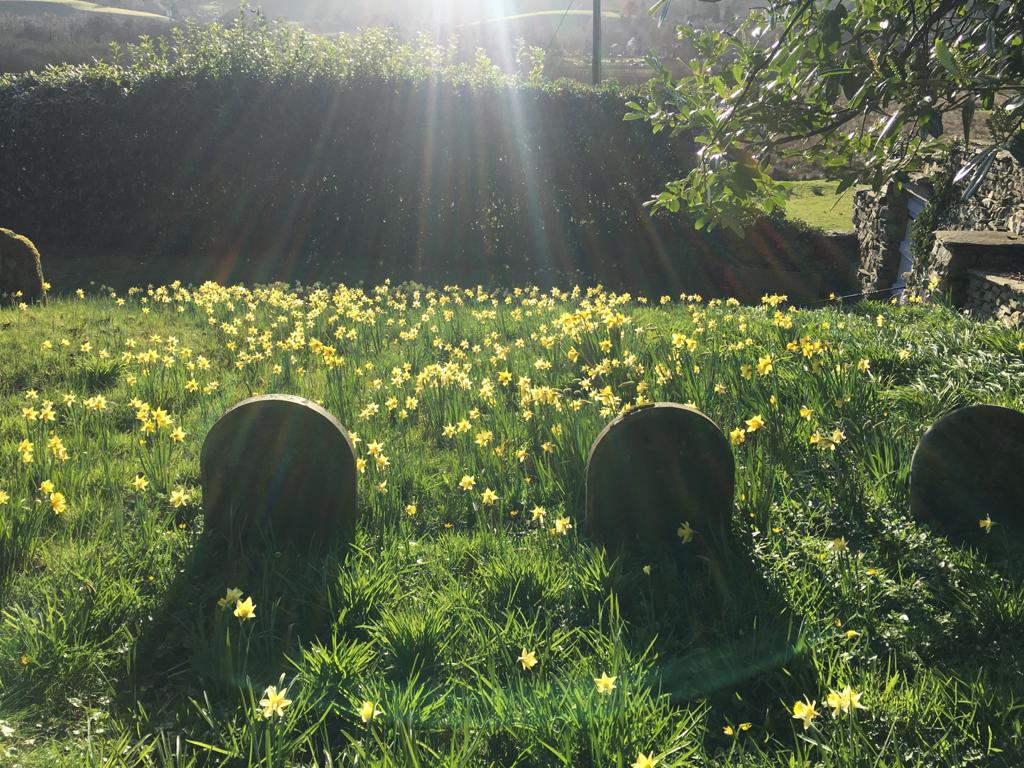
The photograph is another taken by my friend Gill Henwood. The rays of the sun bathing the daffodils and the graves in Colthouse Quaker Burial Ground, Cumbria, speaking to us of God’s hope, love and compassion in these dark daysof personal and community sadness.
NATIONAL DAY OF REFLECTION
Today, March 23rd, we in the United KIngdom are holding a National Day of Reflection, March 23rd 2021—a year since the first Lockdown in the fight against Covid 19. This is a day to acknowledge grief and loss over the last year. It will be led by His Royal Highness, Charles, Prince of Wales. His Royal Highness said: “Whatever our faith or philosophy may be, let us take a moment together to remember those who have been lost, to give thanks for their lives, and to acknowledge the inexpressible pain of parting.
There is a call for all to take part in a minute of silence at 12 Noon, in gratitude for the devotion, kindness and care of NHS Staff and all other care workers and as a time for those who have lost loved ones , especially to COVID 19, to reflect, remember and grieve, whilst seeking the hope amidst the darkness. A hope which Christians and members of other faiths find rooted in God. It is a day which is close to Holy Week when Christians follow a yearly holy pilgrmage with Jesus to Calvary. We believe and proclaim that, in God the Father transformed earthly darkness into light; pain into joy; suffering and death into new life and He triumphed over all that is not love by God’s sacrificial, self-giving love in His Son Jesus from the Cross.
Against this background, we reflect on all that has happened since March 23rd last year whilst looking forward with renewed hope and trust to the time ahead. It is also a time when say thank you to all who gave their all in the care of others. It is also a time when we express sorrow for what as a nation and personally we didn’t do right but with a repentance that with the guidance of a greater power than frail humanity, we can get it better in the future. We dare to say, to God be the glory!
My friend, Michael Manley, Canon Missioner at Carlisle Cathedral, has written a beautiful and poignant hymn prayer which has both a personal and public context. It is a prayer which expresses both grief and hopefulness. It is deeply moving but each will make of it what they can and must. It will be sung for the first time at a Reflection Evensong in Carlisle Cathedral at 5.45pm on the 23rd and it can be accessed on Face Book – https://www.facebook.com/CarlisleCathedral/
MOURNER’S HOPE
We give them back to you O Lord Those whom we loved – but could not hold. We dare to trust they weren’t alone For all are yours and all are known. Through nursing care, we understand You sat beside them, held their hand.
We thank you for the angels there who day and night fulfilled our prayer: to hear their sighs in whispered breath and speak your peace to ease their death. We leave them in your warm embrace Now raised to life within your grace.
We could not mourn as others may Nor offer all we hoped to say. We could not gather all as one To toast their name or sing their song. Yet at your table now they dine And with us join in bread and wine. Lord help us on our lonely road to voice the grief and share our load. You know the pain the fear the loss: You held our wounds upon your cross. Then rose, still scarred, to life reborn, In us, let hope, new purpose dawn.
We give them back to you and trust Your love that gave them each to us. You did not lose them when they came Nor we, in letting go again. Help us to see we’re all but one that death’s defeated, love has won.
Creator, Spirit, Word made flesh In you is life, and all is blest. Receive our prayer and bring us home By love transformed, your image own, With all your saints who’ve gone before To worship you for evermore.
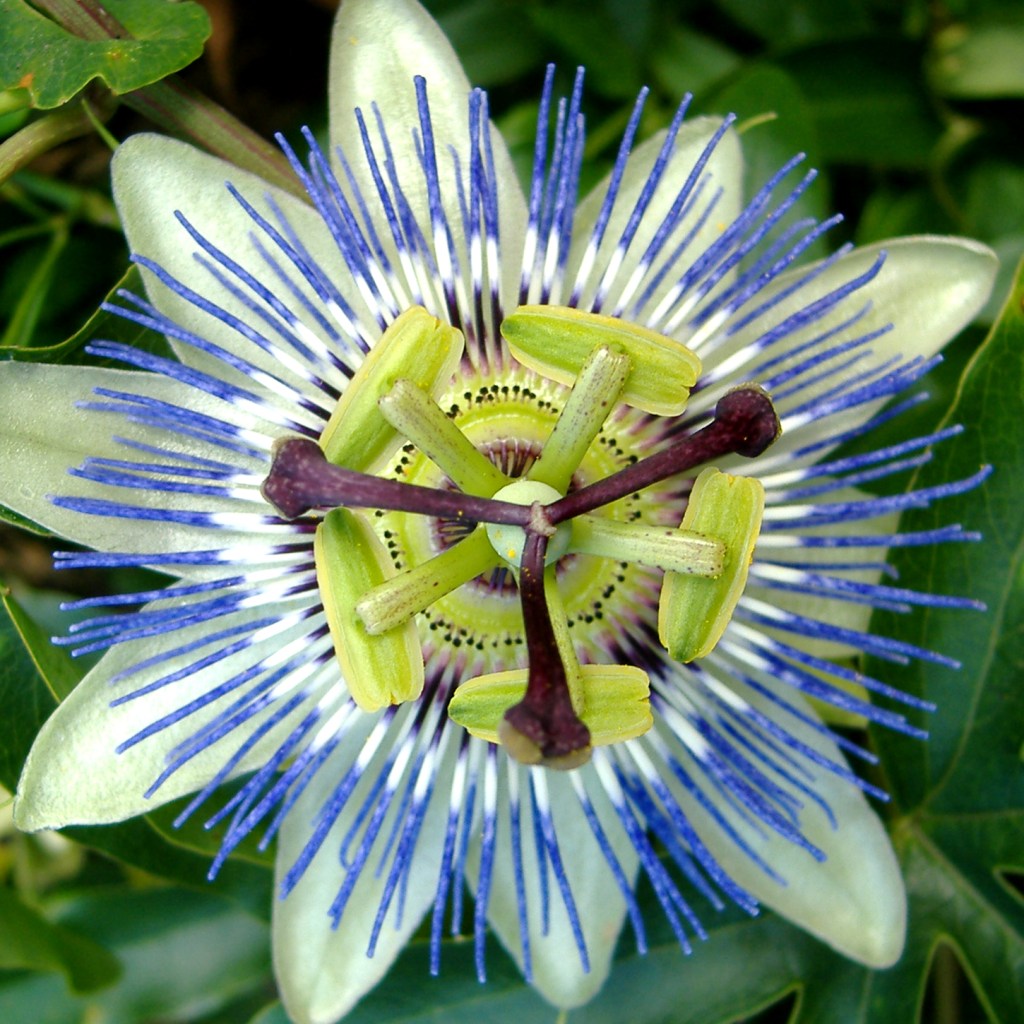
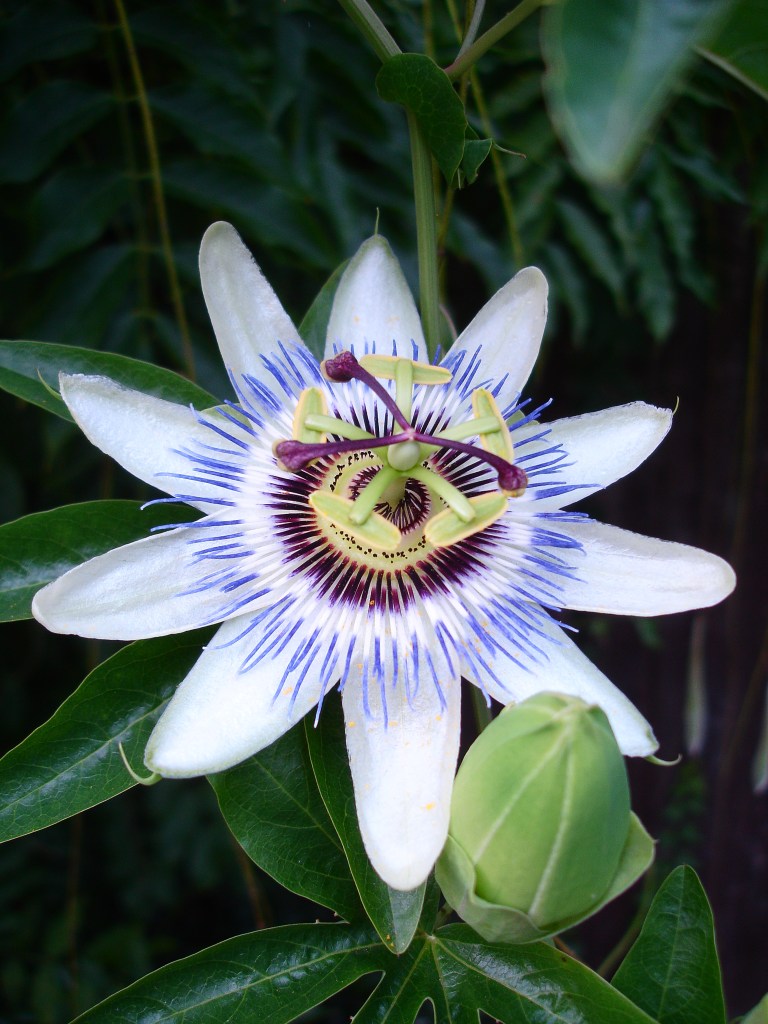
Photo of a Passion Flower, taken by Piers Northam in the Chiltern Hills.
A FLOWER OF THE SEASON
The Passion Flower
Yesterday the church began Passiontide which is the week leading up to Holy Week, the second half of Passiontide. One of the signs of this season is a beautiful flower known as the Passion Flower.
Tradition has it that when Christian missionaries arrived in South America in the 16th century they found a flower which symbolised the death of Christ. They named it la flor de las cinco llagas— the flower of the five wounds. Later it came to be known as the Passion Flower.
A lot of symbolism was read into its design.
The five petals and five sepals spoke to the missionaries of the five wounds of Christ. Taken together, they represent the ten disciples who did not deny Christ (excluding Judas and Peter); the Radial filaments of the flower, known as the corona, represent the Crown of Thorns. The three stigmas at the centre of the flower symbolise the nails used in the crucifixion. The spiraled tendrils curling from the flower are symbols of the whip used to scourge Christ.
The fragrance of the flower helped to recall the spices used to embalm the body of Christ. Finally, the globular egg-size fruit of the plant was seen as a symbol of the world that Christ came to save through his suffering.
Using this plant, which grows wild in South America, the missionaries were able to teach the natives about Christ’s Passion in much the same way as St .Patrick taught the Irish about God by using the shamrock.