Author: mrgsponderings

Manger and Cross

The Ballad of the Cross
Theodosia Garrison

My friend Jonathan sent me a present of a poem as an Epiphany gift.
It is named The Ballad of the Cross and is by Theodosia Garrison.

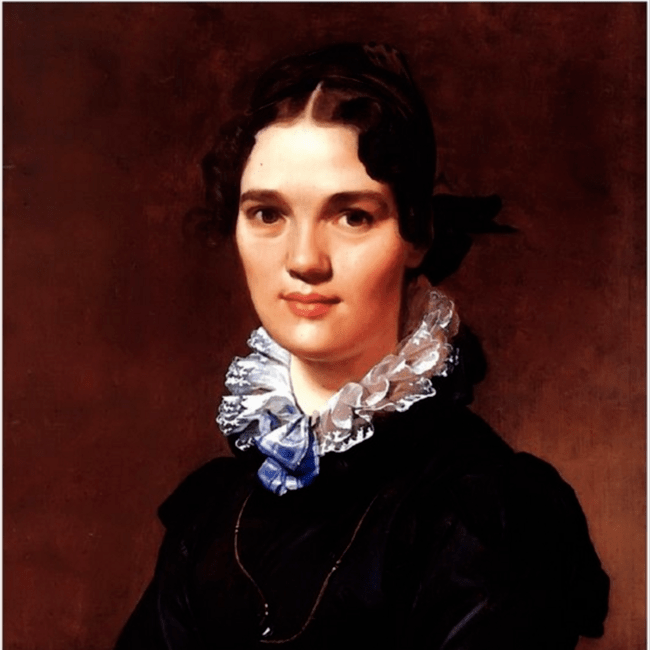
Though she wrote quite a number of poems and a few sacred songs, not a great deal is known about her.
She was born in Newark, New Jersey in 1874 and she married Frederic Faulks but continued to write under her maiden name.
She was on the staff of Life Magazine, resided in New Jersey and was a friend of the American poet, Ella Wheeler Wilcox. She died in 1944.
There are hints about her in a number of places but, apart from her published poetry being still in print, not a great deal more.

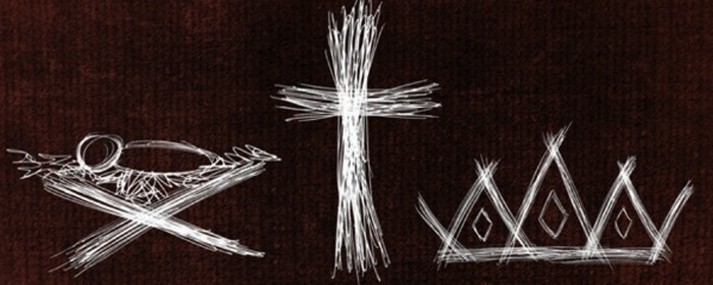
The poem Jonathan sent me is connected with today’s feast of Epiphany though it is called the Ballad of the Cross. The reason for this becomes evident at the end but, as a spoiler, it makes the connection between with the Crib/Manger of Christ and the Cross of Christ (hence the title). It reminds us that God’s work of Incarnation reaches its fulfilment in the Easter of Christ – his death and resurrection.

Here’s the poem.

Melchior, Gaspar, Balthazar,
Great gifts they bore and meet;
White linen for His body fair
And purple for His feet;
And golden things—the joy of kings—
And myrrh to breathe Him sweet.

It was the shepherd Terish spake,
Oh, poor the gift I bring—
A little cross of broken twigs,
A hind’s gift to a king—
Yet, haply, He may smile to see
And know my offering.

And it was Mary held her Son
Full softly to her breast,
Great gifts and sweet are at Thy feet
And wonders king-possessed;
O little Son, take Thou the one
That pleasures Thee the best.

It was the Christ-Child in her arms
Who turned from gaud and gold,
Who turned from wondrous gifts and great,
From purple woof and fold,
And to His breast the cross He pressed
That scarce His hands could hold.

’Twas king and shepherd went their way—
Great wonder tore their bliss;
’Twas Mary clasped her little Son
Close, close to feel her kiss,
And in His hold the cross lay cold
~Between her heart and His!

Comment on the text

The reference at the beginning of verse 2 to the Shepherd Terish,  may be simply a reference to the earlier visit of the Shepherds to the manger The origin of the name may be Persian, which could link it with the Magi who are believed to have come from the East – as in the carol, Three Kings from Persian lands afar. This is my conjecture. There are no notes  from Theodosia to help.

The second  is about the word ‘gaud’ (gaudy) in verse 4. It means something like a ‘trinket’ or ornament. Maybe jewels which would link into the ‘wondrous’  gifts of the Magi. This is followed by an obscure reference to ‘Purple Woof and fold. This is her second reference to  the colour ‘purple’. (see verse one,line four)
Purple in biblical times and also in the days of the Roman and Byzantine Empires is the colour of Kingship, and Royalty. As a mixture of red and blue, it is an expensive dye and therefore rare.  In the beginning of the poem it is one of the ‘great gifts’ from the Magi,‘and purple at his feet’.
This is the garment signifying  both king and  God. It is also linked with the theme of the poem because after his trial, Jesus was mocked by being dressed in a purple (kingly) robe. It is translated ‘scarlet’ in many Bibles but in the Greek it could be translated ‘purple.’ The important thing here is about the Kingly association between the babe of Bethlehem and his subsequent Crucifixion.

The word ‘woof’ and its link with ‘fold’ are connected with cloth. Woof here is the same as ‘weft’ – threads in a garment running crosswise as the warp runs lengthwise.
What Theodosia is saying is that though these costly gifts and fine garments are for a King and a God, the baby Jesus, turning away from them, indicates a very different destiny and throne.
The gift of twigs given by the Shepherd, became the Cross Jesus held in his tiny hand and pressed to him. This simple, inexpensive gift reminds of the carol,In the bleak Midwinter; ‘What can I give him, poor as I am’. The Shepherd’s gift is returned to us by Jesus as the true gift God gives to us. For now, as the Magi and the shepherd leave, the cross ‘lay cold’ until its time.

The Wood of the Manger and of the Cross are brought together as instruments of our salvation.

[Mr G]
Theodosia Garrison

Are we nearly there!

It’s almost the feast of the Epiphany when we commemorate the visit of the Magi (Wise men) to the infant Jesus.
Here’s a meditation on behalf of the camels, by my friend Joyce Smith, who died lasy year.

Like the donkey,
we camels are often
left out of the story;
it gives us the hump
!

The journey
was long and exhausting,
but when we glimpsed
the walls of Jerusalem,
we thought we had arrived.
A king would surely
be born in the palace,
and we could rest in
lovely comfortable stables!

But Herod was even
grumpier than we were
when our masters told him
we were seeking
a newborn king
The priests and scribes
searched their sacred books
and found that
Bethlehem was what had
been foretold by the prophets.

And so we carried on,
guided by the star;
determined not to let
Herod’s scheming
thwart our purpose.

The road ahead might be hard,
but we would keep
carrying our masters
until we found
the newborn king.

(Joyce Smith)

Amazing Grace

Amazing Grace.

Yesterday’s Observer newspaper (January 1st) reported on a new orchestral piece which celebrates the hymn Amazing Grace.
The Hymn by former slave trader, John Newton, was heard first of all during a service in Olney Church, Buckinghamshire on New Year’s Day, 1873, 250 years ago. It’s author, John Newton, included it in a sermon he preached that day.
It was to become an anthem of the Civil Rights movement and of those working for social justice, equality and black people, including former President Barak Obama. It is also a firm favourite of many Christians.

When John Newton wrote it, it was initially a prayer of penitence by a former slave trader who expressed gratitude to God for turning him away from the evil he had participated in and led him to embrace a very different life.
In the hymn, Newton recognised the power of God’s grace – the very essence of His love – to claim a soul of His own making but who had gone astray.

John Newton was born in 1725 in Wapping, London. Both parents influenced the course of his life; his father was a master mariner, whilst his mother, who died when he was six, introduced him to dissenting Christianity.
He became a sailor in his early teens and became involved in the lucrative and profitable slave trade. He was part of the ignominious chapter in history when millions of Africans were kidnapped and shipped in the most appalling conditions to the New World colonies of the North and South Americas

The story of Amazing Grace  began on one such slave transportation. Newton’s ship was overcome by a terrifying storm which raged and threatened the lives of the sailors (not to mention the slaves).
As so often, when in grave danger, there was a turn to prayer. The storm abated and Newton was saved. But he was saved in a deeper and more significant way and shortly after he gave up the sea for a shore job in Liverpool. It was then that he sensed the action of grace claiming him. He found God pulling at his heart springs.
From this he began to study for the ministry of the Church and eventually he was ordained. He became curate of Olney in Buckinghamshire. There he wrote the hymn Amazing Grace as he reflected on his former life and on his miraculous salvation. He came to a deep realisation that only by God’s grace are we truly saved.
What happened to Newton was that he was touched by God’s love – and as with so many in the Christian story, to use the words of John Wesley, his heart was warmed.
Together with another hymn-writer, William Cowper, he wrote and compiled the Olney Hymns  which became an influential evangelistic tool in the work of claiming souls for God.

Newton remained Minister at Olney until 1780. He then became rector of St Mary Woolnoth, London.
His powerful preaching and growing reputation drew large congregations.
Here too, his journey of faith brought him into contact with William Wilberforce who in 1785 came to him for advice.  Wilberforce was going through a crisis of faith and Newton urged him to use his political skills and opportunities to do God’s work. Taking this advice, Wilberforce began the long and challenging campaign for the abolition of slavery.
In 1788, Newton wrote a pamphlet, Thoughts upon the African Slave Trade, which revealed his own past as a slave trader and condemned the trade, expressing his own repentance for his part in it.
As the campaign for abolition gathered momentum, Newton became more active in it. He worked with Wilberforce in his Parliamentary struggle against those who saw abolition as a threat to the economy and who had no care for the abhorrent conditions in which the slaves were transported.
Before a parliamentary select committee Newton argued that money gained from slave trading was blood money.

Newton’s part in the abolition of slavery Act is sometimes underestimated but without his encouragement of William Wilberforce it might never have happened. The long journey towards today’s Black Lives Matter Movement might have never begun.
Newton died in 1807, shortly after the Abolition Act passed into law. He was buried first in the crypt of St Mary Woolnoth but later disruption in the building of the London Underground led to his body being reinterred in Olney.
He is remembered by a plaque at St Mary Woolnoth which records something of his journey of grace.

It reads:

John Newton, Clerk. Once an infidel and libertine, a servant of slaves in Africa, was, by the rich mercy of our Lord and Saviour, Jesus Christ, preserved, restored and pardoned and appointed to preach the faith He had long laboured to destroy.

Amazing Grace had worked a mighty work in him and the hymn is his true legacy. It has brought knowledge of God’s action of love and salvation to many. It is both a comfort and an assurance that God’s care and a source of hope.
Rommi Smith, the poet who is writing the libretto for music composed by Roderick Williams, which draws inspiration from the hymn and celebrates it says this:

“Those who look to their faith for redemption saw hope in Newton’s later life, when he gave testimony against slavery in London and became friendly with the abolitionist William Wilberforce …
For so many people the song seems to represent both comfort and hope at uncertain moments. “It is a song that holds you steadfast,” concluded Smith. “It is passionate and reassuring at the same time. And we all need reassurance and an answer to the question, ‘Am I on the right path? “

Newton, himself wrote his own epitaph when he said:

“I am not what I ought to be, I am not what I want to be, I am not what I hope to be in another world; but still I am not what I once used to be, and by the grace of God I am what I am”

[Mr G]

Amazing grace! how sweet the sound
that saved a wretch like me
I once was lost, but now am found
was blind, but now I see.

’Twas grace that taught my heart to fear,
and grace my fears relieved
how precious did that grace appear
the hour I first believed!

Through many dangers, toils and snares
I have already come
’tis grace that brought me safe thus far
and grace will lead me home.

The Lord has promised good to me
his word my hope secures
he will my shield and portion be
as long as life endures.

Yes, when this heart and flesh shall fail
and mortal life shall cease
I shall possess within the veil
a life of joy and peace.

When we’ve been there a thousand years
bright shining as the sun
we’ve no less days to sing God’s praise
than when we first begun.

(John Newton 1725-1807)

A New Year Dawns

Words and photo by my friend Joyce Smith who died earlier this year.

As a New Year dawns,
we look forward
with hope and expectancy.

We ask God
to watch over us,
and pray for
God’s wisdom and strength;
for peace on earth;

FOR SHALOM.!

Joyce Smith.

A New Year Prayer

Be Our Light for the New Year

Come, Holy Spirit,
Spirit of the Risen Christ, be with us today and always.
Be our Light, our Guide, and our Comforter.
Be our Strength, our Courage, and our Sanctifier.
May this new year be a time of deep spiritual growth for us,
A time of welcoming your graces and gifts,
A time for forgiving freely and unconditionally,
A time for growing in virtue and goodness.
Come, Holy Spirit,
Be with us today and always.

– Author Unknown