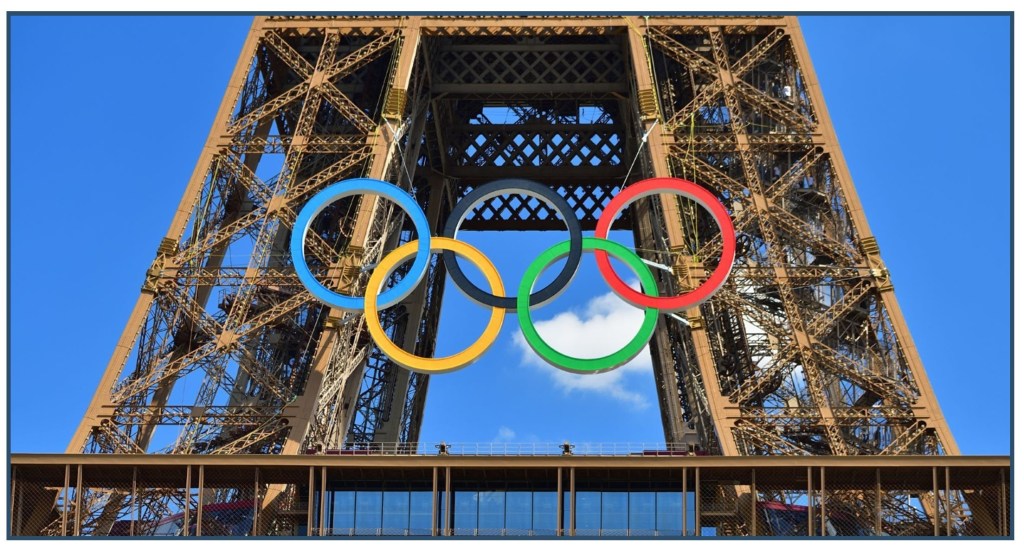
The Paris Olympics – a longing, a prayer and a blessing from Pope Francis.
“Sport is a universal language that transcends frontiers, languages, races, nationalities and religions; it has the capacity to unite people, to encourage dialogue and mutual acceptance; it stimulates the surpassing of oneself, forms the spirit of sacrifice, fosters loyalty in interpersonal relations; it invites people to recognize their own limits and the value of others. The Olympic Games, if they remain truly “games”, can therefore be an exceptional meeting place between peoples, even the most hostile. The five interlinked rings represent the spirit of fraternity that should characterize the Olympic event and sporting competition in general.
I therefore hope that the Paris Olympics will be an unmissable opportunity for all those who come from around the world to discover and appreciate each other, to break down prejudices, to foster esteem where there is contempt and mistrust, and friendship where there is hatred. The Olympic Games are, by their very nature, about peace, not war.
It was in this spirit that Antiquity wisely instituted a truce during the Games, and that modern times regularly attempt to revive this happy tradition. In these troubled times, when world peace is under serious threat, it is my fervent wish that everyone will take this truce to heart, in the hope of resolving conflicts and restoring harmony. May God have mercy on us! May He enlighten the consciences of those in power to the grave responsibilities incumbent upon them, may He grant the peacemakers success in their endeavours, and may He bless them.”
“I ask the Lord to bestow His gifts upon all those who will participate in any way – whether athletes or spectators – and also to support and bless those who will host them, especially the faithful of Paris and elsewhere.”
Pope Francis
Sun rising
This hymn, sung at a service of preparation for the games at The Anglican Church, Trinity Church, Maisons-Laffitte , near Paris. last Sunday expresses the hope of Pope Francis. It is a prayer which we can use to feed our own hopes and longings about what the Games may achieve
In Christ there is no East or West, In Him no South or North; But one great fellowship of love Throughout the whole wide earth.
In Him shall true hearts everywhere Their high communion find; His service is the golden cord Close binding humankind.
Join hands then,people of the faith, Whate’er your race may be; Who serves my Father as his child Is surely kin to me.
In Christ now meet both East and West, In Him meet South and North: All Christlike souls are one in Him Throughout the whole wide earth.
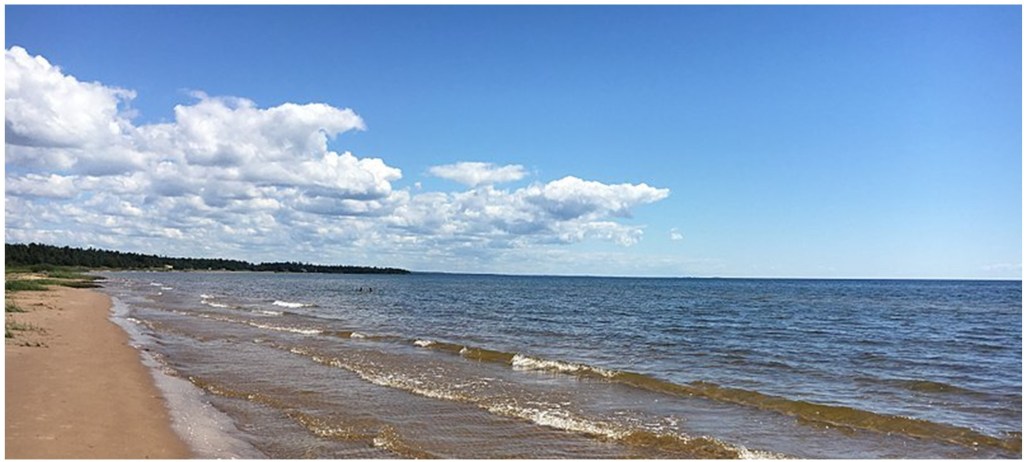
I look along the shoreline. My eyes travel that uncertain, ever-changing border, dividing land and sea. The waves lap and caress the sand, though, sometimes the sea pounds ferociously, as if angry; always powerful.
People are strolling, some with dogs; others are skimming carefully chosen stones, bouncing on the waves. There are others running, racing against the elements, seeking fitness and health, or just enjoying the sense of motion.
Clusters of rocks gather pools of water, becoming safe havens for sea-creatures hiding from the tide. Birds dip and soar, calling to each other greetings with elegant wings.
My eyes travel towards a hub of activity further along. Fishermen struggling to spread out nets in need of mending. Hardworking men, intent, purposeful, together. They are who I seek.
I need them to be with me I bring love and God to the marginalized people shunned and pushed to the edge. I have come to show them where God’s Kingdom laps and teems with new hope; new life for them. The fishermen will help.
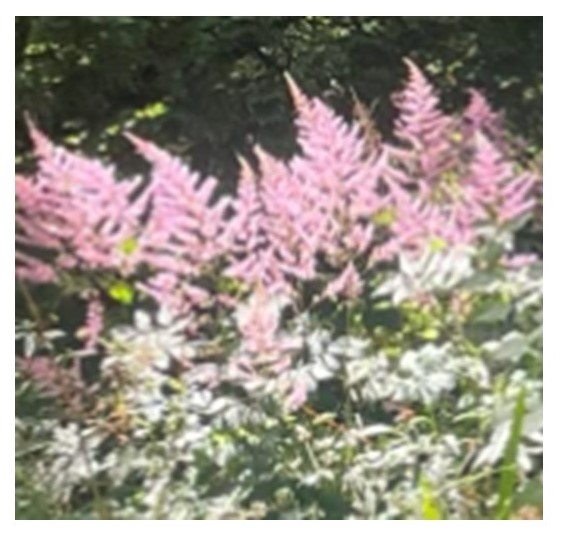
Reaching for light, Woodland Astilbes photographed by Gill Henwood
Reaching for Light Gill’s Pondering July 17th 2024
Responding to your post, love not hate, (daily posting 15th July), in the shady dark spinney, a group of astilbes are reaching for light from a sea of nettles, brambles, large ferns – all overpowering strong competitors. The sunlight on the pink flower plumes brings joy into a dark corner.
In this little bit of wood, we are working towards a balance of ‘weeds’ aka wild flowers, and plants, with strong enough introductions to try to thrive. So far it’s willow whips growing into shrubs we will coppice or pollard, Angelica archangelica which may seed there (flowering for the first time), shuttlecock ferns. There are celandines in spring and enchanters nightshade going to seed now, both impossible to eradicate. So we’ve added bluebells in a drier slope (flowering from seed this spring, seven years after sowing). Wood sorrel is welcome and is spreading.
One willow variety has black catkins with red stamens – all descendants from a couple of twigs used in a flower arrangement at St James’s Whitechapel long ago, either at a flower festival or patronal – the twigs have rooted in Lancashire (two gardens) and now Cumbria. A companion with happy memories of times shared, people who arranged the flowers, wonderful Petertide and patronal liturgies and other significant occasions.
Happy memories of love shared, through the light shining into the shady spinney – as complex an environment as our lives, communities and nations. Love never ends/fails (1 Cor 13)!
[Gill Henwood]
Lord of all life, you created the universe, where all living things reflect your glory. You give us this great and beautiful earth, to discover and to cherish. You give us sun and moon and star-lit sky, everything that gives us light, light for our eyes, our hearts, our minds.
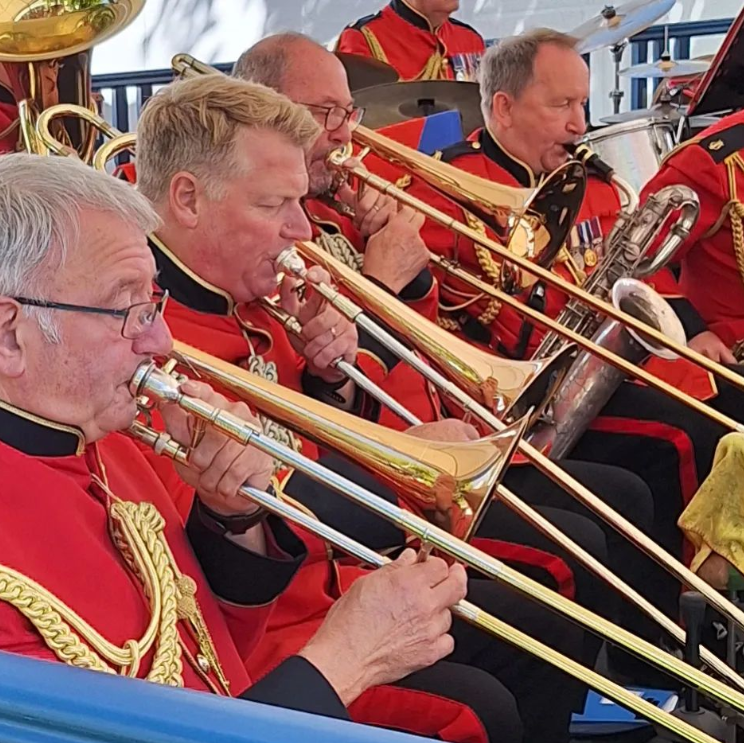
Brass Band playing at Henley Royal Regatta 2024. Photo by Mr.G
This week has been Brass Band Week, a new annual event launched by Brass Bands England to raise awareness of our nation’s brass bands and everything they have to offer. Here is something of my own experience.
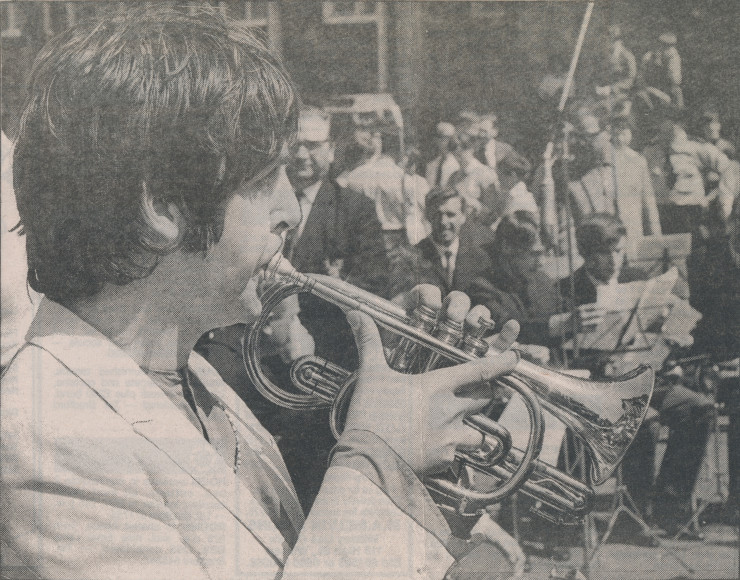
One of my abiding memories is of a three week ‘work experience’ I had at the Black Dyke Mills, home of the world famous band. My aunt lived in Queensbury between Halifax and Bradford, where the mill was situated. I’m vague as to how it came about but she arranged the work experience for me but I remember enjoying working there, without pay! I was however given my reward when on the final Friday afternoon, I was taken to the ‘Band Room’, a vast space which was full of trophies and other memorabilia amassed by the famous band with its distinct sound that I can still instantly recognize today.
It wasn’t my first association with Brass Bands. In the North West of England there was a custom of ‘Whit Walks’. Usually on Whit Sunday (now known as Pentecost). Churches held processions round the streets of each parish, not just Anglicans but Methodists too. In my town, Roman Catholics walked on the following Friday (whit Friday). The big features of the Processions were the huge, embroidered Banners which identified the Churches and were adorned with Christian symbols; and the Brass Band which was hired to lead the Processions.
Saddleworth on the Lancashire and Yorkshire border is an area of 11 villages. Each Whit Friday they hold a Band Contest. Each of the villages host the competition and brass bands march and play in each one. The band judged to be the best receives a monetary prize and the prestige of taking part. There is also an overall prize. Earlier this year 117 bands took part as coaches raced them between the villages. The overall winner this year was the famous Brighouse and Rastrick Band. It is one of the top bands in the UK. Their version of the Floral Dance,’ reached the dizzy heights of the Top of the Pops chart in 1976. It was the Saddleworth Festival which brought to fame another tune – ‘Hail, Shining Morn’ – which complete with vocals, was composed by Reginald Spofforth in 1810. It has become a signature tune for the Saddleworth Festival as well as a Festival at Selkirk commemorating the Battle against the English at Flodden in 1513! It is labelled as a ‘glee’ song which is derived from the Old English, ‘gléo’ – music or entertainment.
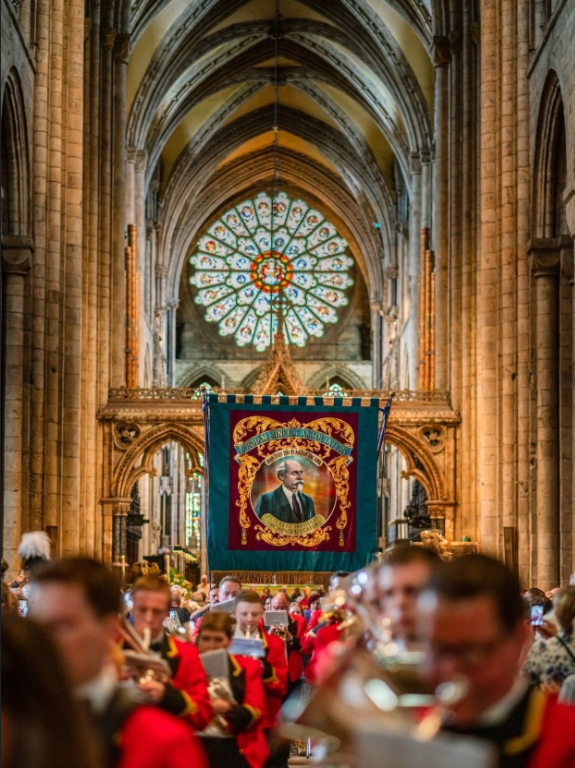
Many Brass Bands are associated with mining and manufacturing, such as the Foden Motor Works Band, and bands associated with Collieries and coal mining. The bands are proud offsprings of the mining industry and with huge secular versions of the Whitsuntide Religious banners, they marched and brought music which raised the spirits of people often living in harsh and deprived communities. Their biggest gathering has always been the Durham Miners Gala, held annually, in the City of Durham which was the spiritual centre of the County Durham mining villages and communities. Whilst the Gala is often seen as a political occasion with huge rallies; for the Durham miners it is the spiritual march behind the Bands and Banners of the various collieries, up the hill to Palace Green and the Cathedral that is the central part of their day.
One of the most moving experiences I’ve had was to be in the Cathedral as the West Doors were flung open and the band marched up the aisle, followed by many miners, to be blessed by and give praise to God. This was at a time when mining was facing a great struggle with the Government to simply exist. As the mines closed in County Durham and throughout the country, it was vulnerability and poverty which seemed to take over people’s lives but there was pride and tenacity mixed with dignity that ruled the day. Poor materially, these communities were rich in spirit (and still are). On one level the miners were defeated in a struggle which was the result of a battle between the Prime Minister, Mrs Thatcher and Arthur Scargill, the Miners Union leader, but the marching band and the proud carrying of the banners, to be blessed by ‘their’ bishop, showed a people who stood tall and with deep integrity enfolded in God’s protective and loving arms.
Both that procession and those of my Sunday School days were acts of witnesses both to faith and a knowledge of God’s care and love.
Brass Bands play a huge part in the lives of communities in almost every Nation.In Britain many village and church fêtes rely on them to bring excitement and pleasure and they are a feature of events such as the Henley Royal Regatta, where I was last week and where I took the photo above. Many towns have their own bands which from New Year to Christmas enhance community gatherings. Nor must we forget our Military Bands, but that’s another story!
What is at the heart of Brass Bands is that they are so distinctive. It is not just their stories stretching back into history but the way they encourage young people to learn instruments and to make music. The music that they play stretches from stirring, uplifting marches to quiet reflective pieces which are more contemplative. Such music raises my spirit, produces goose-pimples on my skin and exercise for my feet as I tap along to the sound. Most of all, it gladdens my heart.
Black Dyke Mills Trumpeter from archives
Make a joyful noise to the Lord, all the earth; break forth into joyous song and sing praises. Sing praises to the Lord with the lyre, with the lyre and the sound of melody. With trumpets and the sound of the horn make a joyful noise before the King, the Lord.


 Mr G's Ponderings