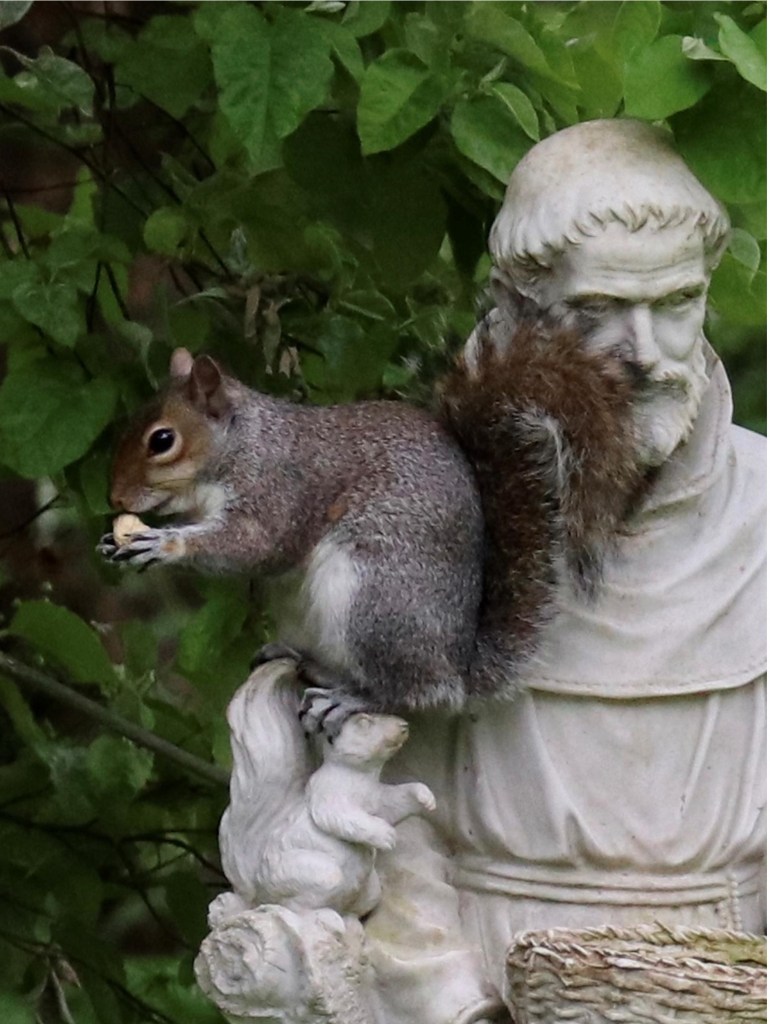
Photo taken in Latton Vicarage Garden by my, friend, The Revd. Lynn Hurry
Readers of this blog at the end of July may remember that Lynn, my Vicar, reflected on the squirrels which frequented the Vicarage garden. She accompanied her thoughts with a photograph of a squirrel raiding the vicarage strawberry patch. She was in the act of stealing an unripe but rather plump strawberry. I say ‘stealing’, but I’m sure that the offender would say that it was simply a re-distribution of wealth. A Christian view may be that it was a sharing in God’s bountiful provision for the sustaining of all.
“Umph! ” I can just hear some people mutter. My friend, Mary Bard, who won the picture competition last year with a photo of a squirrel thwarted whilst attempting to steal peanuts , may disagree with my loving view of squirrels!
But there is always hope for repentance and redemption in God’s scheme of things!
As we see in Lynn’s latest photographs the squirrel is seeking sanctuary with St. Francis. She sits in the basket and is assured of a ready welcome and acceptance. I think there are signs here of her need for forgiveness and who better to scamper to but St. Francis. True, she later uses the stone squirrel on the statue to quietly munch a morsel of food, which may have been in the Saints’ basket! Of course, she didn’t steal it. St. Francis (in the guise of Vicar Lynn) always leaves some tit bits around for the animals and birds. On ths occasion, it is a sign of forgiveness because of the squirrel’s repentance.
Maybe that little squirrel teaches us two things.
First when we return to the Lord after some act of unlove or sin, then He always forgives the repentant sinner. Secondly, once we know we are forgiven we are fed anew with God’s love. In the squirrel’s case this has come in the form of a peanut. Yours comes with a sense of God’s grace bursting joyfully in your heart. Try to love that God loves you!
Dear St Francis, Thank you for sharing God’s loving care with me, even when I’m just a tiny bit naughty. I’m sorry I stole the strawberries. Thank you for the peanuts. Please tell God that I love that He loves me, no matter what. Could you please remind Him to tell other people that too. They do need to know it quite often. Amen
On August 1st, a quaint feast was celebrated in some parts of the Church. This is particularly so in some rural areas. The feast is known as Lammas. That’s a shortened form of Loaf Mass. It is the day when, in former times, the first loaf baked with the first corn of the harvest, was presented to God as an offering of first fruits as a sign of dependence upon God for daily bread. The words in italics come from Common Worship Times & Seasons, which restores this feast as an Anglican Agricultural festival.
Its origins stretch back into Old Testament times when, as we read in Deuteronomy 26 , the people were bidden to present the first-fruits of the harvest. You shall take some of the first of all the fruit of the ground, which you harvest from the land that the lord your God is giving you, and you shall put it in a basket and go to the place that the Lord your God will choose as a dwelling for his name. (Deut 26:2). The priest took the basket and placed it on the altar as an offering from the people.
At the heart of the Lammas feast there is thanksgiving for the food that God provides and thanksgiving for Jesus as our Bread of Life. The offering of the new loaf is both a giving back to God something of what he has given us and a request for a blessing on our daily life so that we too may be part of the rich harvest which Christ gleans for His Father. It is easy to take God for granted and, divorced as many of us now are from the source of our food, it is easy to lose the connection we have with the earth. Lammas is a way of re-affirming our dependence on God and an opportunity to give thanks.
There is an added poignancy about this at present. Our farmers are up against it for three reasons. One is that the weather and the drought we are experiencing in Britain makes it difficult to grow and then bring in the harvest. Secondly, post-Brexit it is difficult to hire workers from other countries to help pick fruit and other produce. The third is, of course global warming. These are also making life difficult for our farmers and they are in need of our prayers because we tend to take our food for granted. The war in the Ukraine and the cost of living crisis post pandemic add to the complications. So, it may that Lammas may not be much of a celebration this year.
Perhaps a little known fact will also not be truth this time. It may not be a fact – it could just be a legend or even wishful thinking. Did you know that, after Lammas Day, corn in the field grows just as fast during the night as it does during the day? Don’t know whether it’s true or why it might happen. Answers on a postcard (what?) or an email!
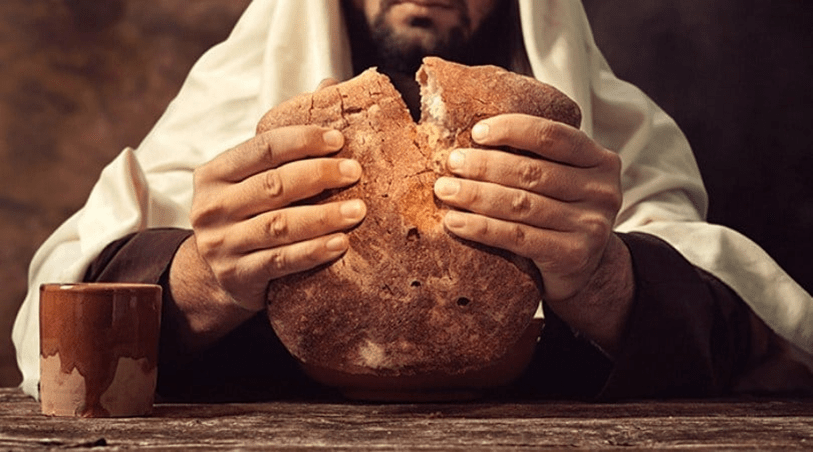
In Christian understanding, there is a special link between the bread we eat and Jesus who called himself the ‘Bread of Life’ He tells his followers that he feeds us for eternal life. The connection is easily made with the bread of the Eucharist under the form of which Jesus comes to us as our spiritual journey through life towards the gift of eternal life which he promises to us.
When you eat your daily bread, pause for a moment and thank God for his gracious provision of all that you need to sustain life on earth—and if it is your custom to receive the bread of the Eucharist (Holy Communion), thank Jesus for his gift of eternal life and for feeding your soul for the journey you are making to God. For it is a gift. We come to it because of Jesus inviting us to the feast. We are gathered around his table because he wants to share this divine food with us.
What bothers me at the moment is that sometimes the Eucharist isn’t seen as a joyful gathering which Jesus calls us to share but rather as a means of showing displeasure with others and making a kind of quasi-political stance.
Andrew Nunn, the present Dean of Southwark, writing in his excellent blog at the weekend, lamented that the Eucharist is being weaponised by certain parties at the current Lambeth Conference. They don’t like some of the churches stance on Sexuality and things associated with same-sex relationships. So they absented themselves from the Conference Eucharist as a protest.
They regard themselves as traditionalists, by which I think they probably mean they stand firmly in the faith as they understand it. Literalists are helpful in keeping us close to the tradition of the church handed down from the early fathers and mothers. But this does not allow for what St John Henry Newman spoke of as the development of doctrine. The doctrine of who God is and what he longs for his people, doesn’t change. But our understanding must and the reason why was given by Pope Francis as he talked to journalists on the way back from Canada at the weekend. He said : Many call themselves Traditionalists but they are not, they just go backwards and that’s a sin A Church that does not evolve is a church that goes backwards. Tradition is the living faith of the dead. Instead their attitude is the dead faith of the living.
Whenever we are tempted to make a protest by withdrawing from the Communion with the Lord and those he calls to be His Companions (literally ‘bread-sharers’), we do need to keep reminding ourselves that it is Jesus who invites us to the table where he feeds us without judgement and always in love.
For whatever reason those leaders at the Lambeth Conference do not follow up this invitation from Jesus, they are not just making a stance against Gay bishops and their partners. Nor are they just taking a stance against supporters of LGBTQI+ in the Church. They are also refusing Christ’s invitation to join their fellow sinners around the Holy Table. They are turning their backs on the gift Jesus brings to all who hold out their hands and humbly receive him as the ‘Living Bread’.
Little children, when they don’t get their own way, have a tendency to sulk or stamp their feet or shout against those who thwart them. It can be an ugly thing to see. That should never be the way of mature Christian leaders. Luckily for all of us, Christ goes on reaching out to all, because the grace of the sacrament doesn’t depend on us. It depends only on God how he chooses to deal with us, naughty or good and usually a mixture of both. He doesn’t dwell on our wrongfulness but only on his gift of loving grace which ultimately will win all our hearts to him and so open all our lives to repentance.
This poem, by my friend Piers Northam, takes its inspiration from a Pilgrimage to the Shrine of St James in Santiago de Compostela. The poem is written at the beginning of the Anglican Lambeth Conference. The Conference gathers Bishops and others from member churches of the Anglican Communion. It is a diverse group with differing opinions on many issues. It can be viewed as a ‘scattered family’ which gets together to celebrate a fellowship which is best described as Koinonia – a fellowship with each other brought together by the Holy Spirit and held by that same Spirit in a Communion with each other.
Sometimes, because of its diversity, there is disagreement and some heart-searching as a compromise is sought. Sometimes because of our separate cultures, it isn’t always possible to agree, at least not at present. The member churches seek to listen and keep talking and praying together under God’s guidance until a new understanding is reached.
Another way of seeing things is as a Pilgrimage to God’s Kingdom which we approach from differing directions – as with the Camino where pilgrims walk from many different places. Conversations, prayers and walking together produces many experiences as we share in the common adventure. Finally each of these ‘ways’ converge. The Camino symbol, tracing the cockle shell (emblem of St. James the fisherman) shows us the paths converging to the same point.
Piers reflects on this as he thinks of what is the nature of the Anglican Communion. There are parallels to be discovered between the Camino and the Anglican Communion. Might it, therefore, be possible to see a positive way forward, not just for Anglicans, but also for Christians of all denominations. Could we be even more brave and see some way forward for inter-faith friendship.
The Anglican mystic and teacher of prayer, Evelyn Underhill, had a belief that our differing views and beliefs are as Chapels in the Cathedral of the Holy Spirit. It is both a lovely and dynamic thought !
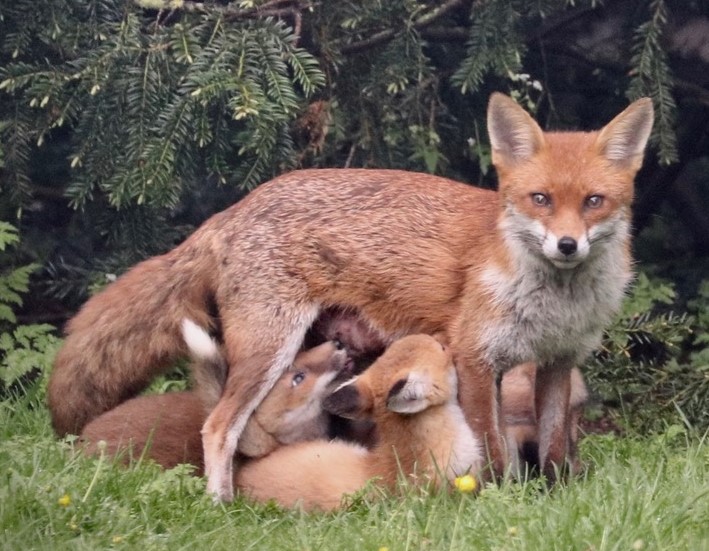
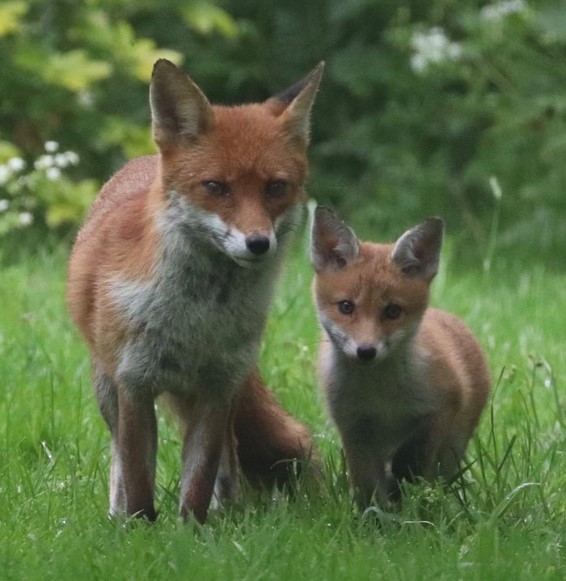
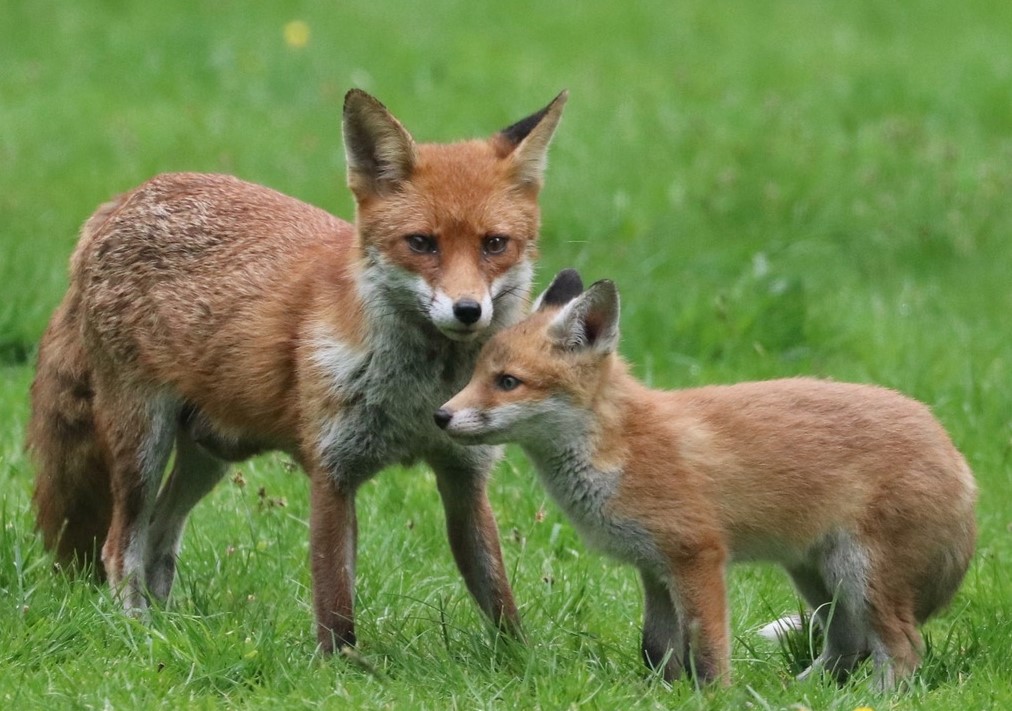
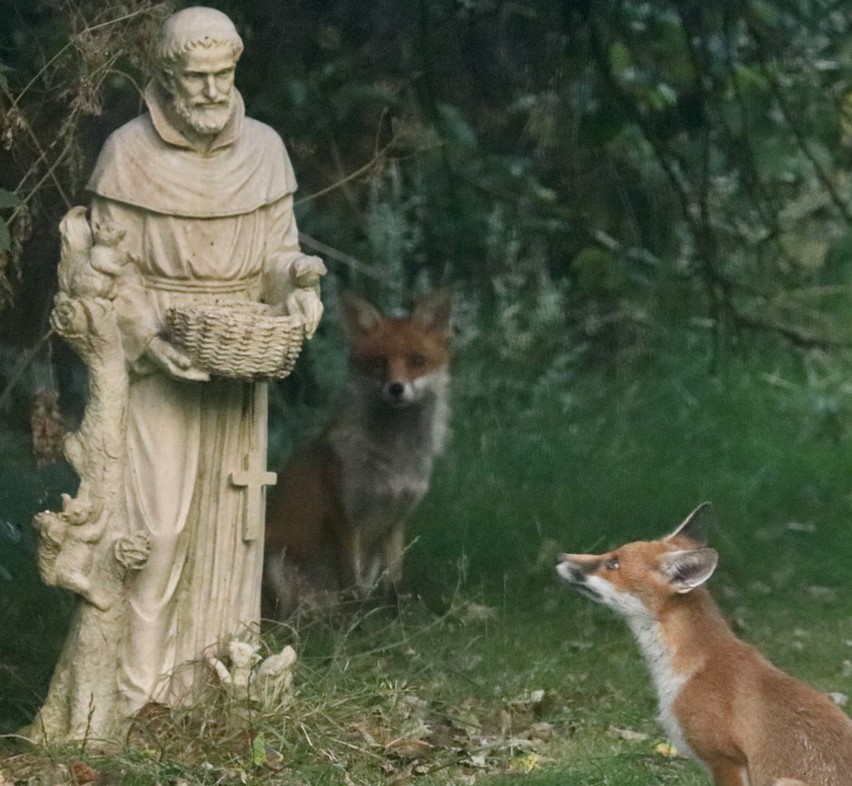
feeding timetogether with mummymummy says we must pray a lotAll creatures of our God and King !
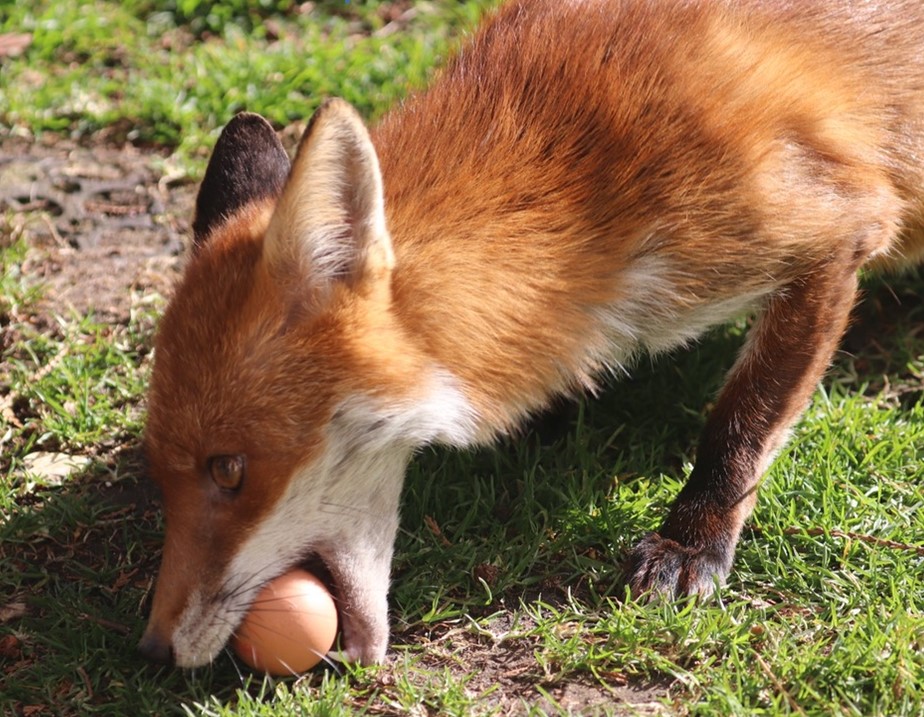
Blessed are you, Lord God, maker of all living creatures. Thank you for the fish of the sea, the birds of the air, and the animals on the land. You inspired St Francis to call them all His sisters and brothers. We thank you that you bless all creation and especially the foxes of Latton. May the spirit of Mamma Fox live on in her cubs. By the power of your love, enable them to live according to your love. May we always praise you for all your beauty reflected in your creation.





 Mr G's Ponderings