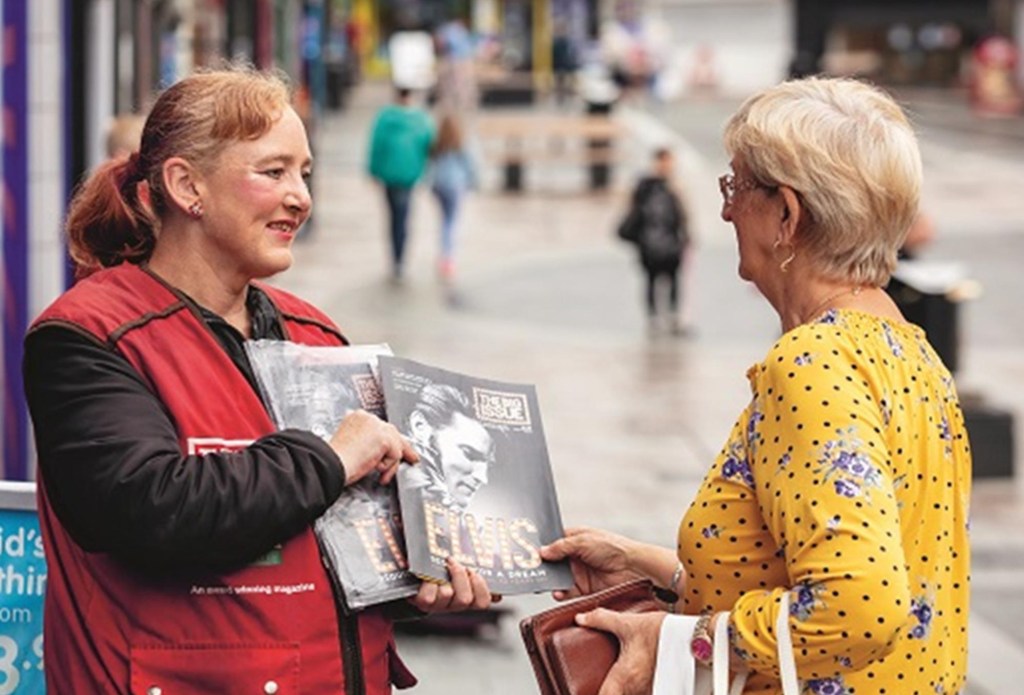
For many years I have been a supporter of the Big Issue magazine. This is for 3 reasons. First I want to support the Vendors. They get half of the sales money. This means they are growing in self-sufficiency and getting the help they need as they move from homelessness into accommodation, the cost of which is a responsibility they need to develop if they are to survive and grow. Perhaps more importantly is the self-esteem and self-respect that they receive through their interaction with others. Perhaps most important of all, they are simply human beings as we all are and sharing a common humanity brings a responsibility of care on all of us.
During our various lock-downs, many in our society have been challenged by real hardship. Such groups of people don’t get a lot of publicity and the homeless are, for some, an inconvenience. Alongside many other socially disadvantaged groups, they have struggled, but also the compassion which I see again and again, mixed with practical concern has brought hope to many.
The Big Issue Foundation was created to funnel that practical help to those in need as well as to campaign in raising awareness on issues surrounding homelessness. But during lockdown it isn’t easy for people like me to find a vendor. Shops like the Co-op stepped in and sold the magazine and one way I could help was to take out a Subscription, which I did. I know that money raised in this way reaches the vendors.
It also feeds the second reason I buy Big Issue. It’s an excellent magazine with a lot of interesting articles.This week’s magazine includes a piece from Jay Blades of the Repair Shop BBC TV programme for example.
It also tells some sad news about Amanda Hill.
Amanda , the first Big Issue Vendor in Cardiff, has died suddenly at the age of 43.
She is typical of many vendors who have been helped but who have also brought joy to others.
Liam Geraghty, writing about her in this week’s magazine speaks of her as a woman with a “heart of good intentions”, who took “took every opportunity offered” in her five-year spell selling the magazine. The Big Issue helped Amanda off the streets and into long-term accommodation.
Lockdown took away her daily contact with people and recently she wrote of looking forward to “seeing the smiley faces of her regular customers”, once lockdown measures ended.
Sales Manager in Cymru, Tom Watts said: “Amanda had her ups and downs in the time we knew her, but we saw her joy in finally getting long-term accommodation near her family in the Valleys and becoming nicely settled on her pitch in Taff’s Well near Pontypridd, getting to know people and looking to build her sales long term as well.
“She bestowed the world with her presence and a heart full of good intentions, and she’ll be missed by her family, her friends, and all of us at The Big Issue in Wales.”
When she began as a Vendor in 2016 she and her then husband slept in a tent which suffered from the winter weather, not least during the 2018 storms known as the Beast from the East. It was difficult to keep dry and maintain body heat.
Amanda featured in the magazine many times over the years and “never turned down the chance to try something different”, according to Watts. He added: “Amanda could chat for hours about anything. She always strove to get what she needed from the world, she took every opportunity offered her, and she never let anything stop her for too long.” She “never turned down the chance to try something different”, according to Watts. He added: “Amanda could chat for hours about anything. She always strove to get what she needed from the world, she took every opportunity offered her, and she never let anything stop her for too long.”
Away from her pitch, Amanda was also a passionate swimmer and represented Cardiff in the sport from the age of 10. She wrote about her experiences for The Big Issue in 2020, giving readers tips on techniques and boosting mental health through the sport. The Big Issue bought Amanda a reconditioned rowing machine to help her exercise while in lockdown as arthritis in her spine and the strain of acting as a carer for her husband meant she was unable to go outside. She said the gesture “really cheered her up”.
Amanda had been in ill health for some time and just last week she revealed that she had been treated in hospital for pneumonia since the new year. She had recently split from her husband of 12 years and was in the process of finding a new place to live near to her children. Despite her health issues and housing troubles, Amanda always remained optimistic and last week praised her customers for supporting her with subscriptions to the magazine during the current lockdown.
In a Vendor’s View article she wrote the week before she died she praised Big Issue frontline staff for “always being there”, adding: “They have been doing so much for me during lockdown. I really want to thank them for the support, the food vouchers and the chats.” She was longing to get back to her pitch to see her customers once again.
In a poignant text following the interview, Amanda summed up why The Big Issue meant so much to her. “I’d like to say it’s built my confidence and with all my problems, if it wasn’t for The Big Issue I probably wouldn’t be here so a big thanks to you all.” Sadly, she is no longer here but Big Issue deserves thanking for all that she both received and ‘Gave.’
The third thing why I like Big Issue is that so many of the Vendors talk to me. I share something of their story and they share something of mine. They are ‘real’ people who relate to me. I’m certain I’m not alone in this.
And nor is Amanda alone now. I love the verse in St. Luke Chapter (V 32) where Jesus says: Do not be afraid little flock, for it is your Father’s good pleasure to give you the Kingdom”.
Whatever belief Amanda may or may not have had, God’s love for her is unconditional and I pray that she is enjoying the love and completeness and safety of that Heavenly Kingdom and the joy of her heavenly Father’s pleasure.

Lockdowns have taken income away from hundreds of Big Issue sellers. If you are concerned please support The Big Issue and the vendors by signing up for a subscription. Just Google Big Issue Subscription to get the details. It’s simple.
- By subscribing to The Big Issue magazine, you are not only keeping up-to-date on the key issues that matter but you are also doing good. As a social enterprise, Big Issue invest every penny made back into the organisation. That means that with every subscription, we are supporting people in poverty to get back on their own two feet. With your support, Big Issue helps vendors to achieve financial stability and overcome social disadvantages holding them back.
[Mr G]

 Mr G's Ponderings