Prayer and the Little Fox

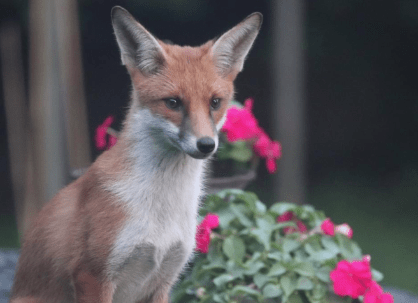
Photo: Lynn Hurry. Little fox kindly posing in Latton Vicarage garden

FOX DAY

Yesterday (September 17th) was National Fox Day. Partly this is promoted by charities and others concerned that foxes and other wild animals are cruelly hunted and killed but there are also those who have concerns for the provision of our wildlife generally. One of the groups keen to promote the well-being of animals is the Woodland Trust and it is worth following them and even supporting their work.

Of course, my friend Lynn Hurry is a great champion of wildlife, especially locally in her garden and especially foxes. Photos of Foxes and their cubs are often on my blog and other postings.

Lynn alerted me yesterday to Fox Day and as I browsed the web I found a delightful story about the Fox, prayer and God. It isn’t a story original to me. I came across it on a site of the Evergreen Community in Spokane Valley, USA.
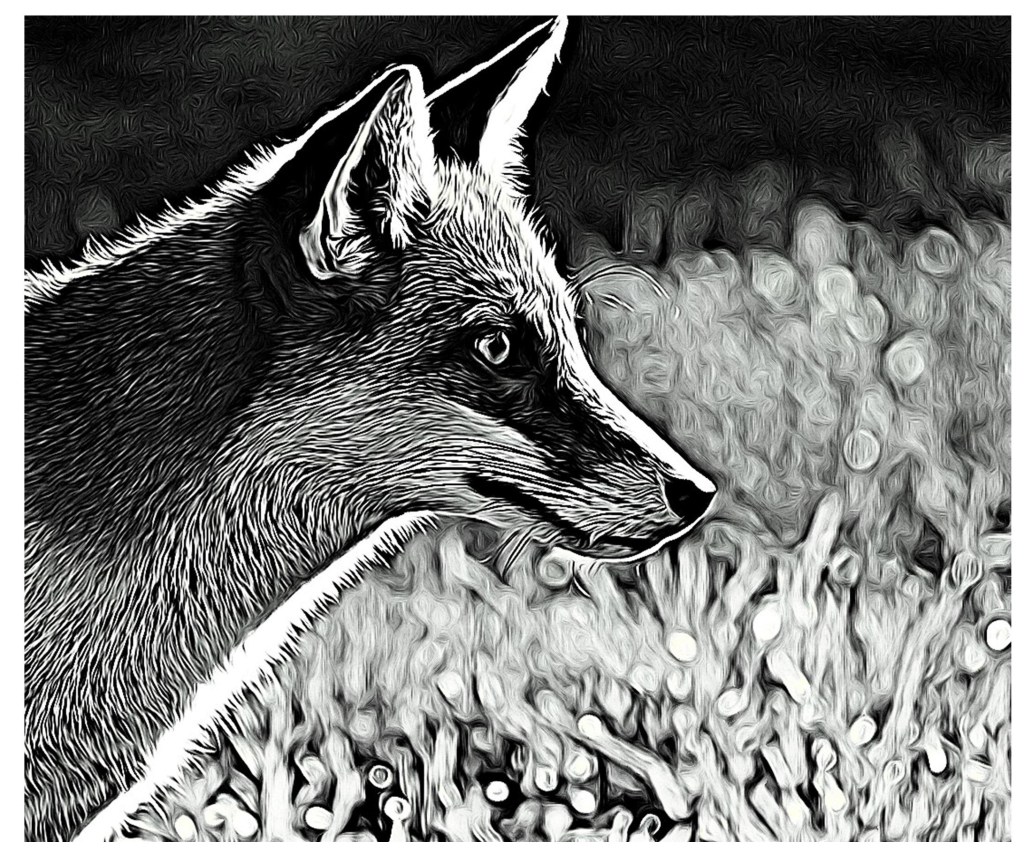
The Tale of the Prayer and the Little Fox

In Egypt, in their ancient Christian past there had once lived a monk who befriended an uneducated and simple peasant farmer. One day this peasant said to the monk, I respect God too, who created this world! Every evening I pour out a bowl of goat’s milk and leave it under a palm tree. In the evening God comes, and drinks up the milk; He’s very fond of it. There’s never once been a time when even a drop of milk is left in the bowl.

Hearing the words, the monk smiled, and kindly told his friend God does not need the bowl of milk. The peasant insisted he was right; and the monk suggested an overnight watch secretly watching to see what happens to the bowl of goat’s milk.

When night fell they hide and secretly watched from a distance. And soon in the moon light; a little fox crept up to the bowl and lapped up the milk. The peasant sighed disappointedly, and said “I can see it’s not God.” The monk explained to him God is a Spirit; and tried to comfort him; telling him every one comprehends God’s presence in their own unique way. The peasant wept and went home to his hovel. The monk also went back to his cell, and when he got there his path was blocked; he was amazed to see his cell blocked by an angel. Utterly terrified he fell to his knees, and the angel said to him with what wisdom, and education you had: you took away what wisdom the peasant had.

But there’s one thing that you don’t know; learned O man; God seeing the sincerity and true heart of this good peasant; every night sent the little fox to that palm tree to comfort him and accept his sacrifice.

For from Him and through Him and to Him are all things.
To Him be glory forever. Amen. Romans 11:36

all photos by Lynn Hurry

The Cross of Christ upon us

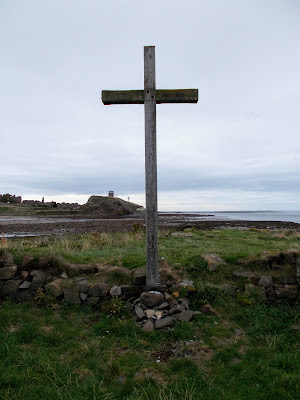
The Cross marking the sacred spot where St. Cuthbert prayed.
The small island is known as Cuddy’s Isle. As with Holy Island/Lindisfarne itself,
it becomes an Island cut off by the tide, twice a day.

HOLY CROSS 2023

One of the prayers of Taize sets the scene for Holy Cross Day which many Christians 0bserve on September 14th:

Through the repentance of our hearts,

And the spirit of simplicity of the beatitudes,

You clothe us with forgiveness, as with a garment.

Enable us to welcome the realities of the Gospel

With a childlike heart,

And to discover your will,

Which is love and nothing else.

Here we are brought to the heart of the Cross’s message – the Victory of love –  and not only sin and death are defeated by love but also those other things which afflict our lives and drag us down.
The Irish have a saying – “The Cross of Christ upon us” which means that it is an immediate presence in our lives – a power on which we can call in any time of need or uncertainty.So, a tenth century prayer speaks of :

Christ’s Cross over this face, and thus over my ear. Christ’s cross over these eyes…this mouth. .this side – to accompany me… Christ’s Cross to meet every difficulty.

The Cross becomes a protection – the Saving Sign which they would trace in every danger – usually quietly behind their back. The recognition here is that when our human frailty brings insecurity our security rests in Christ and in the certainty that through His Cross, he has done what we say at every Baptism as we trace the Cross on the forehead:
Christ claims you for his own.
Receive the sign of his Cross
After which we tell the one being baptised to never be ashamed to confess the faith of Christ Crucified, to fight valiantly as a disciple of Christ against sin, the world and the devil and remain faithful to Christ to the end of their life.
But not in their own strength alone. We follow this immediately with a blessing:

May almighty God deliver you from the powers of darkness,
Restore in you the image of his glory,
And lead you in the light and obedience of Christ.

The tracing of the Cross both then and whenever we invoke it is not a magic talisman, nor an empty gesture or a pious practice, but a bringing to our aid the full power of Christ Himself.
To pilgrim in the Cross is to walk in Christ’s Name and to confess Jesus as Lord to the glory of God the Father,  to quote the letter of St Paul to the  Philippians.
That’s what has driven people to proclaim the victory of the Cross with a certainty that it both symbolizes and makes present Christ’s power of love which converted lives and which, if we believe it, will go on doing so.

[Mr.G]

Cuddy’s Isle at high tide. Photo by my friend Helen Gheorghiu Gould

Swallows go south

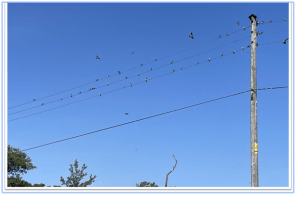
Swallows near Tarn Hows. Gill Henwood

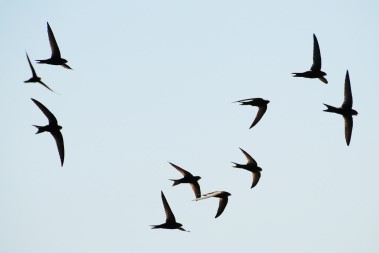
This is a photo taken by my friend, Gill Henwood, of swallows preparing to leave us for different climes. It is a sure sign that the Season are changing and  that Autumn will soon be here. (Though the heatwave in Britain at the moment suggests that there may be a short delay!)

Today I received a letter from another Lakeland friend, Lesley, and she too makes reference to the Swallows. This is what she said:

I have been watching the swallows gathering on the wires that weave this way across gardens and fields. It is interesting to watch the birds jostle to claim and make space on the wires for themselves, some more forcefully than others.

They look so vulnerable. It is hard to imagine the long journey they are preparing to make back to their winter quarters. Soon they’’ll go, flying through difficulties but obviously with an inner certainty about it all. They are held through and beyond the struggles in God’s fantastic plan of Creation.

Even the sparrow find a home
and the swallow a nest for herself,
where she may lay her young,
at your altars, O Lord of hosts,
My King and My God.
Happy are those who live in your house,
ever singing your praise.

[}Psalm 84 v 3-4[]

Lord, your psalmist sings of the birds, the sparrows and the swallows
finding a home and a nest in your presence
where you take care of them with tremendous love.
They fly now to winter pastures but they trust you on that long journey
and they know confidently that you are near them
and enfold them in your love.

May we be filled with that same confidence, trust and faith
wherever our lives journeys take us.
May we find our home in you,
May our song of praise, like the bird song,
sound out in joy and thanksgiving.

[inspired by Psalm 84 v 3]

Consider the Lilies

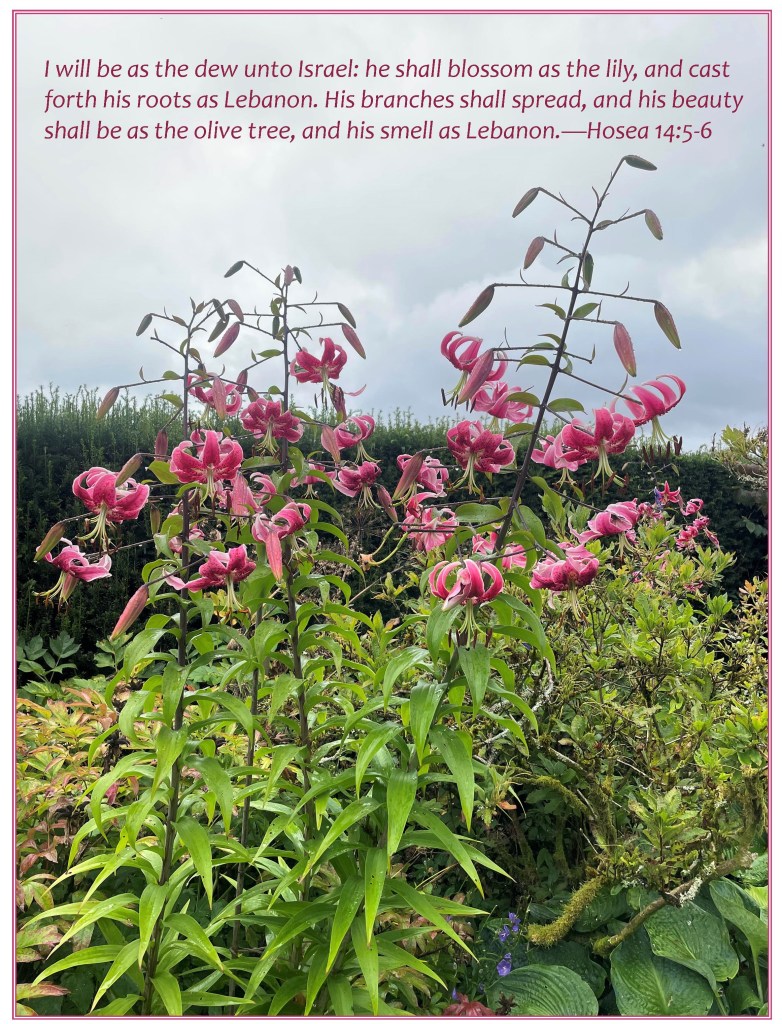
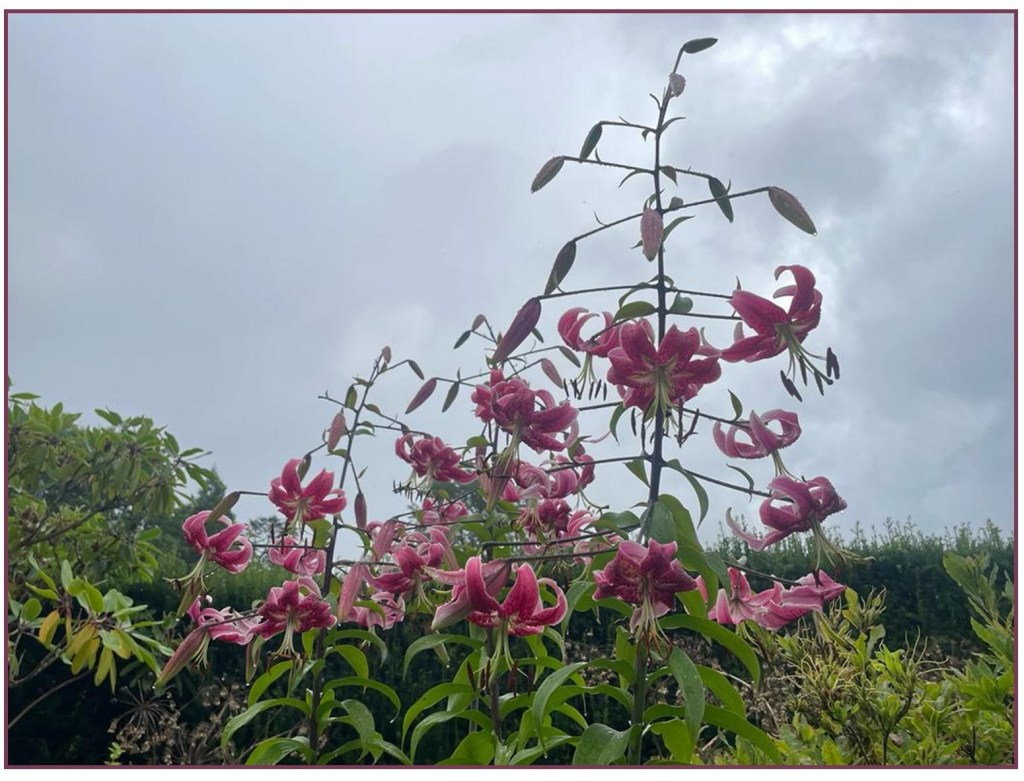
My friend, Gill Henwood, has sent me photos of a striking lily, growing in her Lakeland garden.
It is known as the Black Lily,  though it is generally deep pink/ purple outlined in white – with a green star in the centre which is scented.
It was bred originally about 50 years ago by a plantsman called Leslie Woodriff. It’s pedigree is Lilium speciosum rubrum and Lilium Henryi.
It can reach quite a height in mid to late August.

Like all flowers it has a meaning beyond itself.
Lily flowers are regarded as symbols of purity linked with clarity of thought and sincerity of intention. In vocational terms it can be a symbol of dedication to a spiritual practice or calling. The lily has a long association with the Blessed Virgin Mary whose calling to become the Christ-bearer and instrument of the Incarnation is at the heart of every call to serve God.

Probably because the Lily is associated with devotion and fidelity, it is a flower often chosen by those celebrating their
30th Wedding Anniversary
It is also referenced in the Jewish faith on the day when thanksgiving is made for the falling of dew. The quotation from Hosea (above) is part of the ritual for that day.

For Christians the primary symbolic understanding of the Lily is connected with the understanding of the death and resurrection of Jesus.For many people, Lilies are associated with funerals and bereavement but this link with death is rooted in the belief in the transformation and transcendence of death and the darkness of the world by the triumph of love by Jesus on the Cross. Add to that the symbol of the lily as a sign of re-birth and it is hardly surprising that the dominant flower associated with Easter is the White Lily whose opening represents the revelation of God’s love for us which is at the heart of Easter. It is new growth, new hope and new beginnings all rolled into one.

The Lily in its various forms, shades and colours is a symbol of joy and beauty bringing a special fragrance into our world, whenever and wherever it flowers.

One final thing – sometimes we can overdo our quest for perfection in our lives and in the things we do. So there is a saying  ~ don’t gild the Lily ~
Only God is perfect. Even the gorgeous Lily has its imperfections. So do we but to God it doesn’t matter at all. God loves us come what may and it is love which gilds us so that we shine brightly in God’s eyes.

[Mr G]

photographs by Gill Henwood.