Tag: Compassion

Give us hearts of love and compassion

A woman hugs a girl as refugees from Ukraine wait for a transport at the Moldova-Ukrainian
border’s checkpoint near the town of Palanca.  Nikolay Doychinov/AFP via Getty Images

Once again Refugees seeking safety and asylum in Britain are in the news.
Ms Patel, the Home Secretary, is heading up a plan to send unwanted refugees to Rwanda. This is without consultation with those involved – the refugees who are vulnerable and who have already suffered so much.

Senior Bishops of the Church of England, led by the Archbishops of Canterbury and York recently had a joint letter published in the Times newspaper.
In case you haven’t seen or just heard snippets and adverse media comment, here is what they said.

Bishops’ letter to The Times on the Rwanda asylum policy

14/06/2022

All of the current Lords Spiritual have signed a letter to The Times voicing alarm about the Government’s plan to send asylum seekers to Rwanda.
They wrote:

Sir,

Whether or not the first deportation flight leaves Britain for Rwanda, this policy should shame us as a nation. Rwanda is a brave country recovering from catastrophic genocide. The shame is our own, because our Christian heritage should inspire us to treat asylum seekers with compassion, fairness and justice, as we have for centuries. Those to be deported to Rwanda have had no chance to appeal, or reunite with family in Britain. They have had no consideration of their asylum claim, recognition of their medical or other needs, or any attempt to understand their predicament.

Many are desperate people fleeing unspeakable horrors. Many are Iranians, Eritreans and Sudanese citizens, who have an asylum grant rate of at least 88 per cent. These are people Jesus had in mind as he said when we offer hospitality to a stranger, we do it for him. They are the vulnerable that the Old Testament calls us to value. We cannot offer asylum to everyone, but we must not outsource our ethical responsibilities, or discard international law — which protects the right to claim asylum.

We must end the evil trafficking; many churches are involved in fighting this evil. This needs global co-operation across every level of society. To reduce dangerous journeys to the UK we need safe routes: the church will continue to advocate for them. But deportations — and the potential forced return of asylum seekers to their home countries — are not the way. This immoral policy shames Britain. 


The Most Rev Justin Welby, Archbishop of Canterbury; the Most Rev Stephen Cottrell, Archbishop of York; the Right Rev Dame Sarah Mullally, Bishop of London; the Right Rev Paul Butler, Bishop of Durham; the Right Rev David Urquhart, Bishop of Birmingham; the Right Rev John Inge, Bishop of Worcester; the Right Rev Christopher Cocksworth, Bishop of Coventry; the Right Rev Steven Croft, Bishop of Oxford; the Right Rev James Newcome, Bishop of Carlisle; the Right Rev Alan Smith,  Bishop of St Albans; the Right Rev Donald Allister, Bishop of Peterborough; the Right Rev Stephen Conway, Bishop of Ely; the Right Rev Christopher Chessun, Bishop of Southwark;  the Right Rev Nicholas Baines, Bishop of Leeds; the Right Rev Rachel Treweek, Bishop of Gloucester; the Right Rev Martin Warner, Bishop of Chichester; the Right Rev Vivienne Faull, Bishop of Bristol; the Right Rev Libby Lane, Bishop of Derby; the Right Rev Julian Henderson, Bishop of Blackburn; the Right Rev David Walker, Bishop of Manchester; the Right Rev Guli Francis-Dehqani, Bishop of Chelmsford; the Right Rev Robert Atwell, Bishop of Exeter; the Right Rev Andrew Watson, Bishop of Guildford; the Right Rev Martin Seeley, Bishop of St Edmundsbury & Ipswich; the Right Rev Paul Williams, Bishop of Southwell & Nottingham

[Source: Church of England official website]
 

A PRAYER for Refugees

Give Us Hearts

God of love and compassion: may we always recognize your spirit:

  • in the refugee family, seeking safety from violence;
  • in the migrant worker, bringing food to our tables;
  • in the asylum-seekers, seeking justice for their families;
  • in the unaccompanied child, travelling in a dangerous world.

Give us hearts that break open whenever our brothers and sisters turn to us.
Give us hearts that no longer turn deaf to their voices in times of need;

Give us eyes to recognize a moment for grace instead of a threat.
Give us voices that fail to remain silent but which decide instead to advocate prophetically.
Give us hands that reach out in welcome, but also in work, for a world of justice until all homelands are safe and secure.
Bless us, O Lord…

– Fr. Dan Hartnett S.J.

The Compassion of God

modern day slaves

Wilberforce and abolition of slavery

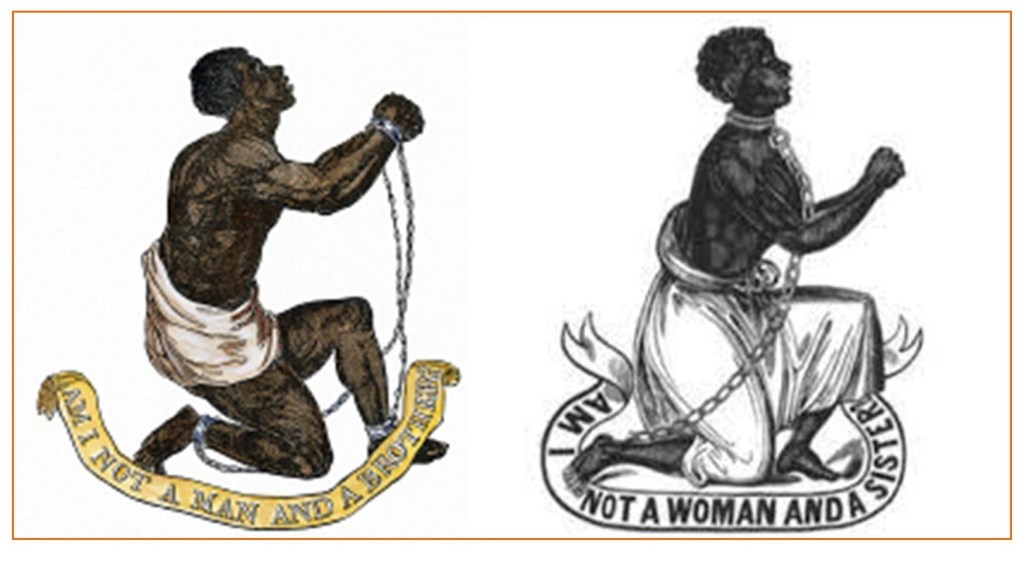
Yesterday we commemorated William Wilberforce, Thomas Clarkson and Olauthah Equalano, all of whom were involved in anti-slavery campaigns and social reform.

William Wilberforce’s battle to abolish slavery is well chronicled in the biography of him by William Hague. It is rather too bulky for bedtime reading. There is, however a very good film, available on DVD, called Amazing Grace.– starring Ioan Gruffodd.
It tells of Wilberforce’s battle against strong vested interests, not least within Parliament itself. Year after Year, Wilberforce presented his Bill only to be rebuffed until very near to his death when he finally succeeded. By then, the toll on his health was a reminder that struggle for justice can often be costly.

What comes across most strongly is that he was driven by his faith in God. This led him to have a deep compassion for his fellow-man, and particularly for those who have no one to speak for them; no one to champion their cause. This was especially true of the many, many thousands who were transported from Africa to the West Indies to become slaves living under the most appalling conditions and treated as sub-human.
Wilberforce saw that slavery was a denial of humanity – not just of human rights – but of  fundamental humanity. He believed that we are all equal in God’s sight.

Knowing nothing personally about these slaves, apart from one he met who had become free, he acted with a passion that consumed him all his life – a passion that he showed in other social areas of British life too.
He was not just consumed with passion – he was filled with com-passion.  But it was a compassion that had a double edge.

In freeing the slaves, he also freed the slave-traders who were deeply sinful in what they were doing. Even Christian people, at the time, thought that slavery was acceptable. By abolishing slavery, Wilberforce hoped to abolish ownership of slaves and so freeing those owners of a misguided and sinful way of treating others.
Despite their failure to see this, he acted, year after year, for abolition until all were free – slaves and slave-traders.

It was an iconic victory and it remains a beacon for all who in this world of ours today are striving for the same freedom for the millions who still live in slavery of many kinds. These include those who are forced to be refugees. Enslaved by despotic rulers and those who support them, they are often deprived of their freedom, livelihood, homes. They are oppressed by stress, anxiety and rejection.
Also from oppressive conditions imposed by owners of sweatshops in Far East (and recently, as we discovered in Leicester), who, in making clothes cheaply for the British market, treat their workers as slaves and with no regard for their working conditions or their safety, and paying them little.

Wilberforce’s victory is a beacon too for those who are engaged in the great struggle for equality of all people today, especially for black people but for so many others who in our world who are treated as slaves.

emblems of the Abolition Movement

Slavery comes in many forms but even those who seek to enslave others are, as Wilberforce recognized, themselves enslaved. We need to pray for them too – those who are enslaved by their homophobia, misogyny, prejudice, bullying of others, racial intolerance, behave unjustly towards others, to name but a few!

All perpetrators of hate against others need our prayers. They need to face up to the darkness within which creates their enslavement and be led to repentance so that love and healing can grow within them.All things can be cured by God’s compassionate Grace.

Wilberforce achieved a great thing and it converted lives.

People like John Newton, a former slave ship captain who, sick in his soul, turned away from his vile trade and embraced God and became a minister in God’s Church, recognized the power of this grace in the wonderful hymn  – Amazing Grace.
A contemporary of William Wilberforce he wrote from his own personal experience of God’s compassion, grace and mercy which he found in Jesus.

But we are all too aware that what Wilberforce began, we must continue until all are free and all are equal.

Against all this, Jesus stands as our compassionate God who knows and loves each of us which is why He confronts everything that enslaves us; all the things that prevent the love of God working in our lives and which stops Grace from transforming us. He especially does this on the Cross where he confronts evil finally and destroys it with Love.

The Cross is the ultimate statement of God that His compassion for us is eternal.
He would love it if we too showed compassion and thirst for justice for others, as Wilberforce did.

[Mr. G]