Star I saw the star at its rising * flaming the dying night sky with light. New Day, empty still of events that will define it, and give it a shape which will date it. Perhaps promises fulfilled, adjusted, stillborn? Expectations tinged with hope colouring the blackness, pushing dreams into memories. half remembered, half forgotten. half heeded, half not.
Shall we become whatever this Morning Star** will make of us? bursting over the horizon of our hearts, golden rays offering us a different kind of day.
[Mr G] Epiphany 2025
*a reference to St Matthew’s Gospel, 2:2 to words attributed to the Three Magi
** Morning Star Is usually associated in astronomy with the Planet Venus. In the Book of Revelation 22: 16, the risen Jesus acclaimed himself as the Bright Morning Star. It is with this meaning that the words appear in my poem
The photo is of the Bede Memorial in the Galilee Chapel of Durham Cathedral. It is in Latin and English and is a quotation from the Book of Revelation: “Christ is the morning star who when the night of this world is past, brings to his saints, the promise of the light of life and open everlasting day.
My friend Jonathan sent me a present of a poem as an Epiphany gift. It is named The Ballad of the Cross and is by Theodosia Garrison.
Though she wrote quite a number of poems and a few sacred songs, not a great deal is known about her. She was born in Newark, New Jersey in 1874 and she married Frederic Faulks but continued to write under her maiden name. She was on the staff of Life Magazine, resided in New Jersey and was a friend of the American poet, Ella Wheeler Wilcox. She died in 1944. There are hints about her in a number of places but, apart from her published poetry being still in print, not a great deal more.
The poem Jonathan sent me is connected with today’s feast of Epiphany though it is called the Ballad of the Cross. The reason for this becomes evident at the end but, as a spoiler, it makes the connection between with the Crib/Manger of Christ and the Cross of Christ (hence the title). It reminds us that God’s work of Incarnation reaches its fulfilment in the Easter of Christ – his death and resurrection.
Here’s the poem.
Melchior, Gaspar, Balthazar, Great gifts they bore and meet; White linen for His body fair And purple for His feet; And golden things—the joy of kings— And myrrh to breathe Him sweet.
It was the shepherd Terish spake, Oh, poor the gift I bring— A little cross of broken twigs, A hind’s gift to a king— Yet, haply, He may smile to see And know my offering.
And it was Mary held her Son Full softly to her breast, Great gifts and sweet are at Thy feet And wonders king-possessed; O little Son, take Thou the one That pleasures Thee the best.
It was the Christ-Child in her arms Who turned from gaud and gold, Who turned from wondrous gifts and great, From purple woof and fold, And to His breast the cross He pressed That scarce His hands could hold.
’Twas king and shepherd went their way— Great wonder tore their bliss; ’Twas Mary clasped her little Son Close, close to feel her kiss, And in His hold the cross lay cold ~Between her heart and His!
Comment on the text
The reference at the beginning of verse 2 to the Shepherd Terish, may be simply a reference to the earlier visit of the Shepherds to the manger The origin of the name may be Persian, which could link it with the Magi who are believed to have come from the East – as in the carol, Three Kings from Persian lands afar. This is my conjecture. There are no notes from Theodosia to help.
The second is about the word ‘gaud’ (gaudy) in verse 4. It means something like a ‘trinket’ or ornament. Maybe jewels which would link into the ‘wondrous’ gifts of the Magi. This is followed by an obscure reference to ‘‘Purple Woof and fold‘. This is her second reference to the colour ‘purple’. (see verse one,line four) Purple in biblical times and also in the days of the Roman and Byzantine Empires is the colour of Kingship, and Royalty. As a mixture of red and blue, it is an expensive dye and therefore rare. In the beginning of the poem it is one of the ‘great gifts’ from the Magi,‘and purple at his feet’. This is the garment signifying both king and God. It is also linked with the theme of the poem because after his trial, Jesus was mocked by being dressed in a purple (kingly) robe. It is translated ‘scarlet’ in many Bibles but in the Greek it could be translated ‘purple.’ The important thing here is about the Kingly association between the babe of Bethlehem and his subsequent Crucifixion.
The word ‘woof’ and its link with ‘fold’ are connected with cloth. Woof here is the same as ‘weft’ – threads in a garment running crosswise as the warp runs lengthwise. What Theodosia is saying is that though these costly gifts and fine garments are for a King and a God, the baby Jesus, turning away from them, indicates a very different destiny and throne. The gift of twigs given by the Shepherd, became the Cross Jesus held in his tiny hand and pressed to him. This simple, inexpensive gift reminds of the carol,In the bleak Midwinter; ‘What can I give him, poor as I am’. The Shepherd’s gift is returned to us by Jesus as the true gift God gives to us. For now, as the Magi and the shepherd leave, the cross ‘lay cold’ until its time.
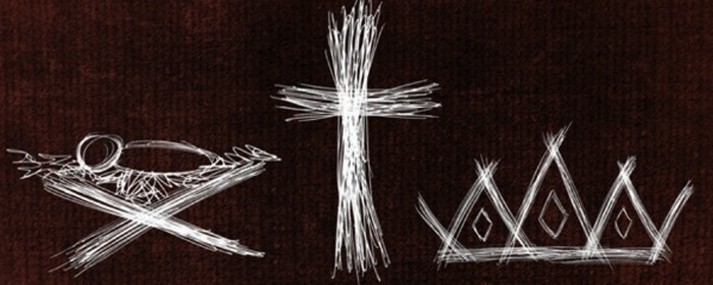
The Wood of the Manger and of the Cross are brought together as instruments of our salvation.
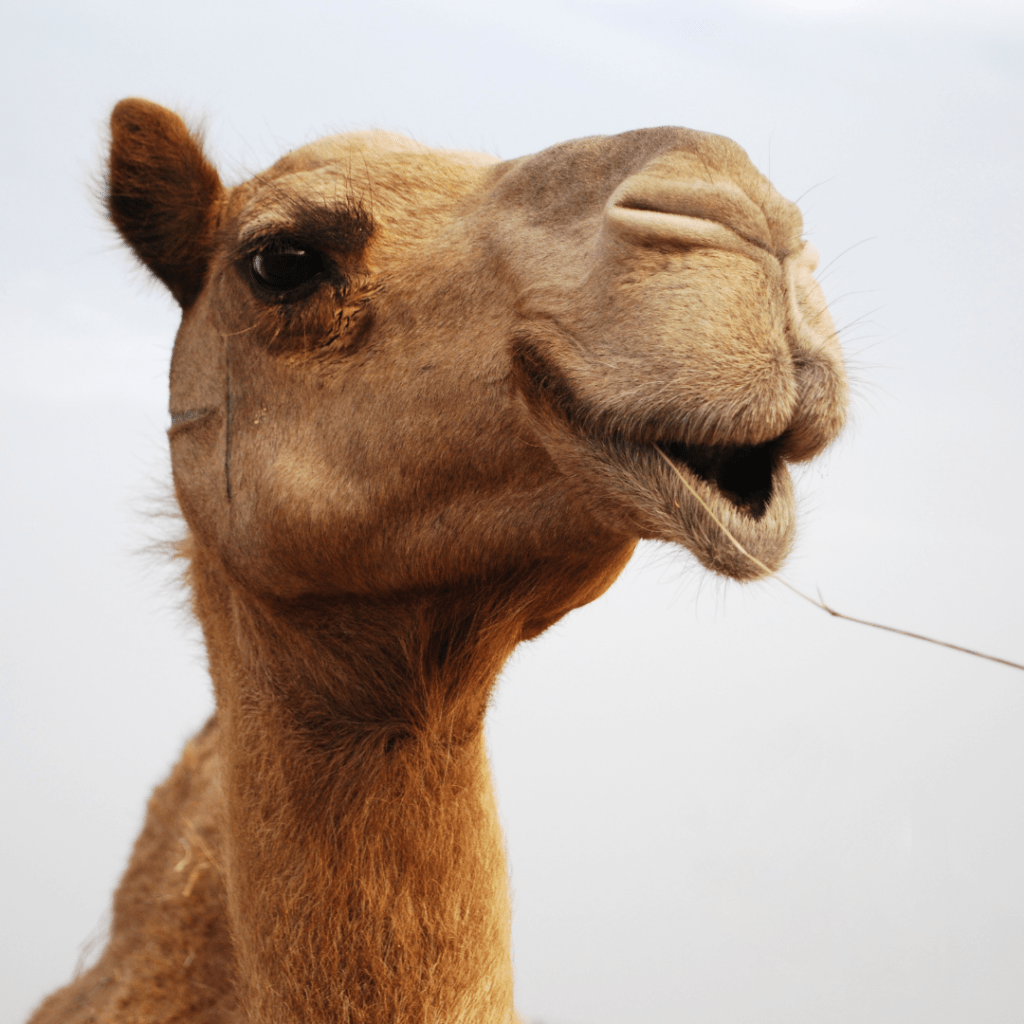
It’s almost the feast of the Epiphany when we commemorate the visit of the Magi (Wise men) to the infant Jesus. Here’s a meditation on behalf of the camels, by my friend Joyce Smith, who died lasy year.
Like the donkey, we camels are often left out of the story; it gives us the hump!
The journey was long and exhausting, but when we glimpsed the walls of Jerusalem, we thought we had arrived. A king would surely be born in the palace, and we could rest in lovely comfortable stables!
But Herod was even grumpier than we were when our masters told him we were seeking a newborn king The priests and scribes searched their sacred books and found that Bethlehem was what had been foretold by the prophets.
And so we carried on, guided by the star; determined not to let Herod’s scheming thwart our purpose.
The road ahead might be hard, but we would keep carrying our masters until we found the newborn king.
There is a custom associated with New Year and Epiphany of asking for God’s Blessing on one’s home.
Home blessing is a popular custom in many faiths and it is particularly associated with moving into a new home. In Hinduism, for example, a newly built home is always blessed before people first move in. Blessing a home is increasingly popular in Christianity, usually when people move. It is often accompanied with prayers and party-like refreshments. It is about Welcome and new beginnings. In some traditions, holy water, is sprinkled in each room and especially at the entrances.
NEW YEAR & EPIPHANY.
There is also an annual blessing of homes at this time of year. It is a particular custom at Epiphany time and is linked with celebrating the visit of the three Wise Men to the infant (or baby) Jesus when they paid him homage as God’s Son and gave him gifts with significant meanings. Gold for Kingship, Frankincense for Divinity and Myrrh for Sacrifice and Suffering.
The visit itself has its own significance. The Wise Men travelled a great distance and whilst their homage and gifts were important, so was their coming into the home. They were received by the Holy Family, with, I suspect, a mixture of perplexity and wonderment. Being Jewish they also opened the doors of their hearts following the example of Abraham and the angelic visitors in Genesis 18.
Hospitality is something that involves generosity of spirit towards each other. In Christianity it received a particular meaning in the teachings of St. Benedict. In his ‘Rule’ (how the brothers and sisters should live) he said it was very important to welcome visitors to the monastery with openness and love. The reason, he said, was because we are to see Christ in each other and therefore we must receive each person as if they are Jesus. This is an echo of Hebrews 13:1f in which the writer of the Epistle encourages mutual love to continue among us. Then these words: Do not neglect to show hospitality to strangers, for by doing that some have entertained angels without knowing it.
So the blessing of homes at New Year/Epiphany is bound up with asking for a blessing on our home, on ourselves and on all who will visit us in the coming year. It is also a re-dedication of ourselves in thanksgiving to God for the loving blessing He pours upon us.
The link with the visit of the Wise Men is maintained with a symbol we chalk on or near the lintel of our homes. In some churches, chalk is blessed by a minister/priest and is then used to mark the entrance of the house with the inscription CMB, the initial Caspar, Melchior and Balthasar, the names of the three wise man in legend. The inscription also stands for Christus Mansionem Benedicat, which means “Christ, bless this home.” The popular form the inscription takes is 20+C+M+B+22. The year 2022 encloses the initials CMB which are each united by the sign of our Lord’s Cross.
A short service of prayer to ask God’s blessing on the home and on all who live, work with and visit them completes the blessing. In this way, we invite Jesus to be a “guest” in our home, in whatever guise He comes, a listener to each conversation, a guide for troubled times, and a blessing in times of thanksgiving.
Throughout each year I have found, also, that casual visitors, delivery people and occasional callers have puzzled over the meaning and this has led to some interesting conversations, so it becomes a tiny moment of evangelism.
I’ve heard it called a bit of Holy graffiti !
Here are two prayers of blessing
Lord God of Heaven and Earth, who has revealed you only-begotten Son to every nation by the guidance of a star: Bless this house and all who inhabit it and upon all who visit us. Fill them with the light of Christ, that their love for others may truly reflect your love. We ask this through Christ our Lord. Amen.
O God, by your heavenly star, you guided those who were wise to your beloved Son, Jesus Christ. May your blessing come to rest on our home and all of us. Make our lives wise with your wisdom, true to your teaching, and enlivened by your love. May your Word made flesh make his home among us. Amen.
If you can’t get hold of blessed chalk you can say this little prayer yourself:
Lord God, please bless this chalk, as we set it aside to mark the symbol of blessing and hospitality over our home. So may we become marks of your loving presence in the world for others to see. We ask this in the name of Jesus, our friend and brother, Who is truly the mark of your joy and salvation over our world. Amen.