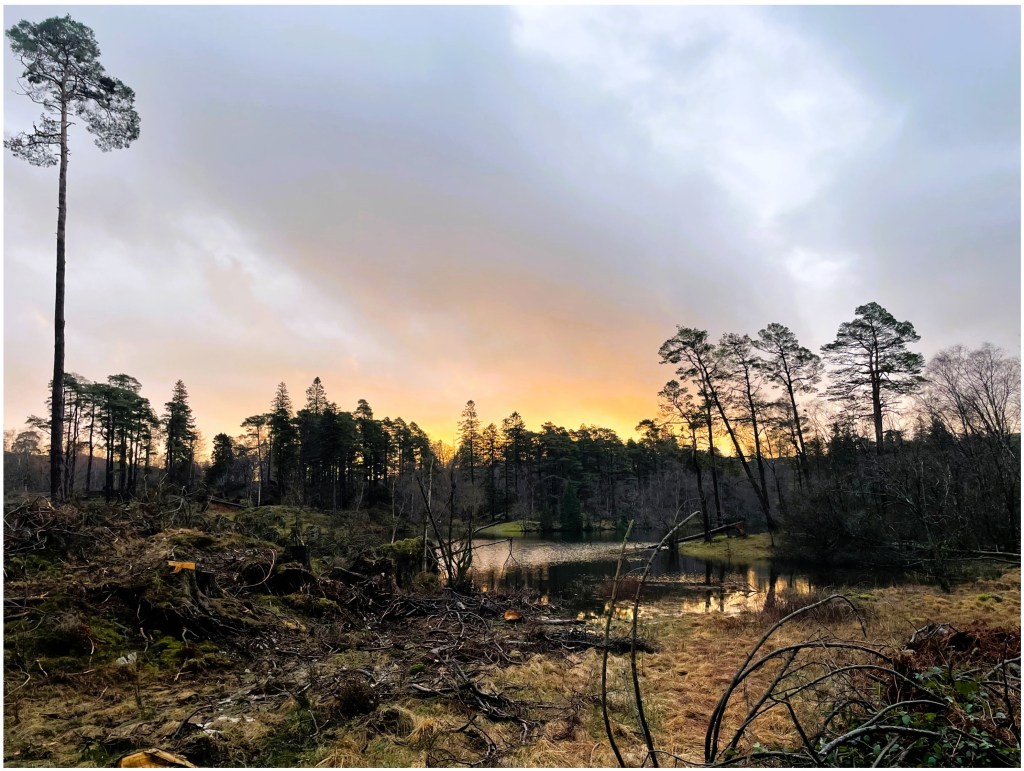
The last Sunset of 2023, photographed over Tarn Hows in the English Lake District. It was photographed by my friend Gill Henwood who was inspired to reflect on the moving from the old year to the New….
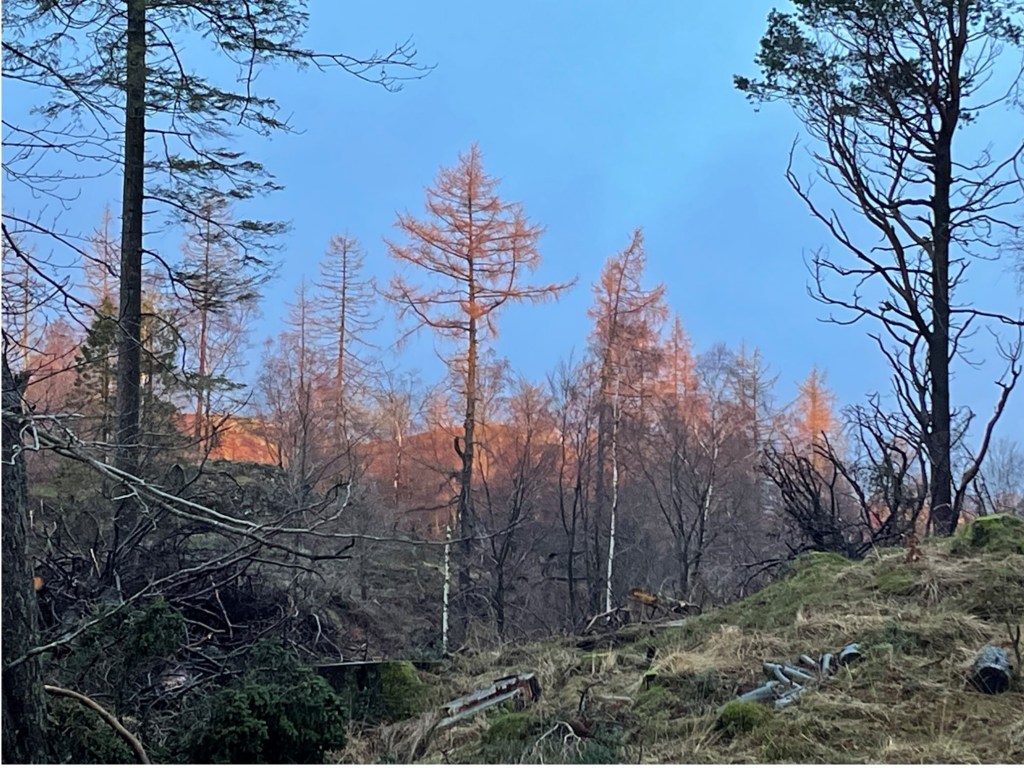
Over Tarn Hows, the foreground devastated by storms Arwen and this winter, being cleared from huge fallen trees. Yet calm on the ruffled tarn surface and the wind is still. A rainbow caught the low cloud behind me as the sun kissed the top of the standing larches, turning them golden.
The old year is ending, nature battered and bruised, but clearing brings light into the forest floor for saplings, berries, mosses, new life.
The birds are beginning to sing that spring is on her way. There are storms ahead in 2024, but the turning of midwinter to the new year has happened from the dawn of time…
There is a power stronger than all our fears, bringing hope into our apprehension and potential for healing to those who are suffering. God’s creating Spirit, stirs anew, while still the Magi are following the bright Christmas star….
The wind is wine to those who walk on bright December days the heath; Above, the cold, capacious sky, the rimy grass beneath.
With each a merry heart the guide, The sun for compass: they who know the wanton ways and whims of earth, and laugh to find them so.
No English hills, in English lanes, A man may walk with ease and find at every turn the mode and mark of earth’s best humankind:
May rest in quiet inns at night, in sleep enfolding bone and brain, and with the dawn may rise and take the long, free roads again.
(Sir William Addison)
This poem comes from a small collection, ‘Winter Forest’ by Sir William Addison. The poems are inspired by Sir William’s long association with Epping Forest where he was one of the four Verderers.The verderers of Epping Forest have represented the views of everyday people for over 800 years acting as a key go-between with the City of London.
Sir William was born in the Ribble Valley in Lancashire and he was educated at Clitheroe Royal Grammar School. His family had connections in the past in Grasmere and Bowness.
When he married Phoebe Dean in 1929, the couple moved south and eventually lived in Buckhurst Hill on the edge of Epping Forest, Essex.He bought a bookshop in the neighbouring town ofLoughton, and began his lifelong association with Epping Forest which included a love of the history of the area. The result was a number of books on the Forest area and Essex, Suffolk and of people like Dick Turpin, highwayman of the Forest. He worshipped at the Parish Church in Epping.
The collection of poems Winter Forest was edited by Richard Morris, Verderer of Epping Forest and published by the Corporation of London in 2002, by kind permission of legatees of Sir William’s estate, including the incumbent of St. John’s church in Epping. My personal involvement in this small way has led me to make the poems in this collection more widely known. Walking in December seems a good place to start. I am grateful that I am able to illustrate this with a ‘December’ photograph by my friend Gill Henwood, and appropriately the scene is from Cumbria, where Sir William’s family had their roots.
Let it Glow! Enjoy an unmissable after-dark spectacle of lights at RHS Gardens this festive season
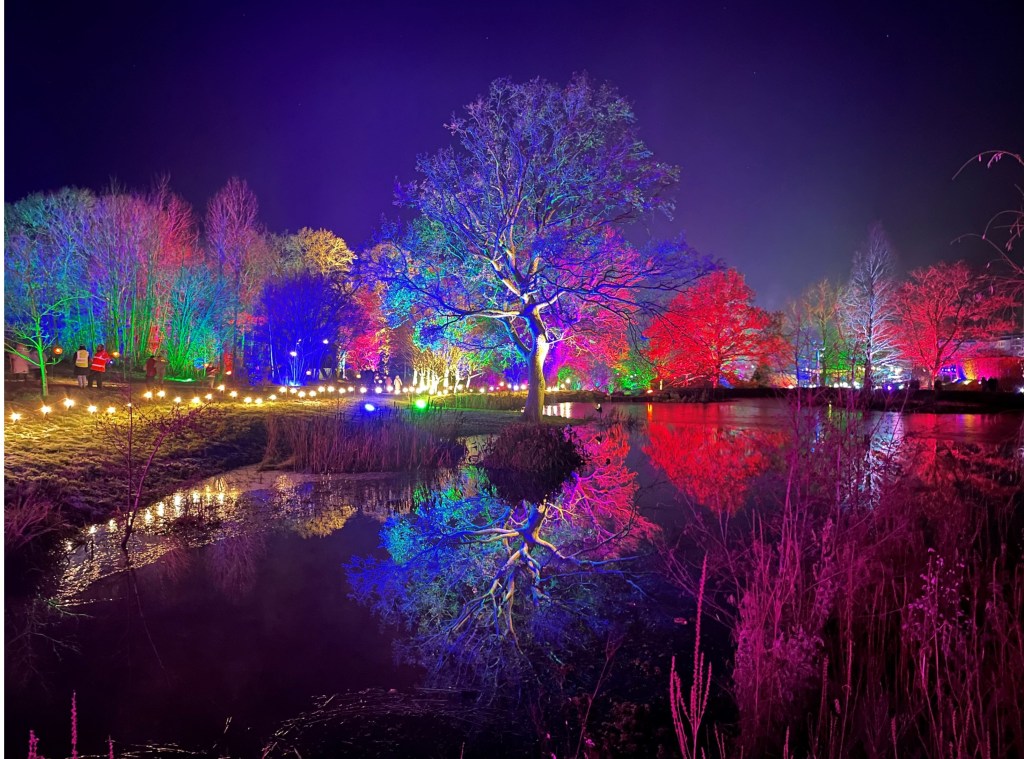
Winter needn’t be doom and gloom. The snow can be a hazard for travellers and people living alone or in isolated places but it also brings its own beauty and even quietness. The Royal Horticultural Society at its 5 Gardens, Wisley, Harlow Carr, Hyde Hall, Bridgewater, Rosemoor are brightening the winter evenings with ‘Glow’ Festivals. Light displays around the gardens and illuminations on and in trees bring a magical beauty. A reminder that light arrangements penetrate the winter cold and gloom. In frosty (even snowy!) weather the combination with coloured lights is, for many of us, a cheerfulness which delights. (Sorry if you don’t agree!!)
The photo above was taken by my friend Gill Henwood at a visit to the Glow Festival at Harlow Carr Garden, near Harrogate, Yorkshire. There are variable dates at the Gardens, some not ending until 30th December. If you live nearby any of the gardens, look up the Royal Horticultural Society website for further details.
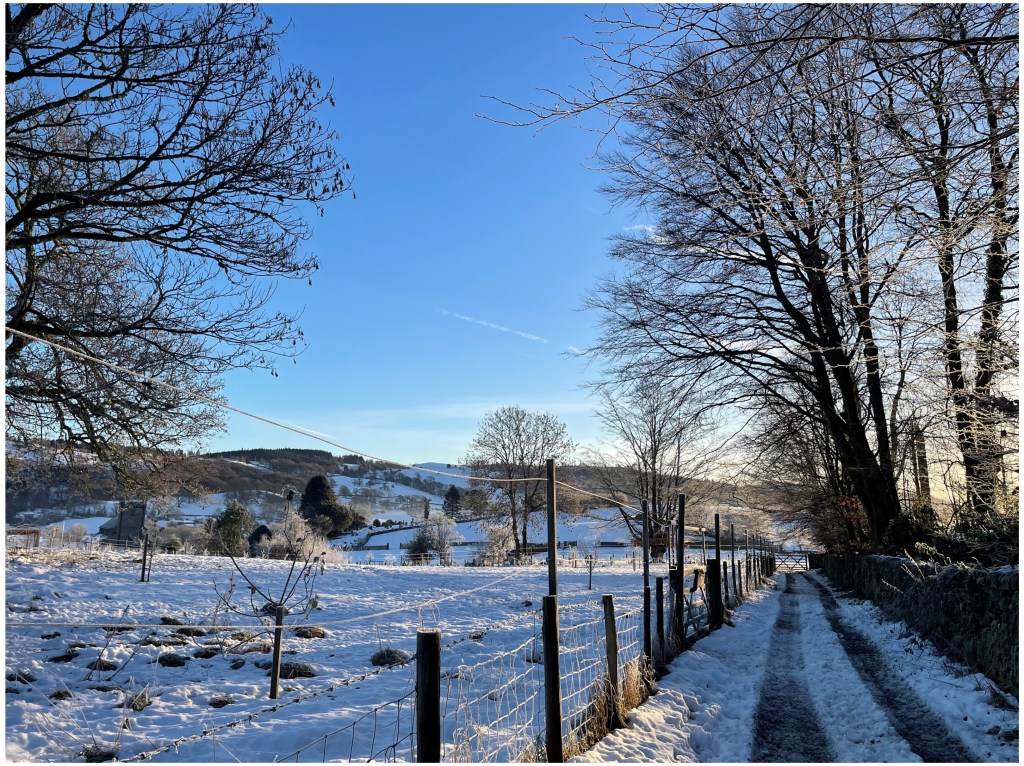
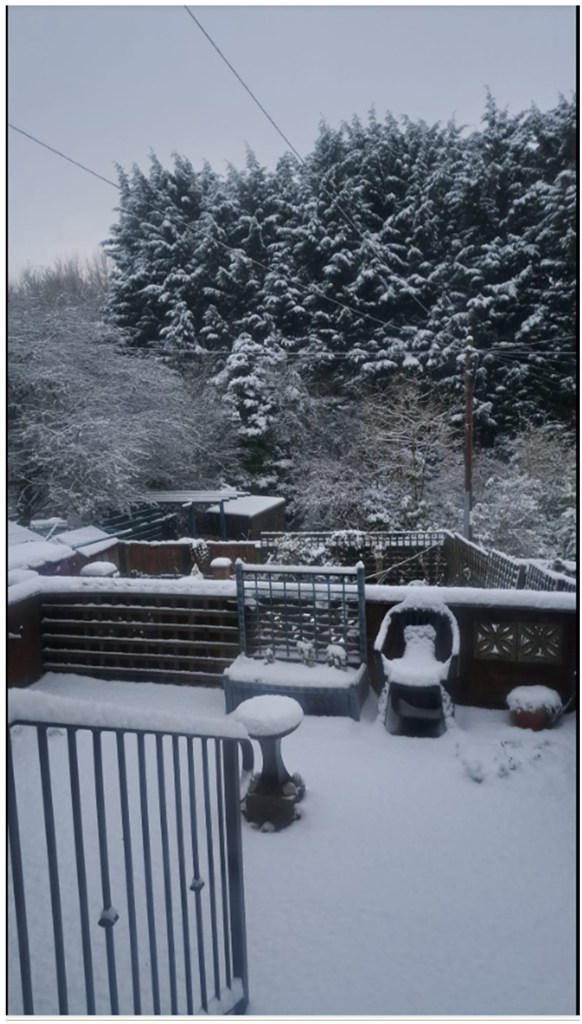
Meanwhile, my friend Heather Upfield has sent me a photo, from the West Coast of Scotland, of her garden and trees beyond, clothed in snow and breathing tranquility. So peaceful!
Both photos are aspects of Advent. The expectation of Light from God coming into the world, and the quietness and gentleness with which, in the birth of Jesus, He does it.
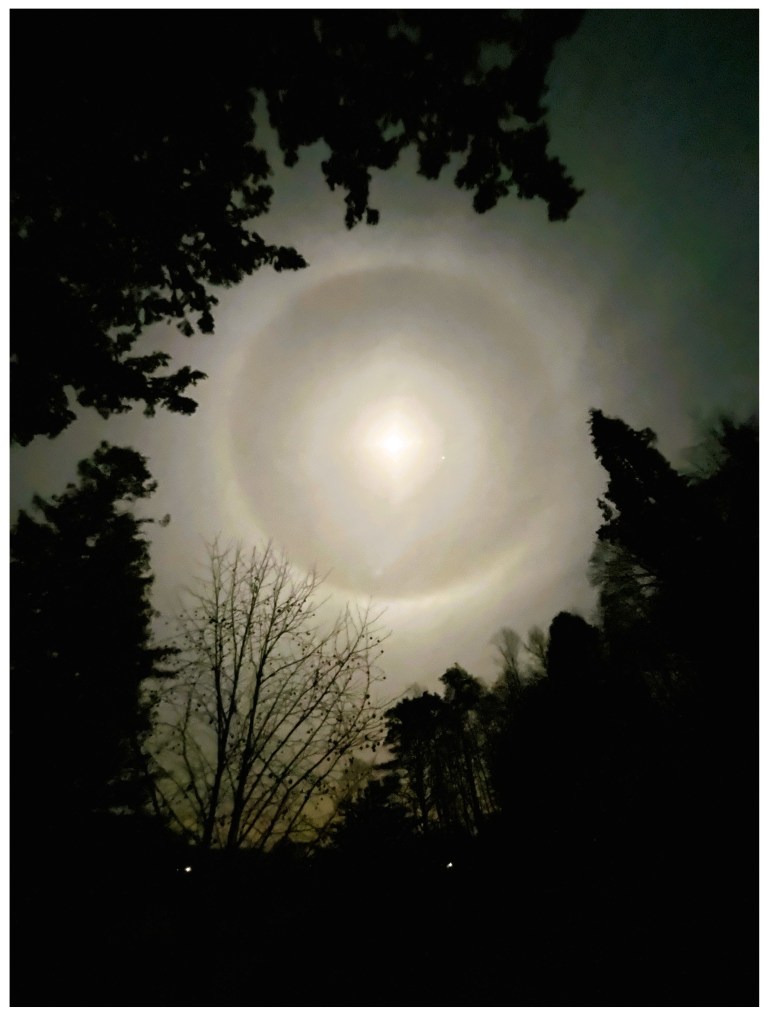
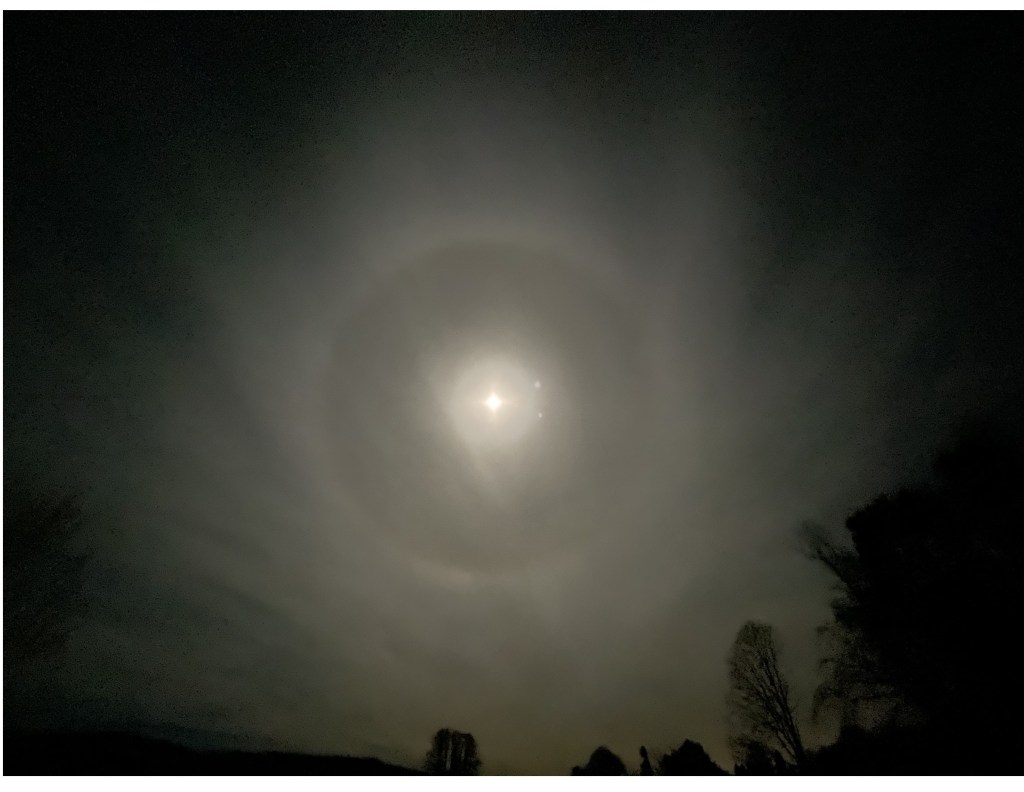
Lunar Halo A ring around the Moon was seen over the skies on Saturday evening The phenomenon is caused by the refraction of moonlight from ice crystals in the upper atmosphere. Gill Henwood took these photos of the moon over Cumbrian skies. Here, on the cusp of the Advent season, on the day which is sometimes called ‘Stir up’ Sunday, she offers this reflection to stir-up our thoughts towards the Christmas season ahead. It centres on the journey of the Magi who visited the infant Jesus, prompted by a bright portent in the night skies.
Pondering a moonbow The Eve of Stir-up Sunday.
Long ago, Magi mapped dark skies night by night accurate watchers. Travelling, through time seas, deserts, bringing wisdom to courts of power.
Stars, planets, moons their close companions familiar sky-marks leading, guiding. Magi knowing: interpreting heaven’s warnings, news for kings.
Waiting for a sign. recognizing the meaning. Following the sky-guide.