Tag: Julian of Norwich

His meaning is Love

Baubles on the tree. photo by Mr.G.

Love is His meaning

A school teacher once asked her class what was special about Christmas and a little child shot up a hand.   “Jesus has the birthday and we get the presents”.    Very perceptive – or was it simply hopeful! 
It is also a profound truth because that is what happens.  

At the heart of Christmas is a Gift and the present above all other presents that we receive is Love.  The whole meaning of Christmas is summed up in that one gift.  In the birth of Jesus right through to his glorious Ascension, God is giving us a living testimony of how much He loves is.  

The 14th century English mystic, Julian of Norwich was given a number of visions of the love of God.  She meditated on these in the quietness of her cell and she left the world the fruit of these meditations in her book Revelations of Divine Love.     At the very end of the book she deals with the questions of what our Lord’s meaning is – what his purpose is towards us – and she comes up with the answer; “Love is His meaning”.     It is worth quoting her in full:

Love was His meaning.  That message shines out from the crib as much as it was later to shine out from the cross.  It gives us the meaning and the purpose of God for us but it also shapes the purpose of our own lives.  

Christmas can be a time for sentimentality; for momentary truces in the battles we wage against each other for dominance, power or control. This is true between Nations but it can also be true in families. We can be filled with goodwill towards people for a time but it is often fragile. Real love, however, takes the hard road from Bethlehem to Calvary and never deviates.  Real love demands costly forgiveness, repentance, understanding, compassion and a bearing towards one another that imitates the love of Christ.    
Too often, as now, our world fails to show that love; too often, sadly, so do we.     Yet if we are to look towards the Bethlehem crib and understand its power and meaning, then only genuine Love will give it to us. As Christians we believe and experience God’s Love for us in Jesus Christ which awakens our love for Him and a sharing of that love with each other.   If that is lacking, the meaning of Christmas is lost and so are we.

[Mr G]

Your Love

Bless us with Love, O Merciful God;
That we may Love as you Love!
That we may show patience, tolerance,
Kindness, caring and love to all!
Give us knowledge; O giver of Knowledge,
That we may be one with our Universe and Mother Earth!
O Compassionate One, grant compassion unto us;
That we may help all fellow souls in need!
Bless us with your Love O God.
Bless us with your Love
.

– Author Unknown

And all is one Love.

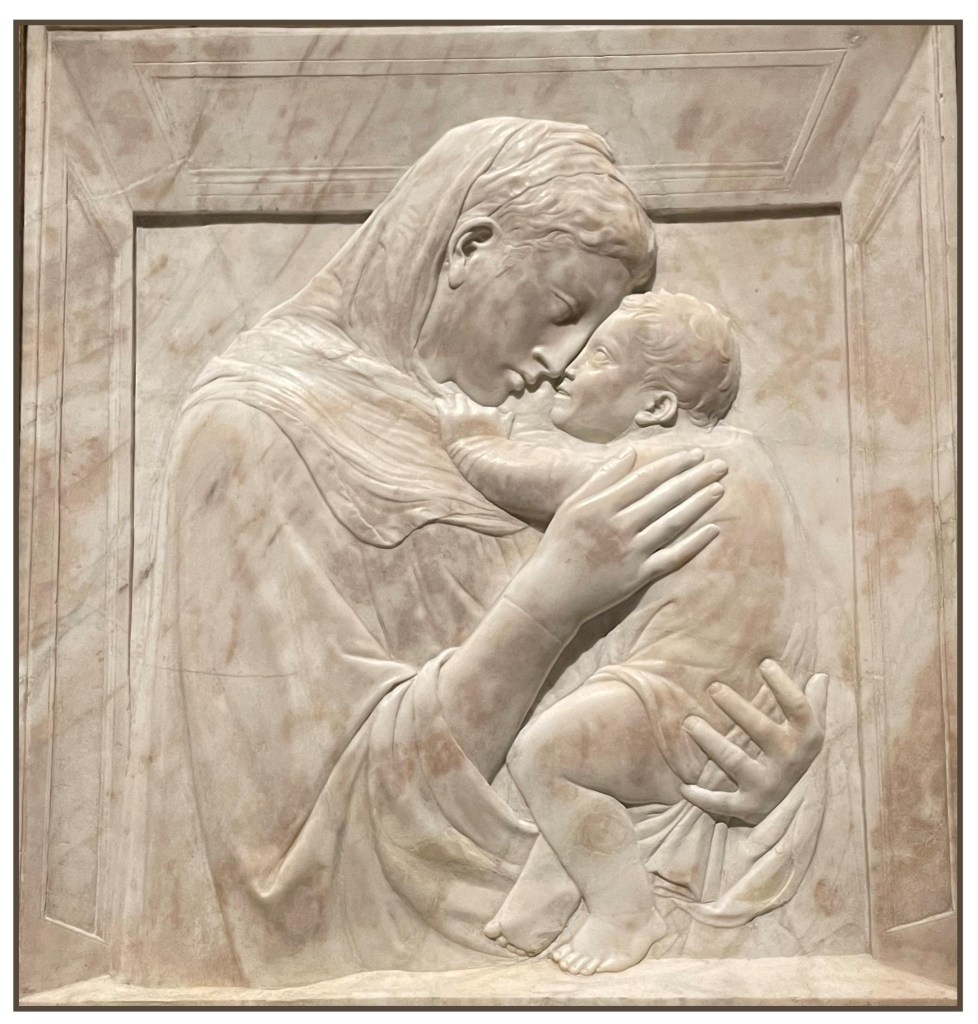
Madonna Pazzi by Donatello. Photographed by Gill Henwood **.

My friend, Gill Henwood visited the major exhibition at the Victoria & Albert Museum recently, featuring the work by sculptor, Donatello. It is entitled, Donatello, Sculpting the Renaissance. It’s the first major UK Exhibition to explore the exceptional talents of this great artist, his vision and his influence.

The Exhibition in at the V & A until Sunday June 11th. (Entry £20)

Gill has sent me some of her photographs including the one above, of Mother & Child, (Madonna Pazzi). Fitting illustration I thought, for Mothering Sunday. There is a beauty and a bond which translates into the closest intimacy.

Motherhood was not easy for Mary. She was young and inexperienced. Her pregnancy was viewed with suspicion. Her baby was born far from home in difficult and dangerous surroundings. When she took her son to the temple, only days old, Simeon’s prophecy for his future was ominous. Jesus’ childhood gave her cause for concern and in adulthood, it was clear that his life would  become increasingly dangerous and he would be marginalised. Mary had to learn to put her own feelings to one side to support him in his mission. Finally, she suffered the worst thing that can happen to a mother. She had to watch her Son die a tortured death.

God the Father’s  part in that suffering was to suffer too. Like Mary he beheld Jesus as a mother her child and to understand that a bit better, we might find help in the writings of the mystic, Julian of Norwich.

In the fourteenth century Julian of Norwich experienced and understood the motherhood of God in her visions. Mothering Sunday is a good day to share this vision and recognise that although we are distinguished by our gender, God is not. Instead God is both mother and father to us . ‘As truly as God is Father, so just as truly is he our mother.’ Said  Julian of Norwich. In both his motherhood and fatherhood, God faces up to his pain

The Theologian, Matthew Fox, muses on what Julian is saying. He says, “God is the true Father and Mother of Nature, and all natures that are made to flow out of God to work the divine will shall be restored and brought again into God.

Julian assures us that “The motherhood of God is a welcome thing on God’s part. Divinity does not consider motherhood a burden to bear for “God feels great delight to be our Mother.”

To recover the motherhood of God is to recover compassion:
Compassion is a kind and gentle property that belongs to a Motherhood in tender love. Compassion protects, increases our sensitivity, gives life, and heals.
Thus we see that the recovery of the theme of the motherhood of God flows naturally from other themes of cosmos, earthiness, blessing or goodness…A motherhood-of-God theology confronts the basic issue of letting go of the one-sided God of patriarchy and learning more about the God whose image we are.
Therefore it is also about learning more about ourselves and about our power for birthing
and creativity. Today it is especially urgent that men learn deeply how all persons, men included, are motherly as well as fatherly.” (Matthew Fox)

In the Donatello sculpture is, as I mentioned, an intimacy which is held by the bond of love, the love which creates a sense of mother and child relating as one. Increasingly, today, that same bond is being celebrated between fathers and their children, and hopefully this is leading to a broadening of the love which is reflective of God’s Trinitarian Love.

In her Revelations, Julian of Norwich said a most powerful thing:

I understood three manners of beholding of Motherhood in God: the first is grounded in our Nature’s making; the second is taking of our nature,—and there beginneth the Motherhood of Grace; the third is Motherhood of working,—and therein is a forthspreading by the same Grace, of length and breadth and height and of deepness without end. And all is one Love.

(Julian of Norwich)

Donatello’s statue opens the door to much thought. Julian of Norwich gently takes our hand and invites us to step through it.

[Mr G and others]

**The Madonna Pazzi, housed today in Berlin’s Staatliche Museen, is rectangular marble relief that dates from c. 1425. It was carved for private devotion during the beginning of the productive collaboration that Donatello formed with Michelozzo (1396-1472), an Italian architect and sculptor.

In a nutshell!

When I was in Norwich recently I visited the Shrine of St. Julian of Norwich.

The Church of St Julian is within the parish of St John Timberell. It is located in King Street.

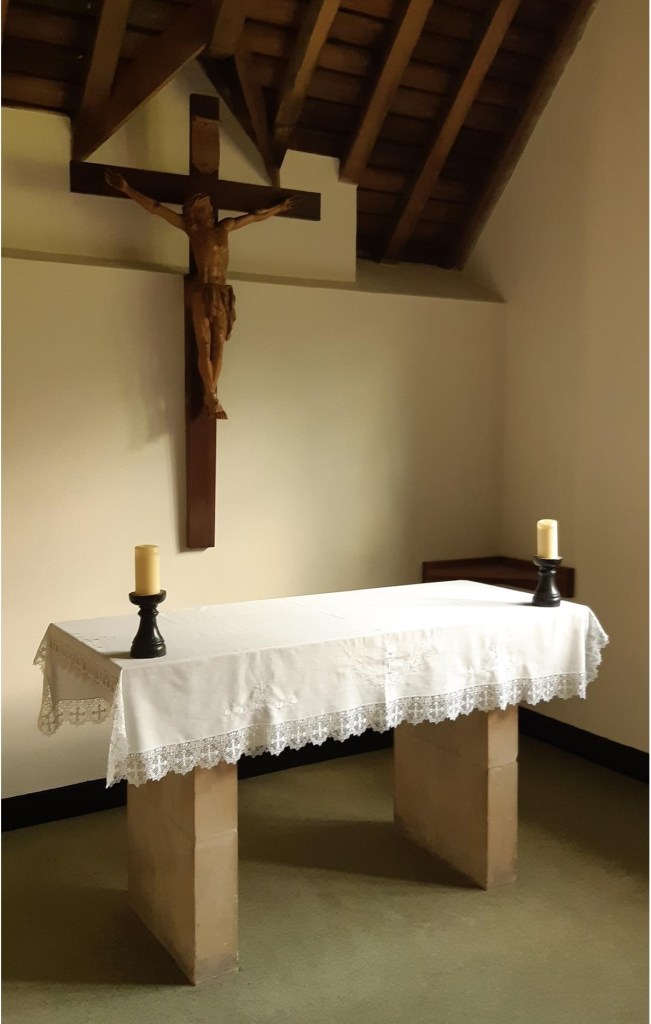
The Shrine itself is on the North side of the Church, where the vestry might have been. Unlike the church, which I would describe as Anglo-Catholic and ornate, the room which is built where the Shrine used to be, is fairly plain but certainly prayerful.

The original Shrine was torn down at the Reformation as part of the widespread acts of religious vandalism by the so-called reformers. The Church itself was destroyed by a German bomb during WWII. During rebuilding, excavations revealed the foundations of what was thought to be a medieval cell so it was rebuilt and is the Chapel of Mother Julian which we see today. Her more lasting legacy is her personal story and the writing which came from it.

Julian was so named after the Church where she resided in the latter part of her life, and where she lived out her life as an ‘Anchoress’ (someone who withdraws completely from the world to live a life of prayer in total solitude., though she was able to pray for and give spiritual advice through a window.)

She is known for just one book—The Revelations of Divine Love– which record sixteen visions granted to her by God on May 8th and 9th 1373 and it is her reflections on these over a 20 year period.  The Visions came to her when she was just 30 and they followed an illness which took her to the brink of death. Shortly after this she took up residence in a room built onto the church of St Julian & St Edward, Norwich.

At the heart of her thinking was the realization of our Lord’s suffering on the Cross which she accepted as the result of John 3:16—God so loved the world that he gave his only Son, so that everyone who believes in him may not perish but have eternal life.

For Julian, Christ’s sacrifice demonstrated the immensity of God’s Love and it was the central theme of her meditations. Alongside this she saw Christ’s nurturing of a new humanity (our re-birth into eternal life through the Resurrection) as like the action of a Mother giving birth to and nurturing  of her child. This idea of God as ‘Mother’ as well as ‘Father’ was more common in Medieval times than the masculine emphasis of later ages and perhaps only today is there an appreciation of God as embodying both male and female—a view that has restored women to their rightful place as co-equal with men. Celtic Christians, in an earlier time, had understood this too and they coined the phrase—“there is in the heart of God a mother’s heart.”

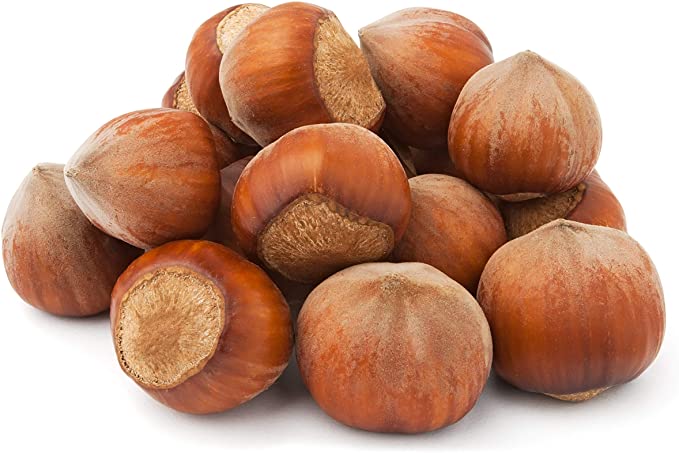
Julian saw the heart of the Gospel as God simply loving us—holding us in His love which is deeply tender and never leaves us. She saw that God was in everything good and this led to her famous vision of the hazelnut which she held in the palm of her hand. Asking God what it meant she understood that it represented all that God has made. It was so small it could have simply disappeared but it did not because God was continually loving it. From this she concluded that everything good is loved like that by God and everything has its being because of God’s love. The Hazelnut became for her the symbol of this and she saw that it had three characteristics—God made it. God loves it. God keeps it.

God was Maker, Lover and Keeper of all.  This was at the heart of God sending Jesus to love us into His Kingdom through his life, his suffering on the Cross and the new life He gives us through the Resurrection.

Julian’s Revelations can be summed up in a few beautiful words that she wrote: “Love was our Lord’s meaning. And I saw for certain, both here and elsewhere, that before ever he made us, God loved us, and that his love has never slackened nor ever will”

‘Love was our Lord’s meaning’ and we are caught up in that meaning. It is the Gospel in fact, as it were, in a nutshell !

Julian Shrine Chapel; Photo: PN

THE JULIAN PRAYER

Most Holy Lord

the ground of our beseeching

who through your servant JULIAN

revealed the wonder of your love grant that as we are created in your nature and restored by your grace

our wills may be so made one with yours that we may come to see you face to face and gaze on you for ever

Amen

Mary’s rose

photo | Gill Henwood

Today the church keeps the Nativity of the Blessed Virgin Mary,
her birthday! So a friend of mine, Gill Henwood, has sent me a Rose.
I thought it churlish to keep it to myself so I’m sharing it.

Gill wrapped her rose in a quotation by St John Henry Newman:
Holy Mary, Mystical Rose, you are the most beautiful flower created by God,
in venerating you we praise God for his holiness and beauty.

In the hymn, Crown Him with many Crowns  the second verse reads:

Crown him the Virgin’s Son,
the God incarnate born,
whose arm those crimson trophies won
which now his brow adorn:
fruit of that mystic Rose,
as of that Rose the Stem;
the Root whence mercy ever flows,
the Babe of Bethlehem.

The ‘mystic Rose’ referred to here is Mary but Jesus is the ‘fruit’ of that Rose and its stem and root – from whence all mercy flows.

The link is that Jesus and Mary are both engaged in the salvation of the world . Her‘ Yes’ to the Angel Gabriel, and thus to God the Father, opens the way for the Incarnation as she gives birth to Jesus. The ‘Babe of Bethlehem’ becomes the way God chooses to save us and free us and love us into His Kingdom, by the way of  Cross.  The Babe of Bethlehem is the instrument of that salvation  Jesus is the God Incarnate born,  who’s brow is now adorned with the potent symbol of the Crucifixion, the Crown of Thorns. Through this suffering and self-giving on the Cross the love of God, poured into Mary at the birth of Jesus, is poured out from Jesus Himself upon and for us all.

We are reminded that the Manger and the Cross are linked together in Jesus, or as T S Eliot puts it in The Four Quartets (Little Gidding) –The Rose  and  the Crown are one – Incarnation and Crucifixion totally intertwined in God’s plan for us and for our salvation and for the redeeming and re-creation of the world.

The result as Eliot puts it, echoing Julian of Norwich, ‘All Shall be Well’  All manner of things shall be well. We shall be well and though it is not always obvious, the world and all creation shall be well.

Enjoy the Rose.  By quite a process it can be a sign of God’s inexpressible and unconditional Love for you – for all.

Thank you Gill. Thank you God!!!


Gill served as my colleague when she was our curate at Whitechapel and Admarsh-in-Bleasdale in Lancashire . She is a great joy to me.