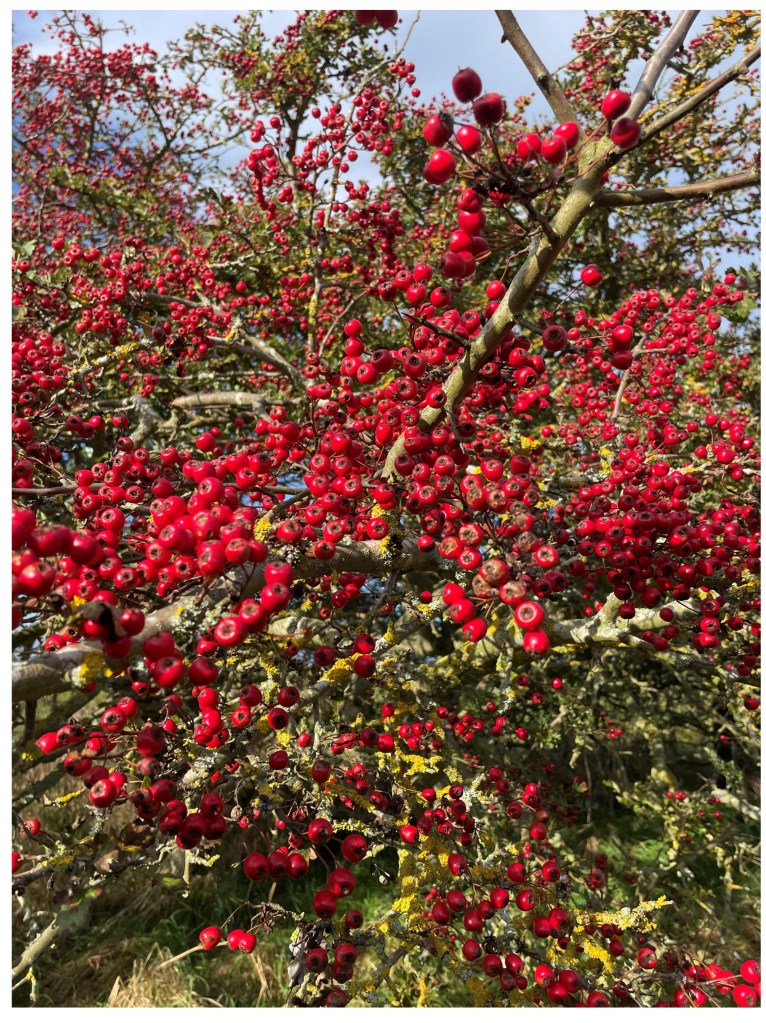
My friend, Gill Henwood, has sent me photos of a Hawthorn bush on the Holy Island of Lindisfarne, in all its autumn finery. It is too delicious not to share it.
The Woodland Trust says that the Hawthorn has great value to wildlife.
“Common hawthorn can support hundreds of other species. It is the foodplant for caterpillars of moths, including the hawthorn, orchard ermine, pear leaf blister, rhomboid tortrix, light emerald, lackey, vapourer, fruitlet-mining tortrix, small eggar and lappet moths. Its flowers are eaten by dormice and provide nectar and pollen for bees and other pollinating insects. The haws are rich in antioxidants and are eaten by migrating birds, such as redwings, fieldfares and thrushes, as well as small mammals.
The dense, thorny foliage makes fantastic nesting shelter for many species of bird.”
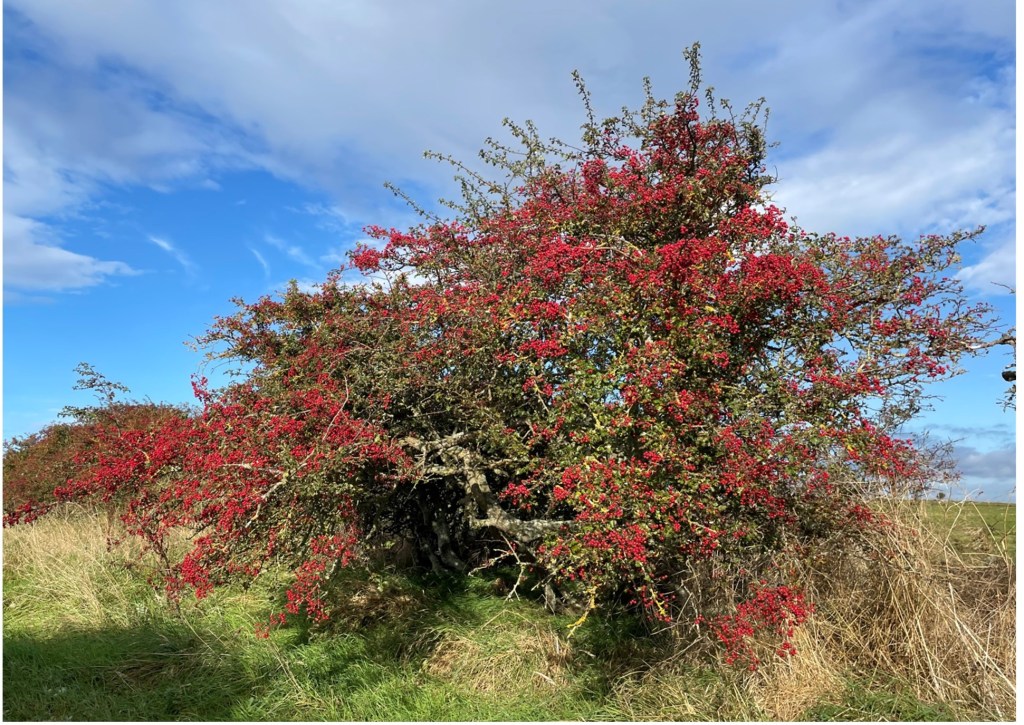
Autumn dripping leaves of weary gold
Exits quietly, fading through the trees.
Hawthorn shakes her cloak of ruby fire.
Naked to the woods and twisting breeze…..
… Winter’s breath now lingers in the air.
[From a poem by, Karen Neary, Winter Song . Copyright © Karen Neary.
The full poem and others by her are to be found on the website, Poetrysoup
PoetrySoup.comhttps://www.poetrysoup.com/poems
[Mr G]
 Mr G's Ponderings