Tag: Lynn Hurry

Foxes of Latton

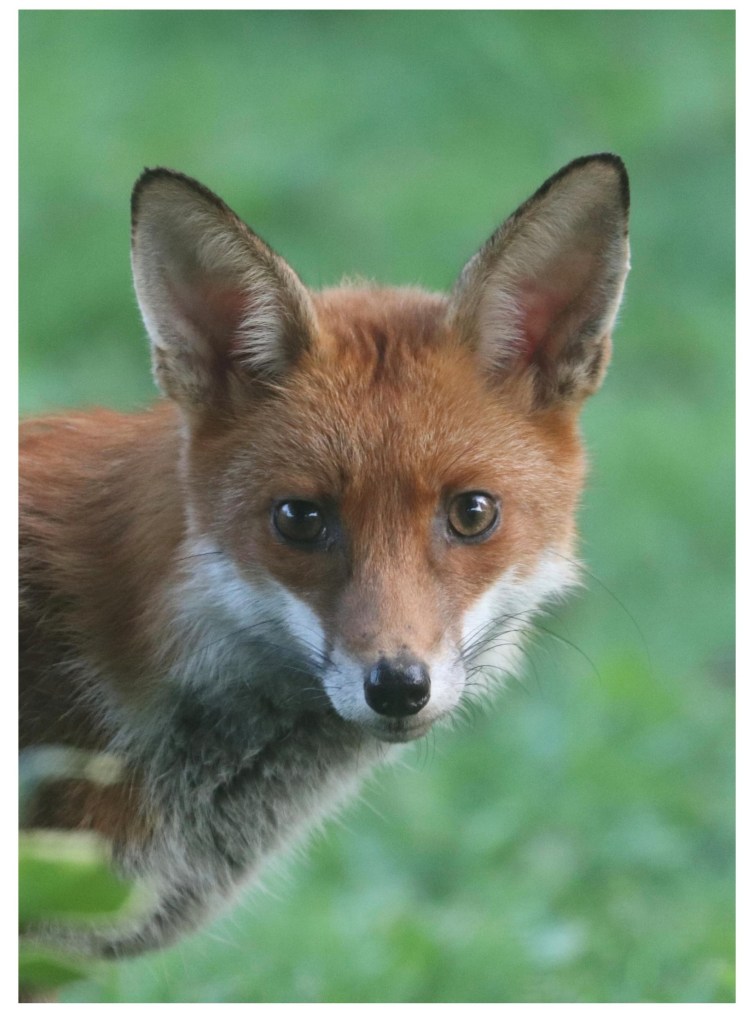
Latton foxes, Minnie-Mama photographed byLynn Hurry

The Foxes have returned to Latton Vicarage!
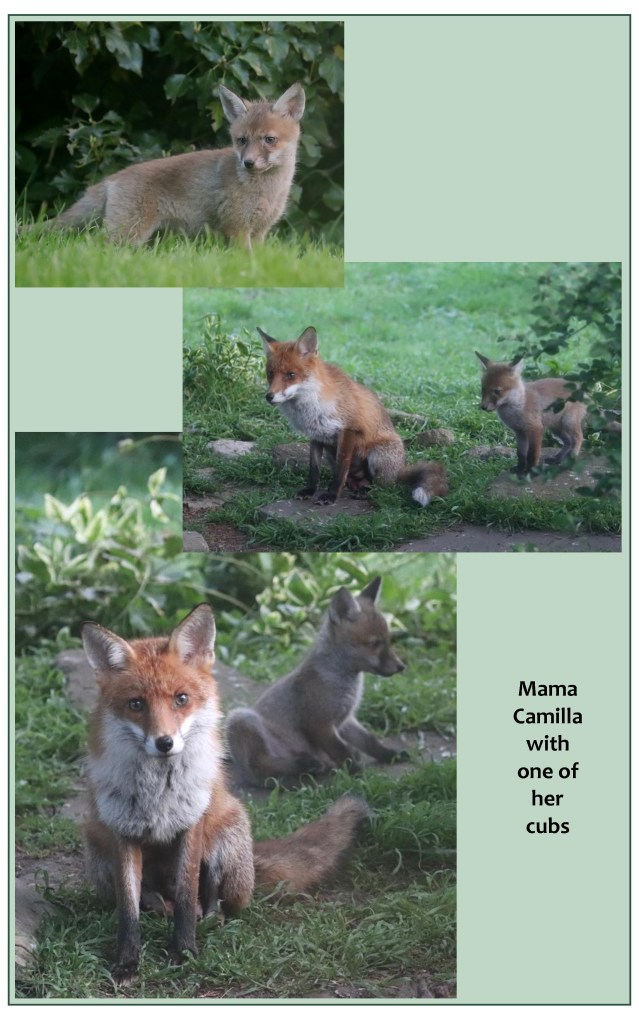
Regular readers of this Blog will be familiar with the antics of the fox cubs in Latton Vicarage garden and we are sure there will be more this year. Mama Fox died last year bur one of her daughters, named by Vicar Lynn as Minnie-mama  has given birth. Another, who has been named Camilla in honour of The Queen, has already shown off some of her cubs.
Vicar Lynn has been busy with her photo-box so we are assured of regular updates.
As Spring unfolds, the world is teeming with new birth, of which the foxes  are a sign.

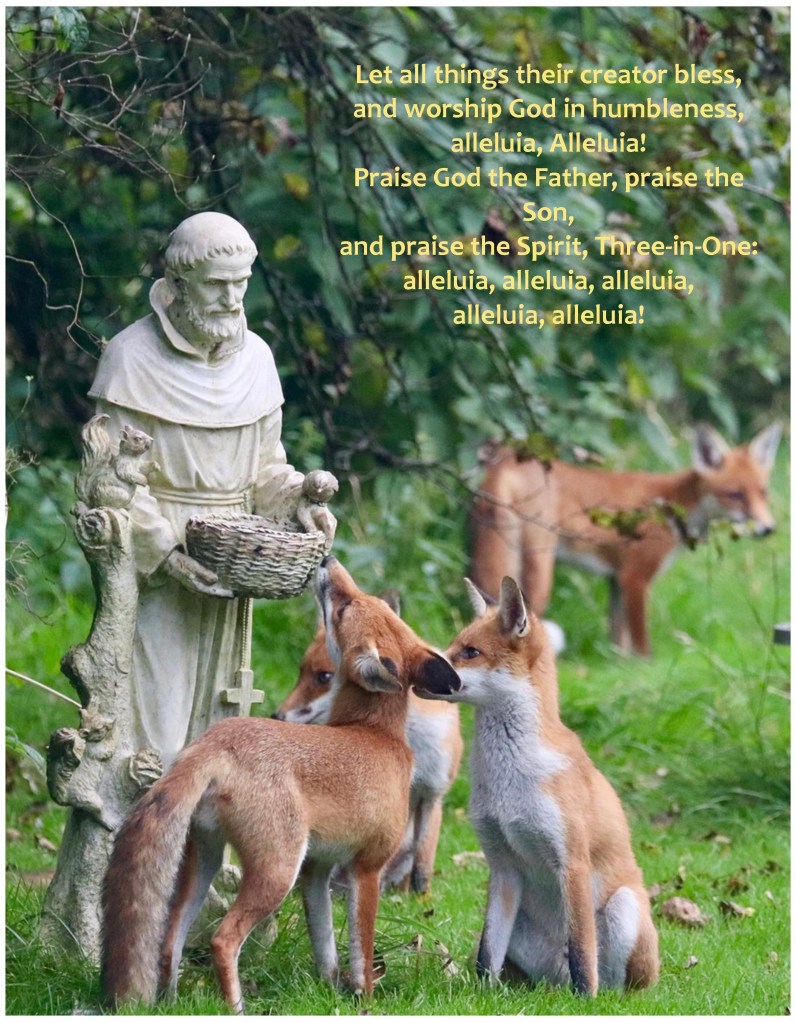
As the fox cubs are being brought up on ‘holy ground’ next to the church, watched over and fed by Vicar Lynn, it is not hard to think of it being an animal convent. Which thought brought to mind the story of St Ciaran and Brother Fox.

In 1934, the scholar Helen Waddell published a small colletion of tales from the Desert Saints and the animals who lived with them. The collection was revised in 1995 by Esther de Waal who provided an introduction to them.
This story is about St Ciaran after he arrived in Ireland at the behest of St. Patrick.
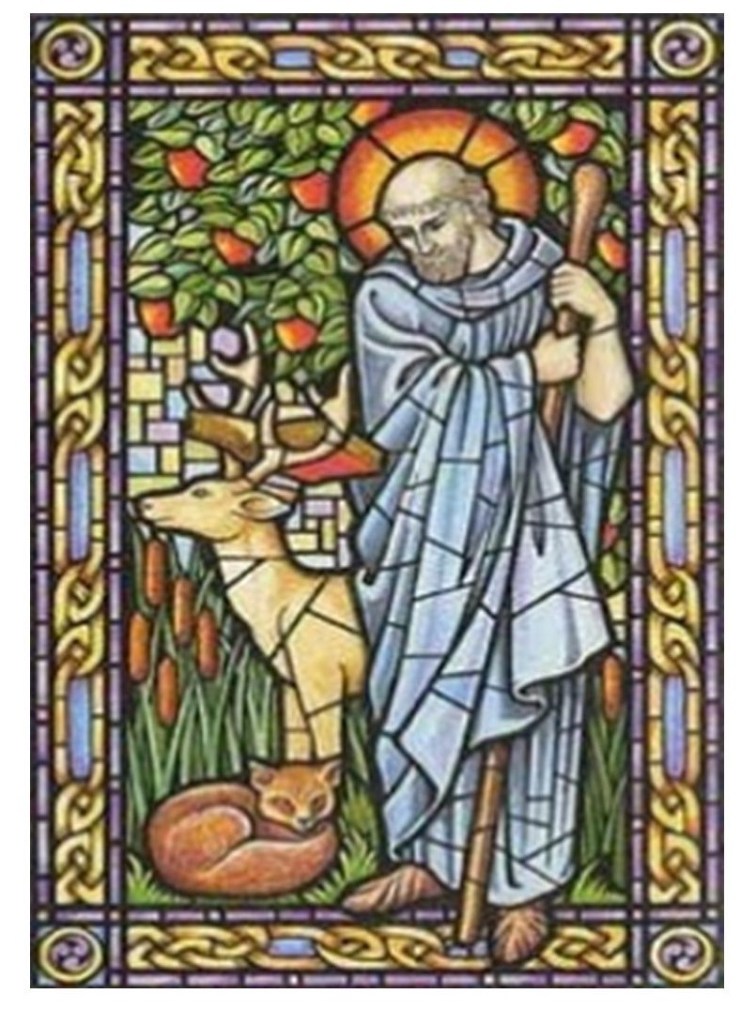
“When St Ciaran settled in Ireland, he sat under a tree. Nearby was a wild boar. The boar was very annoyed at seeing him but sensed something about the saint  that made him flee in terror. As Ciaran established himself and built a cell that would eventually grow into a monastery, the boar was made tame by God and he slowly returned. He became Ciaran’s servant and began tearing down twigs and grass with his teeth, helping to make secure the saints dwelling place. Ciaran regarded him as his first disciple.The boar became company for Ciaran until other animals joined.These animals came from their dens in the wilds. A fox, a badger, a wolf and a deer came to live with Ciaran. They all obeyed the saint’s words in all things as if they had been his monks.

Alas, though, one day, the Fox, shrewder and wilier than the others, stole the abbots shoes and, abandoning his vow, carried them off into the forest, intending to chew them out of sight. Knowing this, the good father sent brother Badger after the fox. The badger was well learned about the woods and set out obediently and straightway went to the den of the fox. Brother Fox was just about the gnaw his master’s slippers so he began to bite the fox’s ears and tale and cropped his fur. Fortunately, Brother Badger had got there in time. He forced the fox to return to the monastery to do penance for his theft. The shoes were returned none the worse for wear.
St Ciaran asked, “Why did you do this evil deed which monks shouldn’t do. We have all we need here—food, water and all we share with each other. If there were things that were lacking, we would have asked Almighty God to get it for you.”
Then the fox asked forgiveness and did penance by fasting and would not eat again until the Saint said he could. After that, Brother Fox lived sociably at peace with the others.

Other disciples joined Ciaran but always, those animals who had begun the work with him lived all the rest of their lives in his company, tame and familiar, for the same was always glad to see them always.
Not least, Brother Fox who had learned the way of repentance and the joy of God’s forgiveness.
World Wildlife Day

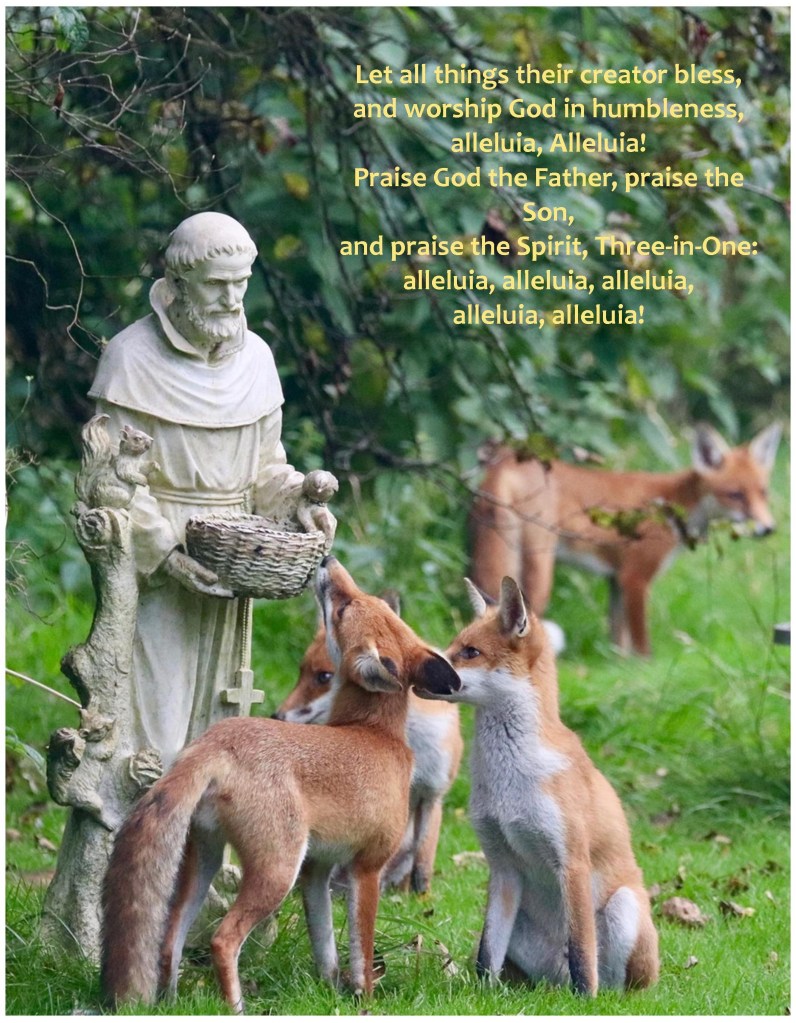
The foxes of Latton visit their Patron, St Francis. Photo by Lynn Hurry

World Wildlife day

World Wildlife day was held on March 3rd.

The Secretary-General of the United Nations, António Guterres, wrote this:

On World Wildlife Day, we reflect on our responsibility to protect the magnificent diversity of life on our planet. And we recognize our abject failure.
Human activities are laying waste to once-thriving forests, jungles, farmland, oceans, rivers, seas, and lakes. One million species teeter on the brink of extinction, due to habitat destruction, fossil fuel pollution and the worsening climate crisis. We must end this war on nature. 

The good news is that we have the tools, the knowledge, and the solutions. This year marks the 50th anniversary of the Convention on International Trade in Endangered Species, which has helped protect thousands of plants and animals. And last year’s agreement on the Kunming-Montreal Global Biodiversity Framework marked an important step towards putting our planet on a path to healing. 

As this year’s theme – ‘Partnerships for Wildlife Conservation’ – highlights, we need to work across governments, civil society, and the private sector to turn commitment into action. And we need much bolder actions now to cut emissions, accelerate renewables, and build climate resilience.  
Throughout, we need to place the voices of local communities and indigenous people – our world’s most effective guardians of biodiversity – front and centre. 

Today and every day, let us all do our part to preserve natural habitats and build a thriving future for all living beings. 

António Guterres Secretary-General, United Nations

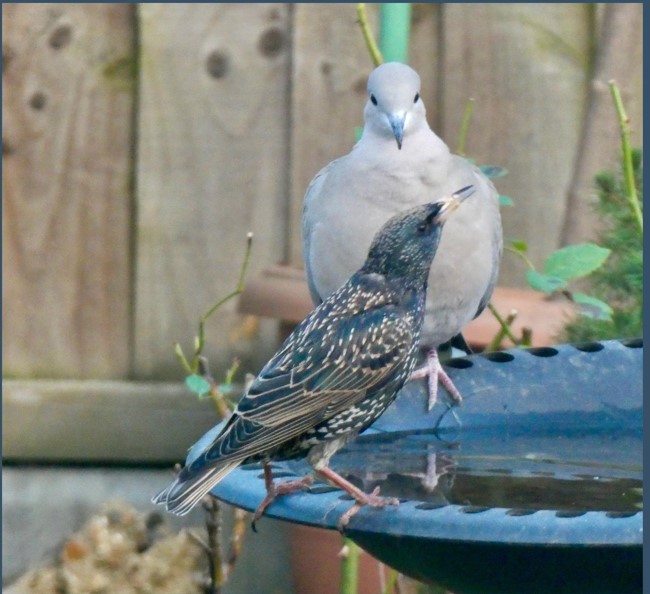
photo: Joyce Smith

As we know, there are huge issues affecting Planet Earth right now and much of what we face feels overwhelming. However many feel a sense of responsibility and a desire to work for a real change. Some of us recognise that we are stewards under God for the well-being of creation. For too long  the understanding from the Book of Genesis that humankind have dominion over all the earth, has been interpreted has given us a God-given right to dominate all creatures on the earth and to exploit creation for our own ends. ‘Dominion’ means, rather, Stewardship and Responsibility. Ultimately it involves Accountability to God even if there are many who don’t accept that duty.
Some of us may think that whilst we accept that responsibility, there is very little we can do. How can each of us make any difference?

I am always heartened by this little story:

A little sparrow laid on its back with its legs in the air. Another sparrow walked past and asked the sparrow on his back what it was doing. The little one replied that it had heard that the sky was going to fall in and thought that it should try and help hold it up.
The other sparrow laughed and said, “You’re only a little sparrow with little legs. How can you hold up the whole sky?
The sparrow laid on the floor with its legs in the air, said:
“I know, but one does what one can.”

Whenever we feed the birds in our garden, nurture our plants, take care of our domestic pets, feed and water wild animals and little but significant things such as that, then we are ‘doing what we can’ and it makes a big difference.

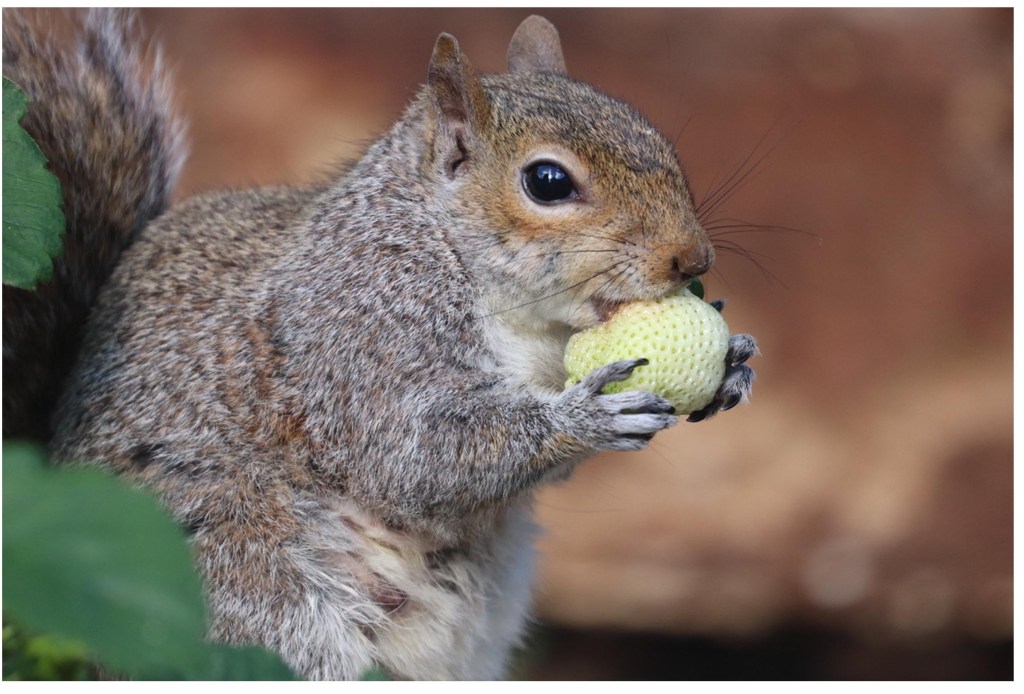
Sqirrel helping herself to Vicarage not quite ripe strawberries! Photo: Lynn Hurry

Heavenly Father,
You have taught us, through your servant St Francis,
That all creation is your handiwork.
Grant us your grace that we may
Exercise wise stewardship of this Earth;
Tread lightly upon it;
And cherish its resources;
That our children may enjoy its riches, throughout all generations,
And your name be glorified through all that you have made.
Amen.

Rt Revd David Walker
Bishop of Manchester

Photo: Gill Henwood

“Enlighten the darkness of my heart”

Latton foxes gather around St Francis. Photo by The Revd Lynn Hurry

When St Francis gave up his life as a kind of lad-about in Assisi – when he turned away from drinking, fighting, leading a pack of rebels, it was because he had been brought up sharp by Jesus.
Not for the first time or the last, God had visited the soul of one whose life was going in entirely the wrong direction. Francis’s soul was sick and needed healing.
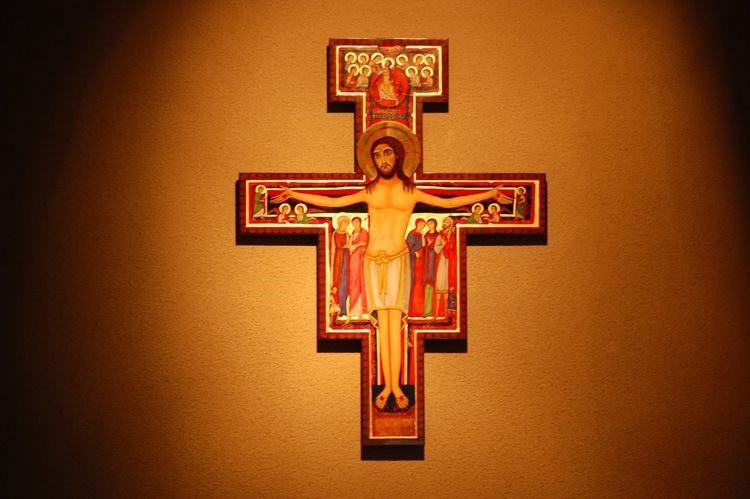
So God drew him away to a derelict church of St. Damiano on the edge of Assisi. There he knelt in prayer and looked at the faded crucifix still hanging over the altar. Francis insists that the voice of Christ came to him from that crucifix, at that moment. The words he heard were: Francis, rebuild my church, which you see is falling down.
The derelict Church certainly needed repairing, just as Francis’s soul needed rebuilding. Francis was about to begin his ministry and service for God.

First, though, he had to get to know the One who called him to this service and to know the love of God flowing into him and through him to others. Francis opened his heart to God in Holy conversation.
As  he knelt in that place of meeting with Jesus, the first prayer he said was one that was to remain with him throughout the rest of his life.

The Prayer before the Crucifix

Most High, glorious God,
enlighten the darkness of my heart
and give me
true faith,
certain hope,
and perfect charity,
sense and knowledge,
Lord, that I may carry out
Your holy and true command

Another prayer is this which was to become food for his soul, in which he prays that the love of the Lord Jesus should enter his heart and absorb him with its fire and sweetness. It is known as the Absorbeat because God’s loving Spirit possesses him.

May the power of your love, Lord Christ,
fiery and sweet as honey,
so absorb our hearts
as to withdraw them from all that is under heaven.
Grant that we may be ready
to die for love of your love,
as you died for love of our love.
Amen

Francis certainly used this prayer often , and it is characteristic of his spirituality.

A simple, yet deeply profound prayer was one that he is said to have dictated as he lay dying.
It was a prayer which he had used often and wasn’t original, but it was so important to him that it was his deathbed prayer. Many will know it in some form.

We adore you, most holy Lord Jesus Christ,
here, and in all your churches throughout all the world;
and we bless you,
because, by your holy cross,
you have redeemed the world.

Francis grew quickly and deeply in love with God and this spurred on his eagerness and zeal to serve others in God’s Name.

Richard Rohr, a much loved Franciscan brother who lives in America and teaches Franciscan spirituality wrote this week that the only way we can truly know how to love God is to love what God loves. Only then do we love with divine love and allow it to flow through us.

It is not always easy to do that because such love has to be stripped of anything that  makes demands or is tinged with our desire for them to be what we want.
A Franciscan theologian, Duns Scotus, put it this way.

“we are to love things in and as themselves, to love things for what they are, not for what they do for us. That’s when we really begin to love our spouses, our children, our neighbours, and others. When we free them from our agendas, then we can truly love them without concern for what they do for us, or how they make us look, or what they can get us. We begin to love them in themselves and for themselves, as living images of God. Now that takes real work!”

Through Prayer and especially time alone with and for God, this spirituality of loving what God loves, simply because God does so, became central to St Francis’s own spirituality and way of life. It became the driving force for his work with the poor, the sick, the lepers, animals, birds and all of nature.
It was how he came to love and honour God.

So he came to Praise God  above all else.
This he expressed in another Prayer poem

Praises of God.


You alone are holy,
you who work wonders!.
You are strong, you are great,
you are the Most High,
you are the almighty King,
you, holy Father, King of heaven and earth.

Lord God: you are Three and you are One,
you are goodness, all goodness,
you are the highest Good,
Lord God, living and true.

You are love and charity, you are wisdom,
you are humility, you are patience,
you are beauty, you are sweetness,
you are safety, you are rest, you are joy,
you are our hope
and our delight,
you are justice, you are moderation
you are all our wealth
and riches overflowing.

You are beauty, you are gentleness,
you are our shelter, our guard
and our defender,
you are strength, you are refreshment,
you are our hope.
you are our faith.
you are our love,
you are our complete consolation,
you are our life everlasting,
great and wonderful Lord,
all powerful God, merciful Saviour!

Amen.

Of course, we are probably all familiar with the poem/song  Make me a channel of your peace. It is known as the Prayer of St. Francis but it was not written by him. Indeed in was probably written in the 1920’s but who could read, pray or sing it, without acknowledging that it is marinated in St. Francis’s own spirituality.

There is so much in his sayings, these prayers, and canticles I haven’t referred to, but if we are to understand the witness and service of St. Francis, these prayers above are a good place to start.

The San Damiano Cross from Fr. Michael Scanlan

[Mr G]

I love that God loves me

Photo taken in Latton Vicarage Garden by my, friend, The Revd. Lynn Hurry

Readers of this blog at the end of July may remember that Lynn, my Vicar, reflected on the squirrels which frequented the Vicarage garden.
She accompanied her thoughts with a photograph of a squirrel raiding the vicarage strawberry patch. She was in the act of stealing an unripe but rather plump strawberry. I say ‘stealing’, but I’m sure that the offender would say that it was simply a re-distribution of wealth. A Christian view may be that it was a sharing in God’s bountiful provision for the sustaining of all.

“Umph! ” I can just hear some people mutter. My friend, Mary Bard, who won the picture competition last year with a photo of a squirrel thwarted whilst attempting to steal peanuts , may disagree with my loving view of squirrels!

But there is always hope for repentance and redemption in God’s scheme of things!

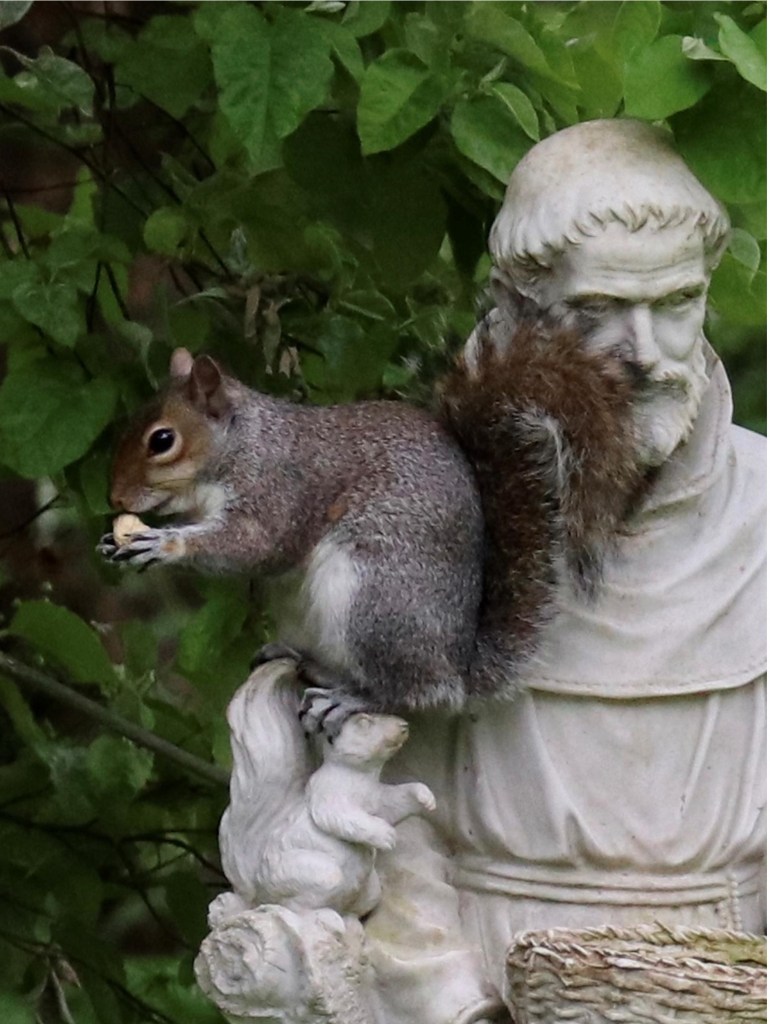
As we see in Lynn’s latest photographs the squirrel is seeking sanctuary with St. Francis. She sits in the basket and is assured of a ready welcome and acceptance. I think there are signs here of her need for forgiveness and who better to scamper to but St. Francis.
True, she later uses the stone squirrel on the statue to quietly munch a morsel of food, which may have been in the Saints’ basket! Of course, she didn’t steal it. St. Francis (in the guise of Vicar Lynn) always leaves some tit bits around for the animals and birds. On ths occasion, it is a sign of forgiveness because of the squirrel’s repentance.

Maybe that little squirrel teaches us two things.

First when we return to the Lord after some act of unlove or sin, then He always forgives the repentant sinner.
Secondly, once we know we are forgiven we are fed anew with God’s love.
In the squirrel’s case this has come in the form of a peanut.
Yours comes with a sense of God’s grace bursting joyfully in your heart.
Try to love that God loves you!

Dear St Francis,
Thank you for sharing God’s loving care with me,
even when I’m just a tiny bit naughty.
I’m sorry I stole the strawberries.
Thank you for the peanuts.
Please tell God that I love that He loves me, no matter what.
Could you please remind Him to tell other people that too.
They do need to know it quite often.
Amen

[Mr.G.]