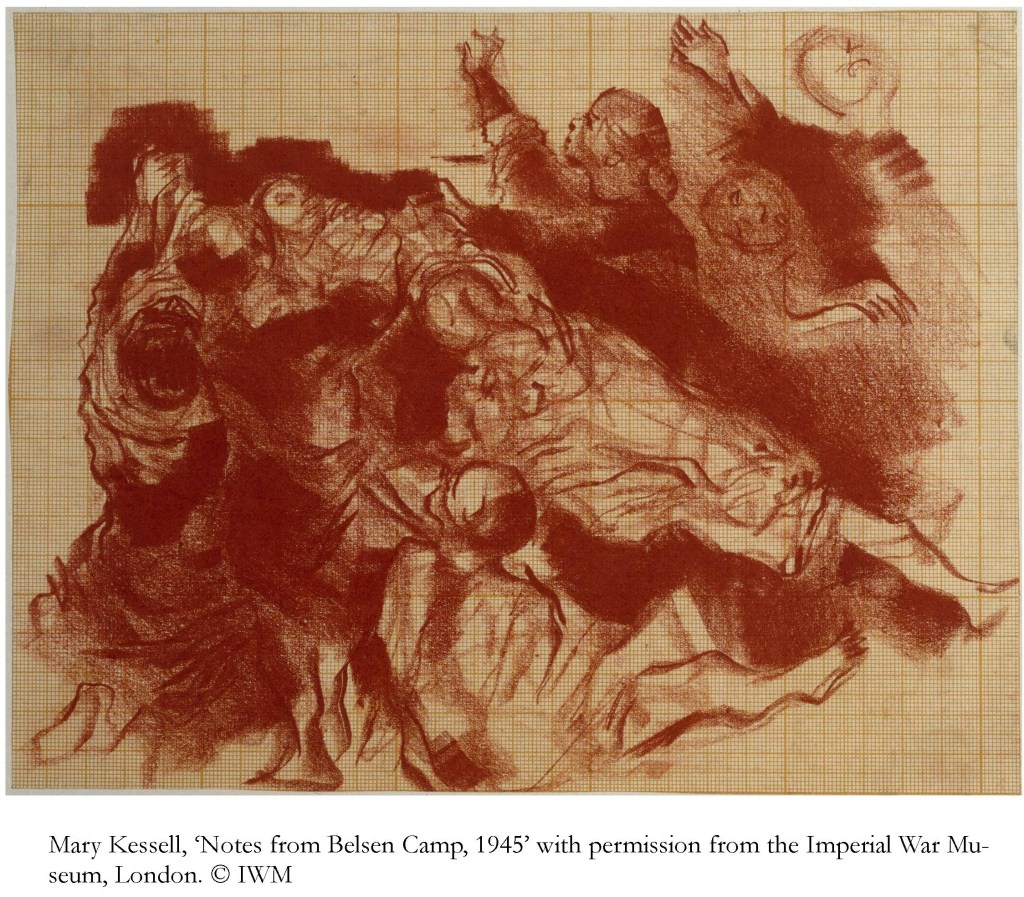
The 27th of January is the day for everyone to remember the six million Jews’, Romanies, Homosexuals, Handicapped, Jehovahs Winesses , Christian ministers, murdered in the Holocaust, the millions of people killed under Nazi persecution, and in the genocides which followed in Cambodia, Rwanda, Bosnia, and Darfur.
The 27th of January marks the liberation of Auschwitz-Birkenau, the largest Nazi death camp.
Elie Wiesel was both a survivor of the Holocaust and yet its victim too because everything changed for him. He became one of the most well known people to bear witness to what happened in the evil camps and his biography of his time in Buchenwald was also a kind of biography of the Nazi ‘final solution.’ He was born on the 30th of September 1928, and passed away on the 2nd of July 2016 at the age of 87.He was a noble peace prize winner and his biography during the holocaust called ‘Night’ is available still along with other writings.
Below is something about the struggle he was having after his ‘liberation’, which he tried to come to terms with in ‘Night’. I wrote about a meeting he had with the French novelist Francois Mauriac, who had agreed to write a preface. Much of what follows is based on what Mauriac said.
Elie Wiesel was a young Jew who was thrown into a concentration camp by the Nazi’s when he was just 15. He witnessed many horrors and he experienced the dereliction of feeling abandoned by God.
By some miracle he survived and he went on to write his experiences in a powerful book which he entitled Night.
It is not a long book but to read it is extremely moving and left this reader with a profound sadness.
Elie Wiesel’s faith was deeply shaken and after the war he was sent to interview a Roman Catholic novelist, Francoise Mauriac.
Mauriac wrote a foreword to ‘Night’.
There he tells of Wiesel’s bitterness at God.
“I no longer pleaded for anything. I was no longer able to lament”, said Wiesel to him, On the contrary, “I felt very strong. I was the accuser, God the accused. My eyes had opened and I was alone, terribly alone in a world without God..”
Mauriac, spoke of his reaction to this.
From the depth of his own faith he wanted to speak to Wiesel of “that other Jew, this crucified brother who perhaps resembled him and whose cross conquered the world.“
Mauriac wanted to say that the connection between the cross and human suffering “remains the key to the unfathomable mystery in which the faith of his childhood was lost.”
He wanted to say: “We do not know the worth of one single drop of blood, one single tear. All is grace. If the Almighty is the Almighty, the last word for each of us belongs to Him.”
But as Mauriac thought this, he sensed that his words would have appeared empty to this young Jew, who in his own way was carrying a Cross on a journey that was uncharted and which defied explanation.
So Mauriac said nothing but what he did would speak volumes.
“All I could do,” he said,” was embrace him and weep.”
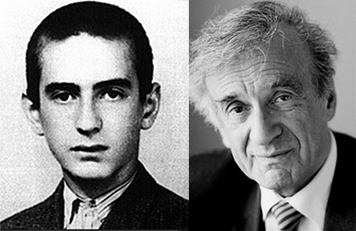
‘Never Shall I Forget’ by Elie Wiesel is a harrowing passage recounting the first night he spent at Birkenau, from Wiesel’s famous memoir Night.
Never shall I forget that night, the first night in camp,
that turned my life into one
long night seven times sealed.
Never shall I forget that smoke.
Never shall I forget the small faces of the children
whose bodies I saw transformed
into smoke under a silent sky.
Never shall I forget those flames
that consumed my faith for ever.
Never shall I forget the nocturnal silence
that deprived me for all eternity
of the desire to live.
Never shall I forget those moments
that murdered my God and my soul
and turned my dreams to ashes.
Never shall I forget those things,
even were I condemned to live
as long as God Himself.
Never.
Elie Wiesel
 Mr G's Ponderings