Tag: Mr.G.

Walking Ancient Highways of Pilgrimage

The Path / softly. a photo by Gill Henwood taken near her home in the Lake District.

I have walked the ancient highways,
Pilgrimaged Caminos, along tracks through forests to
Santiago de Compostella where the Gospel bell rings
and envelops us with the scent of heaven.

Stone age tracks and rumoured Roman roads
carrying ancients
across Lakeland ridges above Ullswater ,
Pooley Bridge to Howtown,
touching Martin’s dale and High Street
where the holy feet of Kentigern trod
carrying the Gospel words on both his sole and soul.

I have waited on the shore as Northumbrian seas
flow and ebb revealing the track over water leading to the haven
of Aidan’s gathered boys, long ago
to pray and hear the word of the Lord, going out eagerly
to imprint God’s love to a thirsty, hungry people.

I have travelled up Welsh valleys and heard
the whispered stories of holy men and women
consecrating the soil with joyful presence and with pain;
meeting St. Melangell, hiding trembling nature,
a hare protected against royal need to kill.

I have shuffled up worn steps, prayer walking 
to kneel with the common people at Canterbury’s shrine.
( left hand only please! Make way for the richer folk
who hope to anticipate the right hand side of heaven
with their purses of gold!).

I have trodden along disused railway line
In the valley of Bec were monks and nuns
travelled between monastery and convent,
and more than once Archbishops and Bishops
left their homeland for Canterbury and beyond.

These ancient tracks, once deeply trodden remain,
echoes of journeys taken into a past world, presently,
and leading to a future steeped with hope,
to the end of all our walking,
the cell at the heart of God.

Mr.G. 25.11.24
Birds of Auschwitz

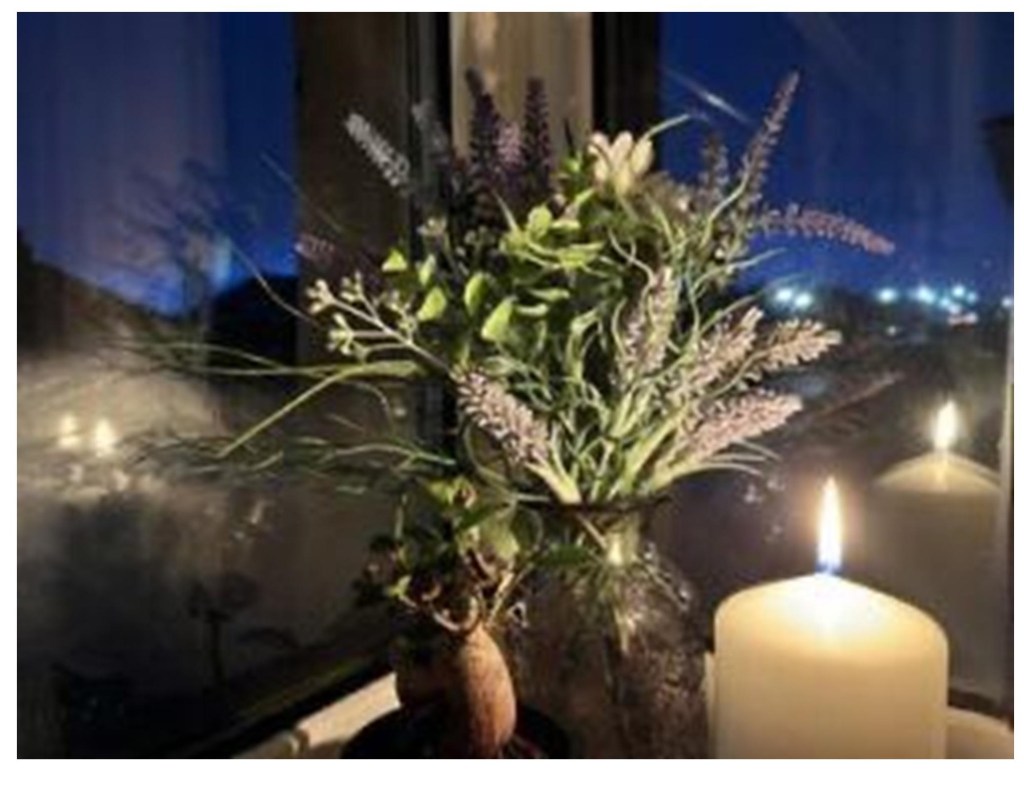
Photo: Holocaust Memorial Trust

Yesterday, January 27th,  was Hololocaust  Memorial Day (HMD).
This year it took the theme of, ‘Light the Darkness against prejudice and hatred’.

On the morning of Holocaust Memorial Day, 27 January, Dame Joanna Lumley handed out commemorative HMD candles to commuters and passers-by in Central London. She was joined by Joan Salter MBE, a child survivor of the Holocaust, and Martin Stern MBE, a survivor of the Holocaust, and Antoinette Mutabazi, a survivor of the genocide against the Tutsi in Rwanda.
Dame Joanna invited people to light the candles and place them safely at 4pm that day for the Light the Darkness national moment.
Dame Joanna commented:

It is a real privilege to be able to mark Holocaust Memorial Day by being here in central London with survivors of genocide. I hope that by handing out these candles and inviting people to light them at 4pm this evening, we can provide people with an opportunity to remember those who were murdered for being who they were, and to reflect on ways that they can challenge hatred and prejudice today.

At 4pm on 27 January, people across the UK took part in the Light the Darkness national moment, lighting candles in their windows to remember those who were murdered for who they were and to stand against prejudice and hatred today. Social media was flooded with photos of candles as people joined the online conversation about Light the Darkness.

Whether a myth or a truth, it is said that because of the Holocaust, birds do not fly over Auschwitz and other death camps. I wrote the poem below inspired by this as a tribute to the thousands of victims of the so-called Final Solution and out of respect for the victims of ‘prejudice and hatred’ from the Jewish people, Gay and Romany people.

Birds of Auschwitz

This is a place where the voice of song is silent.
A place for remembrance,
reflection;
and numbness of feeling.
To feel would be to break apart.
The ground, though watered with myriad tears,
is cracked open and dry.

Some say that the birds don’t sing here.
How can we?
How can we sing joyfully,
melodiously,
in this place of deep terror and pain,
of total hatred and barbaric torture?

Long ago, in those satanic days,
we took council together;
high in the trees where the acrid smoke
spewing from chimneys did not choke our lungs
and the roasting stench of death could not singe our feathers.
Hidden deep in the branches and leaves,
our eyes could no longer see
the piles of discarded humanity tossed aside.
The birds of prey were not our species,
but belonged to man.

We decided then
that here and in places like this,
our voices would be still.
Forever.

Our gift to those who had themselves been silenced.
Our memorial.
Our act of remembrance.

Durham 1985

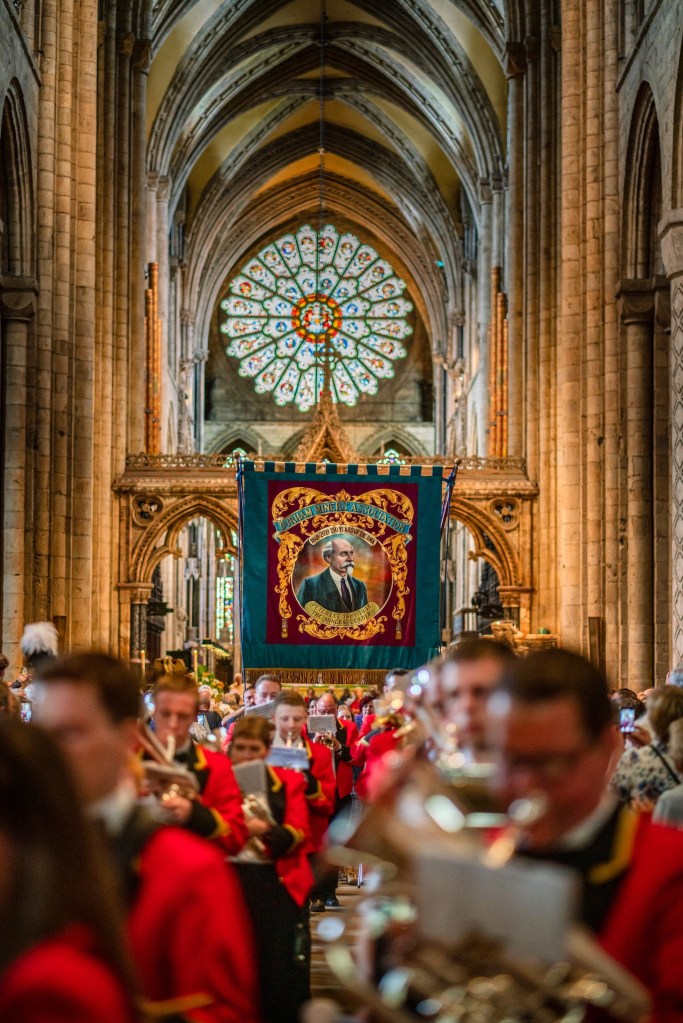
Miners’ Band & Banner leaving Durham Cathedral today.
image copyright Friends of Durham Miners’ Gala

Durham 1985

(Inspired by the end of the Miners’ strike leading to  the closure of mines in the North East)

They marched proudly,
those broken men who broke the coal
that fuelled the Nation.
The bowels of the earth
are silent now as are
the spirits within.
Yet, entering their Cathedral
they filled that ancient space
with music.
Even in brokenness they transcended
actions of Powers
who would have preferred them to be silent.

… and Bishop Jenkins wept.

[Mr G]

(the miners’ strike lasted from 1984-5. At the end the Government got its way and closed a lot of pits, throwing over 25,000 out of work. Many communities suffered and bear the scars still. For his love, care and support Bishop David Jenkins was called, the Miners’ Bishop’. During his sermon at the Gala Service, he broke down in tears for his beloved mining communities and for those who were desperate with need)
Today (July 9th) the Miner’s Gala, normally an annual event, has returned to Durham, after Covid. 5 new Banners (a feature of the Gala) were dedicated and blessed by the present Bishop of Durham, during the service in the Cathedral.

Mamre

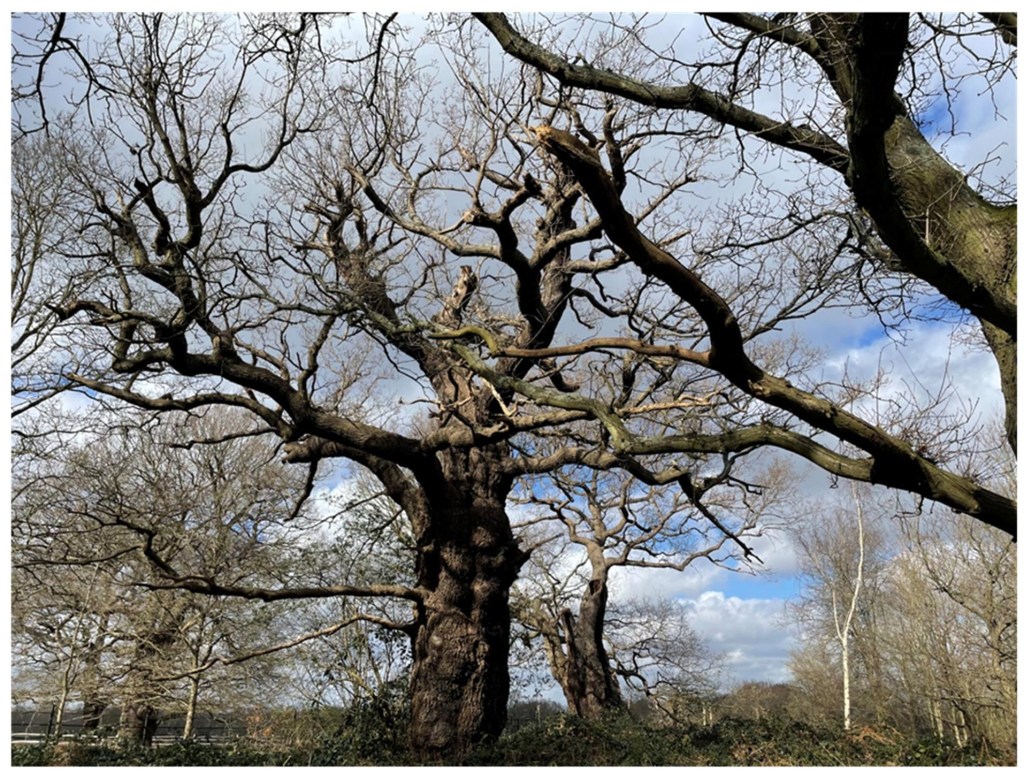
Oak Trees wintering in Richmond Park, London. Photograph by Gill Henwood.

This little poem has a double inspiration.
My friend Gill sent me photographs of majestic oak trees in Richmond Park, waiting for Spring to burst open their new buds.
The other inspiration is Genesis 18 verses 1 – 8. Here Abraham also waited under the oaks of Mamre, for God to reveal to him the promise of new life and new purpose.

The poem includes another ‘waiting’; for those on a Lenten Pilgrimage to open their hearts afresh to God.

MAMRE

By the oaks of Mamre
Abraham sat in quiet contemplation

seeking solace in the heat of the day.
Waiting, though he knew not what for.

Expectation seemed to dust the winter tree over him.
Branches dormant, dead?
They waited too for a new life promised
by the whispering of God.

Abraham’s moment came.
Visited by the Three, he rose,
with hospitality bubbling in his heart,

receiving them as if they were God
– because they were God!

And us?
We wait too as the Three approach us
in quietness,
inviting us to open our Lenten hearts.

It’s different somehow for us.
Abraham fed God and received God’s promise.
God feeds us and, in the breeze of Mamre,

becomes the Promise.

Expect it!

Mr G. 16th March 2022

(inspired by Genesis 18: 1-3 & by Gill Henwood)