A group of us at my church recently shared in a Quiet Day led by our Archdeacon Vanessa.
Her addresses were about different aspects of Prayer – Prayer and silence; Prayer and Place; Prayer and Time; Prayer and the Senses.
Each one has its own way of inspiring and creating reflection. We were encouraged to engage with the gift of silence to ourselves, each other, and especially to God. We were also encouraged to receive the Gift of prayer to us from God and seek the Holy Spirit at work within us. In a beautiful phrase we were to sense ‘God speaking to God from within.’
Looking at Prayer and Place, Vanessa prompted us to think of the places where God has been easily found. She herself, spoke to us of Lastingham in the Cleveland Hills in North Yorkshire. Here the Saxon monk Cedd, pupil of St. Aidan of Lindisfarne, set up a monastery. This same Cedd brought the Gospel to Essex, to Bradwell which was consecrated by his presence and his prayer.
I haven’t been to Lastingham for many years but Vanessa opened up the memory and the experience within me. Below is the poem that I felt encouraged to write.
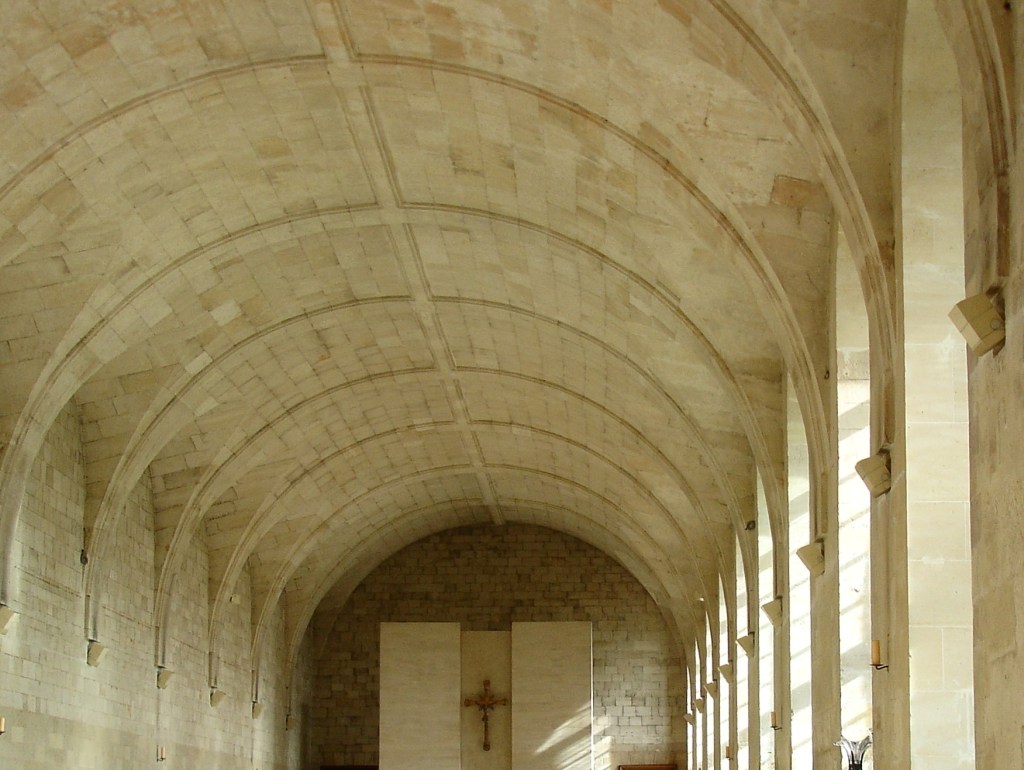
With it is a poem by Piers who was at the Quiet Day. Inspired, this time by the Abbey of Bec Hellouin in Normandy. Bec in the past supplied us with three Archbishops of Canterbury, Lanfranc, Anselm and Theobald. Bec still has a special relationship with Canterbury Cathedral. Today, only the tower remains of the Norman Abbey but a community of monks live in buildings near the tower. A sister community of nuns live in a convent a short distance away and on Sundays and Feast Days, the monks and nuns worship together. The serene and beautiful worship in their chapel inspired the first of the poems.
Both locations express the essence of what Vanessa spoke of to us. Thin places where heaven touches earth and God feels very near.
l’Abbaye du Bec
In my mind’s eye, I return: cream quietness… light bathing ordered stone, the scent of sung prayer hanging low.
Immanence re-discovered.
Piers Northam 10 July 2021
Lastingham
I come to this place, deep in the hills, where silence and conversation meld into stillness.
God is here, his sanctuary a stone rainbow over the seeker after meaning.
What am I looking for in this place, where the one who drew others to their knees, poured out his soul?
I sense and seek the company of the one who prayed here first, in the shadows of sweeping arches, pillars and faint light.
Seemingly impermeable rock – steeped in suffering and joy; pain and perfection; faltering hope and confident determination – enfolds me as I kneel with Cedd:
exhaling uncertainty… …inhaling God’s blessing and his love.
Geoffrey Connor 10 July 2021
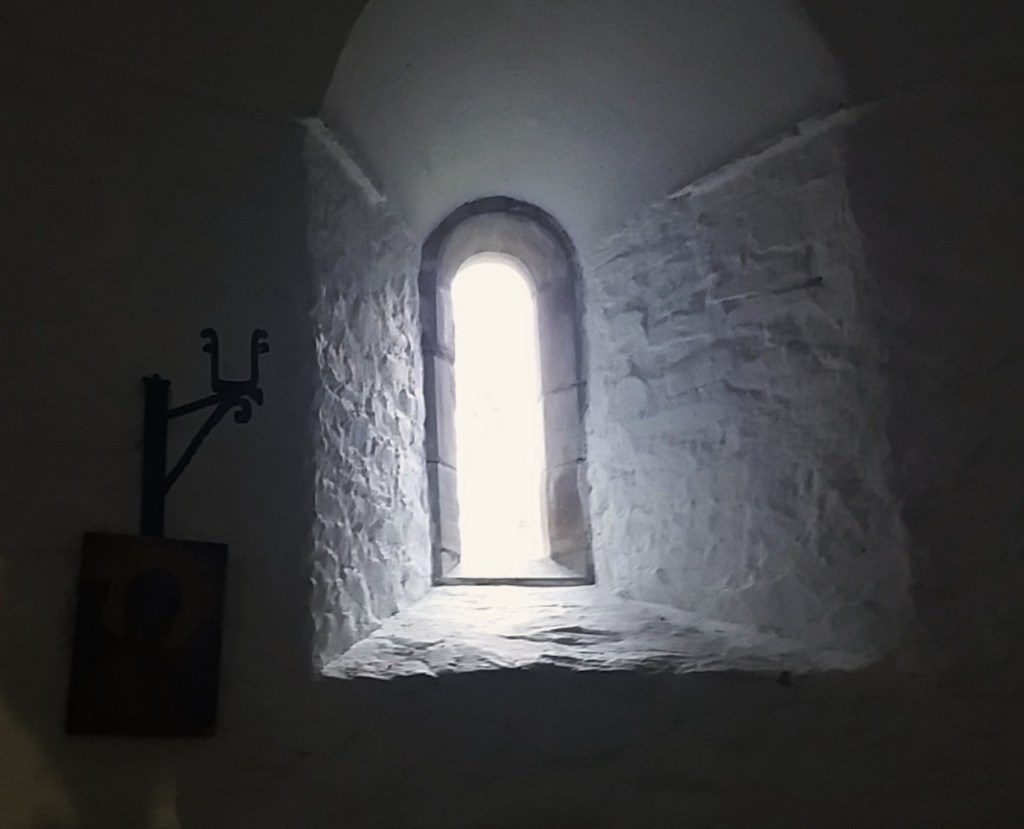
Photos: The Apse Chapel Pennant Melangell Church Mr.G Abbey Church Bec Hellouin Piers Northam Crypt, Lastingham Church. Parish of Lastingham
Thoughts on Genesis 9: 8-17 from Piers Northam Licensed Lay Minister at St. Mary-at-Latton, Harlow
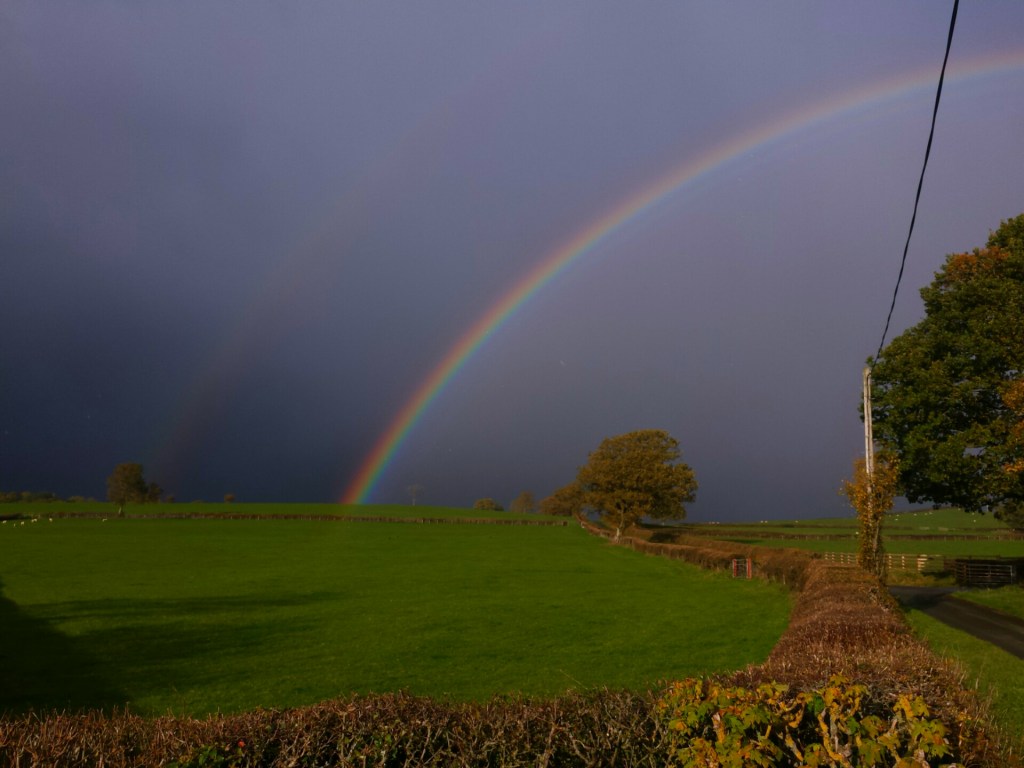
I can never resist commenting on a rainbow if I see one. They’re wondrous things, aren’t they? And it doesn’t seem to matter if we’re nine or ninety, they still stop us in our tracks and invite us to marvel. I remember once, many years ago now, driving through a very heavy rainstorm in France and turning a corner to see perhaps the most intense rainbow I have ever seen, bright and vivid against a background of thick, dark threatening clouds; a blaze of glory in the assault of the storm. We stopped the car to take a photo, but actually that image is vibrant in my mind’s eye – along with the wonder and the excitement of what we saw.
Of course rainbows have become prominent symbols of late – not least because they have been adopted as the symbol of the NHS and we have seen drawings stuck up in people’s windows; badges and the like. Originally Gilbert Baker devised the rainbow flag in 1978 with eight colours as a symbol of pride for the gay community – the colours speaking of diversity and the various elements of life. Over the years the flag has been adapted, the number of colours reduced and changed slightly and variations adopted to draw attention to different groups. Its meaning has been broadened to include concepts of social justice. The rainbow badge was originally adopted by the NHS to show greater understanding and inclusivity for LGBTQI+ people; but it also speaks of being mindful of the various discriminations that people live with and over time it has evolved into a symbol of wider inclusivity; of an acknowledgment of the rich diversity of life and human experience and of the NHS’s role in responding to that sensitively and generously. And during the pandemic, of course, it’s also become a symbol of our collective support for each other.
But in the story of Noah that we heard read to us just now, there are further connotations to the rainbow. Here it stands as a symbol of hope and life after the forty days and nights of the Flood which wiped out all living beings other than those carried in the safety of the Ark – it speaks of release from hardship and confinement: of hope for the future. And our reading from Genesis tells us that the meaning of the rainbow is one of Covenant – of a solemn and immutable promise that God makes with us. Actually, if you listen carefully, of the covenant that God makes with every living creature of all flesh that is on the earth… ‘When the bow is in the clouds, I will see it and remember the everlasting covenant between God and every living creature of all flesh that is on the earth.’
So often, when we read again a familiar passage of Scripture, things pop out that we haven’t noticed before, and here, I was struck by the insistence that this covenant is made ‘with every living creature of all flesh’. The phrase comes up three times in the passage we heard and God spells it out even further at the beginning: As for me, I am establishing my covenant with you and your descendants after you, and with every living creature that is with you, the birds, the domestic animals, and every animal of the earth with you, as many as came out of the ark.’
When Noah takes all the different species into the ark to save them from the floor he is fulfilling his proper role as a steward of God’s creation; caring for and keeping safe the beauty and diversity of that creation; the finely balanced ecosystems that exist.
As we embark on the season of Lent, this reading helps us to ponder two questions – which Jane Williams suggests are appropriate questions for us to consider in Lent: ‘What are we for?’ and ‘What [or who] do we depend on?’
So what are we for? Well Noah – as the representative of humankind – is fulfilling his God-given role as the steward of God’s creation. And it’s a role that includes all living creatures – not just the domestic animals that are going to be of some specific use to him. As we watch programmes such as David Attenborough’s ‘A Life on our Planet’ we need to remember the proper interdependence of all life forms and the way that we plunder the natural world so greedily and wantonly. Part of what we are for is to work with God to care for the life-sustaining world that we have been given to live in. And who do we depend on? Noah’s story reminds us that we depend on God for everything – for it is through God’s mercy that Noah and his family survive and come through the flood safely.
In our Gospel story we see Jesus faced with similar questions as he withdraws to the wilderness. In following the Spirit’s promptings he makes time and space to ponder what his calling is and to rely on his Father’s mercy; to make himself vulnerable and to depend on his Father. Again, this is a familiar passage – although, as is typical of Mark, it’s pretty pared back, with few details – but three phrases did catch my ear: ‘The Spirit immediately drove him out into the wilderness.’ ‘He was with the wild beasts’ and ‘the angels waited on him.’
In this time of Lent we need to allow the Spirit to drive us; we need to be open to the Spirit’s insistence as she drives us into the wilderness – a place where we have time and space to ponder; to go deep; to listen… There’s an urgency and a vitality to the Spirit’s prompting here that we need to open ourselves up to because it’s important to be addressing those questions: ‘what am I for?’ And ‘who do I depend on?’ To find again our place in the world and our relationship with God.
So Jesus followed the Spirit’s insistence and went alone into the wilderness ‘where he was with the wild beasts’. I’ve always thought of the wild beasts as being a threatening part of the story – a symbol of the harsh surroundings that Jesus find himself in. And in part that’s true. But seen in the context of Noah’s story and the Covenant that God makes with every living creature of all fleshthat is on the earth, we might take it that Jesus is in his – and our – rightful place in the midst of creation; alongside the wild animals and reptiles and birds with whom we share in God’s rainbow promise. It’s a strong reminder of how we are all interlinked.
And then that final phrase – ‘and the angels waited on him’. Hitherto, I’ve rather dismissed that phrase – it doesn’t seem sufficiently Lenten really, does it? Bit too comfy perhaps. A trifle ‘Wilderness Lite’… But actually, is it not a reminder that even in the most desperate and isolated of situations we are not alone; that God cares for us; sending his angels (in whatever form they may take) to be with us? I think many of us will have witnessed or experienced examples of this in recent months. Taken in this way, the wilderness – the Lenten wilderness – reminds us of our rightful place in the world and of our rightful relationship with the Father. It gives us space to ponder and explore what God might want for us; what he is calling us to; but it also reminds us that in all we do, we are reliant on God.
One last thought. As I imagined the rainbow, two things occurred to me – first, that each colour needs the others to be complete – the one bright light is refracted by the rain into the colours of the spectrum: but take one away and the rainbow is incomplete; the rainbow dissipates without inclusive diversity. But also, beyond the colours that are visible to the eye are those that we can’t see – infra red at one end and ultraviolet at the other. And I am sure there’s much more hidden glory beyond in both directions. In our creed, we profess our faith in things ‘visible and invisible’ for we believe in the things God reveals to us, but also in the hidden workings; the hidden glories that we cannot perceive…
Promise, covenant, hope, inclusivity, diversity, interdependence and the glories of creation – both visible and invisible – there’s a lot bound up in that seemingly simple symbol. May your time in the Lenten wilderness give you space and time to ponder all these things – and may you glimpse a rainbow or two along the way.
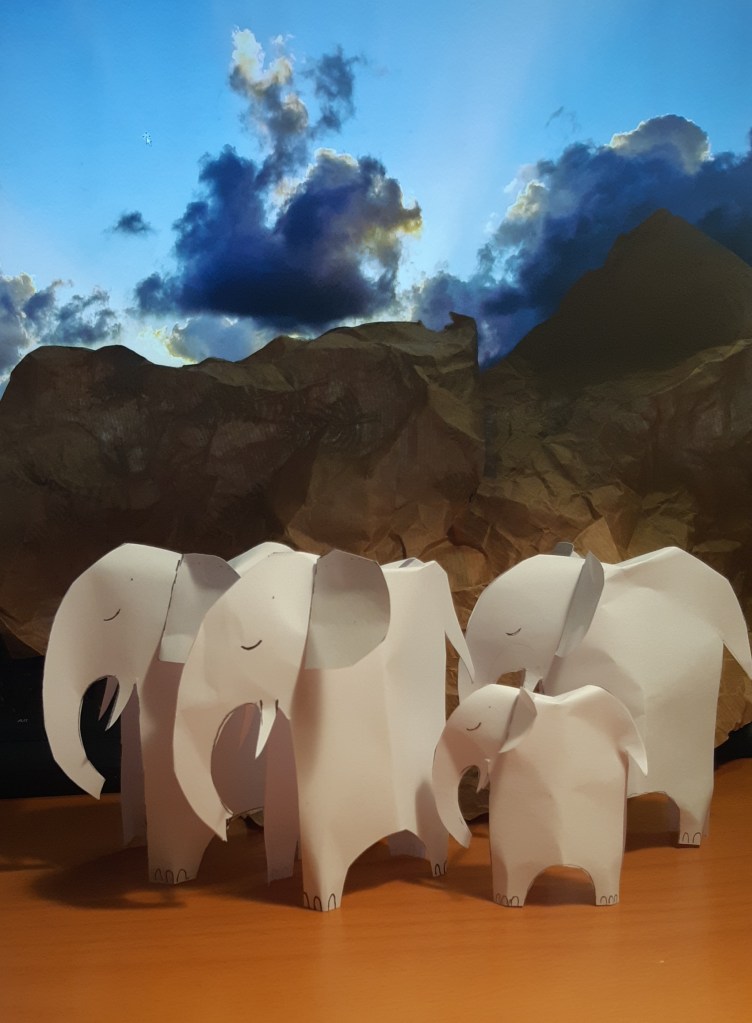
Elephant family in harmony with creation, made, arranged & photographed by Piers Northam
Last Sunday at St Mary-at-Latton our Family Service had a Creation theme. Piers, the leader told a story based on A Year Full of Stories, 52 Folk Tales and Legends from around the world.
The particular story was called Elephant and the Rain Spirit which was sub-titled An African Bushman Story.
It told of an Elephant which was very proud of being the largest and strongest animal, the greatest in the land. Being a big animal no-one dared to argue with him. Until, that is, the Rain Spirit challenged the Elephant. The Elephant wasn’t used to being challenged and began to protest. What about his great trunk and his fine tusks, not to mention his great big feet which made the earth tremble. The Rain Spirit then reminded him that it was she who filled all the watering holes so that the animals can drink and watered the plants so that they could grow. The elephant got quite annoyed at this and insisted that he could find his own food and drink. The Rain Spirit said that the Elephant could therefore fend for himself and with a flash of lightning off the Spirit went. The Elephant laughed. He had seen the Rain Spirit off. He really was the greatest.
All went well until the Rainy season arrived but there was no Rain Spirit to fill the lakes and water holes, nor water for the plants. The other animals became thirsty and hungry so they went to the Elephant. They asked him to provide water for them to drink and water the plants so they had food to eat. The Elephant was a bit stuck so he told Crow to make water. Crow did her best but very soon what little was produced was soon used up. Except for one watering hole that Elephant kept for himself. He told Tortoise to guard it which he tried to do. All the animals tried to persuade Tortoise but to no avail. Until, that is, the Lion came. He moved Tortoise away with his paw and began to drink. The other animals took advantage until all the water was gone. When the Elephant returned and saw what happened, he became very angry. The Tortoise tried to defend himself but the Elephant punished him by swallowing him up. The Tortoise wasn’t happy either and he made a great commotion in the Elephant’s stomach. The Elephant sunk to his knees in agony. Then the Rain Spirit returned and the Elephant begged for help. The Rain Spirit said that surely, as the Elephant was the greatest in the land, why would he need help.
The Elephant then realized something. He told the Rain Spirit that though he was the greatest on earth, he wasn’t the greatest in the sky. The Rain Spirit laughed and laughed and the rain splashed down. When Tortoise heard the rain he gave Elephant a great thump and Elephant coughed him out again.
This delightful story has a big lesson. No one is more important than anyone else and that we all depend on each other. Gifts and food and water have all been provided for all of us by God. To enjoy this Providence all we have to do is share it with each other. That also means that we have to look after all of Creation. We are called Stewards which really means lookers-after. We have accountability for this stewardship. That goes for Mother Earth too. We have been given the work of caring for the climate and looking after this wonderful planet of which we are currently the tenants.
But we know all too well that we are failing. Politicians, world leaders, those who exploit animals, rain forests, oceans, poor people and natural resources because they are greedy or who, like the Elephant in the story think they are the greatest are leading the world into extinction are all failing. So are we!
David Attenborough, the elder statesman of planet and nature conservation together with Greta Thumberg, one of our youngest activists have done more to alert and educate people of our Universal plight than any politician. Young voices are being heard in our own country. The proposed Future Generations Bill with its simple aim to put the well-being of those who follow us at the heart of decision making today. The Bill has been promoted by The Big Issue Foundation and Lord Bird who does so much for the homeless and vulnerable.
The Pandemic is a time when our own vulnerability as the human race, is something we are being made to face. Whatever happens as we try to tackle the Virus, things are no longer the same and never ever will be. We are discovering that we aren’t the greatest and we never will be. There are truly vital lessons to be learned.
In the Christian religion there is a word – Repentance- it means expressing sorrow for our mistakes and failings and self-centredness but most of all, out of this, there needs to come a turning round towards God, (The heart of what Repentance means) returning to the source of love and self-lessness. We are to return to the one who is our Provider – who gives and gives and gives all we need.
The Elephant had to learn a big, big lesson about our mutual dependency on each other. We all have a special place in the life of the world. However, that special place is not greater or better than anyone else. We have to try and help people to realize that and also, that together we can do lovely and wonderful and beautiful things.This depends on mutual care, love, acceptance, celebration and cherishing each other. Also, developing a growing recognition and gratitude that God who really is our provider, makes life (ours and all creatures that inhabit our Planet) very special.
Our picture above shows a family of rather gentle elephants. All those at the service made their own versions of it. May it remind them and us of how much better it is if we work together with others – human and otherwise!
[Mr.G.]
#The book, A year full of stories. 52 Folk Tales and Legends from around the world, is written by Angela McAllister and is wonderfully illustrated by Christopher Corr. Published by Francis Lincoln Children’s books 2016 ISBN 978-1-84780-859-2
#There are a few photos of the children’s elephants on the St. Mary-at-Latton Facebook page (under photos).
Cyclamen in fresh Snow photographed by my friend Gill Henwood in the Lake District.
Gill sent me this photograph a little while ago. It moved me very much at the darkest time of the year just as we were entering the 3rd Lockdown. At the time I couldn’t decide how to respond to it. There were allusions to lockdown, hope, struggle at a very difficult time for us. Gill used the word endurance.
As I continued to mull over it, I discussed it with my friend Piers and he came up with this reflection:
‘Initially I looked at this image and thought of the ice and snow as something that was holding the flowers back; through which they had to struggle – and this made me think of feelings thrown up by this current lockdown. But actually, as I thought more and read Geoffrey’s poem, it dawned on me that the ice and snow protect and insulate the seed as it germinates and emerges to flower. The struggle is filled with new hope and possibilities. We tend to see being in lockdown as a negative, threatening thing but of course it’s a collective act in which we’re protecting each other and ourselves – and looked at that way it feels far more positive. And just as the dormant plant flowers to new life, we can also use it as a time to discover what is truly important: what values and priorities will help to sustain our lives, our society and our planet. What if the snow and ice of lockdown are allowing us to emerge into really new life?‘
PN
Here’s a poem I have written on this photograph.
Lockdown wake-up
Earth’s untidy clutter of hurried hibernation covered over with scattered flakes of heaven’s protection. Opaque cloak of winter wraps warmly around dormant seed.
Early buds break open crusty ground scattering melted crystal. Coloured life announces Nature’s lockdown ended, beckoning us to New Beginnings at last!