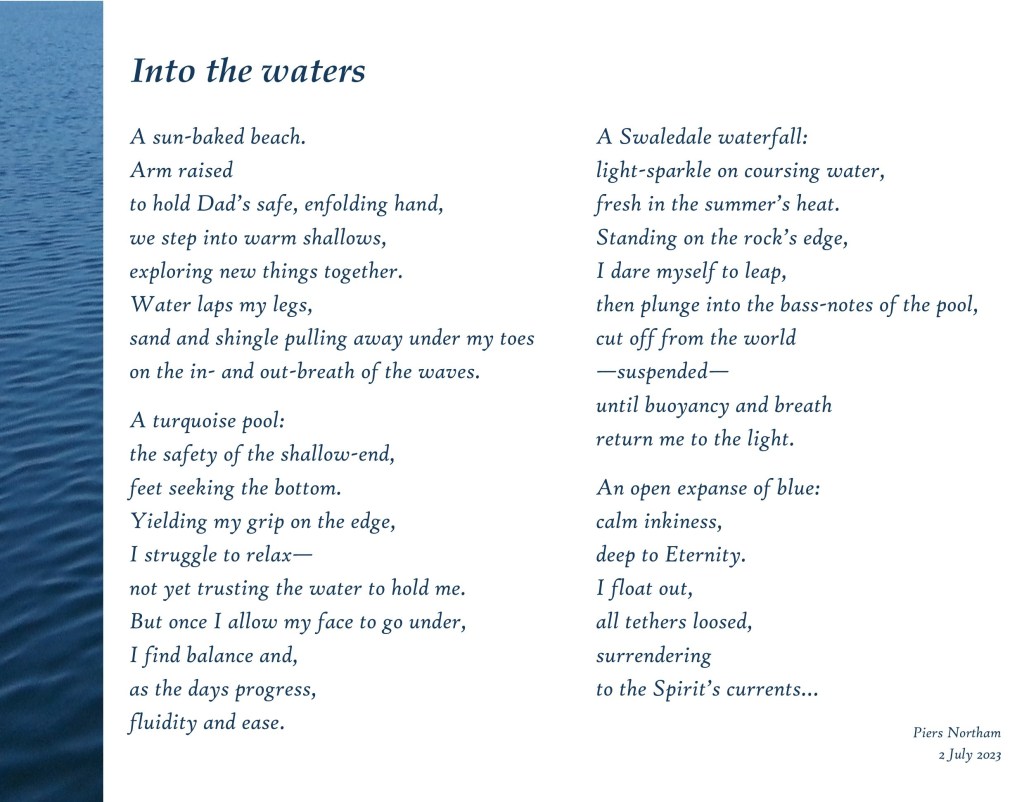
My friend Piers has written this poem which is a meditation on a personal journey of faith through life.
Tag: poem
My friend Piers has written this poem which is a meditation on a personal journey of faith through life.
The human reputation about care and preservation of Nature and God’s Creation is not always a good one. On the whole humans are more prone to exploitation, persecution, destruction than we are on preservation and protection.
A reading of the poem of Creation, which begins the book of Genesis in the Bible, could convince us that human beings have a superior place in the pecking order of Creation. Indeed the writer of the poem observes that according to God’s word we are to subdue the world and have dominion over every living thing. This has led to a view that we have power over Creation which is exercised through control and domination. A development of this is that everything exists for the sake and use of the human race. This has led to a wanton destruction of the natural world—animals, birds, creatures of the sea and also of the natural resources which we have exploited for our own ends. Too often we have lost sight of something else expressed in the Genesis Creation poem, that everything in precious in the sight of God, the Creator. He clothes the lilies of the field and he watches over the birds of the air. Alongside the idea of ‘dominion’ is the principle of stewardship. We are custodians of the earth and of the world of nature and we are to be stewards. Stewards have to give account of their stewardship—and to God. So it is good to highlight something good that we have done in this respect.
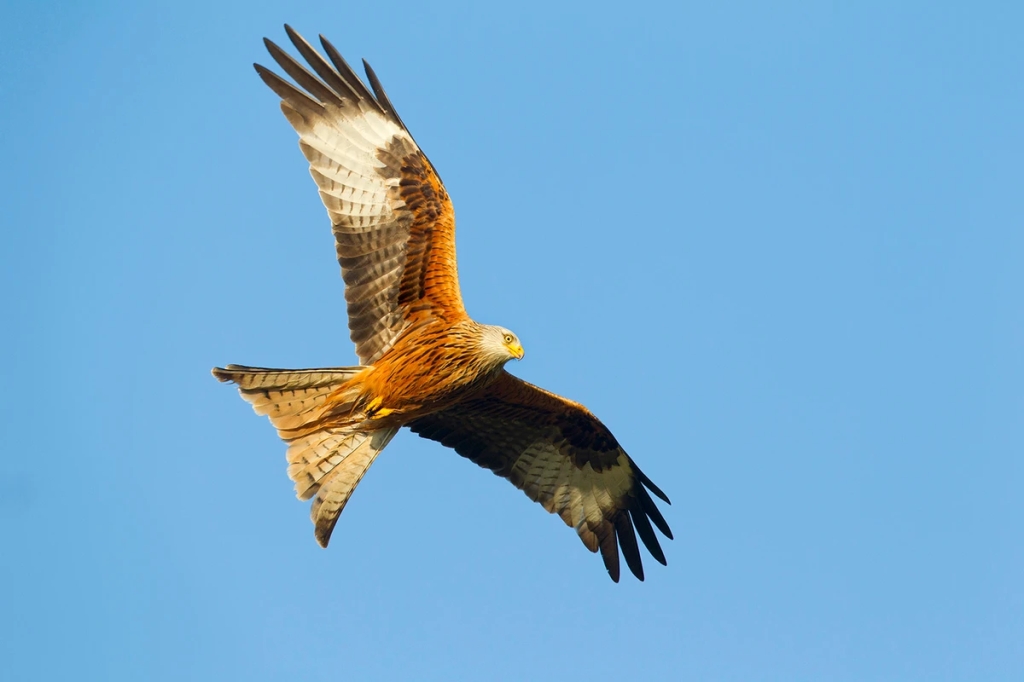
I was reading recently about the successful project to save the Red Kite bird of prey which was facing extinction.
I first met these birds a few years ago when I was walking along the Ridgeway on the Buckingham/Oxfordshire border. My attention was attracted by large swooping birds which danced and wheeled on the horizon and then through the valley below before soaring up into the sky way above my head.
These birds were common in Shakespeare’s time. He mentions them in some of his plays.
In later times, they had a particular function when they were common in towns and cities where they scavenged for scraps. It was a crime to kill one as they were so useful for rubbish management. Then things changed for them.
Persecuted and made almost extinct, these amazing birds with their 185cm wingspan and striking eyes were in great danger.
Successful reintroduction projects have now helped the species to recover. They can be seen in a number of places. The best areas to find them in the UK are central Wales, central England – especially the Chilterns, central Scotland – at Argaty and along the Galloway Kite Trail.
They are a protected species under Schedule 1 of The Wildlife and Countryside Act.

RED KITES (Poem) GC 19.6.2023
We soar and swirl on the uplift of the wind
swooping gracefully,
wheeling majestically.
Free to be.
It was not ever thus.
Humans hated us, hunted, poisoned,
drove us away on orgy of persecution.
Lordship over the earth, over the world of nature,
is seemingly always stronger than stewardship.
Yet kind hearts,
Determined souls,
visionary aspirations,
saved us.
A new choreography for our dance of life
was composed,
nurturing, protecting the few of us left
but we did not trust them.
Yet over time, hesitantly,
responding to infinite patience and soft actions,
we became tender again to each other.
We bore young who knew no fear
nor the hate of others.
Springing into life they took flight,
joyfully circling and chasing and with speed.
Quite a performance!
We dance again.
We are high as Kites!
[Mr G. 19th June 2023]

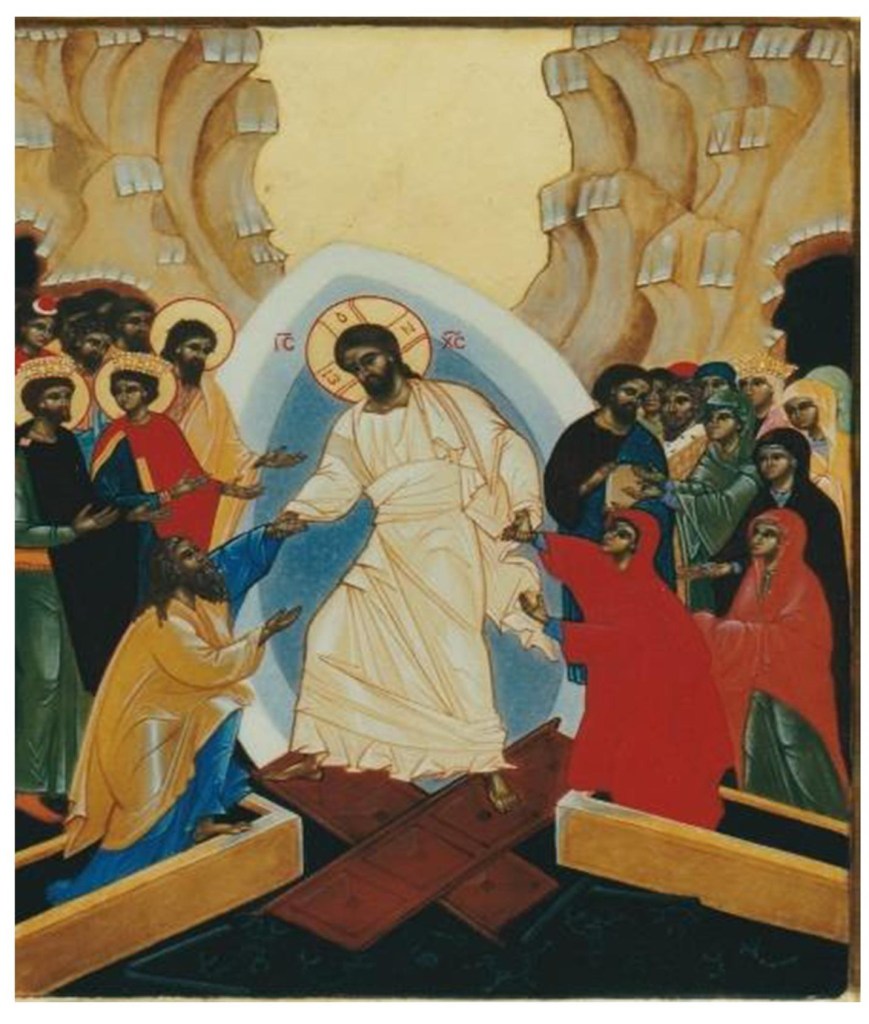
At the Weekend, I posted a blog item about Sister Irène-Marie, a beautiful nun and iconographer. She was a member of the community at the Monastère Sainte Françoise Romaine, Le Bec Hellouine, Normandy. You can read more about her if you scroll back two blog entries.
Her funeral is today, Thursday 9th, at the Convent and I just wanted to mark the entry into heaven of a dear friend.
So I have written the following poem.
Dear Sister Irène-Marie,
bearer of Peace,
held in the love of Mary,
you brought a singular joy into our lives.
We met you and sensed your nearness to God.
We were enraptured by your sacramental eyes
which mirrored the Divine.
Extending monastic hospitium ,
you encircled us with welcome,
embracing our need with thoughtfulness
and gentle love, which was kept warm
within the folds of your habit.
Your listening expressed concern
for a broken world from which you could draw
a reservoir of experience.
No hidden cell housed you.
The lives of others glazed your windows
and held open the door from which rays of love shone.
Most of all, you ‘wrote’ visible signs
of God’s Presence in Jesus and the Saints.
You dipped your brush and pen
in the palette and inkwell of God.
From the depth of your prayerful iconography
you led us into the heart of faith
which has led you now into the bosom of your Saviour,
for as you said, that is what you, (and we,) “are here for.”
Thank you for opening and sharing the images
of your faith with us.
By you we have been truly blessed.
[Mr. G. 8th February 2023]
Yesterday, January 27th, was Hololocaust Memorial Day (HMD).
This year it took the theme of, ‘Light the Darkness against prejudice and hatred’.
On the morning of Holocaust Memorial Day, 27 January, Dame Joanna Lumley handed out commemorative HMD candles to commuters and passers-by in Central London. She was joined by Joan Salter MBE, a child survivor of the Holocaust, and Martin Stern MBE, a survivor of the Holocaust, and Antoinette Mutabazi, a survivor of the genocide against the Tutsi in Rwanda.
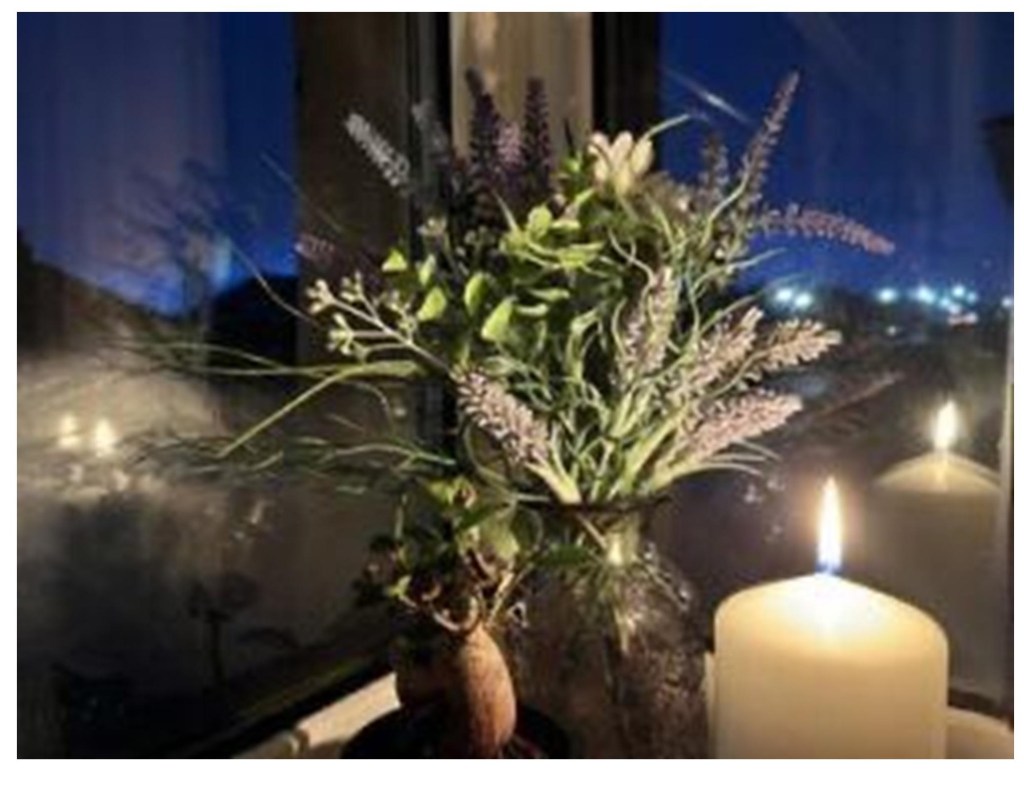
Dame Joanna invited people to light the candles and place them safely at 4pm that day for the Light the Darkness national moment.
Dame Joanna commented:
It is a real privilege to be able to mark Holocaust Memorial Day by being here in central London with survivors of genocide. I hope that by handing out these candles and inviting people to light them at 4pm this evening, we can provide people with an opportunity to remember those who were murdered for being who they were, and to reflect on ways that they can challenge hatred and prejudice today.
At 4pm on 27 January, people across the UK took part in the Light the Darkness national moment, lighting candles in their windows to remember those who were murdered for who they were and to stand against prejudice and hatred today. Social media was flooded with photos of candles as people joined the online conversation about Light the Darkness.
Whether a myth or a truth, it is said that because of the Holocaust, birds do not fly over Auschwitz and other death camps. I wrote the poem below inspired by this as a tribute to the thousands of victims of the so-called Final Solution and out of respect for the victims of ‘prejudice and hatred’ from the Jewish people, Gay and Romany people.
Birds of Auschwitz
This is a place where the voice of song is silent.
A place for remembrance,
reflection;
and numbness of feeling.
To feel would be to break apart.
The ground, though watered with myriad tears,
is cracked open and dry.
Some say that the birds don’t sing here.
How can we?
How can we sing joyfully,
melodiously,
in this place of deep terror and pain,
of total hatred and barbaric torture?
Long ago, in those satanic days,
we took council together;
high in the trees where the acrid smoke
spewing from chimneys did not choke our lungs
and the roasting stench of death could not singe our feathers.
Hidden deep in the branches and leaves,
our eyes could no longer see
the piles of discarded humanity tossed aside.
The birds of prey were not our species,
but belonged to man.
We decided then
that here and in places like this,
our voices would be still.
Forever.
Our gift to those who had themselves been silenced.
Our memorial.
Our act of remembrance.

