Tag: RSPB

Listen, said the Sparrow

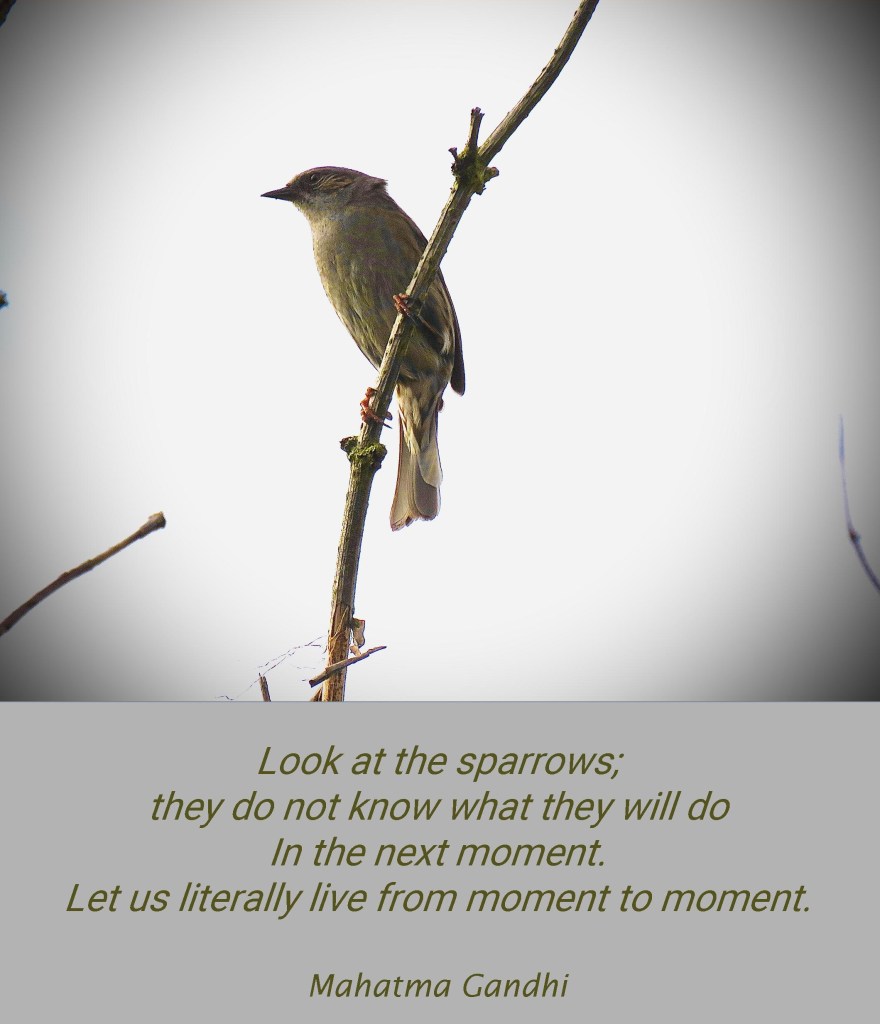
Photoposter by Joyce Smith.

Words from the Sparrow

I gather that I have become very important!
A recent survey by the Royal Society for the Protection of Birds – known as the Big Garden Birdwatch Chart –came up with some important news. Amongst all the birds watched in the United Kingdom, I topped the Chart for the 21st consecutive time! Isn’t that marvellous. Let the Blue Tits, Starlings, Wood Pigeons and Blackbirds chirp away to their hearts content. They won’t beat the House Sparrow.
I was not, however, quite so pleased to read that my own chirp was not as melodious  as some. One of the reviewers actually referred to it as slightly tuneless.
Of course, I may be driven to take singing lessons. I think it will be with a Nightingale. They have such lovely, spell-binding voices.
Not everything about we birds is good news. I was especially sorry to hear that the lovely Starling is now on the UK Red List, joining others in the most threatened breeding birds category.

It reminds me of the importance of providing garden habitats  for we birds. By keeping open invitation to birds, including providing the right kind of sustenance, such as seeds. Insects, fruit and berries, peanuts  and regular well-stocked drinking areas, you can make all the difference to solving the ongoing nature crisis.
Gardens, green spaces are crucial lifelines for birds like me who are struggling. It’s a bit like providing an oasis in the desert, a sign of life where nature can grow.

One other thing;
DID YOU KNOW? that we sparrows get a little mention in the Bible New Testament. I had to ask a human to point this out to me.
It seems that in Matthew 10, Jesus tells the people not to be afraid of the evil folk who would turn them away from God. He said that if we are afraid we should remember: are not two sparrows sold for a penny? Yet not one of them will fall to the ground unseen by your heavenly Father. Even the hairs of your head are all counted. So do not be afraid; you are more value than many sparrows… (see also St Luke 12:6-7).
Of course, let the reader understand that Jesus is not disparaging sparrows. He loves us very much and there were lots of us in the Holy Land when Jesus was there. What he is saying , I think, is that human beings who try to live close to Jesus are loved even more. I think, when he said this, some of my fellow sparrows saw him give a little wink towards us!

So, there we are – be nice to sparrows and all birds and you will be filled with joy and be rewarded because we shall dance and sing for you and soar around your garden or local park or fields and maybe drop some surprise seeds for you.I expect you know this little poem, but in case you need reminding, take note of it in view of what Jesus said. It’s  by Elizabeth Cheney and I’m sure she would be delighted if you take it to heart.  As you look at the birds around you, I hope you might let them remind you how much your heavenly Father cares for you and will provide for you.  Do the same for the birds.

[The photo poster heading this article is by my friend Joyce Smith, who lives now close to God and to redeemed creation in heaven,]
 [Mr G]

House Martin at home

photo: Cornell Lab of Ornothology

My friend, Gill Henwood, has sent me a poem she has written about House Martin’s. I want to share it with you.

The house martin is a small bird with glossy blue-black upper parts and pure white under parts. It has a distinctive white rump with a forked tail and, on close inspection, white feathers covering its legs and toes. It spends much of its time on the wing collecting insect prey. The bird’s mud nest is usually sited below the eaves of buildings. They are summer migrants and spend their winters in Africa. Although still numerous and widespread, recent moderate declines earn them a place on the Red List.

To find out more go to the website of the RSPB (Royal Society for the Protection of Birds) and the website of : House Martin Conservation UK & Ireland.

House Martin

Martins, skimming

village churchyard

slicing greensward,

ancient slate stones.

Low under mist

clouds cloaking fell tops

air heavy, moist slate.

Martins twittering,

high above, weaving

open patterns

crossing, three-D.

Warm currents

explosive turning

free to rise

timeless,

mystical magical

summer soaring

ecstasy, flight.

Gill Henwood
Hawkshead
9th August 2023

At home.

Red Kites

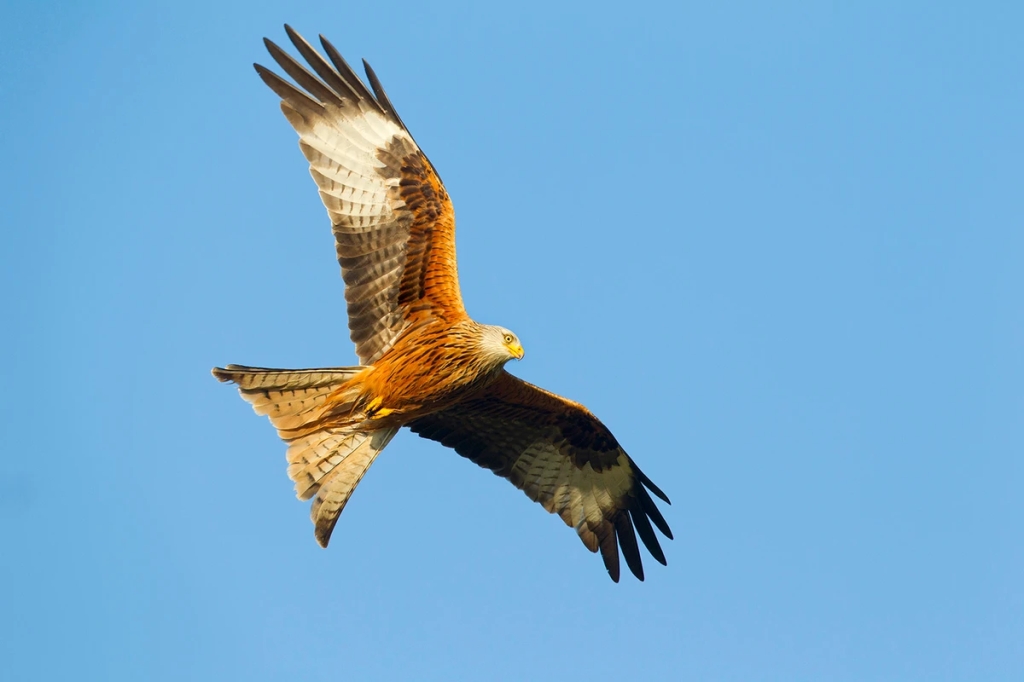
Red Kite photo copyright RSPB

The human reputation about care and preservation of Nature and God’s Creation is not always a good one. On the whole humans are more prone to exploitation, persecution, destruction than we are on preservation and protection.
A reading of the poem of Creation, which begins the book of Genesis in the Bible, could convince us that human beings have a superior place in the pecking order of Creation. Indeed the writer of the poem observes that according to God’s word we are to subdue the world and have dominion over every living thing. This has led to a view that we have power over Creation which is exercised through control and domination. A development of this is that everything exists for the sake and use of the human race. This has led to a wanton destruction of the natural world—animals, birds, creatures of the sea and also of the natural resources which we have exploited for our own ends. Too often we have lost sight of something else expressed in the Genesis Creation poem, that everything in precious in the sight of God, the Creator. He clothes the lilies of the field and he watches over the birds of the air. Alongside the idea of ‘dominion’ is the principle of stewardship. We are custodians of the earth and of the world of nature and we are to be stewards.  Stewards have to give account of their stewardship—and to God. So it is good to highlight something good that we have done in this respect.

I was reading recently about the successful project to save the Red Kite bird of prey which was facing extinction.
I first met these birds a few years ago when I was walking along the Ridgeway on the Buckingham/Oxfordshire border. My attention was attracted by large swooping birds which danced and wheeled on the horizon and then through the valley below before soaring up into the sky way above my head.
These birds were common in Shakespeare’s time. He mentions them in some of his plays.
 In later times, they had a particular function  when they were common in towns and cities where they scavenged for scraps. It was a crime to kill one as they were so useful for rubbish management. Then things changed for them.
Persecuted and made almost extinct, these amazing birds with their 185cm wingspan and striking eyes were in great danger.
Successful reintroduction projects have now helped the species to recover. They can be seen in a number of places. The best areas to find them in the UK are central Wales, central England – especially the Chilterns, central Scotland – at Argaty and along the Galloway Kite Trail.
They are a protected species under Schedule 1 of The Wildlife and Countryside Act.

Woodland Trust

RED KITES   (Poem) GC 19.6.2023

We soar and swirl on the uplift of the wind
swooping gracefully,
wheeling  majestically.
Free to be.

It was not ever thus.
Humans hated us, hunted, poisoned,
drove us away on orgy of persecution.
Lordship over the earth, over the world of nature, 
is seemingly always stronger than stewardship.

Yet kind hearts,
Determined souls,
visionary aspirations,
saved us.

A new choreography for our dance of life  
was composed,
nurturing, protecting the few of us left
but we did not trust them.

Yet over time, hesitantly,
responding to infinite patience and soft actions,  
we became tender again to each other.
We bore young who knew no fear
nor the hate of others.
Springing into life they took flight,
joyfully circling and chasing and with speed.
Quite a performance!

We dance again.
We are high as Kites!

[Mr G. 19th June 2023]