Tag: Thin places

Special places, special people

Lindisfarne Castle. Photo by Mr G.

Special places, special people thoughts on St. Aidan’s Day. 31st August 2024
In many journeys of faith there are special places that have spoken to people vividly about God. The early Christians called these the ‘thin places’ where the membrane which separates our world from the world of heaven is so thin that it is easy for heaven’s spirit to burst through, catching us up in a breathtaking experience of God’s nearness.
For me one very special ‘thin’ place will always be the Holy Island of Lindisfarne, off the Northumbrian coast between Bamburgh and Berwick-upon-Tweed. It was to this island that St. Aidan came in 635AD.
He nearly didn’t come at all!
When King Oswald won back his Kingdom from the pagan king of Mercia, he immediately sent to Iona for a monk to teach his people Christianity. Oswald had spent many years in exile on Iona and there embraced the Christian faith. His desire was that his people would also find a love for Christ. The Abbot of Iona sent a monk who soon fell foul of the local people whom he branded as barbarians and un-teachable. Returning to Iona he told his brethren what he thought and a gentle monk admonished him. “I think, brother, that you gave them the meat of the gospel when what they needed first was milk.” Wise words but as so often happens, those who criticize (however gently) must be prepared to serve. Aidan was sent to Northumbria. There he set up his base in the place which, twice a day became an island—Lindisfarne. Here he built a monastery and founded a school in which he taught 12 boys amongst whom were the future St. Cedd, apostle to Essex and his brother, Chad, Apostle to Mercia.  They were part of a great mission which was to take the Christian Gospel throughout the North and the Midlands and to Essex.
Because, initially, Aidan couldn’t speak the language, King Oswald went with him on his missionary journeys to act as interpreter. One of the earliest examples of the co-operation between Church and State!

Lindisfarne remained a Christian centre until Viking raids led to the withdrawal of the monks. Today it is once again a centre both of pilgrimage and prayer. The local Church set up a Christian house for pilgrims known as Marygate House and it was here, in 1974 that I first came across Aidan and the spirit of the Celtic saints. I have returned many times since and more than once I have experienced the sense of God’s nearness and presence. It truly is a ‘thin’ place. Some, reading this will know exactly what I mean and will have their own ‘thin’ or special places (associated often with special holy Christians). They are places where faith comes alive in a unique and special way. Such experiences carry us through the more mundane parts of our Christian journey. What marks such places is that they are, in the words of the poet T.S.Eliot, places ‘where prayer has been valid’ – where prayer has consecrated them to God.
It strikes me that we should not have to travel far to find such places. There are lots and lots of special people whose prayer has made valid places where God can be found. Whilst people like St. Aidan seem to be extra-holy, he would probably argue that he did nothing that all Christians, all believers in God, can do—which is to allow God to love them until they are on fire with God’s love. That can be true for all of us and where it is, then we become the ‘thin’ place where others can find God.

[Mr G]
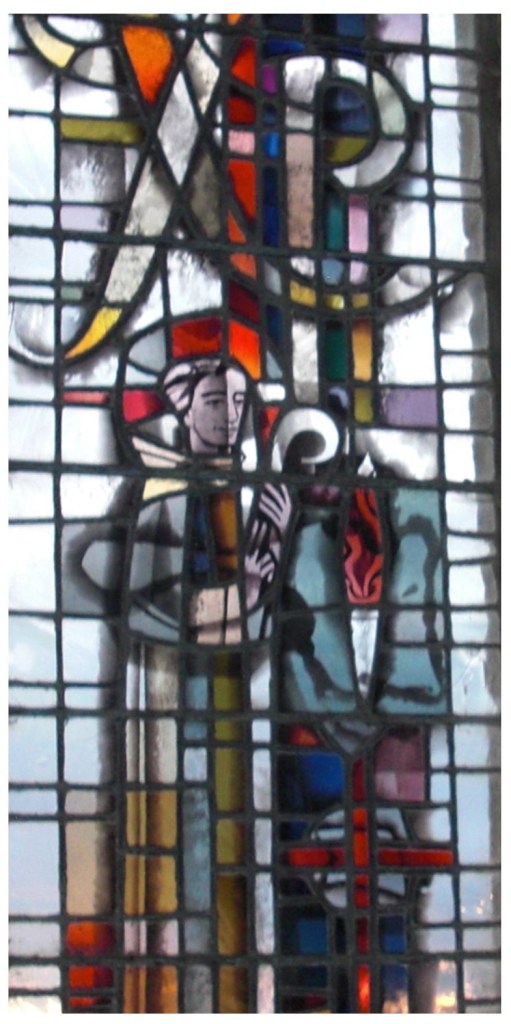
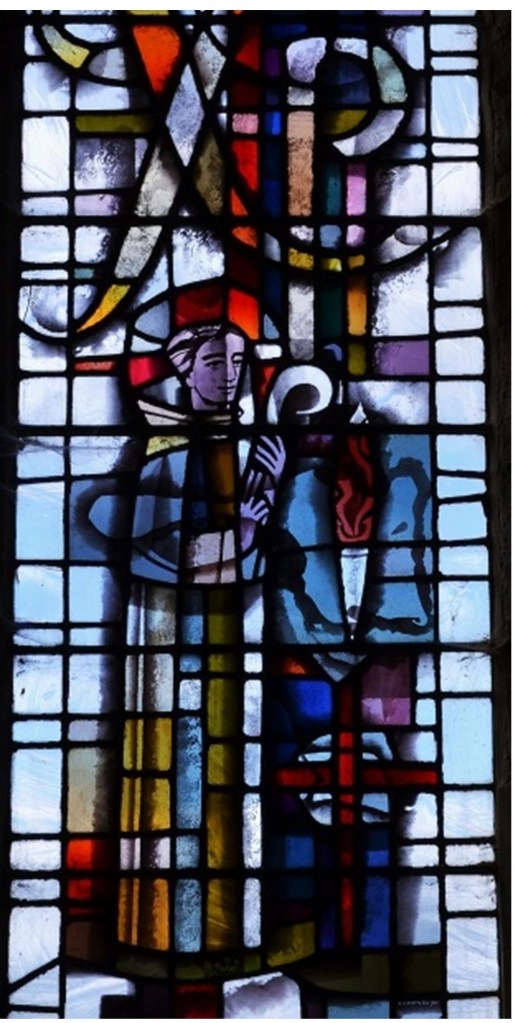
St Aidan window by Leonard Evetts, Lindisfarne Church.
photo by Mr. G.

God’s calling card

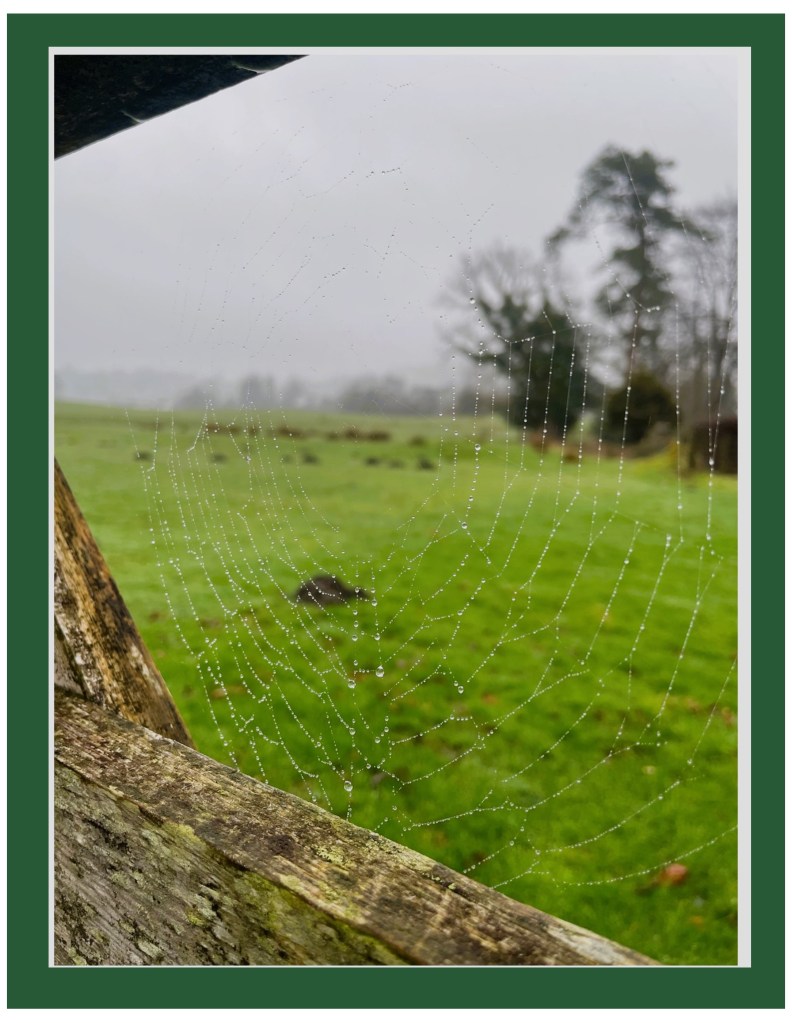
Dewdrops on spider’s web. photograph by Gill Henwood

My friend Gill has recently sent me this photograph of dewdrops on a cobweb near her home in the Lake District.
My thoughts centred on the fragility and ephemeral nature of the scene.  A word often associated with spiders’ webs is ‘gossamer’ – a fine filmy substance consisting of cobwebs spun by spiders; light, thin, delicate, almost insubstantial. Certainly short-lived. But another way of seeing it is that of a thin place, a tissue paper kind of boundary between two worlds.

‘Thin Place’ is an idea many of us use to describe places where God seems spiritually and, in a way, physically present to us.
Obvious thin places are religious shrines, like that at Santiago de Compostella where pilgrims walk from many places in Europe to the Northern area of Spain, to a journey end at the Shrine of St. James the Great there. When I made the pilgrimage there  a few years ago, I was deeply moved by the experience of God I had and I knew then what a thin place truly is.
There are many such places, such as Iona, the Holy Island of Lindisfarne and legions of other places. Every religion has such holy places which have been sanctified by God and by prayers of the pilgrims.
Not all are huge centres like Lisieux in Northern France or Lourdes where many go to pray for healing. Some are almost backwaters like Little Gidding near Huntingdon, Cambridgeshire. It is a quiet oasis and not that easy to find. However,  those who visit, certainly can say of it, words which the great poet T.S.Eliot coined in the Quartet Poem to which he gave it’s name. It is a place where Prayer has been valid. It is valid still. It is truly a thin place where it feels very easy to meet God.

Though all that is true, Gill’s photo reminds me that not all thin places are permanent nor beyond the immediate moment, spectacular. God sanctifies all our meetings with him, it’s just that we don’t often recognize it. (at least, I don’t !) I have to keep remind myself of something St. Teresa of Avila said – God walks among the pots and pans. Her soul friend, St John of the Cross, puts that rather more beautifully, when he says, “God passes through the thicket of the world, and wherever His glance falls He turns all things to beauty.”

In the spider’s web decorated with dewdrops we can be aware of that.
It becomes a way in which God reveals his presence and it is a personal revelation so everything could be experienced as  a thin place. Whether it be cleaning the dishes in the kitchen or catching our breath at some lovely sight in the world. Being touched by God, becoming aware of the spiritual in the midst of the ordinariness of life, can be a breath-giving moment. Such an experience can be seen as an act of love on God’s part. In such ways, he presents his ‘calling card’ to us
In the war torn areas of our world it may not seem like that but even there,maybe especially there, in kindnesses and moments when people are touched by love, care and by prayer,  almost unawares, certainly not always invited, God comes to call.

[Mr G]

Special places, Special people

St Aidan window on Holy Island Church (St Mary the Virgin) detail.

In many journeys of faith there are special places that have spoken to us vividly about God.
The Celtic Christians called these the ‘thin places’ where the membrane which separates our world
from the world of heaven is so thin that it is easy for heaven’s spirit to burst through,
catching us up in a breathtaking experience of God’s nearness.
For me one very special ‘thin’ place will always be the Holy Island of Lindisfarne,
off the Northumbrian coast  between Bamburgh and Berwick-upon-Tweed.

It was to this island that St. Aidan came in 635AD.

He nearly didn’t come at all!
When King Oswald won back his Kingdom from the pagan king of Mercia,

he immediately sent to Iona for a monk to teach his people Christianity.
Oswald had spent many years in exile on Iona and there embraced the Christian faith.

His desire was that his people would also find a love for Christ.

The Abbot of Iona sent a monk who soon fell foul of the local people whom he branded as barbarians
and un-teachable. Returning to Iona he told his brethren what he thought and a gentle monk admonished him.
“I think, brother, that you gave them the meat of the gospel when what they needed first was milk.”

 Wise words but as so often happens, those who criticise (however gently) must be prepared to serve!  
Aidan was sent to Northumbria! There he set up his base in the place which, twice a day became an island—Lindisfarne.

Here he built a monastery and founded a school in which he taught 12 boys amongst whom
was the future St Chad, and his brother, St. Cedd as well as their two other brothers.

From this island a great mission began which was to take the Christian Gospel throughout the North and the Midlands and to Essex.

Because, initially, Aidan couldn’t speak the language, King Oswald went with him on his missionary journeys
to act as interpreter. One of the earliest examples of the co-operation between Church and State.

Lindisfarne remained a Christian centre until Viking raids led to the withdrawal of the monks.
Today it is once again a centre both of pilgrimage and prayer.

The local Church set up a Christian house for pilgrims known as Marygate House and it was here, in 1974 that I first came across Aidan and the spirit of the Celtic saints.
I have returned many times since and more than once I have experienced the sense of God’s nearness and presence. It truly is a ‘thin’ place.

Some, reading this will know exactly what I mean and will have their own ‘thin’ or special places (associated often with special holy Christians).
They are places where faith comes alive in a unique and special way. Such experiences carry us through the more mundane parts of our Christian journey.

What marks such places is that they are, in the words of the poet T.S.Eliot, places ‘where prayer has been valid’ – where prayer has consecrated them to God.

It strikes me that we should not have to travel far to find such places.

It is often the sincere prayer of ordinary Christians which makes a place holy.

One of my personal criteria when I visit, or worship in, a church is whether I can find God easily there.

A place where God can be found is a holy place, a thin place. It certainly needn’t be a church nor a place of special pilgrimage.

One of the holy and thin places I discovered is a slight bend in the rough hewn road which leads down from the Parish Church on Holy Island
to the shore which is opposite the crossing to Cuddy’s isles.

One day, when the island was clothed in a mist, I walked down this road and quite suddenly and totally unexpected, I found I had a companion.
I knew that it was St. Aidan whose simple presence touched me.

I knew at that moment I was on holy ground. I was at the thin place which is extraordinarily the meeting point between earth and heaven.
I can’t (and don’t want to) explain it in any other way.

Yet, whilst people like St. Aidan seem to be extra-holy, he would probably argue that he did nothing that all Christians can do,
which is to allow God to love them until they are on fire with God’s love.
That can be true for all of us and where it is then we become the ‘thin’ place where others can find God.

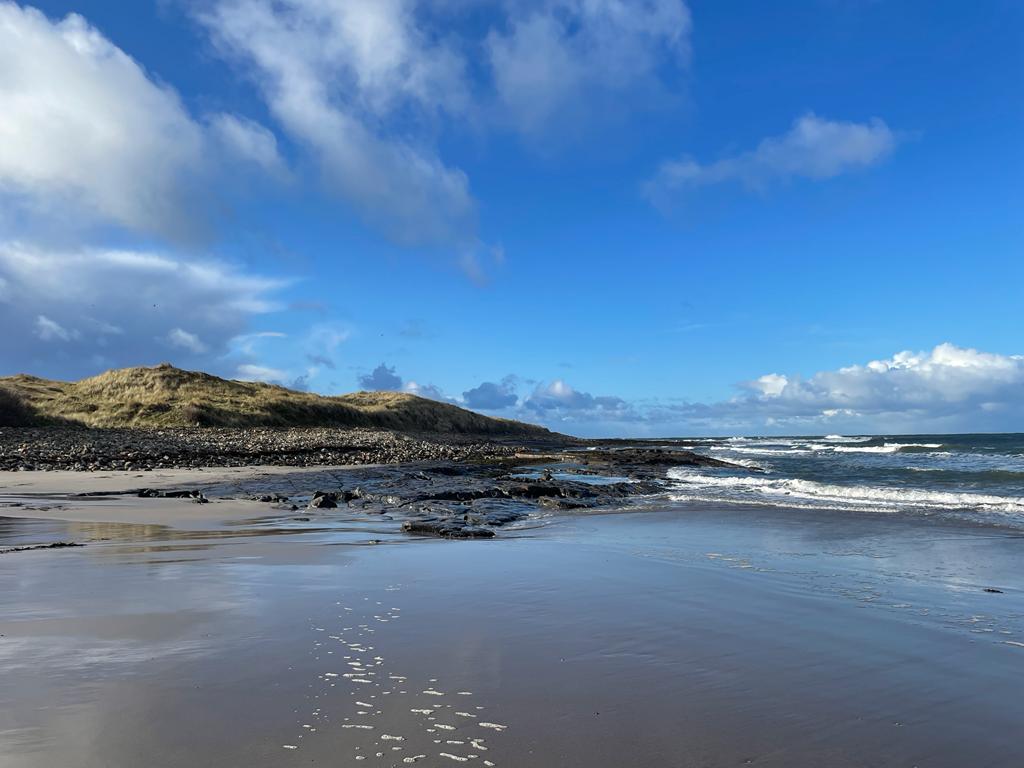
Photo: Gill Henwood

Aidan

You came on the flow tide
blown in, full of hope and zeal.
You carried the milk of the Gospel
but in your satchel, the firm, solid Good News waited to be heard.

The waves revealed the pilgrim way to Lindisfarne,
for its first journeying companion of Christ.

Those waves, a sign of what your Lord achieved through you:
first, lapping the hearts of those aspiring to know God,
then rushing in, hurrying to swamp the land with love:
a sea boiling with joy and hope and message.

Milk, then meat.
Quiet ripples, then mighty waters of God’s love and grace.

You were sent, Apostle to the North.
You came: a gentle breeze inspiring others,
awakening in them the wind of the Spirit.
Because of you, they stormed the Gospel message,
opening others to grace and truth,

to joy and love.

Mr G. | St Aidan’s Day, 2020