A reflection on Animal Welfare and Creation by my friend,
The Revd Lynn Hurry (Vicar of St. Mary-at-Latton, Harlow)
Wouldn’t it be so fantastic if it were said of all Christians, ‘see how they love God’s creatures’ ?
Believe me when I say, God knows just how bad the situation is on our planet right now as so many are faced with extinction.
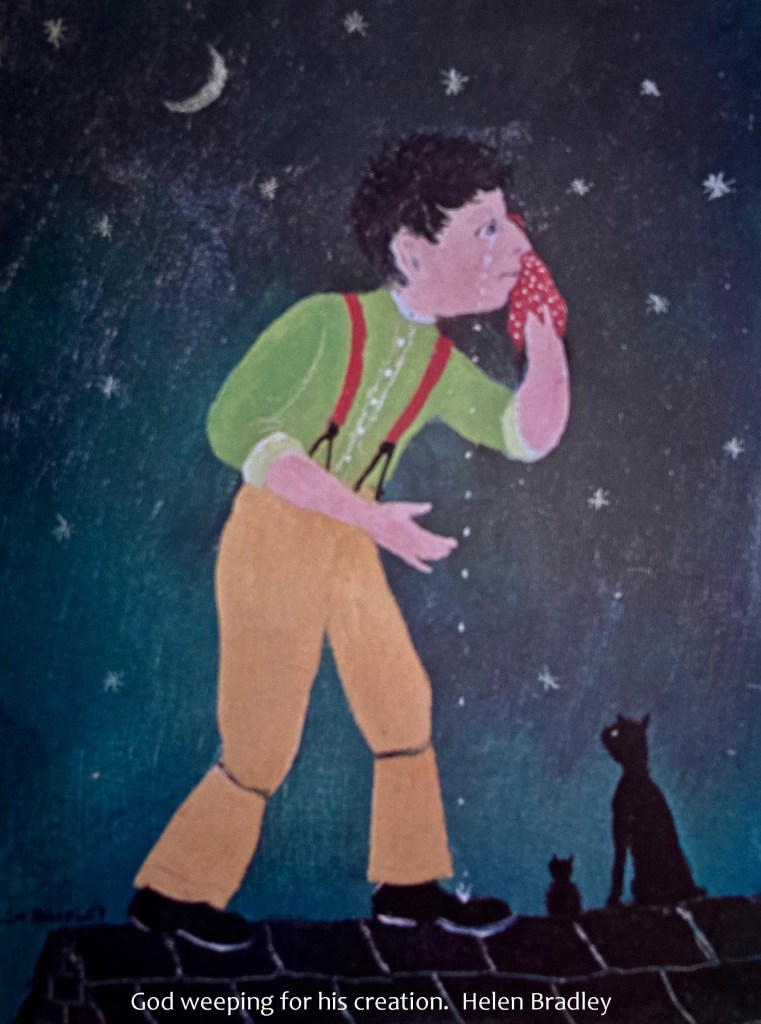
In fact I think the artist and writer Helen Bradley gets it right in her book titled ‘In the beginning said great aunt Jane’, when at one-point she paints God standing on the roof of a house and weeping over the earth crying, ‘Oh my beautiful earth, my beautiful people’…..there wasn’t even time to see all the lost dogs and cats whom he loved so much. He held out his hand, ‘Please give a thought to me. I made you, and I made you so beautiful, and all the animals and birds I made, and they are beautiful. I gave you all love and yet you are without it……My beautiful world….what will become of it’. And a tear ran down his cheek.
A former bishop of Manchester once expressed within the House of Lords:
“My Lords, I once heard it said – and the saying has haunted me ever since –
that if animals believed in the devil he would look remarkably like a human being”.
Seeing and reading about the appalling treatment, abuse and neglect, such lack of feeling for all God’s creatures, I can agree with his sentiment.
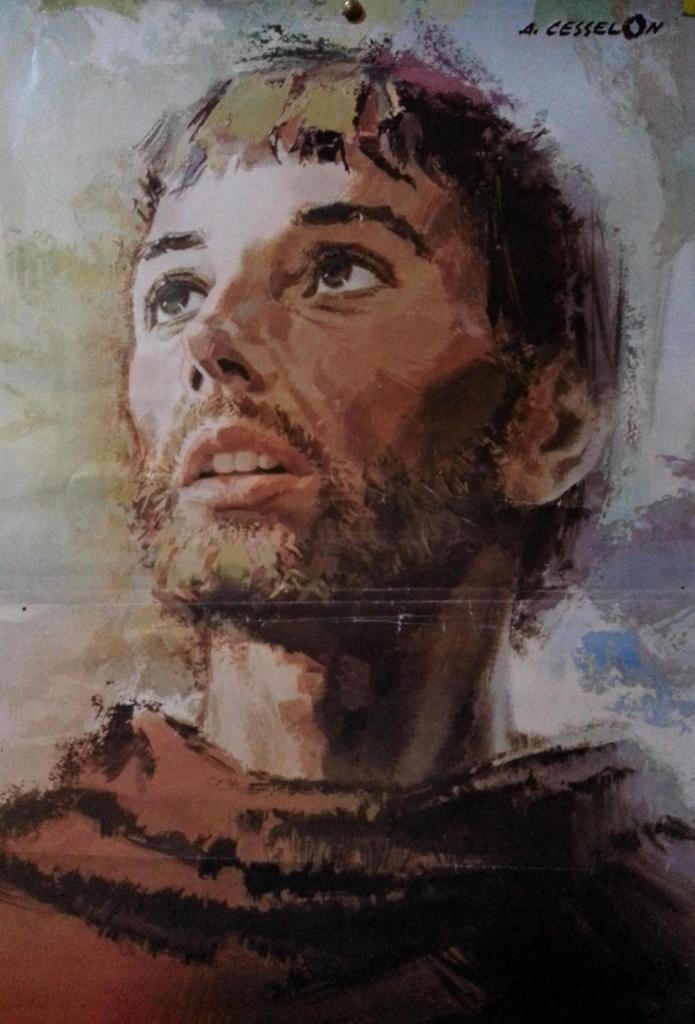
In fact, many notable saints have had much to say in support of the care of God’s creatures and the appalling way they have been abused, including Saint Francis of Assisi whose feast day was on Sunday.
Yet despite thousands of years of human neglect and abuse, animals still reflect the very nature of the Divine in their selfless giving and loving.
We are given a remarkable, spiritual and unique relationship with animals, but you wouldn’t sometimes recognise that in the world or even in our churches. Rarely do we speak of spirituality and animals in the same breath.
In our culture, we are taught to eat them, wear them, and work them.
We even refer to other people as “animals” in a derogatory manner. Publicly, our culture emphasises animals as ‘Things to be used.’ Things with a limited shelf life.
We blame them for passing on diseases and we hunt them down.When there are too many, we turn our backs to millions who are euthanized due to overpopulation – a tragedy so easily prevented.
We see them as property, rather than as separate beings who deserve the good things in life we want for ourselves.
When they are bought for food, they no longer resemble animals grazing in our fields or more likely these days locked in cages and small crates on our farms.
And yet every one of them has the same complex feelings, as do the very cats and dogs that share our homes. They too have unique personalities, and value their lives. They nurse and snuggle with their young, they get hungry and thirsty like us, they mourn the deaths of their companions, they get scared by strangers and loud noises, they play, they cry, they feel pain.
And yet they are treated like machines and no more than products …. in their billions! Too often we give little thought to what the animals have sacrificed for us.
Being stewards or caretakers of the earth’s creatures is the responsibility all of us…. Not just some of us!
If you watched the latest David Attenborough documentary called ‘Extinction’, then you will know that not everyone is playing their part in protecting our planet and its creatures.
Right now, a million species are at risk of becoming extinct.And how much do we care?
Everything in the natural world supports the whole of life on earth, including us, and we are losing many of the benefits that nature provides for us. The loss of insects threatens pollination of crops, loss of biodiversity in soil threatens plants. In fact, one in four plants face extinction right now. And the crisis will have a knock-on effect for everyone. It threatens our food and water, puts us at even greater risk of pandemic diseases and among the largest drivers are overfishing, climate change and pollution.
And it’s happening very, very fast!
But the single biggest driver of biodiversity loss is the destruction of natural habitats. Seventy-five per cent of Earth’s land surface has been changed by humans, most of it for agriculture.
The way we are destroying God’s beautiful world isn’t just putting the ecosystems that we rely on at risk. Human activities like the trade in animals and the destruction of habitats are driving new diseases. We’ve heard a lot for example about the beautiful, gentle, now threatened pangolins that are boiled alive for Chinese medicines. Their scales carry coronavirus. And you and I have a huge responsibility as consumers, because unless we are very, very careful, without realising it we contribute towards the loss of species through what we buy in the supermarket.
A good example is products with palm oil. Its production is responsible for terrible human rights violations because corporations often forcefully remove Indigenous Peoples and rural communities from their lands in order to expand their palm oil plantations.
Tragically, child labour, modern day slavery and other serious labour abuses occur on plantations where most of the world’s palm oil is grown.
But it’s also one of the world’s leading causes of rainforest destruction.
The expansion of the plantations push deep into the heart of some of the world’s most culturally and biologically diverse ecosystems.
And so irreplaceable wildlife species like the Sumatran Rhino, Sumatran Elephant and the Sumatran and Bornean Orangutan are being driven to the brink of extinction.
Look at the products you buy and you will see many have Palm oil in: Bread, crisps, soap, ice cream, shampoo, chocolate, biscuits and tons more. Look at the packaging.
The part that animals play in our world is so vital. We cannot afford our thoughtless, selfish behaviours to go on. All of us have a part to play.
Back in biblical days’ people lived with their animals, today the vast majority of those used for food and other purposes are hidden from sight in factory farming.
I don’t know how much people are really aware of the suffering involved in factory farming, because I do know a common reaction when faced with the facts is, ‘Don’t tell me, I don’t want to hear about it’ or ‘don’t tell me what I can or can’t eat’!
Well say that to God and hear what God would say……’My beautiful creatures, what has become of the people I asked to care for them’.
For most of history Christians have largely ignored animal suffering. Christian thinkers believed that human beings were greatly superior to animals and so could do what they like to them. Fortunately, modern Christians generally take a much more pro-animal line realizing mistreatment of animals is both sinful and morally wrong. But having said that many still shut their eyes to what goes on in the meat industry.
I’m a vegetarian working towards becoming a vegan. This wasn’t an overnight change. It’s an ongoing process. And I’m not saying that all of you should do that same.
What I am saying is when people shop, do they really know about where our food comes from, how much the animals have suffered and what the impact is upon our planet? Do people care enough to change shopping and eating practices? Do people dare enough to ask what God requires of us? Do people care enough about their children and grandchildren and those yet unborn and what the impact of our buying will have on the planet and them, as well as all God’s creatures?
The global livestock industry produces more greenhouse gas emissions than all cars, planes, trains and ships combined, while millions of cows raised for meat produce tons of methane, far more potent than CO2 as a greenhouse gas. The environmental impact of meat production needs to be taken much more seriously.
I could tell you so many stories about the negative impact and brutality of factory farming and the huge meat consumption there is, but at the end of the day it’s up to each of us as individuals to think very, very carefully about what we are doing. Most of us have computers and can research online if we really want to be good stewards of God or of the planet. Look up ‘Compassion for World Farming’ Or ‘Viva’ if you really would like to know the truth.
A start would be to buy less meat and fish and only buy free range because pigs and cows were not created to be forced to live their lives in pens they can’t even turn around in. In fact the majority of factory farmed chickens will have more room in your oven than they had in their short lives.
Yes, free range is more expensive, but you could eat less of it, eat more veg with it. It would be healthier, taste better, and the animals suffering would be reduced and the planet would thank you.
At the end of the day The Bible shows that God made a covenant with animals as well as human beings. They both have the same origin and God has the right to have everything created treated respectfully and equally – and so wronging animals is wronging God.
Our God is not indifferent to anything in creation and the example of a loving creator God should lead all humans to act lovingly towards them and take an active role in changing what’s happening to them and our planet.
Inflicting pain on any living creature is incompatible with living in a Christ-like way.
Change to our planet and the way God’s creatures are treated begins with you and me as we are all co-creators with God, called to acknowledge that we have a spiritual duty to take these issues seriously. It’s an important part of our Christian discipleship, this is not an optional ‘add on’.
Lynn

 Mr G's Ponderings