Month: March 2021

Cat on a hot tin roof

From: PAGLI Ace Reporter

As most of you know, I allow my servant, Mr G, to organize most of the postings on this lovely blog but every so often I like to add my contribution.

I was particulary interested by a news item I saw this week as I was peeking at my servant’s  i-pad. It came from the Manchester Guardian (or Guardian as it likes to call itself these day.

A very nice lady, Lucy Campbell wrote about a feline friend of mine who became responsible for a  major incident on the upper part of Euston Station (a place where trains depart and arrive in the north part of London centre).

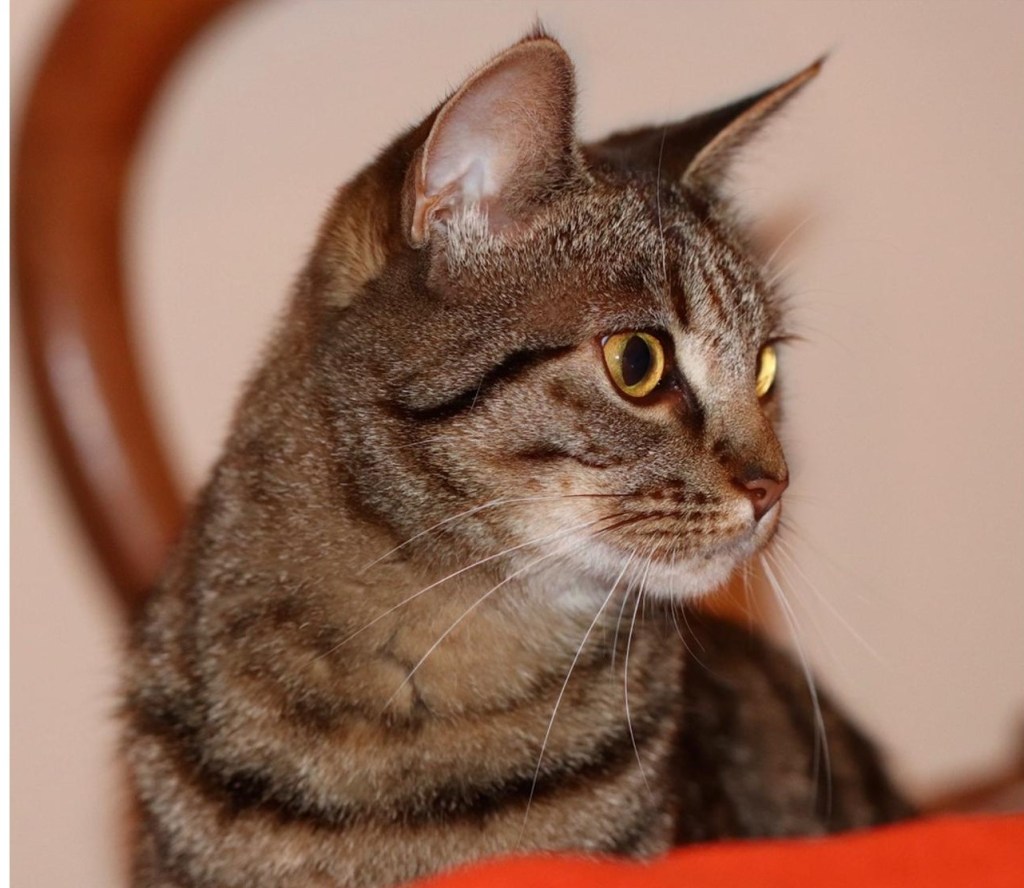
My feline friend (who looks a little bit like me, though I was tucked up at home) decided to go walkabout. This was on Tuesday evening. Said cat was spotted within a whisker away from hitching a 125mph ride up th’north. The dear friend was spotted  curled up on top of an Avanti West Coast train just half an hour before it was due to depart for Manchester at 9pm . Other cats reading this will know that once a dear pussy cat finds itself causing inconvenience to humans, no amount of persuasion is going to shift them/ us.

The train was therefore taken out of service and a replacement train found. It was then hoped that the cat might be coaxed to alight (with or without ticket).

Passengers detrained to a new train, whilst employees of the railway company encouragd the dear pussy cat to leave her precarious perch, perilously close the the 25,000 volt overhead lines. This took two and a half hours of standoff. It all came to an end when a bin was pulled up beside the carriage, giving the animal a platform on which to disembark.

The feline appeared unbothered as it alighted the train, according to station staff, who described it as “swaggering off” into the night as though it had other places to be.

Naturally it was just resting between two evening engagements.

When I told this story with some glee to one of my servants he reminded me that the safety of the cat was in the end thanks to some good and kind human beings. Despite all the trouble, caused the welfare of the cat was of paramount importance . It should be jolly grateful for the milk of human kindness flowing from them (not that the cat wouldn’t have minded a saucer of the other kind!.)

My servant tells me that this is a heartwarming tale showing humans in a lovely light.  It also showed, he says, that many people love animals and will do much to keep them safe and cared for. How lovely that is, he says. The more such kindness flows around our world, what a loving and better place it will be.

Of course, I gave three purrs to that!.
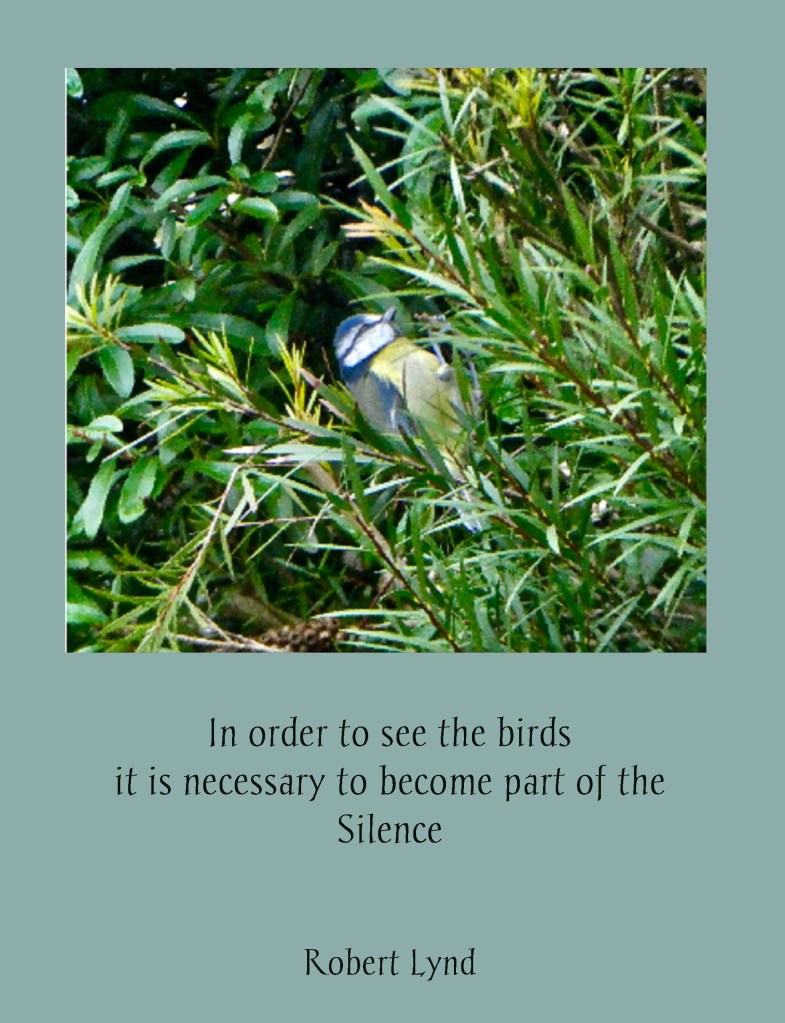
Listen to the birdsong in your heart

My friend Joyce Smith has sent me another of her tweets. She reminds us that it is is nearly Spring and the dawn chorus is amazing, but it is also in the silences that we see the wonders of God’s creation.

The little bird is almost camouflaged and to notice it you have to pause and be still. As Joyce reminds us, God’s creation is ablaze with new wonder, new life. Even in the midst of the pandemic we learn new things. We learn to appreciate our surroundings, our neighbours and nature in ways that we never did before. Many lead busy lives and many fail to see the beauty aroud them. Even in the heart of cities and urban sprawl we can see the loveliness of God.

When you are still outwardly you see things. When you are still inwardly, God shows you things about yourself -things within.

Sometimes we become busy in order to avoid looking at ourselves. We crowd out the silence with noise. But if we dare to be still God shows us round the home that is ourselves, the place where Jesus tells us that the Kingdom is. God is keen to show us. He wants us to see how beautiful He has made us. How proud He is of what He has made.

God speaks to us in whispers about what we mean to him. Like the little bird we are beautiful and, of course, God’s more than beautiful and He has lots to tell us. If only we woud be still we shall learn so much. We will enter the Springtime of our hearts, our inner being and as with the Spring outside. Then we could allow ourselves to sing our own kind of birdsong, from our hearts.

[MrG & Joyce]

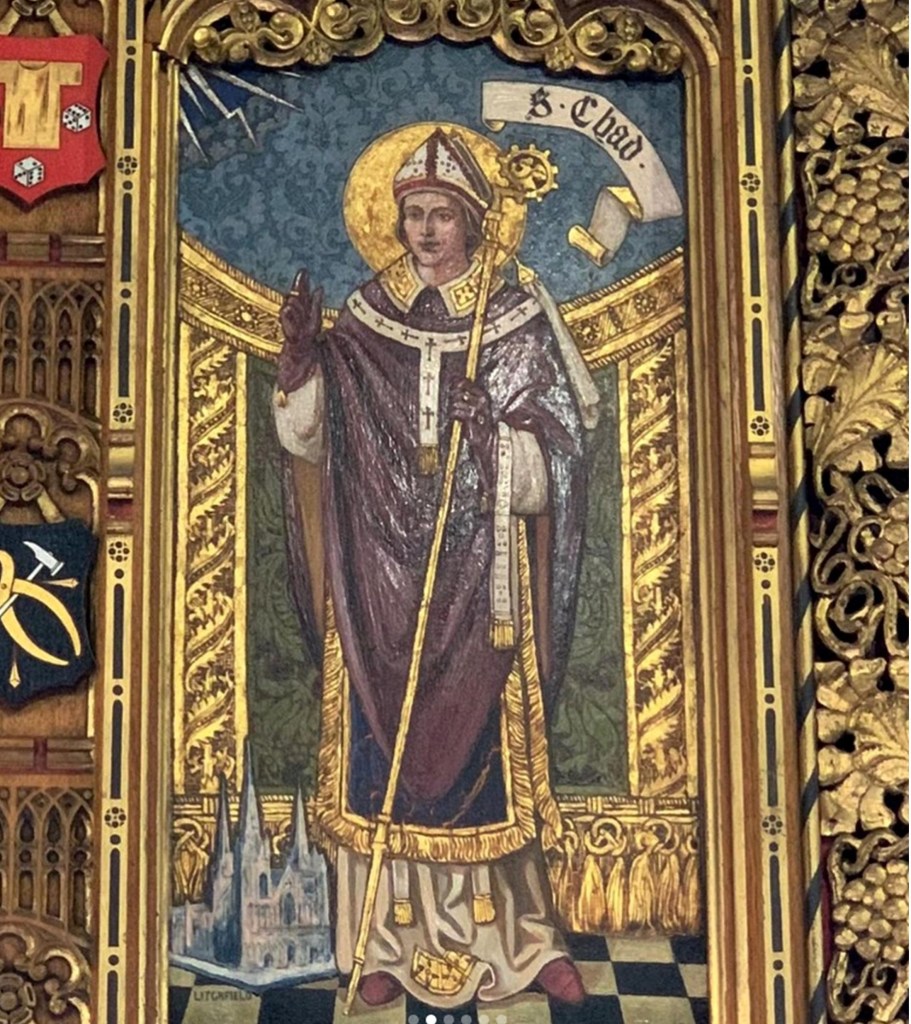
St Chad’s Birthday in Heaven.

Detail from the Altar Reredos, St Chad’s College Chapel, University of Durham

Today, March 2nd, the Church keeps the feast day of St. Chad. In a rich and eventful life there is too much to mention, so I thought I would say something about his birthday into heaven.

Appointed  the first Bishop of Lichfield, in what was then the Kingdom of Mercia, Chad established his church and monastery there. Chad also sought solitude, in the custom of the Celts and Anglo-Saxons, by building a house away from the church to which he could retire quietly to pray and study whenever his missionary duties permitted. In Celtic style he also trained up others to carry out the work of mission, as he himself had been trained by St. Aidan on Lindisfarne.  One of those he trained was Winfrid who succeeded him as Bishop. him as Bishop. Chad was to be bishop for only three more years for in 672 the Plague struck again.

The Venerable Bede  in his Ecclesiastical History of the English Nation, records the event:

When he had ruled the church of the province with great success for two and a half years, heaven sent a plague which, bringing bodily death, bore away the living stones of the Church to the Temple in heaven.”

The date of his death was March 2nd 672.

It was accompanied by a premonition 7 days before it happened. A monk working outside Chad’s oratory heard a joyful melody of persons singing sweetly which descended from heaven into the bishop’s cell, accompanied by a great light. Half an hour later the sound ceased and Chad called the brother asking him to bring his companions. When they entered the oratory he urged them to preserve peace, be faithful in prayer and observe the discipline of the monastic life. He asked them to pray for him as he approached death and he begged them to remember their own deaths which would come at an uncertain hour – they must be vigilant, prayerful and given to good works,
The brother who had first heard the singing asked Chad from where it had come.“They were angelic spirits” replied Chad “who came to call me to my heavenly reward, Which I have always longed after.”
Shortly after he fell into the throes of his final illness which grew steadily worse until 7 days later, having received the eucharistic sacrament, he died – or as Bede puts it:
“his soul being delivered from the prison of the body, the angels, as may justly be believed, attending him, he departed to the joys of heaven.”

Bede then comments that “it was no wonder that he joyfully beheld the day of his death, or rather the day of our Lord, which he had always carefully expected till it came; for notwithstanding his many merits of continence, humility, teaching, prayer, voluntary poverty, and other virtues, he was so full of the fear (Love) of God, so mindful of his last end in all his actions…”

He died as he had lived, deeply within the love of God.
He combined the Celtic love of mission  with a firm conviction that nothing is accomplished without prayer.
His life was one of active Proclamation of the Gospel but whenever he could he would retire to the solitude of communion with God – a lesson he had well learned at Lindisfarne.
Whilst his call was to the Market Place of the world his heart was always travelling towards heaven.

[Mr G]

Little things with a generous heart.

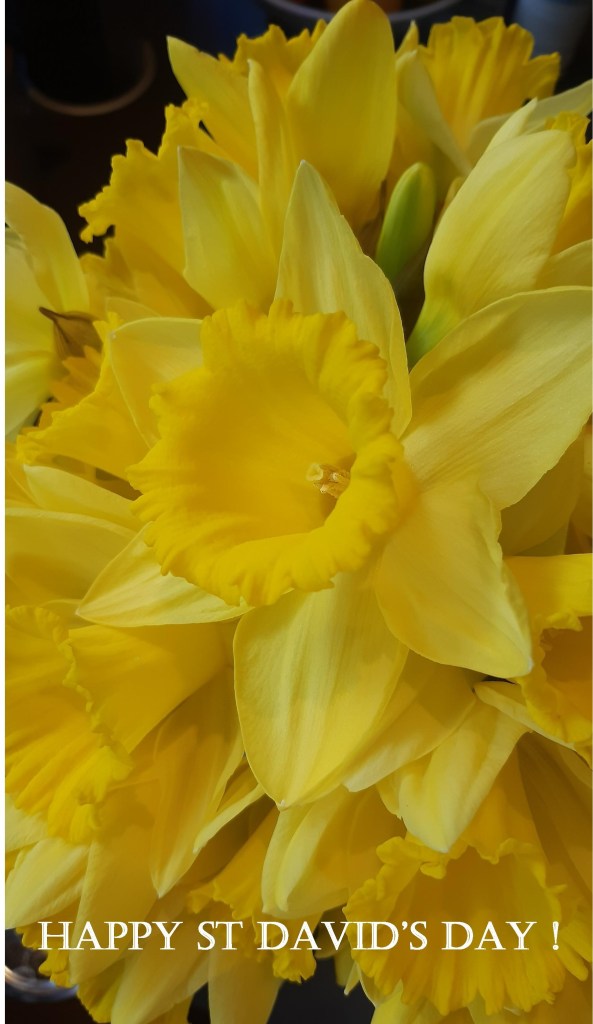
Photo: Piers Northam

Welsh hearts generally sing as the month of March begins.  It is the day we remember the patron Saint of Wales—St. David. His importance goes beyond his native country because he was one of the leaders of Celtic Christianity. For a long time he was the only Welsh Saint honoured by the whole of the Western Church.
Celebrations may be more muted this year but Wales is a resilient place and there will doubtless be celebrations of sorts.

As a spiritual leader St. David has been described as an athlete of the spiritual life who pressed himself to the limits of human endurance.  But what he expected of himself he did not demand of others whom he treated with deep compassion, especially the poor and the sick. 
On his deathbed, his monks gathered around him and he spoke his final words to them

Lords, brothers and sisters, be happy and keep your faith and your belief, and do the little things that you have heard and seen me do.”

The little things which characterized David’s own approach to life were (a) to respect others (b) to live in lowliness, which can be read as meekness and humility, or to live a life of simplicity, and (c) be at home to others.  This is about practicing the deeply held monastic ideal of hospitality in which Christ is recognized in everyone. 

These are important virtues today when so many are isolated, lonely or, because of lockdown, in dark and sometimes dangerous places.
Loneliness is one of the scourges of the pandemic so it is even more important to reach out and enfold people with kindness and love, even if it is by phone, email, shopping, just being nice to them and so on. On my daily walk I meet strangers and neighbours and we exchange a few words. People who never used to speak to each other are now reaching out in friendliness. That’s about the hospitality of the heart. This hospitality is based on recognizing the worth of others. This involves looking for and rejoicing in the image of Jesus Christ in others. It enriches theirs and our day.

One of David’s early biographers with a personal knowledge of him said that he was constantly feeding a multitude of orphans, wards, widows, needy, sick, feeble and pilgrims. 
Drawing on the example David set, a modern writer on Welsh Spirituality, Patrick Thomas wrote:
“In any community apparently insignificant acts of habitual kindness and self-forgetfulness which display a fundamental respect and love for others can generate stability, unity and wholeness.  On the other hand, acts of unkindness or contempt, however superficially trivial, can quickly lead to the disintegration of a society as feuds develop and are fuelled by an unwillingness to forgive.”

Seemingly Insignificant acts of kindness which takes us outside ourselves is at the heart of what St. David meant when he spoke of doing the little things. 
Respect, Lowliness and Hospitality towards others, beginning with random acts of kindness combined with selfless care, would be a good way of building up loving and caring communities.
It would also, as with St David, bring us closer to God whose acts of habitual kindness towards us we call grace.

[Mr.G]