It is two years, in mid-August, since Mr G began his ponderings. As those who followed the Ponderings at that time will know, it was an idea of mine and I became the Patron. I lead an especially busy life so I haven’t been able to write to you as much as I would have liked but I have always been around to give Mr. G my wise advice. He has sometimes taken it! I have been purr-fully delighted that so many of you now follow the articles, photos and thoughts not only of Mr. G but some of his friend.
Sadly we lost one of our dear friends, Joyce, recently. She brought us such pleasure with her photos and reflections. Mr. G is going to reproduce some of them in the early autumn. Many of us have enjoyed the antics of the Latton Foxes. For this we thank our Vicar Lynn not only about the foxes but all the menagerie that occupy the Latton Vicarage grounds. Another regular contributor has been Mr. G’s friend, Gill Henwood. We have been able to catch something of the brooding joy of the Lake District as well as accompanying Gill on her jaunts around Europe. Mr G told me that her trip to Prague around the Christmas season. It was a truly magical experience for him as. Through Gill’s reflections, he revisited some favourite haunts in that great city. Piers the Poet as we like to call him has contributed a number of wonderful poems and I am sure there is more to come. Others have added their contributions and this is fulfilling Mr. G’s aim of encouraging people to share the Blog and enrich it with their own take on things. Thank you for all who have contributed and those who follow. It is much appreciated.
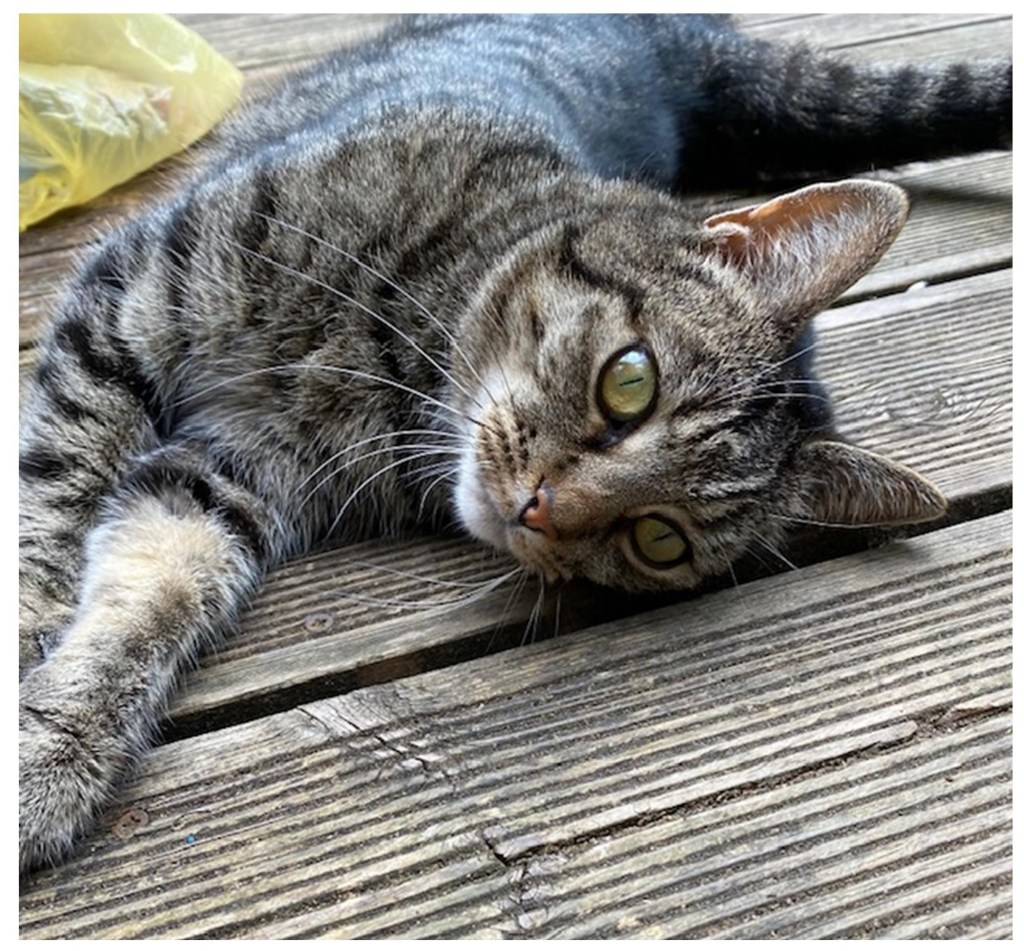
Now Mr G has agreed to take a short break from the Blog but will be back very soon so don’t go too far away. As his patron and really his ‘boss’ I have agreed to pay his usual wages whilst he goes swanning around I know not where. He says he is doing research for further Blog items. We wait and see! Meanwhile, I shall have a little rest myself as you see from the photo above.
You must try and do the same.
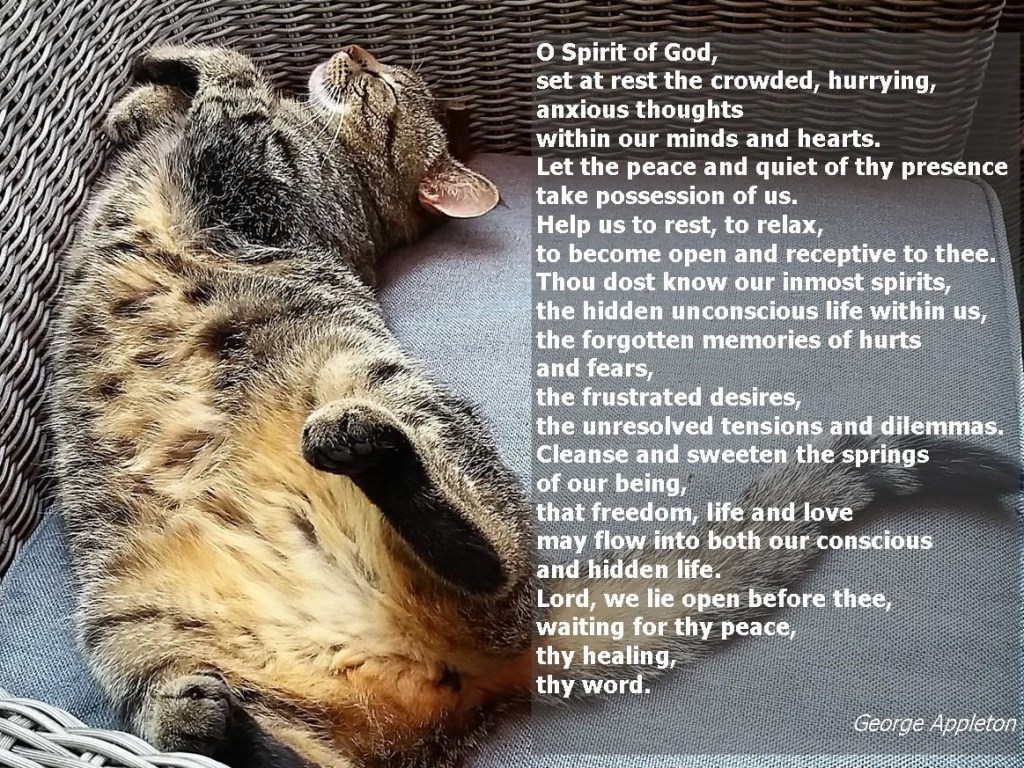
I offer you this little prayer to help you chill out in the Lord.
Yours purrfully Pagli-Ji, A friend to all my ‘servants’
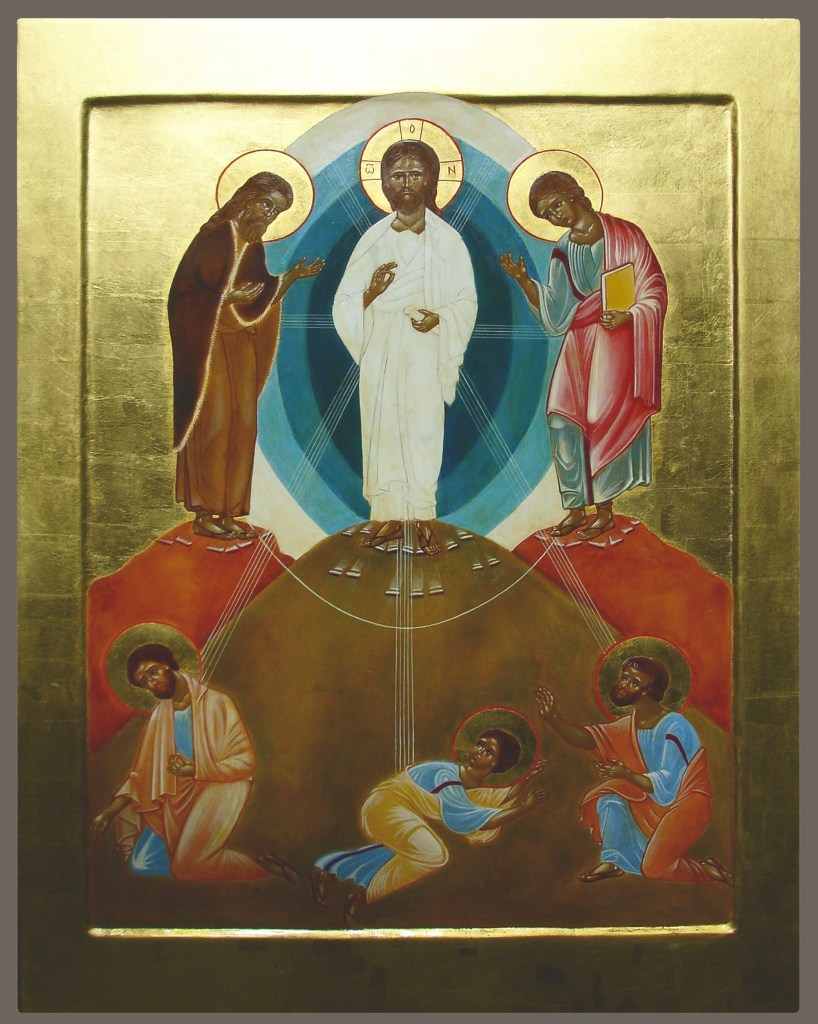
Icon of the Transfiguration, written by Sister Irène-Marie of the Bec Community. The original is in St John the Baptist Parish Church Epping and a second version is in the author’s home.
In 1984, the novelist J G Ballard published a book, ‘Empire of the Sun’, The title is a reference to Japan and though the book is a novel, it is based on Ballard’s own experience of life after the Japanese drove out the British from Shangai during the 2nd World war. The novel was turned into a film
The central character of the film was Jim, a spoiled young British boy – played expertly by Christian Bale. He lived with his wealthy family in pre-World War II Shangai. During the Japanese takeover, Jim was separated from his parents and taken prisoner. Much of the film is shot in a Japanese Concentration camp where Jim grows up from being a boy to becoming an adolescent who learns to survive without a retinue of servants at his beck and call. Thanks to a meeting with an American who was a bit like Fagin in Oliver Twist, Jim became much more the street-wise kid who knows just how to survive. For him, the Camp is one big adventure playground and he flits and darts between the various groups – American, British and even Japanese.
In 1945, when the Japanese know that the writing is on the wall, the Camp is ‘liberated’ and the inmates are force marched towards Nantow where they are told there will be food. All this is against a backdrop of American planes bombing the airfield near the camp
On the march he is befriended by Mrs Victor who, with her husband, had been kind to him. Now alone after the death of her husband, Jim stayed with her, suggesting that she acts ‘dead’ so that the Japanese won’t shoot her. Unfortunately for Jim, she died in the night and as morning breaks, Jim saw a bright white light in the eastern sky. He thinks it is Mrs Victor’s soul going to heaven. Later he was told that what he saw was the atom bomb exploding on Hiroshima. “I saw it” he said, “it was like a white light in the sky. Like God taking a photograph.”
The day it happened, of course, was August the 6th – the Christian Day of Transfiguration. There is a strange irony that the brilliant light made by that bomb should share its birth with the day when Jesus was surrounded by a brilliant light – transforming him until, as St. Luke tells us, his clothes became dazzling white.”
Since 1945, Transfiguration has been linked It is a day of remembering God’s act of glorifying his Son and also a day when humanity sank to its lowest ebb, using a nuclear force to destroy rather than create. Here is how one victim of that bomb described the experience:
On the 6th of August, 60 years ago, I was a college student, 20 years old. When the atomic bomb wasdropped, I was near the Hiroshima City Hall, about one kilometre away from the ground zero. I’ve seen so many Hibakusha wounded, injured and killed in blood and in burns. It was like hell on earth. I really believed Hiroshima was dead at that time. I was fortunate to survive the instant bombing, but one week later, I fell unconscious. For forty days, I was staying in unconscious so I didn’t know when the war ended. After so many years, I’ve survived, but I have many, many illnesses: A plastic anemia, angina, colon cancer, prostate cancer. Many Hibakusha who have survived the atomic bombings still suffer from many, many difficulties and illnesses, and they have been constantly under medical care. The most cruel damage on human beings by the atomic bomb is that even if you luckily survived you have to continue to suffer from psychological and physical disruption of human beings until your life ends. That’s why we call the atomic bombing the absolute evil.
He ended his speech with the words ‘No more Hiroshimas’ – a cry that has become a clarion call by many. A cry that has, of course been heeded so far because no nuclear or atomic bomb has been used in war since those two bombs dropped on Hiroshima and Nagasaki. We live however, in very uncertain times just now.
There is always something to be learned through quiet reflection and prayer. On the mountain, Jesus was transfigured – glorified, exalted. In the words that Jim might understand it is as though God was sending a photograph of what humanity could become. For it is within the destiny of humanity to become so filled with the image of God that we are bound for glory. Our world at present does not show this destiny very clearly so we need to be reminded of what the Transfiguration points to in our own lives.
The word Transfiguration means transformation or radical change. In the Transfiguration of Christ this change was to turn outside in and inside out. What I mean is that the inner glory of Jesus became totally visible – so visible in fact that it was dazzling. Not surprisingly Peter tried to capture the moment almost as if he had a camera to capture the scene.
For Jesus, this was not to become a memorial of an historic event. Through the Cross and Resurrection which followed and the descending of the Holy Spirit, the Transfiguration was to be the glimpse of God’s glory which was to lead to the total transformation of humanity in an even more dazzling display of God’s glory. This is real. This is the real moment of transfiguration for us all and it is God’s way of dealing with human frailty, sin and the temptation, ever present to a greater of lesser degree, to choose evil rather than good. Something which we are seeing a lot of us in the world today.
The Japanese survivor told his harrowing story and pleaded ‘No more Hiroshimas!’ In our dark world we cannot guarantee this but what transforms the demonic is Love. It is a powerful, sacrificial love. Only that kind of Godly love can save our world now.
Jesus absorbed all human pain, conflict and hurt and he became the instrument of our transfiguration. He absorbed human sin and nailed it to the Cross and he did so out of sheer love for humanity and the world. God is saying to us . “You can do this to me and yet I will go on loving and you cannot stop me for it is only love that transforms humanity and changes our destiny.” Today, God calls us to this witness where the pain that is in our world can be absorbed and by our love transformed by God. We are no longer standing with the disciples at the foot of the Mount of Transfiguration. The Glory of God shining in and through our lives is a kind of living Transfiguration today.
Here’s a prayer which I have found helpful. I cannot remember the source.
Ever loving God, Thank you for always being a light in the dark places of the world and the dark places of our lives. May we always place our hope in you, for you are the light of the world and you call us to be lights for others. You tell us your story in many ways, in people in Word, in art and music, In pain and struggle and in suffering, But you constantly surprise us with healing and joy, Compassion and in holding us. You enlighten our thoughts and nourish our hearts, But we thank you, most of all, that you lighten our way as we walk the pilgrimage of life, and love us until we are safely in heaven May we be, like icons of light and love reflecting and refracting that joyous vision to all we meet and so share with you in the transfiguration of the world, Through Jesus Christ our Lord
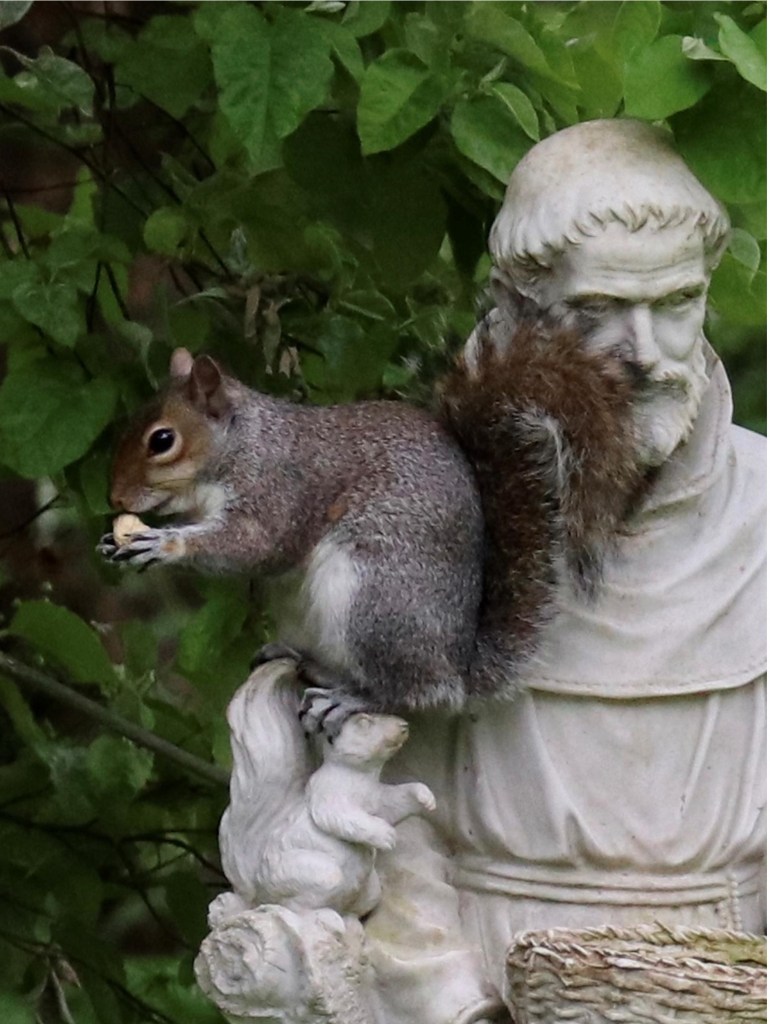
Photo taken in Latton Vicarage Garden by my, friend, The Revd. Lynn Hurry
Readers of this blog at the end of July may remember that Lynn, my Vicar, reflected on the squirrels which frequented the Vicarage garden. She accompanied her thoughts with a photograph of a squirrel raiding the vicarage strawberry patch. She was in the act of stealing an unripe but rather plump strawberry. I say ‘stealing’, but I’m sure that the offender would say that it was simply a re-distribution of wealth. A Christian view may be that it was a sharing in God’s bountiful provision for the sustaining of all.
“Umph! ” I can just hear some people mutter. My friend, Mary Bard, who won the picture competition last year with a photo of a squirrel thwarted whilst attempting to steal peanuts , may disagree with my loving view of squirrels!
But there is always hope for repentance and redemption in God’s scheme of things!
As we see in Lynn’s latest photographs the squirrel is seeking sanctuary with St. Francis. She sits in the basket and is assured of a ready welcome and acceptance. I think there are signs here of her need for forgiveness and who better to scamper to but St. Francis. True, she later uses the stone squirrel on the statue to quietly munch a morsel of food, which may have been in the Saints’ basket! Of course, she didn’t steal it. St. Francis (in the guise of Vicar Lynn) always leaves some tit bits around for the animals and birds. On ths occasion, it is a sign of forgiveness because of the squirrel’s repentance.
Maybe that little squirrel teaches us two things.
First when we return to the Lord after some act of unlove or sin, then He always forgives the repentant sinner. Secondly, once we know we are forgiven we are fed anew with God’s love. In the squirrel’s case this has come in the form of a peanut. Yours comes with a sense of God’s grace bursting joyfully in your heart. Try to love that God loves you!
Dear St Francis, Thank you for sharing God’s loving care with me, even when I’m just a tiny bit naughty. I’m sorry I stole the strawberries. Thank you for the peanuts. Please tell God that I love that He loves me, no matter what. Could you please remind Him to tell other people that too. They do need to know it quite often. Amen
On August 1st, a quaint feast was celebrated in some parts of the Church. This is particularly so in some rural areas. The feast is known as Lammas. That’s a shortened form of Loaf Mass. It is the day when, in former times, the first loaf baked with the first corn of the harvest, was presented to God as an offering of first fruits as a sign of dependence upon God for daily bread. The words in italics come from Common Worship Times & Seasons, which restores this feast as an Anglican Agricultural festival.
Its origins stretch back into Old Testament times when, as we read in Deuteronomy 26 , the people were bidden to present the first-fruits of the harvest. You shall take some of the first of all the fruit of the ground, which you harvest from the land that the lord your God is giving you, and you shall put it in a basket and go to the place that the Lord your God will choose as a dwelling for his name. (Deut 26:2). The priest took the basket and placed it on the altar as an offering from the people.
At the heart of the Lammas feast there is thanksgiving for the food that God provides and thanksgiving for Jesus as our Bread of Life. The offering of the new loaf is both a giving back to God something of what he has given us and a request for a blessing on our daily life so that we too may be part of the rich harvest which Christ gleans for His Father. It is easy to take God for granted and, divorced as many of us now are from the source of our food, it is easy to lose the connection we have with the earth. Lammas is a way of re-affirming our dependence on God and an opportunity to give thanks.
There is an added poignancy about this at present. Our farmers are up against it for three reasons. One is that the weather and the drought we are experiencing in Britain makes it difficult to grow and then bring in the harvest. Secondly, post-Brexit it is difficult to hire workers from other countries to help pick fruit and other produce. The third is, of course global warming. These are also making life difficult for our farmers and they are in need of our prayers because we tend to take our food for granted. The war in the Ukraine and the cost of living crisis post pandemic add to the complications. So, it may that Lammas may not be much of a celebration this year.
Perhaps a little known fact will also not be truth this time. It may not be a fact – it could just be a legend or even wishful thinking. Did you know that, after Lammas Day, corn in the field grows just as fast during the night as it does during the day? Don’t know whether it’s true or why it might happen. Answers on a postcard (what?) or an email!
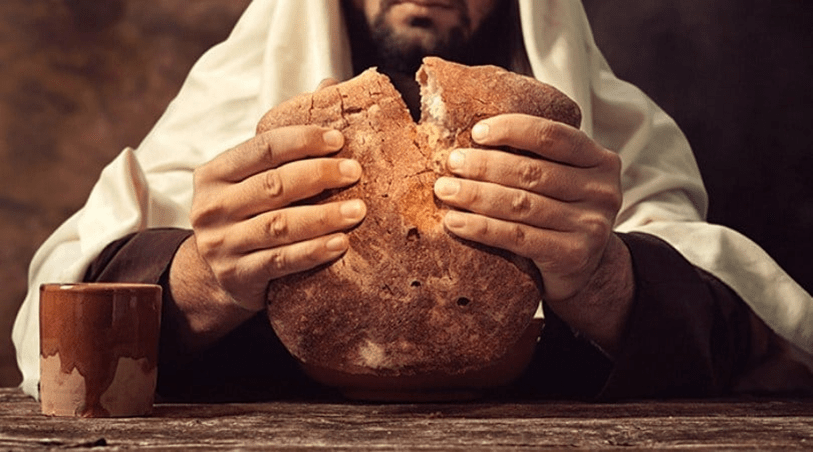
In Christian understanding, there is a special link between the bread we eat and Jesus who called himself the ‘Bread of Life’ He tells his followers that he feeds us for eternal life. The connection is easily made with the bread of the Eucharist under the form of which Jesus comes to us as our spiritual journey through life towards the gift of eternal life which he promises to us.
When you eat your daily bread, pause for a moment and thank God for his gracious provision of all that you need to sustain life on earth—and if it is your custom to receive the bread of the Eucharist (Holy Communion), thank Jesus for his gift of eternal life and for feeding your soul for the journey you are making to God. For it is a gift. We come to it because of Jesus inviting us to the feast. We are gathered around his table because he wants to share this divine food with us.
What bothers me at the moment is that sometimes the Eucharist isn’t seen as a joyful gathering which Jesus calls us to share but rather as a means of showing displeasure with others and making a kind of quasi-political stance.
Andrew Nunn, the present Dean of Southwark, writing in his excellent blog at the weekend, lamented that the Eucharist is being weaponised by certain parties at the current Lambeth Conference. They don’t like some of the churches stance on Sexuality and things associated with same-sex relationships. So they absented themselves from the Conference Eucharist as a protest.
They regard themselves as traditionalists, by which I think they probably mean they stand firmly in the faith as they understand it. Literalists are helpful in keeping us close to the tradition of the church handed down from the early fathers and mothers. But this does not allow for what St John Henry Newman spoke of as the development of doctrine. The doctrine of who God is and what he longs for his people, doesn’t change. But our understanding must and the reason why was given by Pope Francis as he talked to journalists on the way back from Canada at the weekend. He said : Many call themselves Traditionalists but they are not, they just go backwards and that’s a sin A Church that does not evolve is a church that goes backwards. Tradition is the living faith of the dead. Instead their attitude is the dead faith of the living.
Whenever we are tempted to make a protest by withdrawing from the Communion with the Lord and those he calls to be His Companions (literally ‘bread-sharers’), we do need to keep reminding ourselves that it is Jesus who invites us to the table where he feeds us without judgement and always in love.
For whatever reason those leaders at the Lambeth Conference do not follow up this invitation from Jesus, they are not just making a stance against Gay bishops and their partners. Nor are they just taking a stance against supporters of LGBTQI+ in the Church. They are also refusing Christ’s invitation to join their fellow sinners around the Holy Table. They are turning their backs on the gift Jesus brings to all who hold out their hands and humbly receive him as the ‘Living Bread’.
Little children, when they don’t get their own way, have a tendency to sulk or stamp their feet or shout against those who thwart them. It can be an ugly thing to see. That should never be the way of mature Christian leaders. Luckily for all of us, Christ goes on reaching out to all, because the grace of the sacrament doesn’t depend on us. It depends only on God how he chooses to deal with us, naughty or good and usually a mixture of both. He doesn’t dwell on our wrongfulness but only on his gift of loving grace which ultimately will win all our hearts to him and so open all our lives to repentance.


 Mr G's Ponderings