If humanity does not rid the world of war;it will be war that will throw humanity out of history.
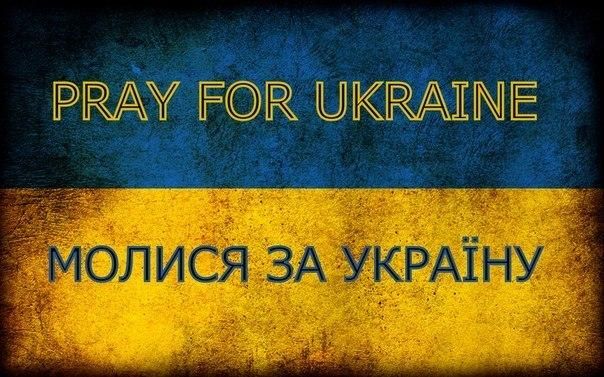
February 24th marks the beginning of the 3rd year of the War that Putin of Russia is waging against Ukraine. There is a growing sense of weariness amongst Ukraine’s western allies and a preoccupation with other conflicts. How easy to would be to abandon the people of Ukraine to a fate that is unthinkable. Above is artwork by Shamsai Hassani, the artist from Afghanistan who continues to draw our thoughts and prayers to the plight of our world and therefore of each other. I have given the title of this piece, Our Father..the beginning of the Lord’s Prayer. It begins in Ukranian. If you are able, please pray it in your own language.
The Prayer below has been written by a Ukrainian family who are being hosted by the Black Country Methodist Circuit. Lord God of power, You alone work miracles, so be kind to all and hear us. Help us God, our Saviour, and deliver the people of Ukraine from persecution. Come to our aid and destroy the intentions and unrighteous boldness of those who go to war against our people. Calm those who oppose your commandments. Grant us all peace, salvation and joy in our hearts. For you are protection and salvation for those who trust in you. We give you glory, the Father, and the Son, and the Holy Spirit, now and ever, and forever. Amen
The prayer below is a response to a request by the United Reform Church (UK) made to young people who are refugees in the UK. They were asked what we should pray for on the second anniversary of the war in Ukraine.
God who hears, For two years we have prayed, mourned and lamented. Two years of war in Ukraine. Two years of invasion, of violence, of death. Sometimes it slips from news broadcasts and from people’s consciousness. But we know you, O God, have not forgotten. We hold before you refugees who still feel like strangers, unsure when or if they will ever see and hug loved ones again. Keep safe those who remain in Ukraine. Protect them from the mental and physical wounds of war. We ask for a miraculous end to this bloodshed. Help us, even when we feel powerless, to act where we can. To care, to listen, to sit with those who grieve. To give, to protest, to continue to pray:
Your kingdom come, your will be done on Earth as in Heaven. Amen.
Отче наш, що єси на небесах, Нехай святиться Ім’я Твоє. Хай прийде Царство Твоє, нехай буде воля Твоя Як на небі, так і на землі Хліб наш насущний дай нам сьогодні. І прости нам провини наші, як і ми прощаємо винуватцям нашим. І не введи нас у спокусу, але визволи нас від лукавого. Бо Твоє є Царство, і сила, і слава навіки. Амінь
[Lord’s Prayer in Ukranian checked by Tania Andrienko of Taras Shevchenko National University of Kyiv]
Osip Mandelstam, a Russian poet who could not be silent.
Osip Mandelstam was one of the most important and inspiring Russian poets in the 20th century. He was born in Poland but moved to St Petersburg where he was educated. He was introduced to me in one of Bishop Richard Holloway’s books. He was writing about how ideas for sermons develop and he likened the process to the way Osip approached his poetry. According to Nadezhda Mandelstam, Osip’s wife, in her memoirs Hope against Hope and Hope Abandoned, Mandelstam he began his poetry process by listening to the ether and the words came to him. He acted as a midwife bringing those words to birth. Quite often, he didn’t write them down. He recited the poems to his wife who acted ‘like a Dictaphone.’ This Process , minus the dictaphone, is not dissimilar to that of writing a sermon, hence the illustration by Richard Holloway.
As well as learning that insight, I brushed against the poetry itself and the revelation of his life. It has been written of him that he had a prophetic understanding of the suffering of the twentieth century ‘which he transformed into luminous poetry. The same commentator said of him that he was, ‘childish and wise, joyous and angry, complex and simple. He was outspoken and brave which bordered on foolishness. He was unhappy about the way Russian Society was developing under Stalin and he felt a prophetic need to use his poetry to warn people of how dangerous it all was. Needless to say, he became a person of interest to the authorities and he suffered persecution at a time when the dictator, Stalin, was growing in power. In view of this, it was probably unwise to write a poem, a lampoon about the dictator. In May 1934 he wrote, of Stalin,
Our lives no longer feel ground under them. At ten paces you can’t hear our words. But whenever there’s a snatch of talk it turns to the Kremlin mountaineer, the ten thick worms his fingers, his words like measures of weight, the huge laughing cockroaches on his top lip, the glitter of his boot-rims.
Ringed with a scum of chicken-necked bosses he toys with the tributes of half-men. One whistles, another meows, a third snivels. He pokes out his finger and he alone goes boom He forges decrees in a line like horseshoes, One for the groin, one the forehead, temple, eye. He rolls the executions on his tongue like berries. He wishes he could hug them like big friends from home.
It was, of course, the most dangerous thing he wrote. When he chanced to meet his fellow poet, Boris Pasternak, he recited the poem to him. Pasternak was filled with dread and fear. Stalinism had eyes and ears everywhere. It was even suggested that the very pavements had ears! Russia was fast becoming a heinous dictatorship. Pasternack immediately told Mandelstam, “I heard nothing, Strange and terrible things are happening right now, You said nothing!”
Though the poem remained unpublished, the authorities, proving Pasternack right, got wind of it. Stalin began to play with Mandelstam as a cat plays with a mouse. He was arrested, interrogated, tortured and labelled a subversive to the State. He was imprisoned in Moscow and then exiled to the provincial city of Voronezh. Here and previously in Moscow, he was at his most creative. The Voronezh and Moscow notebooks, published still today are the outpourings of the poetic genius of a man who perhaps sensed he had little time but with much to say.
Eventually Stalin’s insecurity got the better of him. Like so many dictators, he fed only on hatred, fear, lust and an inner weakness which needed power to sustain it. It is hard to get into the inner being of such a person. Perhaps poets manage it because so many who challenge society do so through the medium of poetry (alongside art and music). A generalization, I know! At the age of 48, in a transit camp in the east, he died of a ‘heart attack’, His body was dumped in an open grave, identified only by a tag marked on his big toe with his prison number. Stalin could rest, at last. easy in his bed! Or could he?Nadezhda took up her pen. Osip would be remembered. His words would be read, quoted, pondered over. His creativity would be celebrated. His desire for justice, light and peace would be struggled for. Stalin? Only the suffering he inflicted is remembered. Who he was as a human being was never fully known whilst he was alive and certainly is not of interest now.
This week, along with many, I am thinking of another Russian. He was 47 when he died. There are similarities in his story and that of Osip Mandelstam. Not least that what he stood for lives on through his wife, Yulia. Osip Mandelstam / Alexei Navalny cannot be silent and nor must we.
One day people will forget Putin. Dictators fade away but those who stand up against them for goodness, kindness, generosity and love. They will always matter. So Mandelstam wrote:
Having deprived me of seas, of running and flying away, and allowed me only to walk upon the violent earth, what have you achieved? A splendid result: you could not stop my lips from moving.
[Osip Mandelstam. May 1935]
Maya Angelou said that birds sing because they have a song. Mandelstam & Navalny have much still to sing to us.
The photo of the Robin is from the collection left to us by my friend Joyce Smith. A remembrance that she was one of those who never failed to sing of God’s love.
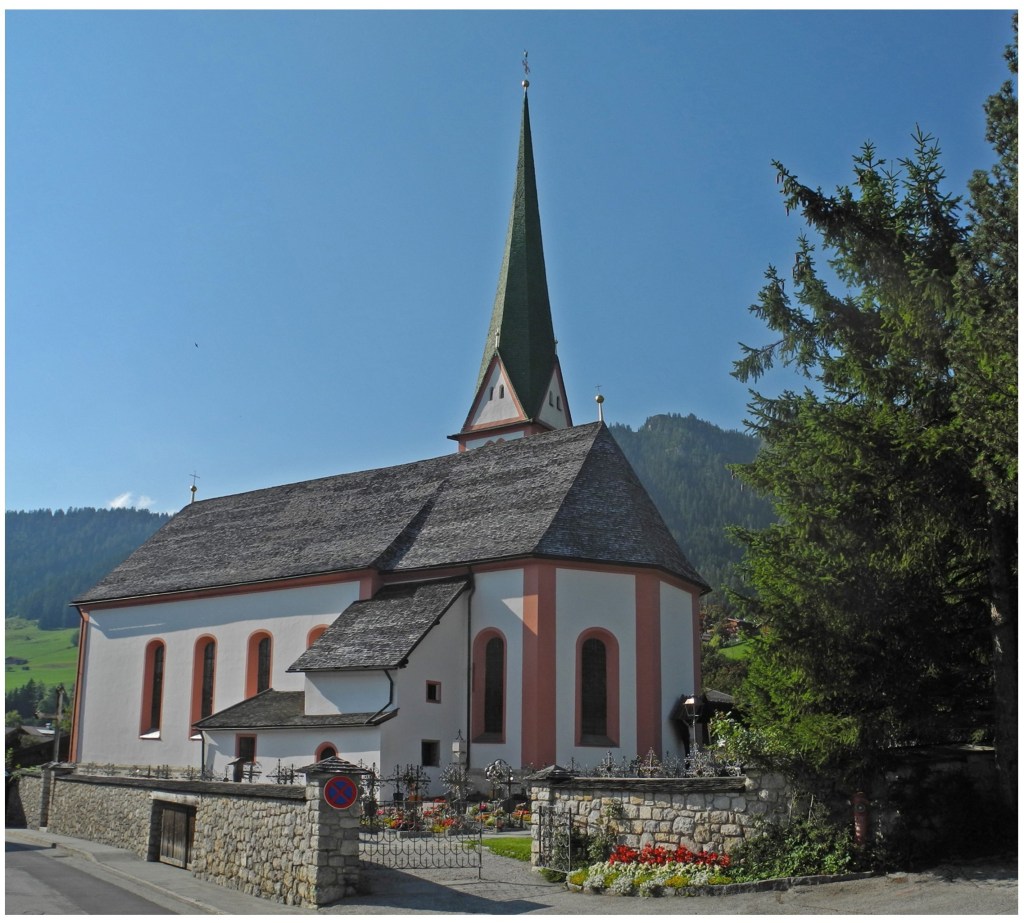
When Bishop David Jenkins was Bishop of Durham, he often spent his summer holiday leading tours to Christian places. On one such occasion he found himself at a place in Western Austria, the mountain village of Alfbach. He visited the church and, to his surprise he found that it was dedicated to St. Oswald of Northumbria. His own Cathedral in Durham was the place where some physical remains of St. Oswald rested alongside Saint Cuthbert. David Jenkins fell to wondering why this Austrian Church had this dedication to a saint in faraway Northumberland. He found a tourist leaflet which said that in the 7th and 8th centuries Christianity was brought to the region by Irish and Northumbrian monks. The bishop’s journey to the village had been in an air-conditioned coach but it had still been a difficult journey along narrow mountain roads. How much more difficult must it have been for those monks who had travelled through darkest Europe to bring the Gospel to that place. The bishop could only imagine what it must have been like and what hardships they endured.
More importantly, why did they bother? The Bishop asked himself that question and this is the answer he came up with: They had discovered in Jesus, that God loved them so they fell in love with God. As a result they wanted to share that love with others.
That was what took them through Europe at a time when the flame of Christianity was burning dim—and their mission—to spread the Good News of God’s love renewed the faith of Europe and took the Gospel to new places.
In an age when, for the majority of people, the Christian light burns dimly —God continues to love us so much that we too might fall back in love with Him—and when we do, like those monks, we will want to tell others. A way of describing mission. That’s a good thought for Lent.
Mindful of Valentine’s Day and Ash Wednesday coinciding this year, I want to share with you a prayer that I received by email. The prayer draws its inspiration from 1 Corinthians 13 verses 4-7 (recommended reading!) It was compiled by Holley Gerth. If we put into practice what the prayer suggests, not only on Valentine’s Day but also during Lent , then we will use both to good purpose.
Dear God, Because love is patient… Help me to be slow to judge, but quick to listen, hesitant to criticize but eager to encourage, remembering your endless patience with me.
Because love is kind…. Help my words to be gentle and my actions to be thoughtful. Remind me to smile and to say “Please” and “Thank You, ” because those little things mean so much.
Because love does not envy or boast, and is not proud…. Help me to have a heart that is humble and sees the good in others. May I celebrate and appreciate all that I have and all that I am, as well as doing the same for those around me.
Because love is not rude or self-seeking …. Help me to speak words that are easy on the ear and on the heart. When I’m tempted to get wrapped up in my own little world, remind me there’s a great big world out there full of needs and huts.
Because love is not easily angered and keeps no record of wrongs …. Help me to forgive others as you have forgiven me. When I want to hold onto a grudge, gently help me to release it so that I can reach out with a hand of love instead.
Because love does not delight in evil but rejoices with the truth …. Help me to stand up for what is right and good. May I defend the defenseless and help the helpless. Show me how I can make a difference.
Because love always protects and trusts …. Help me to be a refuge for those around me. When the world is harsh and cold, may my heart be a place of acceptance and warmth.
Finally, because love always perseveres …. Help my heart continually to beat with love for You and others and for showing us what that word really means.



 Mr G's Ponderings