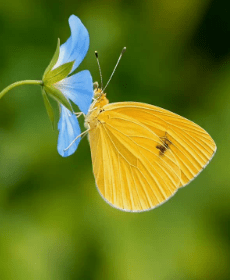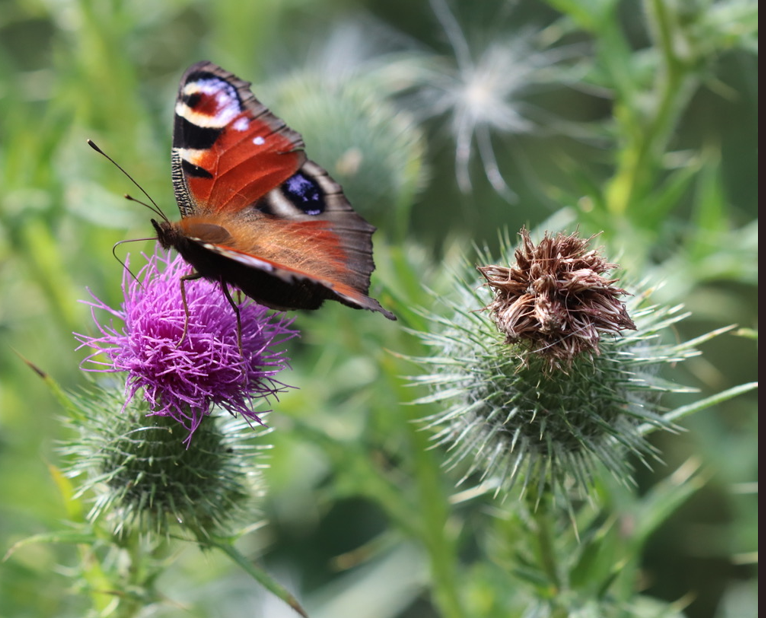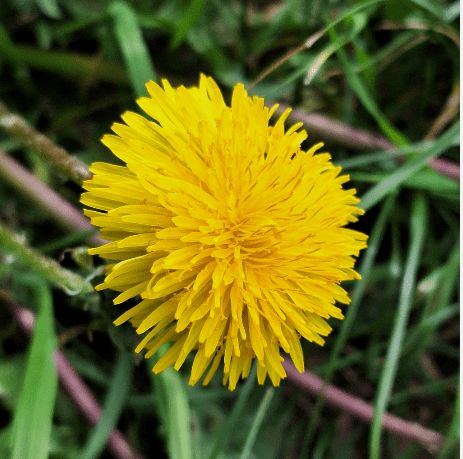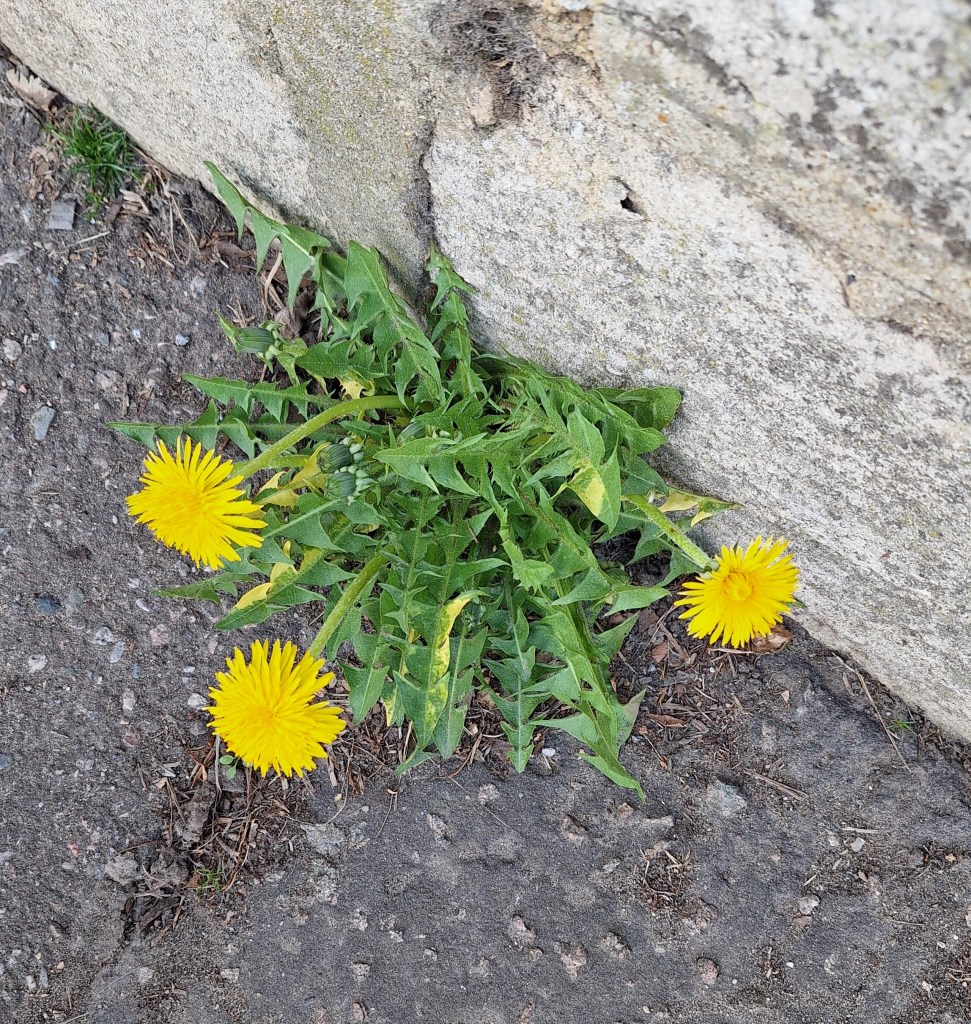
Dandelion near Bradley Wood. photographed by Piers Northam
I confess that I love Dandelions. They are always welcome in my garden. They brighten the early Spring and they are a wonder to behold. Maybe if we didn’t take them for granted or, worse, wage war on them, we might appreciate the intricate sun flower in all its bright array. The golden dandelion, with its intricate and gorgeous leaf formation will still be bringing bright joy to otherwise dull verges, hedgerows, fields, wastelands, and almost anywhere, whatever we feel about them.
I find this story (which I’ve quoted on a number of occasions) great fun. A frustrated gardener wrote to the Department for Environment, Food and Rural Affairs. In his letter he explained that his aim to have a perfect lawn was being thwarted by the persistence of Dandelions. They simply kept appearing no matter what he did. He had tried to root them out; he had smothered them with various chemicals; He had re-sown the most badly affected areas but it was all to no avail. In desperation he begged the Ministry to provide him with a solution to get rid of the Dandelions forever. After the usual delay, an official wrote back to him. The letter offered the Department’s considered advice: We suggest that you learn to love them.
We should indeed learn to love them, though I am not expecting total agreement about that!
Here’s a poem from someone who does agree with me!
Unwelcomed Save by children, Dandelion, I declare you Patron flower Of prophets.
Who would Believe such power Lies within The beauty Of your soft Geometric fluff Posed to take A ride On the wind And land in Uninvited places?
Badger in Latton Garden. Photograph by Revd. Lynn Hurry
The badger was a night time visitor in her garden and Introduces herself.
“ I try not to show my face too often. It isn’t always wise or safe. As you see I have a rather distinctive face. It’s the broad white stripe that gives it away! I am told that it serves a purpose. It’s a sign of my knowledge and insight into matters not easily accessible to other animals on earth.
One of my special attributes is my strong jaws. This is very useful because it makes it easier to chew and also, when required, to snap and bite at those other animals who like to throw their weight around. A much more useful thing is that my jaws help me to habit the mysteries of the Word’, which is a pretentious way of saying how I reveal the ‘magic of storytelling.’
When needed, I give away generously to people, a magical word which is the way I guide people who are looking for beauty, encouragement and a more open mind especially when they seek a differing direction and purpose in life which otherwise deludes them. I use the word, story’ in a sense of helping others to listen to that inner voice whereby God speaks. I am part of that spirit-filled creation which leads people to embrace courage and independence and so cultivate a tenacity which shows the importance of holding on when running away and hiding would feel much safer.
Drawing from my own characteristics and a tendency to dig deeper into the soil of the earth, I am able to show other members of God’s creation how to embrace untapped potential and take that journey all of us must take if we are to become our true selves under God.
I have this story to tell from the heart of my being and it has inspired a number of important people to use me as a character in their writings. The late eighteenth century poet, John Clare, wrote of me in a poem entitled Badger. At a time when many humans were cruel to animals, he took my tenacious character and wove it into a poem which emphasizes endurance and resistance rather than then being a victim. Beatrix Potter, in her Tale of Mr Tod, was less kind of me, speaking of my curiously, earthy voice in a dismissive way. She called me Tommy Brock By then, I was being referred to as Broc which actually was my Celtic Name and really only meant ‘grey.’. That nice Mr Graham, who wrote the delightful book, Wind in the Willows, called me a “wise and kind badger” though he did say that I could be bossy at times, by which he meant that I was forthright!
Things are not always what they seem and humans are not the be all and end all of creation. Each of us animals have insights, hopes and loves to offer as we share in shaping Creation. Each of us is made by God and we are Icons of His presence in the world. We are all filled with God’s Spirit and signs of the totality of His loving being. Increasingly we need to see that truth and treat Creation and the Created order in a new and more grateful way, all of us as part of God’s story of pure love.
Many the gifts, many the people, many the hearts that yearn to belong. Let us be servants to one another, making your kingdom come. (Bernadette O’Farrell)
[Mr G, a visiting Badger and The Revd.Lynn Hurry] 30th April 2026
Peace Vigil Reflection Part of the text of Pope Leo’s reflection at the Prayer Vigil for Peace in St Peter’s Basilica at the Vatican on April 11th
“Your prayer is an expression of that faith which, according to the words of Jesus, moves the world to pray for peace. War divides; hope unites. Arrogance tramples upon others; love lifts up. Idolatry blinds us; the living God enlightens. My dearest friends, all it takes is a little faith, a mere “crumb” of faith, in order to face this dramatic hour in history together — as humanity and alongside humanity. Prayer is not a refuge in which to hide from our responsibilities, nor an anaesthetic to numb the pain provoked by so much injustice. Rather, it is the most selfless, universal and transformative response to death: we are a people who are already risen! Within each of us, within every human being, the interior Teacher teaches peace, urges us toward encounter and inspires us to make supplication. Let us rise from the rubble! Nothing can confine us to a predetermined fate, not even in this world where there never seem to be enough graves, for people continue to crucify one another and eliminate life, with no regard to justice and mercy.
Prayer teaches us how to act. In prayer, our limited human possibilities are joined to the infinite possibilities of God. Thoughts, words and deeds then break the demonic cycle of evil and are placed at the service of the Kingdom of God. A Kingdom in which there is no sword, no drone, no vengeance, no trivialization of evil, no unjust profit, but only dignity, understanding and forgiveness. It is here that we find a bulwark against that delusion of omnipotence that surrounds us and is becoming increasingly unpredictable and aggressive. The balance within the human family has been severely destabilized. Even the holy Name of God, the God of life, is being dragged into discourses of death. A world of brothers and sisters with one heavenly Father vanishes, as in a nightmare, giving way to a reality populated by enemies. We are met by threats, rather than the invitation to listen and to come together. Brothers and sisters, those who pray are aware of their own limitations; they do not kill or threaten with death. Instead, death enslaves those who have turned their backs on the living God, turning themselves and their own power into a mute, blind and deaf idol (cf. Ps 115:4–8), to which they sacrifice every value, demanding that the whole world bend its knee. Enough of the idolatry of self and money! Enough of the display of power! Enough of war! True strength is shown in serving life. With evangelical simplicity, Saint John XXIII once wrote: “The benefits of peace will be felt everywhere, by individuals, by families, by nations, by the whole human race.” And echoing the incisive words of Pius XII, he added: “Nothing is lost by peace; everything may be lost by war” (Encyclical Letter Pacem in Terris, 116).
Let us, therefore, unite the moral and spiritual strength of the millions and billions of men and women, young and old, who today choose to believe in peace, caring for the wounds and repairing the damage left behind by the madness of war. I receive countless letters from children in areas of conflict. In reading them, one perceives, through the lens of innocence, all the horror and inhumanity of actions that some adults boast of with pride. Let us listen to the voices of children!
Dear brothers and sisters, there are certainly binding responsibilities that fall to the leaders of nations. To them we cry out: Stop! It is time for peace! Sit at the table of dialogue and mediation, not at the table where rearmament is planned and deadly actions are decided! Yet there is a no less significant responsibility that falls to all of us — men and women from all over the world. We are an immense multitude that rejects war not only in word, but also in deed. Prayer calls us to leave behind whatever violence remains in our hearts and minds. Let us turn to a Kingdom of peace that is built up day by day — in our homes, schools, neighbourhoods, and civil and religious communities. A Kingdom that counters polemics and resignation through friendship and a culture of encounter. Let us believe once again in love, moderation and good politics. We must form ourselves and get personally involved, each following our own calling. Everyone has a place in the mosaic of peace! As Pope Francis taught us, “There is also a need for peacemakers, men and women prepared to work boldly and creatively to initiate processes of healing and renewed encounter”
Dear brothers and sisters, let us make a commitment to pray without ceasing and without growing weary, a commitment to a profound conversion of heart. Throughout the world, it is to be hoped that every community become a ‘house of peace,’ where one learns how to defuse hostility through dialogue, where justice is practiced and forgiveness is cherished
Brothers and Sisters of every language, people and nation: we are one family that weeps, hopes and rises again. “No more war, a journey with no return; no more war, a vicious cycle of grief and violence;” (Saint John Paul II,)
Dear friends, peace be with you all! It is the peace of the Risen Christ, the fruit of his sacrifice of love on the cross. For this reason, we raise our prayer to him:
Lord Jesus, you conquered death without weapons or violence: you shattered its power with the strength of peace. Grant us your peace, as you did to the women filled with doubt on Easter morning, as you did to the disciples who were hiding in fear. Send forth your Spirit, the breath that gives life and reconciles, that turns adversaries and enemies into brothers and sisters. Inspire in us to trust in Mary, your mother, who stood at the foot of your cross with a broken heart, firm in the faith that you would rise again. May the madness of war cease and the Earth be cared for and cultivated by those who still know how to bring forth, protect and love life. Hear us, Lord of life!
A wise friend once said to me that it only costs the price of a stamp to thank people for something they have done for us or a kindness they have shown to us. Saying Thank You can seem a small thing to do but it can make a world of difference to the person receiving thanks. Today we might do this via email, WhatsApp or telephone but sending and receiving a greetings card is still rather special.
Kindness is something which is too often lacking in society and it’s all too easy to take people for granted. That is particularly true about God. We take his love for us for granted and we can fall short of thanking him for his goodness to us. That is something that I think as we approach Lent.
At a time when so much in the world is dark and negative, life can exist in a state of gloom and emptiness. That can only ever be part of the story. There are many things that happen which are much more positive. There are also people who make our lives happy and hopeful, joyful and full of kindness. So, one thing which can help us to change the balance from despair and sadness to joy and gladness is to spend time on giving thanks. In particular we can use the period of Lent as a time of thankfulness to God. At the beginning and end of each day we can identify something that has happened recently and for which we can thank God. Maybe write these things in a notebook which build up into a special kind of prayer book, or maybe use post-it notes.
We can offer our thanks in a very simple way. During a time of quiet, perhaps only a few minutes, you can tell God your thanksgiving. It may be for some personal action of God’s grace in your life or for something good that has happened to you or you may want to thank him for taking care of you through a difficult period of your life. You may simply want to thank him for the way he continually blesses you and holds you in love. It may be a thanks for what others have contributed to your life, or for a kindness to a friend or relative. It may be for a new insight into the working of God’s love and grace.
Basically we want to Thank God for his many blessings to us—blessings which far outweigh anything negative in our Life. We continually rejoice at the way God showers his love and grace upon us and how God blesses our efforts to live out the Gospel and try to live a corporate and individual life of discipleship. We try to serve God as best we can and He guides, strengthens and rejoices in that service. The Book of Common Prayer has a prayer of General Thanksgiving which we might pray. This prayer can gather your thanks to God. Here’s a modern version.
Almighty God, Father of all mercies, we your unworthy servants give you humble thanks for all your goodness and loving-kindness to us and to all whom you have made. We bless you for our creation, preservation, and all the blessings of this life; but above all for your immeasurable love in the redemption of the world by our Lord Jesus Christ; for the means of grace, and for the hope of glory. And, we pray, give us such an awareness of your mercies, that with truly thankful hearts we may show forth your praise, not only with our lips, but in our lives, by giving up ourselves to your service, and by walking before you in holiness and righteousness all our days; through Jesus Christ our Lord, to whom, with you and the Holy Spirit, be honour and glory throughout all ages. Amen.
Or something quicker, a prayer of Dag Hammarkjold (a former General Secretary of the United Nations )
Dear God, For all that has been, Thanks! For all that will be, Yes!