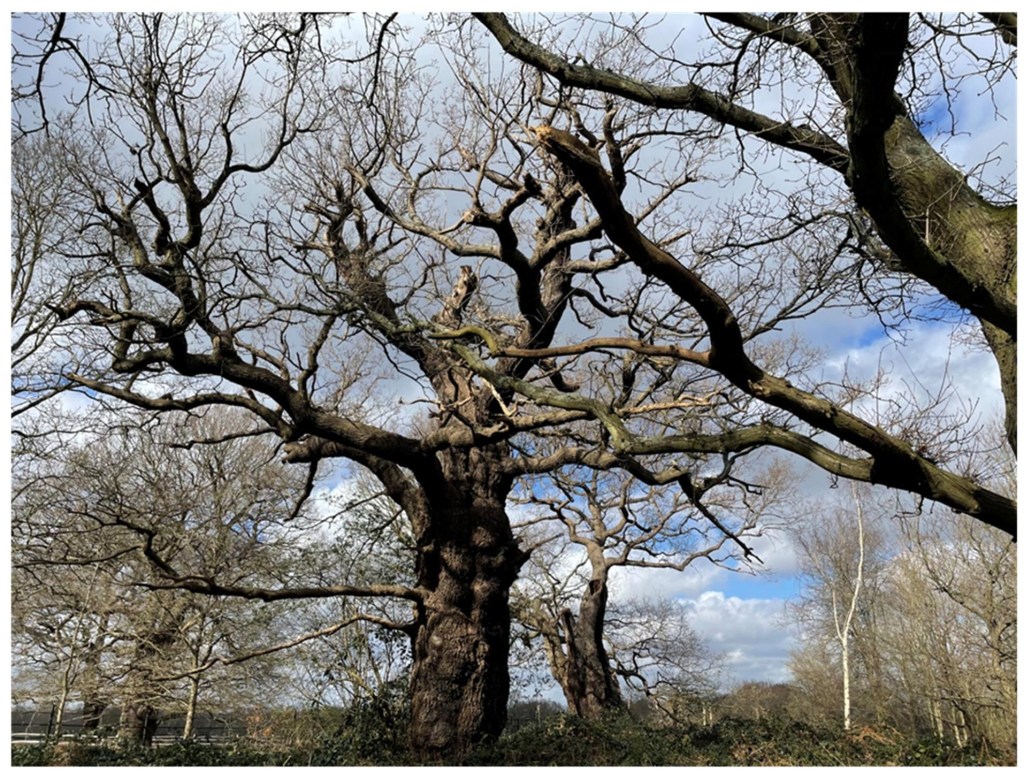
Oak Trees wintering in Richmond Park, London. Photograph by Gill Henwood.
This little poem has a double inspiration. My friend Gill sent me photographs of majestic oak trees in Richmond Park, waiting for Spring to burst open their new buds. The other inspiration is Genesis 18 verses 1 – 8. Here Abraham also waited under the oaks of Mamre, for God to reveal to him the promise of new life and new purpose.
The poem includes another ‘waiting’; for those on a Lenten Pilgrimage to open their hearts afresh to God.
MAMRE
By the oaks of Mamre Abraham sat in quiet contemplation seeking solace in the heat of the day. Waiting, though he knew not what for. Expectation seemed to dust the winter tree over him. Branches dormant, dead? They waited too for a new life promised by the whispering of God.
Abraham’s moment came. Visited by the Three, he rose, with hospitality bubbling in his heart, receiving them as if they were God – because they were God!
And us? We wait too as the Three approach us in quietness, inviting us to open our Lenten hearts.
It’s different somehow for us. Abraham fed God and received God’s promise. God feeds us and, in the breeze of Mamre, becomes the Promise.
Dementia prayer week begins today until March 19th
Dementia Prayer Week, which was previously run by the Pastoral Care Project , is now being promoted by the Religious order of The Redemptorists. They are also known as the Congregation of the Most Holy Redeemer (CSsR). The hope is that, through our prayers, we can offer support and spiritual care for those suffering with Dementia. The invitation to prayer is also in support of those who are caring for loved ones and who try to cope with distress which this dreadful illness brings to all involved.
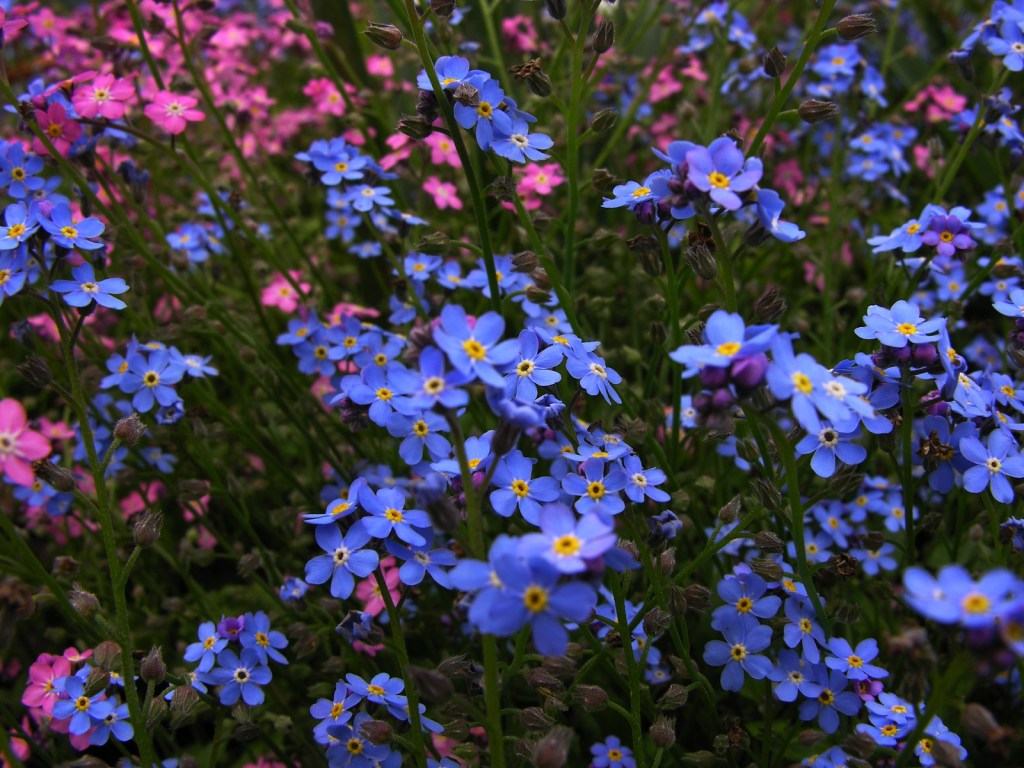
The symbol of the ‘Forget me not’ flower is an important part of our ‘remembering’. I recently lost my cousin, who was very close to me, and who was afflicted with Alzheimers and I find the message of the Forget me not flower very comforting. Forget-me-nots symbolize true love and respect. When you give someone these tiny blooms, it represents a promise that you will always remember them and will keep them in your thoughts. The Alzheimers Society have chosen this flower because of this.
The Prayer offered by the Redemptorists is this –
Loving God, Healer and Comforter, we pray for those who suffer from the anxiety, ambiguity and confusion of dementia, and in a special way for their caregivers.
Give them patience as they work through familiar daily scripts and questions asked, answered and asked again. Give them long memories to recall the fullness of their loved one’s life beyond these moments of forgetting. Give them the grace to let go of what was and embrace what is in love.
When the pain of being forgotten and the grinding trials become too much, comfort them with the promise of your Resurrection where every tear shall be wiped away and we shall know each other once more.
God of all mercies, sustain those who care for others. Grant them what they need for the moments ahead. We ask this through our Lord Jesus Christ.
Today’s thought for the Day, on BBC Radio 4 this morning, was given by the Rt. Reverend Richard Harries. Centred on prayer for all those caught up in the conflict un Ukraine, the bishop used a prayer by Reinhold Niebuhr.
He believed in Justice tempered with Mercy, the title of one of his works from which comes the prayer below. He saw the importance of religion engaging with politics and public policy. Living through the Second World War he recognized that everyone is affected by conflict and violence of warfare, not least the innocent. One of the themes Richard Harries raised this morning was that the sin of violence is rooted in the human heart which, unchecked and held in the burning love of God can easily destroy the peace and tranquillity of the world created by God.
Richard Harries spoke of the Agony of Christ which he placed firmly in the heart of Ukraine, in all those suffering and in real despair at this time.
Because of this our personal prayer can be the prayer much loved by Orthodox Christians, known as the Jesus Prayer. Today that simple but deeply profound prayer is popular with many Christians. It has a number of forms but Bishop Richard shared his own version, apt for what the world is going through right now: Lord Jesus Christ, have pity on us.
Here is the prayer by Reinhold Niebuhr.
Lord we pray this day mindful of the sorry confusion of our world. Look with mercy upon this generation of your children so steeped in misery of their own contriving, so far strayed from your ways and so blinded by passions. We pray for the victims of tyranny, that they may resist oppression with courage. We pray for the wicked and cruel, whose arrogance reveals to us what the sin within our own hearts is like when it has conceived and brought forth its final fruit. We pray for ourselves who live in peace and quietness, that we may not regard our good fortune as proof of our virtue, or rest content to have our ease at the price of others’ sorrow and tribulation. We pray for all who have some vision of your will, despite the confusions and betrayals of human sin, that they humbly and resolutely plan for and fashion the foundations of a just peace between people, even while they seek to preserve what is fair and just among us against the threat of malignant powers. Amen.
Benjamin Zephaniah is a fascinating and exciting writer, singer, actor who holds provocative views for some and inspiring for others. He is one of those people who you can’t just ignore. Born in Birmingham, he wrote poetry from an early age and was attracted to music which drew its influence from the music and street politics of Jamaica.
Of his many writings, his poetry and novels are aimed at children and young people though there is a wider context in that adults are encouraged to engage with the realism of the subjects. Nowhere does he ‘talk down’ to his audience and he tackles the issues of the real world and its conflicts and struggles at a local level.
Outside poetry and writing, he has recorded music which, like his writing, deals with gritty issues. He was responsible for an early tribute to Nelson Mandela and appeared in Peaky Blinders as the preacher Jeremiah, “Jimmy” Jesus. He has what some would think of as radical political views but which spring from a desire for justice, equality and reform in our society that many feel is vital if we are to become a harmonious and homogenous multi-cultural society.
It’s worth following him on his own website https://benjaminzephaniah.com/ which gives you an amazing insight into who he is and what he believes as well as access to his writings.
His picture of our multi-cultural and diverse society is expressed particularly in his poem The British. At a time when we are faced with an unprecedented influx of people from other parts of the world, especially Syria and now the Ukraine, it’s good to be reminded that Britain is shaped by people of diverse ethnicity stretching back to the Indo-European migration way back in the mists of time.
Very few of us could claim to be descended from the original British people (except, perhaps, the Welsh and Cornish). Even our Home Secretary, deeply involved in immigration matters, has a non-British background which brought her parents from Uganda to Hertfordshire. Her paternal grandparents came from Gujarat in India. I myself have some Irish ancestry which brought my great grandparents from West Cork to Glossop in Derbyshire.
This is one of the great components of our diverse and multi-cultural society. It’s probably what really makes us ‘Great’. Our story from pre-Celtic and Roman times is one of assimilation which brings enrichment, occasional tension, but there is always the possibility of celebrating difference by sharing common ground.
This is a big debate but Benjamin Zephaniah opens a window for us in his poem. It has humour which is always a good way of presenting complex matters but its message is powerful. As he says himself, at the end, enjoy
The British
Take some Picts, Celts and Silures And let them settle, Then overrun them with Roman conquerors.
Remove the Romans after approximately 400 years Add lots of Norman French to some Angles, Saxons, Jutes and Vikings, then stir vigorously.
Mix some hot Chileans, cool Jamaicans, Dominicans, Trinidadians and Bajans with some Ethiopians, Chinese, Vietnamese and Sudanese.
Then take a blend of Somalians, Sri Lankans, Nigerians And Pakistanis, Combine with some Guyanese And turn up the heat.
Sprinkle some fresh Indians, Malaysians, Bosnians, Iraqis and Bangladeshis together with some Afghans, Spanish, Turkish, Kurdish, Japanese And Palestinians Then add to the melting pot.
Leave the ingredients to simmer. As they mix and blend allow their languages to flourish Binding them together with English.
Allow time to be cool.
Add some unity, understanding, and respect for the future, Serve with justice And enjoy.
Note: All the ingredients are equally important. Treating one ingredient better than another will leave a bitter unpleasant taste. Warning: An unequal spread of justice will damage the people and cause pain. Give justice and equality to all.


 Mr G's Ponderings