9/11 Kintsugi
The 11th September 2001 is forever marked as one of the darkest days in the journey of humanity on this earth.
That day, I was bidden to turn on the television news and I witnessed the second of the planes flying directly into the second of the Twin Towers of the World Trade Center in New York. The sense of horror was deep within me. This was an unbelievable act of demonic terrorism which destroyed not only many innocent lives but also changed forever our perception of what evil human beings are capable of. It brought back the atrocity of World War Two and Nazism. This time, the perpetrators were an Islamist extremist network called al-Qaeda who planned the attacks on both New York and Washington from Afghanistan.
The first thing that came to my mind was a line from the poem by W.B.Yeats, Easter 1916 – All changed,changed utterly.
And so it has turned out because so much has divided humanity since. The experience of the demonic and the hatred, hurt, prejudice and distrust between people are only part of the legacy of that day and event. What is happening in the Middle East today is only one example of an evil gripping our race.
But, as always, there is also an opposite reaction and view.
One of the sources of prayer and reflection that I turn to is one provided by the Jesuitresource.org which is part of Xavier University in Cincinnati. (It provides resources in Jesuit education and Ignatian Spirituality.)
On its prayer website, I came across a number of prayers and reflections relating to 9/11 and its aftermath.
I was particularly touched by this reflective prayer from a Hindu source which seems to me to put into words what many felt that day and since:
As glass shattered, cement crumbled and steel melted in the inferno of senseless cruelty, the heart of humanity screamed in anguish. September 11, 2001 — a day when the evil potential of misguided ego was again exposed. While our landmarks collapsed in a cloud of smoke and debris, beneath a surge of shock and rage, something awakened in our hearts: compassion. Suddenly, our worldly obsessions faded away as we cried for the plight of others and were deeply affected by our “remen’s sacrifice.” In memory of this tragic day, let us join hands and pray for God’s grace to heal, unite and empower us to serve with love.
– Radhanath Swami
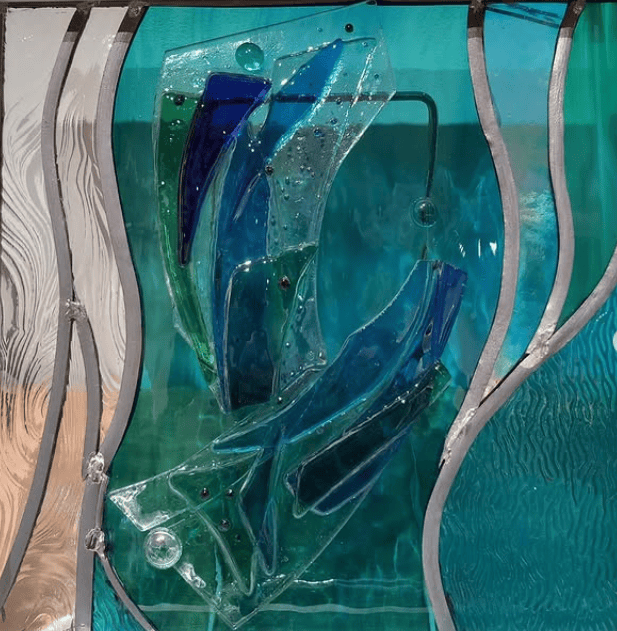
This sense of moving beyond the destruction and brokenness into a new hope of love is strongly prayed in these words. It is also what drew me to the illustration I have used above. It is a piece of glass sculpture by my dear artist friend, Kay Gibbons.
It is a piece which began as an attempt to fuse blue and green glass together. In the process it broke into 3. So she “played around, had fun, and created something quite different.”
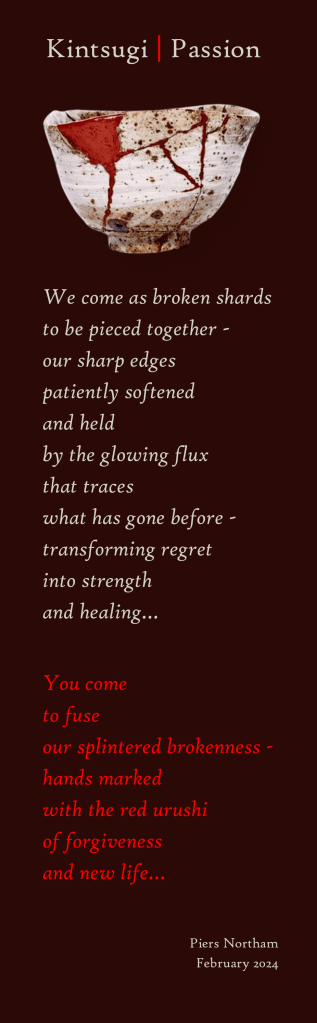
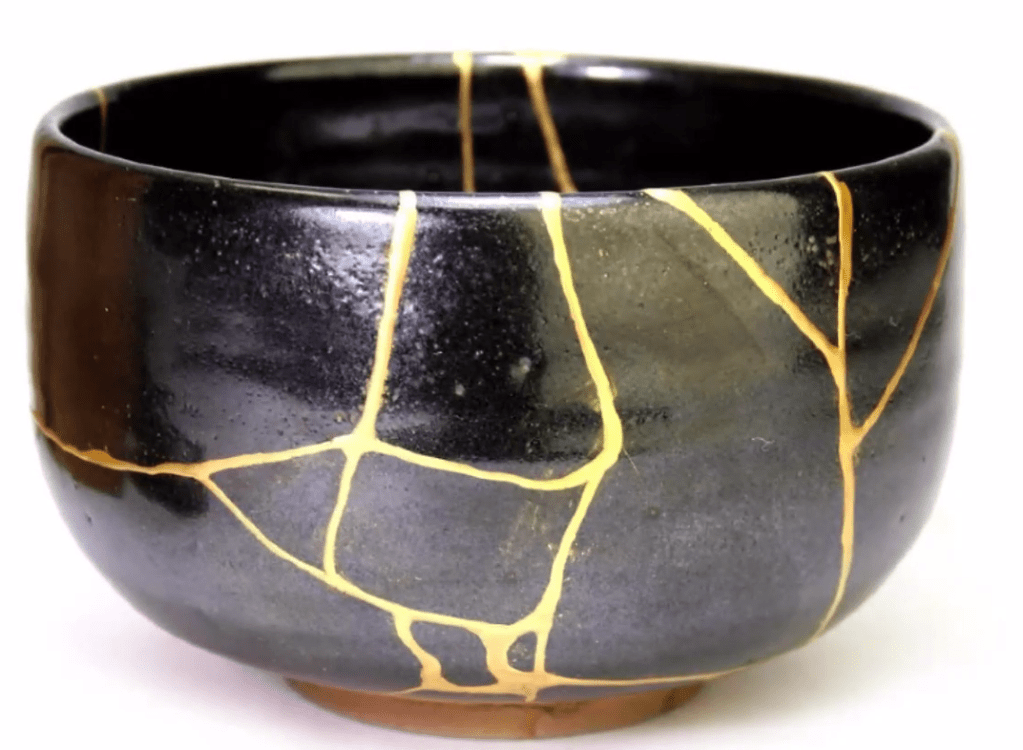
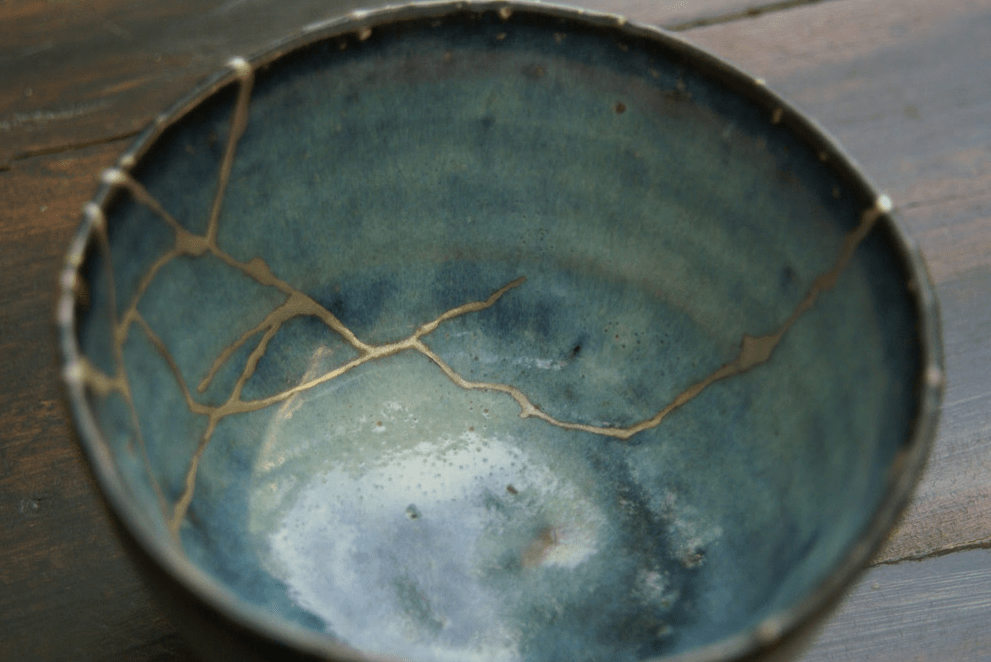
The process in doing this she describes as, “This panel has been produced in a ‘kintsugi’ fashion, after the Japanese art of bonding broken ceramics with gold.
Beauty in fracture..
Broken beauty..
It struck me that this resonates with the prayer above. The aftermath of 9/11 could be seen as a spiritually human ‘kintsugi’. Bonding broken people with the gold of repentance and love and with determination to work for a beauty which though broken is nevertheless bonded in hope and as the prayer says, filled with compassion and love.
I have no solutions to what we can do to heal our broken world but another prayer on the Xavier University resource site puts it so movingly and offers an amazing way forward if we would but take it.
One Loving Family
Loving God of Peace: On this anniversary of unbelievable sorrow, comfort those who mourn, and guide our hearts toward healing and hope. Remind us of the love of Christ, love which leapt over cultural and ethnic boundaries to feed the hungry, seek the lost and care for the least. Make of Your children, no matter how we name You, one human family, bound together in the work of justice and peace-making. Make us one with the Light that shines in the darkness and illumines a path toward understanding and reconciliation. Let love be our genuine call.
Amen.
– Rev. Dr. Jacqueline Lewis
[Mr G. 13th September 2026]