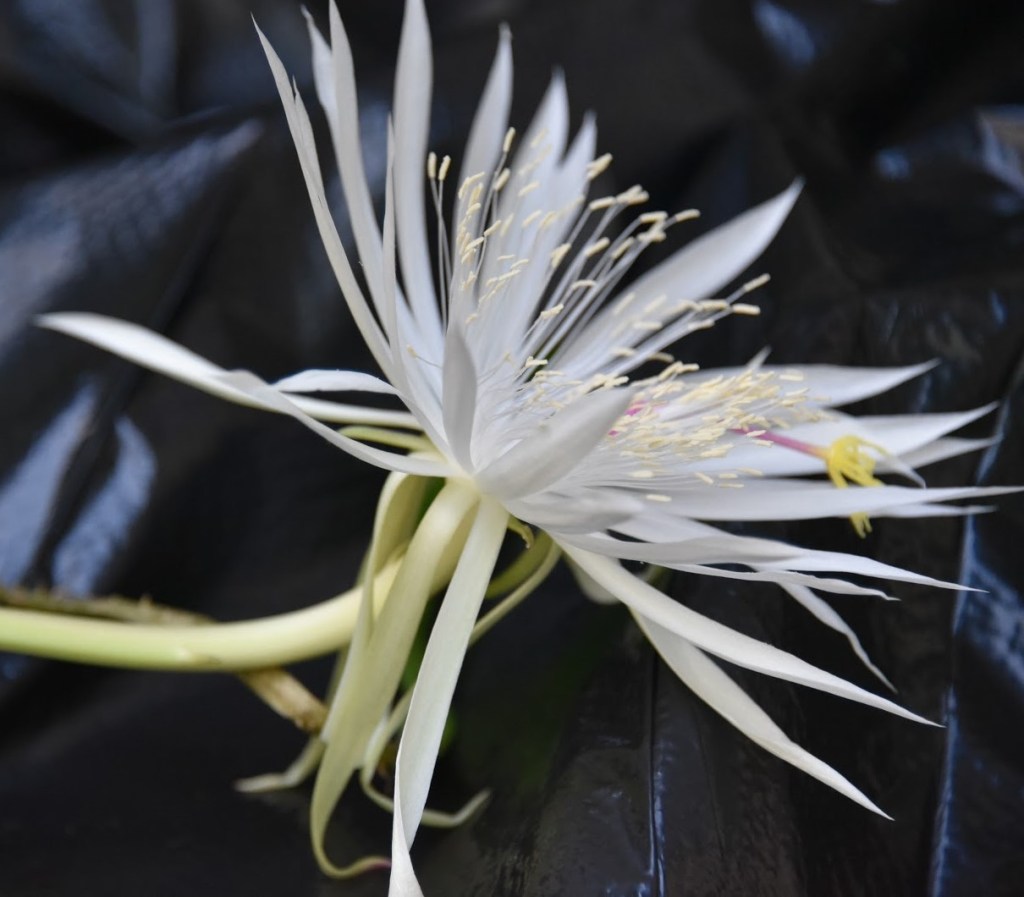
Ephphatha – ‘be opened’
A Meditation by Piers Northam on last Sunday’s readings: Isaiah 35:4-7a James 2: 1-10, 14-17 Mark 7: 24-37
Over the years in my design career I’ve worked on quite a few projects in Kuwait and, along the way, I picked up one or two Arabic phrases – mostly to do with food, numbers or building sites. One expression – and I can’t remember why I learnt it, though I think we might have been playing games with one of our clients’ children – was the Arabic for ‘Open sesame!’ which is ‘iftah ya simsim!’ [افتح يا سمسم ]
And of course that word iftah (open) comes from the same root as the word that we hear Jesus say this morning as he opens the ears and loosens the tongue of the man in our story.
Ephphathà! [’eφφαθά] – be opened!
I’m drawn to this word because it seems to me to be what God is all about: openness. Openness to us and to our concerns; arms stretched open on the cross in an embrace for the world and all humanity; a heart never shut to us – always open to welcome us when we turn to him; ready to come running down the road to meet us like the prodigal son’s father.
And it seems to me that it’s what God asks of us too: openness to him, but also openness to each other.
’eφφαθά – be open!
It’s why I pray the prayer I always pray before my sermons – that our eyes be opened to God’s presence, our ears to his voice and our hearts to his love – because it seems to me that that’s what God is asking of us. That we are aware of his presence in the world and in each other; that our hearts are open to others just as his is open to us.
’eφφαθά – open your hearts!
These last weeks the crisis in Afghanistan has once again highlighted the agony of those who are forced from their countries and livelihoods, their families and familiar surroundings to flee; to undertake dangerous journeys and to leave everything that they’ve ever known behind – to become refugees because the alternative is simply too dangerous or too awful to contemplate. As the world seems to become ever more troubled – through war, tyranny, oppression, economic collapse and natural disasters brought on by climate change – the numbers of refugees leaving their homes and seeking asylum and the chance of life elsewhere are on the rise – and this poses a real challenge. How do we deal with these people? Where do we put them? How might they impact on our own lives? Our instinct is to think of people of different nationalities as ‘other’.
And yet, as we read in James’s letter, we must beware showing partiality: treating people differently and favouring some whilst disadvantaging others.
We find it a lot easier to deal with people who are clean and fed than people who are grubby, hungry and needy. But God is shockingly blind to all of that. He doesn’t hear their accent or notice the colour of their skin. He simply sees a beloved child.
Our reading from James last week told us to ‘be doers of the Word, not merely hearers’. And here he is again, underlining the importance of actions alongside our faith.
Jane Williams sums it up rather well:
‘ “Faith changes the way you live”, James says, in that obnoxiously black and white way of his. You might feel tempted at this point to turn to that nice St Paul, who really understands the importance of faith, and doesn’t go droning on about having to do things as well. Dream on. Try reading Romans 6. There is no escaping the New Testament conviction that faith is a commitment to a changed way of life because it is a commitment to trying to see the world with the eyes of God.’
We have to open our eyes to the world – and to those refugees around us.
’eφφαθά – open your eyes!
The first half of our Gospel story is interesting though – Jesus is in the region of Tyre when the Syrophoenician woman asks for his help for her daughter. Remember, she’s a Gentile, not a Jew. Jesus’ words sound rather like some of the rhetoric that we hear at the moment much closer to home:
‘Let the children be fed first, for it is not fair to take the children’s food and throw it to the dogs.’
In other words, he’s suggesting that the Jews should come first and merit his attention and his help before anyone else. But the woman challenges this, certain that God’s provision is for everyone and that there’s enough to go round.
I can’t work out whether she really is opening Jesus’ eyes to the breadth of his Father’s love, or whether he draws her on to say this as a test of her faith and so that others might hear it. But whichever way, she’s unafraid to open her mouth and challenge the view that some are more important and deserving than others in God’s eyes.
And it seems to me that it’s incumbent on us too – that we open our mouths to challenge these attitudes.
’eφφαθά – open your mouths!
I’ve felt very disturbed by stories I have heard in the news recently – first about RNLI lifeboatmen being abused and criticised and possibly facing the threat of criminal proceedings because they continue to risk their own lives attempting to rescue illegal immigrants in trouble at sea. And then by the actions of the Government in the last couple of months as they have put the Nationality and Borders Bill through parliament criminalizing people who attempt to seek asylum here and those who help them. There are plans within the bill to imprison people for 4 years if they arrive illegally by sea in small boats for example – this despite the fact that the cost of housing a prisoner comes it at around £42,000 per year as against around £9,000 per year for putting someone through the asylum system. People do not get into those boats lightly: it’s a last and desperate resort and our country’s response to this seems heartless in the extreme. I say I’m disturbed. I’m not. I’m appalled and disgusted – and deeply, deeply ashamed that this sort of thing is going on in my name.
And as Christians we should all be opening our mouths to cry out loudly against this behaviour which speaks of shut minds, shut hearts and the very partiality that James warns against.
’eφφαθά – open your mouths and cry out!
There is no sense in the Government’s approach – it seems to me plain wicked if I’m honest – evidence shows that where we work to help people and do our best to integrate them into society, they fast begin to build new lives and to contribute to that society, socially, culturally and economically. But it requires some initial generosity on our part.
In thinking about all of this, I came across a story of another Afghan, Sabir Zazai, who arrived in this country seeking asylum in 1999 in the wake of the troubles in Afghanistan then. The joke was that he was ‘sent to Coventry’ but he speaks of the warm of welcome that he received there.
‘I left home in search of peace and reconciliation and I found myself in a city associated with peace and reconciliation. […] Coventry inspired me and especially its cathedral; both old and new buildings have been a real source of hope for me and many others seeking protection in the city.
One sunny day I sat in the cathedral ruins […] My eyes were caught by the word ‘Forgive’ engraved behind the cross that was burnt during the [World War II air-]raids. On reflection I thought forgiving is a gift from God, but only if we use it often to be more forgiving to one another and more welcoming and understanding of others’ needs. This way, we can build a more welcoming and hospitable society in which people fleeing persecution and human rights violations can rebuild their lives in safety and dignity.
Wise words. Sabir – the 23-year-old refugee who came to the UK over 20 years ago in the back of a lorry with not a word of English – is now based in Glasgow where he serves those seeking asylum and refuge as CEO of the Scottish Refugee Council, and as chair of the City of Sanctuary movement. In Coventry, a city rebuilt after the Second World War on peace, reconciliation and sanctuary, he worked tirelessly to make life better for all those in similar situations to himself and became CEO of the Coventry Refugee and Migrant Centre. His drive, energy, compassion and commitment have been extraordinary and were marked by his award of the Civic Prize for his efforts in bringing peace and reconciliation to the City of Coventry.
The refugee who brought peace and reconciliation…
What would happen to him today?
‘Then, looking up to heaven, Jesus sighed and said ’eφφαθά’
– open your eyes to what is happening…
– open your hearts to the heart-wrenching stories
– open your hands to do what you can
– and open your mouths to speak words of welcome
but to cry out against injustice!
’eφφαθά! – be opened!
Amen.
Piers Northam
5 September 2021
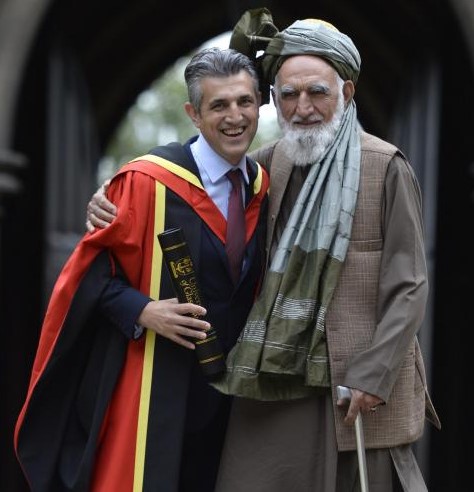
Sabir Zazai with his father, after receiving an Honorary Doctorate from the University of Glasgow.
 Mr G's Ponderings