In a nutshell!

When I was in Norwich recently I visited the Shrine of St. Julian of Norwich.

The Church of St Julian is within the parish of St John Timberell. It is located in King Street.

The Shrine itself is on the North side of the Church, where the vestry might have been. Unlike the church, which I would describe as Anglo-Catholic and ornate, the room which is built where the Shrine used to be, is fairly plain but certainly prayerful.

The original Shrine was torn down at the Reformation as part of the widespread acts of religious vandalism by the so-called reformers. The Church itself was destroyed by a German bomb during WWII. During rebuilding, excavations revealed the foundations of what was thought to be a medieval cell so it was rebuilt and is the Chapel of Mother Julian which we see today. Her more lasting legacy is her personal story and the writing which came from it.

Julian was so named after the Church where she resided in the latter part of her life, and where she lived out her life as an ‘Anchoress’ (someone who withdraws completely from the world to live a life of prayer in total solitude., though she was able to pray for and give spiritual advice through a window.)

She is known for just one book—The Revelations of Divine Love– which record sixteen visions granted to her by God on May 8th and 9th 1373 and it is her reflections on these over a 20 year period.  The Visions came to her when she was just 30 and they followed an illness which took her to the brink of death. Shortly after this she took up residence in a room built onto the church of St Julian & St Edward, Norwich.

At the heart of her thinking was the realization of our Lord’s suffering on the Cross which she accepted as the result of John 3:16—God so loved the world that he gave his only Son, so that everyone who believes in him may not perish but have eternal life.

For Julian, Christ’s sacrifice demonstrated the immensity of God’s Love and it was the central theme of her meditations. Alongside this she saw Christ’s nurturing of a new humanity (our re-birth into eternal life through the Resurrection) as like the action of a Mother giving birth to and nurturing  of her child. This idea of God as ‘Mother’ as well as ‘Father’ was more common in Medieval times than the masculine emphasis of later ages and perhaps only today is there an appreciation of God as embodying both male and female—a view that has restored women to their rightful place as co-equal with men. Celtic Christians, in an earlier time, had understood this too and they coined the phrase—“there is in the heart of God a mother’s heart.”

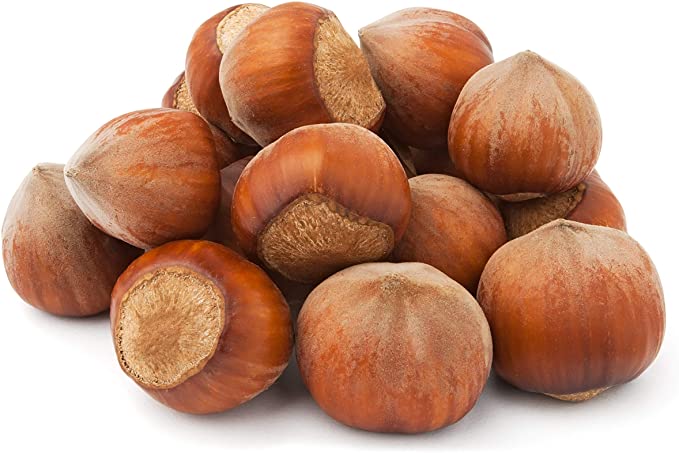
Julian saw the heart of the Gospel as God simply loving us—holding us in His love which is deeply tender and never leaves us. She saw that God was in everything good and this led to her famous vision of the hazelnut which she held in the palm of her hand. Asking God what it meant she understood that it represented all that God has made. It was so small it could have simply disappeared but it did not because God was continually loving it. From this she concluded that everything good is loved like that by God and everything has its being because of God’s love. The Hazelnut became for her the symbol of this and she saw that it had three characteristics—God made it. God loves it. God keeps it.

God was Maker, Lover and Keeper of all.  This was at the heart of God sending Jesus to love us into His Kingdom through his life, his suffering on the Cross and the new life He gives us through the Resurrection.

Julian’s Revelations can be summed up in a few beautiful words that she wrote: “Love was our Lord’s meaning. And I saw for certain, both here and elsewhere, that before ever he made us, God loved us, and that his love has never slackened nor ever will”

‘Love was our Lord’s meaning’ and we are caught up in that meaning. It is the Gospel in fact, as it were, in a nutshell !
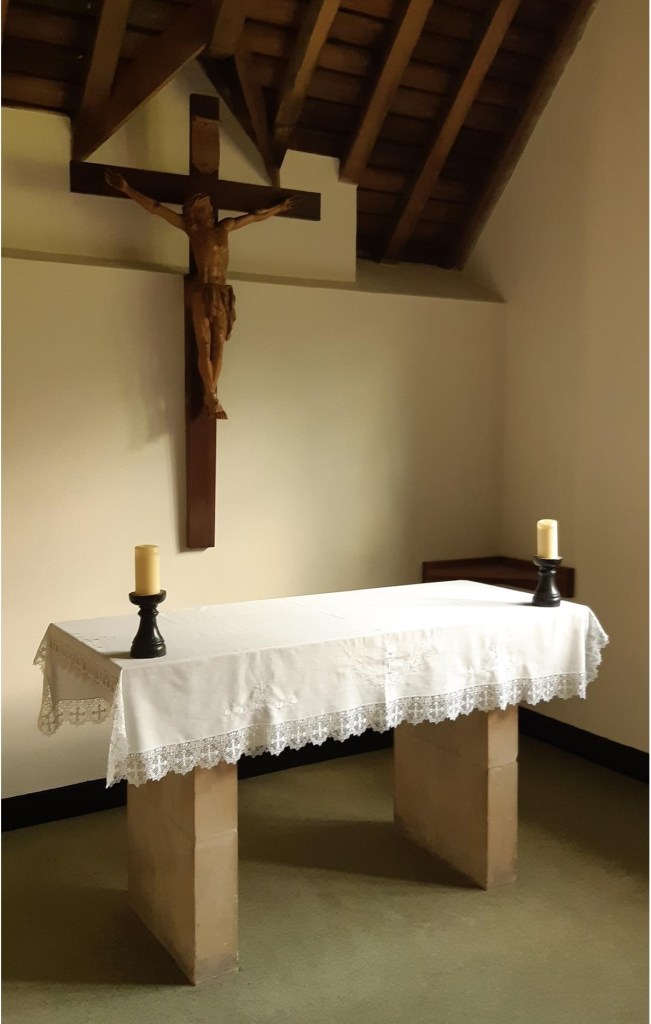
Julian Shrine Chapel; Photo: PN

THE JULIAN PRAYER

Most Holy Lord

the ground of our beseeching

who through your servant JULIAN

revealed the wonder of your love grant that as we are created in your nature and restored by your grace

our wills may be so made one with yours that we may come to see you face to face and gaze on you for ever

Amen
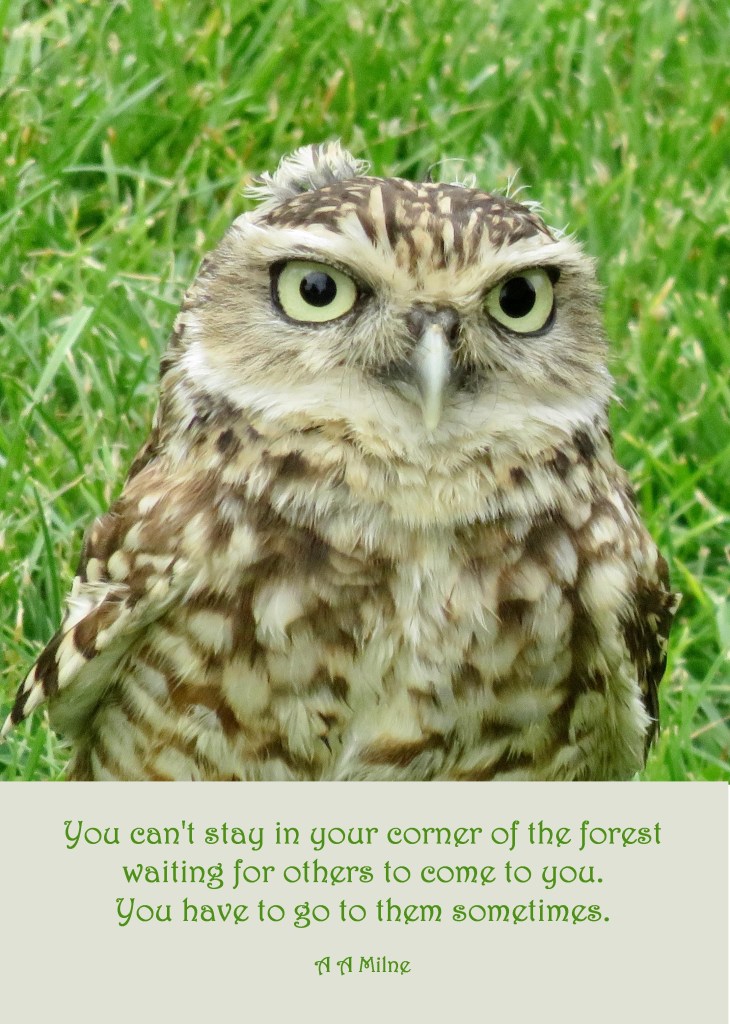
Pooh’s wise advice

Another picture reflection from my friend Joyce Smith

The quotation from ‘Winnie the Pooh’ is such a wise saying that it really needs little explanation.

As we emerge a little from isolation and lockdown, it is tempting to continue to stay in the safety of our own corner but Pooh would wag his paw at that thought.

We shouldn’t just wait for others to visit, email or ring our doorbell. If they don’t it is so easy to complain or think unkind thoughts about those who don’t reach out to us.

Human relationships (and probably cuddly bears too) require us to work at them, to make the effort. Friendship is a two way path.

We have a responsibility to those who care about us, and even more towards those we don’t know so well, to reach out with generous kindness and help people to see they matter.

If we make the effort to ring, write, email or visit we show people that they are special. It helps us too. We are social beings and we need to open not only our doors but also our hearts. Going outwards gives us a new appreciation of ourselves too. Showing love means we have love within us and that should lead us to have gratitude to the One who planted the seed of love within us. God and His love is always there loving us from within.

Don’t hide in a dark corner but embrace God’s love.

Just by leaving your corner and going to others, especially after such a time of isolation, we can share God’s mutual love and, as Pooh might well agree, share a little honey too

Lord, give us the wisdom and the joy
to know your love for us.
Help us to celebrate and share that love with others
and so spread a little honey as well!
Love and Amen.

St Edmund and the Wolf

St Edmund and the Wolf

St Edmund is closely connected with Bury St Edmunds in Suffolk.

In 1095 an Abbey was built as the centre of worship and devotion and remained a primary  witness to God inspired by St. Edmund himself. Here his remains were venerated until Henry VIII dissolved the monastery, when Edmund’s remains were taken to France. They now rest in a chapel in Arundel Castle.

Edmund’s story, however, leads us to Hunstanton in Norfolk.
When King Aethelweard of East Anglia died in AD855 he was the last of the Royal House of East Anglia, so his subjects sent word to their homeland of Angeln for a successor. A distant cousin named Edmund arrived, at what is now known as St. Edmunds Point in Hunstanton, to claim his kingdom. Since then Hunstanton has had a long and close association with St Edmund.

The story goes that Edmund later entered into battle against the Vikings, led by Ivarr the Boneless. The two armies fought somewhere near Diss. Edmund’s forces were defeated. The Vikings demanded that Edmund renounce his faith in Jesus Christ. When he refused they were merciless with him. They tortured him and eventually tied him to a tree where the archers used him as target practice. Finally, they beheaded him.

This is where the wolf comes into the story.

It is said that the Vikings discarded his head in the woodlands. Edmund’s followers later recovered his body but the head was missing.
Eventually they found it, guarded by a wolf which attracted the followers with his cry. Edmund’s head lay between its paws safe and untouched by all the forest animals.

So the wolf entered into the folk lore of St. Edmund.

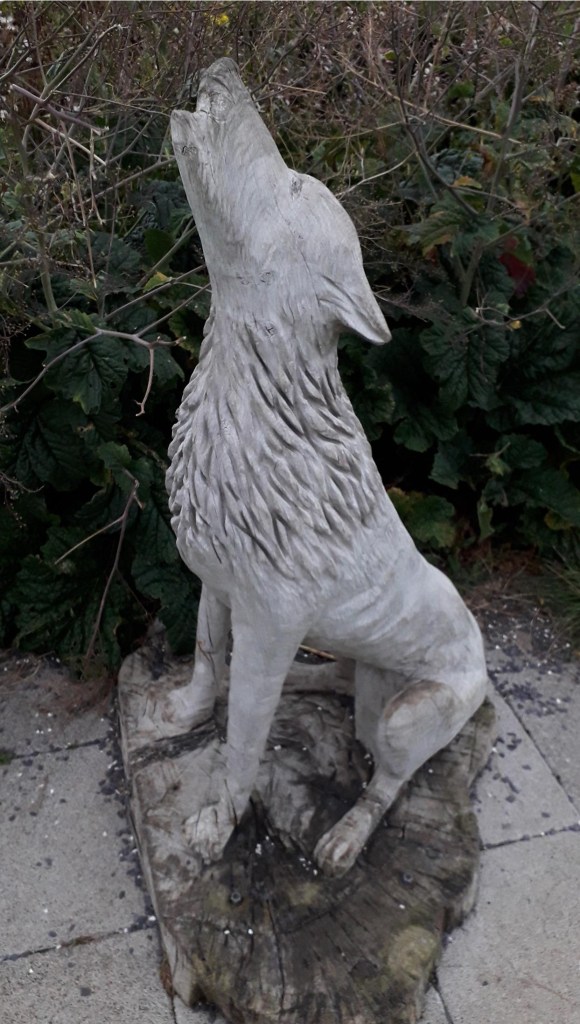
I discovered this on a recent visit to Hunstanton were I came across the vestiges of a ruined chapel dedicated to him. There is very little left of that chapel but nearby is a statue of a wolf  (see photo above), a reminder of the story and of how, quite often, the animal kingdom is kinder to holy men and women than humans are.

Eternal God,
whose servant Edmund kept faith to the end,
both with you and with his people,
and glorified you by his death:
grant us such steadfastness of faith
that, with the noble army of martyrs,
we may come to enjoy the fullness of the resurrection life;
through Jesus Christ your Son our Lord,
who is alive and reigns with you,
in the unity of the Holy Spirit,
one God, now and for ever.

[Mr. G]

photo: Mr. G

Gathering with God

My friend Joyce Smith has sent me another of her lovely tweets for you to enjoy.

One of the current changes that the relaxation of Covid rules has made possible is that more people may gather together. This has brought joy to families who have been prevented from meeting. I was able to see my sister for the first time in 18 months and many of you can tell a similar story.

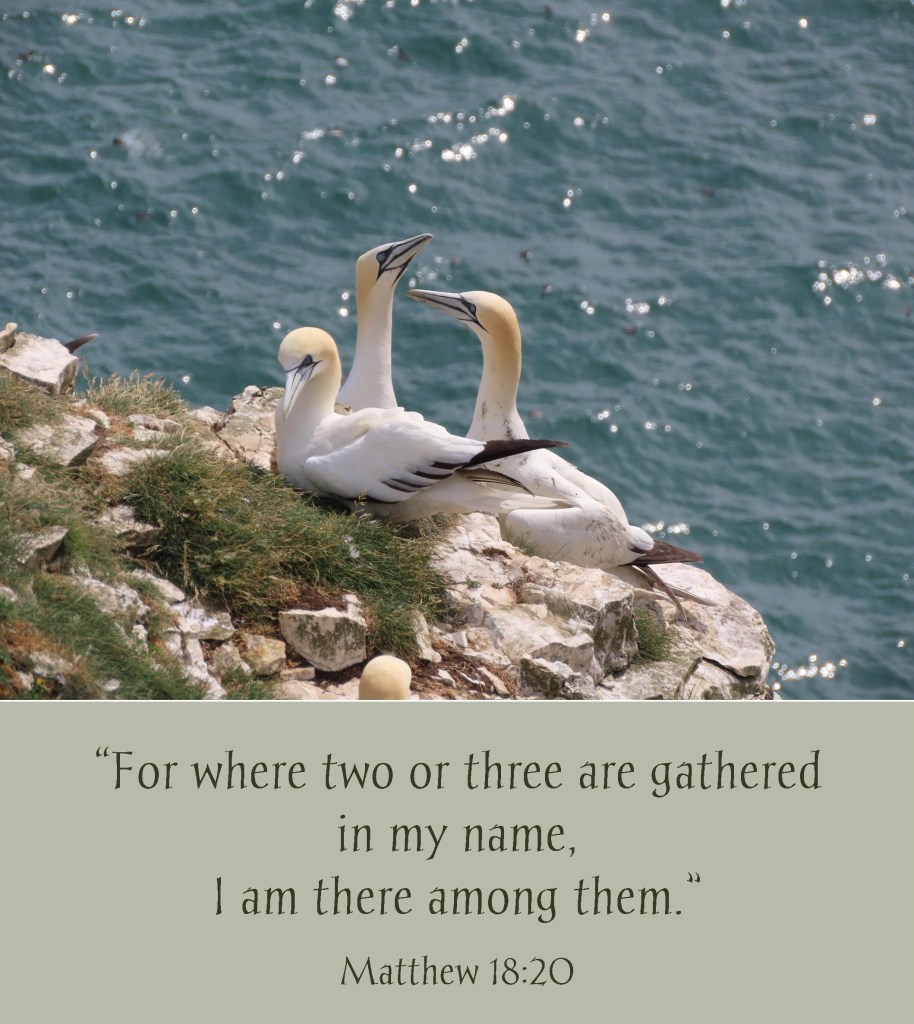
It is especially joyful for Christians to be able to meet for worship because sharing Eucharist and praying together or sharing in communal worship of other kinds is something Christians and other faiths know is important. The Quotation Joyce has selected from St. Matthew’s Gospel carriers a promise that when we gather together for prayer and worship, Jesus is amongst us.
Jesus is also with us whenever alone, we pray or are still in quiet contemplation, of course.

Gathering together does much to strengthen us as the people of God . We share in a very special Holy fellowship which is called Koinonia,  in which the Holy Spirit draws us not only to each other but to all who make up the Kingdom of God. That includes fellow worshippers throughout the world, but also those who are already in God’s nearer presence in heaven. We are part of a great company who on earth and beyond gather before God in His glory.

Whenever we quietly pray or engage with God in the Scriptures we draw close to Him. In the Church’s liturgy we say With angels and archangels and all the company of heaven and that means when we pray and worship alone or with others we gather at that thin place where God is especially near us and heaven is a breath away.

P.S. Being part of the Company of Heaven also means that the Church can never decline. It can sometimes grow more slowly that’s all!

[Mr.G.]