I have set My Bow in the Clouds

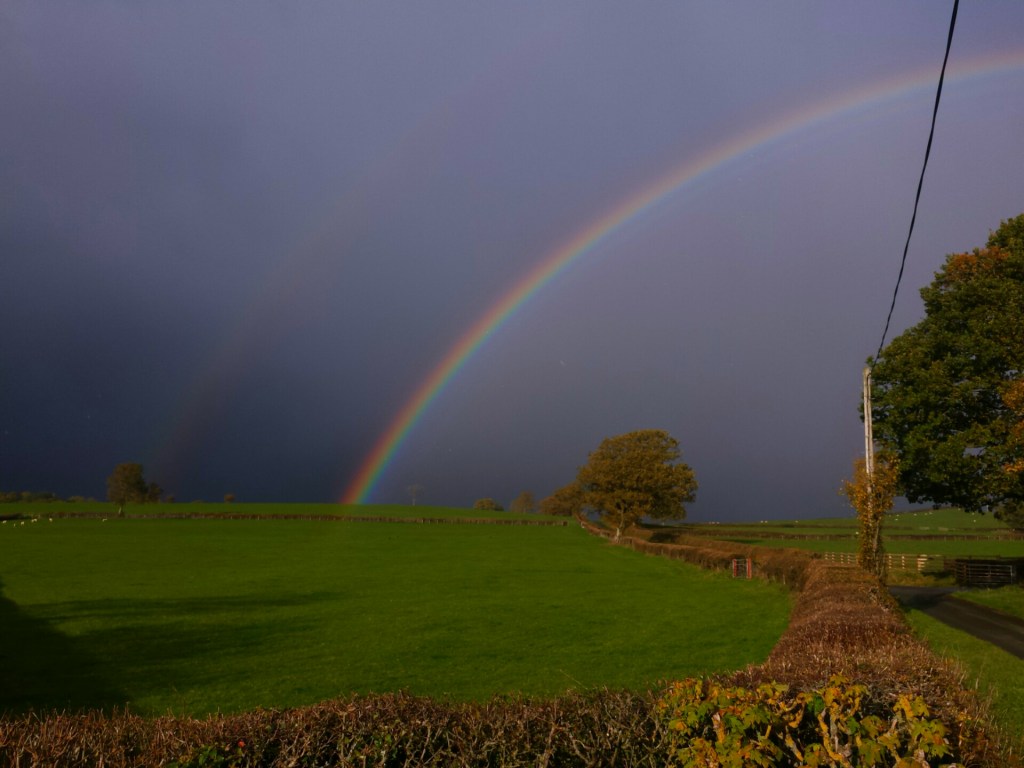
Rainbow over Lane. photo Piers Northam

Thoughts on Genesis 9: 8-17 from Piers Northam
Licensed Lay Minister at St. Mary-at-Latton, Harlow

I can never resist commenting on a rainbow if I see one.  They’re wondrous things, aren’t they?  And it doesn’t seem to matter if we’re nine or ninety, they still stop us in our tracks and invite us to marvel.
I remember once, many years ago now, driving through a very heavy rainstorm in France and turning a corner to see perhaps the most intense rainbow I have ever seen, bright and vivid against a background of thick, dark threatening clouds; a blaze of glory in the assault of the storm. We stopped the car to take a photo, but actually that image is vibrant in my mind’s eye – along with the wonder and the excitement of what we saw.

Of course rainbows have become prominent symbols of late – not least because they have been adopted as the symbol of the NHS and we have seen drawings stuck up in people’s windows; badges and the like.
Originally Gilbert Baker devised the rainbow flag in 1978 with eight colours as a symbol of pride for the gay community – the colours speaking of diversity and the various elements of life.  Over the years the flag has been adapted, the number of colours reduced and changed slightly and variations adopted to draw attention to different groups.  Its meaning has been broadened to include concepts of social justice.
The rainbow badge was originally adopted by the NHS to show greater understanding and inclusivity for LGBTQI+ people;
but it also speaks of being mindful of the various discriminations that people live with and over time it has evolved into a symbol of wider inclusivity; of an acknowledgment of the rich diversity of life and human experience and of the NHS’s role in responding to that sensitively and generously.  And during the pandemic, of course, it’s also become a symbol of our collective support for each other.

But in the story of Noah that we heard read to us just now, there are further connotations to the rainbow.  Here it stands as a symbol of hope and life after the forty days and nights of the Flood which wiped out all living beings other than those carried in the safety of the Ark – it speaks of release from hardship and confinement: of hope for the future.
And our reading from Genesis tells us that the meaning of the rainbow is one of Covenant – of a solemn and immutable promise that God makes with us.  Actually, if you listen carefully, of the covenant that God makes with every living creature of all flesh that is on the earth…
‘When the bow is in the clouds, I will see it and remember the everlasting covenant between God and every living creature of all flesh that is on the earth.’

So often, when we read again a familiar passage of Scripture, things pop out that we haven’t noticed before, and here, I was struck by the insistence that this covenant is made ‘with every living creature of all flesh’.  The phrase comes up three times in the passage we heard and God spells it out even further at the beginning:
As for me, I am establishing my covenant with you and your descendants after you, and with every living creature that is with you, the birds, the domestic animals, and every animal of the earth with you, as many as came out of the ark.’

When Noah takes all the different species into the ark to save them from the floor he is fulfilling his proper role as a steward of God’s creation; caring for and keeping safe the beauty and diversity of that creation; the finely balanced ecosystems that exist.

As we embark on the season of Lent, this reading helps us to ponder two questions – which Jane Williams suggests are appropriate questions for us to consider in Lent: ‘What are we for?’ and ‘What [or who] do we depend on?’ 

So what are we for?  Well Noah – as the representative of humankind – is fulfilling his God-given role as the steward of God’s creation.  And it’s a role that includes all living creatures – not just the domestic animals that are going to be of some specific use to him.  As we watch programmes such as David Attenborough’s ‘A Life on our Planet’ we need to remember the proper interdependence of all life forms and the way that we plunder the natural world so greedily and wantonly.  Part of what we are for is to work with God to care for the life-sustaining world that we have been given to live in.
And who do we depend on?  Noah’s story reminds us that we depend on God for everything – for it is through God’s mercy that Noah and his family survive and come through the flood safely.

In our Gospel story we see Jesus faced with similar questions as he withdraws to the wilderness.  In following the Spirit’s promptings he makes time and space to ponder what his calling is and to rely on his Father’s mercy; to make himself vulnerable and to depend on his Father.
Again, this is a familiar passage – although, as is typical of Mark, it’s pretty pared back, with few details – but three phrases did catch my ear:
‘The Spirit immediately drove him out into the wilderness.’
‘He was with the wild beasts’ and
‘the angels waited on him.’

In this time of Lent we need to allow the Spirit to drive us; we need to be open to the Spirit’s insistence as she drives us into the wilderness – a place where we have time and space to ponder; to go deep; to listen…  There’s an urgency and a vitality to the Spirit’s prompting here that we need to open ourselves up to because it’s important to be addressing those questions: ‘what am I for?’  And ‘who do I depend on?’  To find again our place in the world and our relationship with God.

So Jesus followed the Spirit’s insistence and went alone into the wilderness ‘where he was with the wild beasts’.  I’ve always thought of the wild beasts as being a threatening part of the story – a symbol of the harsh surroundings that Jesus find himself in.  And in part that’s true.  But seen in the context of Noah’s story and the Covenant that God makes with every living creature of all flesh that is on the earth, we might take it that Jesus is in his – and our – rightful place in the midst of creation; alongside the wild animals and reptiles and birds with whom we share in God’s rainbow promise.  It’s a strong reminder of how we are all interlinked.

And then that final phrase – ‘and the angels waited on him’.  Hitherto, I’ve rather dismissed that phrase – it doesn’t seem sufficiently Lenten really, does it?  Bit too comfy perhaps.  A trifle ‘Wilderness Lite’…  But actually, is it not a reminder that even in the most desperate and isolated of situations we are not alone; that God cares for us; sending his angels (in whatever form they may take) to be with us?  I think many of us will have witnessed or experienced examples of this in recent months.
Taken in this way, the wilderness – the Lenten wilderness – reminds us of our rightful place in the world and of our rightful relationship with the Father.  It gives us space to ponder and explore what God might want for us; what he is calling us to; but it also reminds us that in all we do, we are reliant on God.

One last thought. 
As I imagined the rainbow, two things occurred to me – first, that each colour needs the others to be complete – the one bright light is refracted by the rain into the colours of the spectrum: but take one away and the rainbow is incomplete; the rainbow dissipates without inclusive diversity.
But also, beyond the colours that are visible to the eye are those that we can’t see – infra red at one end and ultraviolet at the other.  And I am sure there’s much more hidden glory beyond in both directions.  In our creed, we profess our faith in things ‘visible and invisible’ for we believe in the things God reveals to us, but also in the hidden workings; the hidden glories that we cannot perceive…

Promise, covenant, hope, inclusivity, diversity, interdependence and the glories of creation – both visible and invisible – there’s a lot bound up in that seemingly simple symbol.
May your time in the Lenten wilderness give you space and time to ponder all these things – and may you glimpse a rainbow or two along the way.

Piers Northam
21 February 2021
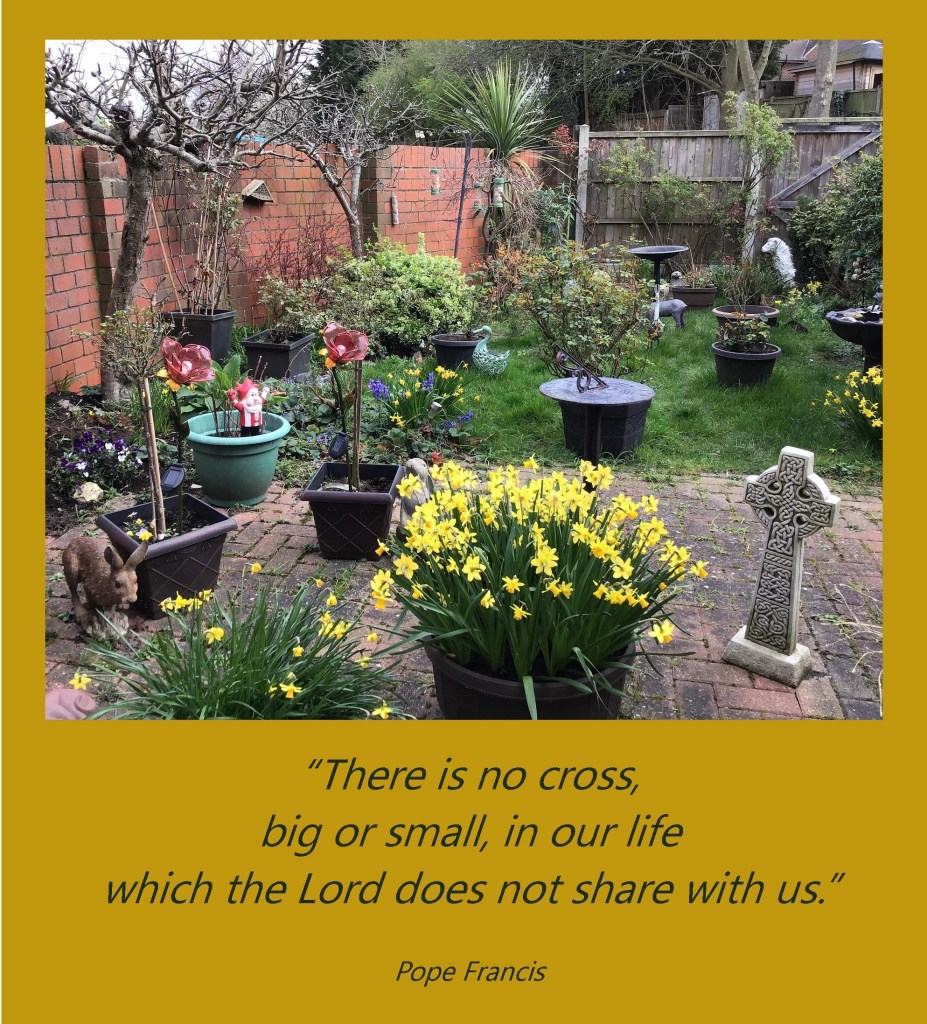
Our Lord’s Cross brings hope and joy.

Photo of her garden by Joyce Smith

Another picture reflection by my friend Joyce Smith. The quotation from Pope Francis centres our thoughts on the Celtic Cross on the right. She makes this comment:

Dear Friends,
This quote from Pope Francis, reminds us that God is with us in all our dark days
and as signs of Spring are beginning to show, and the days are becoming lighter and longer, we have the sure hope of
the Light of Christ triumphing over darkness.

With my love and prayers, God bless,
Joyce

P.S. can you also see the hope that Southampton FC will begin to return to winning ways in the picture?!!


For those not familiar with the English obsession with football (Soccer) many of the fans dress in their Team colours and tend to behave with charismatic-like evangelical fervour. They don’t, however look like garden-gnomes. Well, not all of them.! [Mr G]

Watering Holes

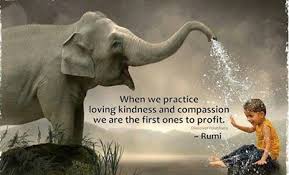
The posting we did a little while ago, which centred on Elephants, inspired my friend Gill Henwood to write a poem about ‘Watering holes’, places where we find refreshment in our journey through life. A journey which is spiritual as well as physical. Gill is fed, too, by the countryside of the Lake District where she lives. Nature is always a source of opening our hearts, minds, souls and Cumbria is one of those places which are ‘thin’, places where God is very near and where heaven and earth are within touching distance. In these difficult days, Gill takes up her theme of Living Water.

The ‘tarn’ referred to is Tarn Hows and the ‘Lake’ is Coniston Water.

Watering Hole

Elephants gathering at precious watering holes 
weathering the drought of hot summer, 
water, life-giving, cleansing, refreshing, 
joyful in splashing spray
and, if you have a trunk, 
spraying about!

We in our Covid drought,
seek  a precious watering hole
where  God provides
the living-water we need
to weather this long unseasonable time.

So the little beck wriggles its way down fell,
trickles under ice
to find its way into the tarn
before waterfalling through woods
into the tributary that feeds the lake.

Shower us.
Refresh us
with your living spring of water. *

*John 4:14

[Gill Henwood January 2021]

The Beck at Tarn Hows photographed by Gill Henwood

A Lenten Message of an Icon

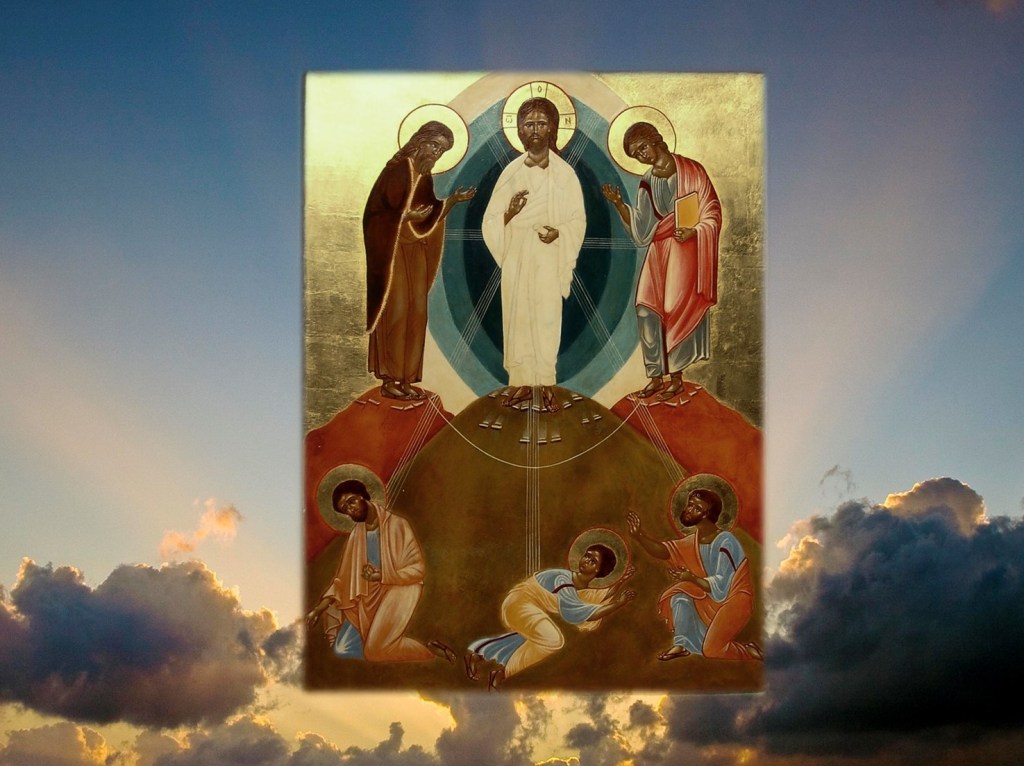
Icon of the Transfiguration written by Sister Irène of the Convent at Bec-Hellouin, Normandy.
Photograph arranged by Piers Northam.

The Gospel used by the Church of England on the Sunday before Lent is that of the Transfiguration. (Luke 9: 28-36) An unusual choice perhaps but it has a message to tell us as we enter, once again, the Lenten season.

One of the most treasured things I have is an Icon of the Transfiguration (see above). It was  painted/written by Sister Irène of the Convent at Bec-Hellouin, in Normandy. Sister Irène wrote (or painted) two versions. One is in the Chapel of the Transfiguration in the Parish Church of St. John the Baptist, Epping. It was commissioned specially for the new Chapel. The second is in the library in my home. It was written in memory of parents.

Over the centuries there have been many attempts by artists and Icon writers to capture the moment when Jesus is Transfigured – bathed in glory –on the Mountain.
Quite naturally the primary subject matter of these paintings & icons is Jesus bathed in beatific and glorious light. It is to this that our eyes are drawn but also  we take note of the other five figures, not least the favoured disciples, Peter, James & John, usually at the foot of the painting, often in a state of enraptured prayer.
In Sister Irène’s Icon there is a sense of awesomeness and of being overcome by the dazzling beauty of it all.

We are led by the Gospel writers to see this scene with the eyes of those disciples and certainly through their witness.
Whilst the effect on the disciples is present in Sister Irène’s Icon there is something else that attracts me to it and it is something unusual. It concerns the figure of Elijah.
Traditionally the two representatives of the Old Testament, Moses and Elijah are shown as revered, wise and elderly men.
Moses represents the theme of deliverance which threads its way through the Old Testament and, Elijah the prophetic strand which points to a deliverer­ usually called a Messiah who will free the people of Israel from whatever yoke holds them back from true love and service of God.
 Sometimes this is the behaviour of their leaders – those Kings who did wicked, even demonic, things about whom we hear so much in the Scriptures – or it is about correcting and judging of sin which led to the people being variously exiled or driven back into slavery until they mended their ways.
By placing these two figures on either side of the figure of Jesus at the moment of his glorification we get a Triptych but always with the two figures pointing away from self towards the Christ in the middle.
This is because Jesus fulfils the hope and promise of deliverance – of freedom – of transformation of a community who, wayward and rebellious, nevertheless are claimed by God as his own.

So in the Icon both Moses and Elijah are pointing their hand towards Jesus. See, they are saying, this is one whom God has sent to free you and love you into his Kingdom.
Because Jesus is Transfigured then we, looking at him and making him the centre of  our lives, can be Transformed too.

Sister Irène  gives us a clue, I believe, not in the transformation of the disciples – that is yet to come when they understand better what has happened on this Mountain – not in them, but in Elijah.
He is almost always, as I say, painted as an old and venerable man whose wisdom came through a life that was often harsh, incredibly lonely and more often misunderstood but who, through experiencing God closely, becomes the great Prophet, calling people back to a life with God. 
In this Icon, however, Elijah is painted as a young man.
At Bec we were shown a number of possible representations but it was this which excited me most.
A young Elijah symbolised for me something essential about the Transfiguration – that it is about being Transformed by the glory and love of God in such a way that we are utterly changed.

Elijah as a young man is on the face of it a physical thing but spiritually it can be seen as a Transformation from within.
The more we see the glory and love of God as something that frees us, forgives us, redeems us and opens for us a new way of life, so our soul fizzes with new energy, new life – a life energized by God. This opens us to new possibilities, new adventures of faith and a renewed way of being true disciples.

Luke’s version of the Transfiguration tells us that while Jesus was praying, the appearance of his face changed.
And it was this change that I see startlingly portrayed in Elijah and with that a realization that this is at the heart of our relationship with Jesus.
We are called to be people of change- people who are renewed by our encounter and subsequent life with, in and through Jesus Christ. People who are unafraid to grow, indeed who long to grow and become more deeply involved the Christian adventure.
This change comes about when we turn our lives around towards the beauty of God, which as St. Paul tells us shines in our hearts and gives the light of the knowledge of the glory of God, in the face of Jesus Christ.

This is the message of the Transfiguration and it is personalized by that rather beautiful phrase, shines in our hearts.
God penetrates our hearts with light – with knowledge that in Jesus we can all be changed, transformed. We can be renewed, rejuvenated, made youthful again, because in the trials of life in this world with its pressures and relentless claims on our energy, especially at this time, this affects our spiritual centre which gets a bit askew. We become weary, dispirited, disorientated
Which, of course, is why Lent is such a Godsend.

It is a time to refresh our souls, to learn afresh about the mighty acts of God in Jesus Christ, about disciplining our lives through prayer and fasting and centring ourselves on God again. It’s about encouraging new growth in the Spirit. And new hope.
No wonder a writer of the Orthodox Church calls this a season of the springtime of the soul. The spiritual writer Thomas Hopko quotes a phrase from the Orthodox Lenten Liturgy which begins : The Lenten spring shines forth, The flower of repentance ­
He goes on to say: The Church welcomes the Lenten spring with a spirit of exultation. She greets the time of repentance with the expectancy and enthusiasm of a child entering a new and exciting experience. The tone …is one of brightness and light.

Lent is not about doom and gloom and grovelling – it is a time of rebirth renewal. It is an enthusiastic turning of our lives back to God and therefore a time of rejoicing.
We are bidden to put a new spring in our step and let the glory and love of God, shining not only from the face but also the heart of Jesus, burn away from our lives all that is not of God and replace it with a re-centring on God which is what repentance really means.

So as we approach the Lenten Journey we are given a glimpse of glory. Lent is a time of real Transformation and of being glorified as we are held in the beautiful glorious, totally stupendous Vision of Jesus on the Holy Mountain and so becoming filled with a longing to be there with Him. We are invited to be transformed through a response to God’s Glory which begins with thankfulness.
Thanksgiving is such an important part of our response to what God is doing for us in Jesus Christ, in our community and personal life. We give thanks in small and big ways.

It would be a good thing to use Lent as a time when we repent of negativity and concentrate instead on the positive things which are happening, from deeper care and kindness towards each other to the many opportunities we have to think and pray about what matters in our lives.  Not least, the many and varied signs in which God loves us. The call to return to God is a big sign of God’s love but so is the call to make life better for others through what might be called random acts of kindness.
When the story of this pandemic is told, it will include so much about how, with God holding us, we have not only transformed our neighbourhoods through such acts of kindness, but also discovered the transfiguration of what is important in our being human, true humanity shot through with God’s glory. Add to that the inspiration of service from carers, NHS workers, doctors and amazing people like Captain Sir Tom. Ordinary people who by simply showing goodness, determination, care and kindness. People like you!

The message of the Icon of the Transfiguration is to show us what ordinary lives, blessed by God, can be and how we can all be transformed, transfigured, when we live close to God in Jesus Christ.

[GC]