In the cradle of Your hand there is safety, intimacy, trust…
And there I find my name: “See, I have engraved you on the palms of my hands.”
There, my name is scored, etched into Your flesh: tattooed in love, blood-red.
The pain of that etching reveals the depth of that love. The marks indelible, everlasting…
Piers Northam 6 September 2024 Deacons’ Retreat in response to a ‘Word Friend’ – Isaiah 49:16 ~ See, I have inscribed you on the palms of my hands.(NRSV)
The time between September 1st and October 4th (The feast of St. Francis) is used by many Christians, other believers and organizations concerned about our Planet, as a time of meditation on Creation, our part in caring for it, and the dedication our lives anew to God who we celebrate as Creator and Sustainer of life
The photo of the Hay bales seems to express something of the beauty of the earth and gives me joy. The bales were typical of the countryside of Normandy where I recently spent some time. Gathering in the hay and bind it in round bales was going on in many fields and farms. I was pleased to see that the bales were tied naturally and not, as is so often in England, bound in unsightly black plastic.
Rural Communities rarely have an easy time of it, so I am not moaning. As well as farming and managing woodland, farmers often bear the brunt of the general failure to care for our planet. We dump on the rural communities a responsibility for caring about ecology and promoting climate change as well as nurturing the land to provide food and having consideration for their animals. Meanwhile, many enjoy the delights of the countryside, free of charge, even insisting that maintenance and trouble free access is our right and we expect the farming community to maintain it so that we might not feel responsible. A generalization, I know, but it contains truth. Many of us know that blaming others for things that go wrong or which don’t achieve our aims is an excellent way of ducking out of our own responsibility! Yet we don’t fool anybody, not even ourself.
Equally importantly is our concern for those in our world who are without food or water. We have a duty of care for the people who live in poverty and destitution either through crop failure; the inhumanity of war; or in our own country where people are reliant on Food Banks or through meals provided for children who otherwise go hungry.
There are big issues around our stewardship of God’s creation and climate change but if we do just little and responsible things like random but heartfelt acts of kindness to others, especially the poor and needy, then the world becomes a better place. I am constantly being drawn back to something Saint Ambrose said: “It is not from your own possessions that you are bestowing alms on the poor, you are but restoring to them what is theirs by right. For what was given to everyone for the use of all, you have taken for your exclusive use. The earth belongs not to the rich, but to everyone. Thus, far from giving lavishly, you are but paying part of your debt.”
Here is a prayer we might consider saying, though it is uncomfortable!
Call us out of our sleep; Awaken our hearts and minds to the reality of so many lives. Awaken us to our connectedness as a global community. Awaken us to a future free from poverty and climate change.
Father, call us out of our sleep. Call us out of our sleep; Awaken us to the suffering of others. Awaken our hearts and minds to our choices and their impacts. Awaken us to be renewed with creation. Awaken us to the joy of enabling others to live life to the full.
Christ, call us out of our sleep. Call us out of our sleep; Awaken our hearts and minds to your hope. Awaken us to be renewed with creation. Awaken us to the joy of enabling others to live life to the full. Holy Spirit, call us out of our sleep.
A Prayer based on Psalm 102:5 (offered as a resource from the Churches)
Special places, special people thoughts on St. Aidan’s Day. 31st August 2024
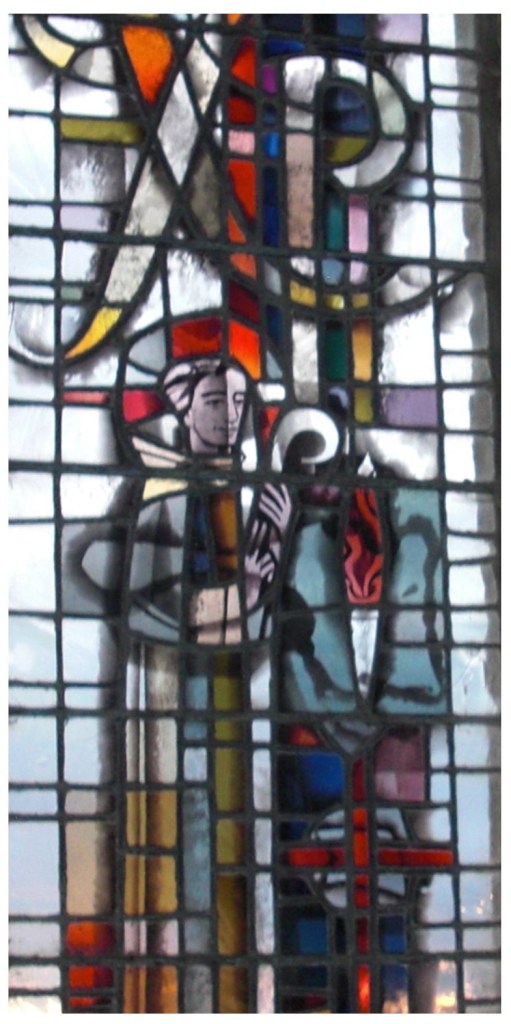
In many journeys of faith there are special places that have spoken to people vividly about God. The early Christians called these the ‘thin places’ where the membrane which separates our world from the world of heaven is so thin that it is easy for heaven’s spirit to burst through, catching us up in a breathtaking experience of God’s nearness. For me one very special ‘thin’ place will always be the Holy Island of Lindisfarne, off the Northumbrian coast between Bamburgh and Berwick-upon-Tweed. It was to this island that St. Aidan came in 635AD. He nearly didn’t come at all! When King Oswald won back his Kingdom from the pagan king of Mercia, he immediately sent to Iona for a monk to teach his people Christianity. Oswald had spent many years in exile on Iona and there embraced the Christian faith. His desire was that his people would also find a love for Christ. The Abbot of Iona sent a monk who soon fell foul of the local people whom he branded as barbarians and un-teachable. Returning to Iona he told his brethren what he thought and a gentle monk admonished him. “I think, brother, that you gave them the meat of the gospel when what they needed first was milk.” Wise words but as so often happens, those who criticize (however gently) must be prepared to serve. Aidan was sent to Northumbria. There he set up his base in the place which, twice a day became an island—Lindisfarne. Here he built a monastery and founded a school in which he taught 12 boys amongst whom were the future St. Cedd, apostle to Essex and his brother, Chad, Apostle to Mercia. They were part of a great mission which was to take the Christian Gospel throughout the North and the Midlands and to Essex. Because, initially, Aidan couldn’t speak the language, King Oswald went with him on his missionary journeys to act as interpreter. One of the earliest examples of the co-operation between Church and State!
Lindisfarne remained a Christian centre until Viking raids led to the withdrawal of the monks. Today it is once again a centre both of pilgrimage and prayer. The local Church set up a Christian house for pilgrims known as Marygate House and it was here, in 1974 that I first came across Aidan and the spirit of the Celtic saints. I have returned many times since and more than once I have experienced the sense of God’s nearness and presence. It truly is a ‘thin’ place. Some, reading this will know exactly what I mean and will have their own ‘thin’ or special places (associated often with special holy Christians). They are places where faith comes alive in a unique and special way. Such experiences carry us through the more mundane parts of our Christian journey. What marks such places is that they are, in the words of the poet T.S.Eliot, places ‘where prayer has been valid’ – where prayer has consecrated them to God. It strikes me that we should not have to travel far to find such places. There are lots and lots of special people whose prayer has made valid places where God can be found. Whilst people like St. Aidan seem to be extra-holy, he would probably argue that he did nothing that all Christians, all believers in God, can do—which is to allow God to love them until they are on fire with God’s love. That can be true for all of us and where it is, then we become the ‘thin’ place where others can find God.
[Mr G]
St Aidan window by Leonard Evetts, Lindisfarne Church. photo by Mr. G.
Aidan
You came on the flow tide blown in, full of hope and zeal. You carried the milk of the Gospel but in your satchel, the firm, solid Good News waited to be heard.
The waves revealed the pilgrim way to Lindisfarne, for its first journeying companion of Christ. Those waves a sign of what your Lord achieved through you: first, lapping the hearts of those aspiring to know God, then rushing in, hurrying to swamp the land with love, a sea teeming with joy and hope and message. *
Milk, then meat. Quiet ripples then mighty waters of God’s love and grace.
You were sent, Apostle to the North. You came: a gentle breeze inspiring others, awakening in them the wind of the Spirit. Because of you, they stormed the Gospel message, opening others to grace and truth, to joy and love.
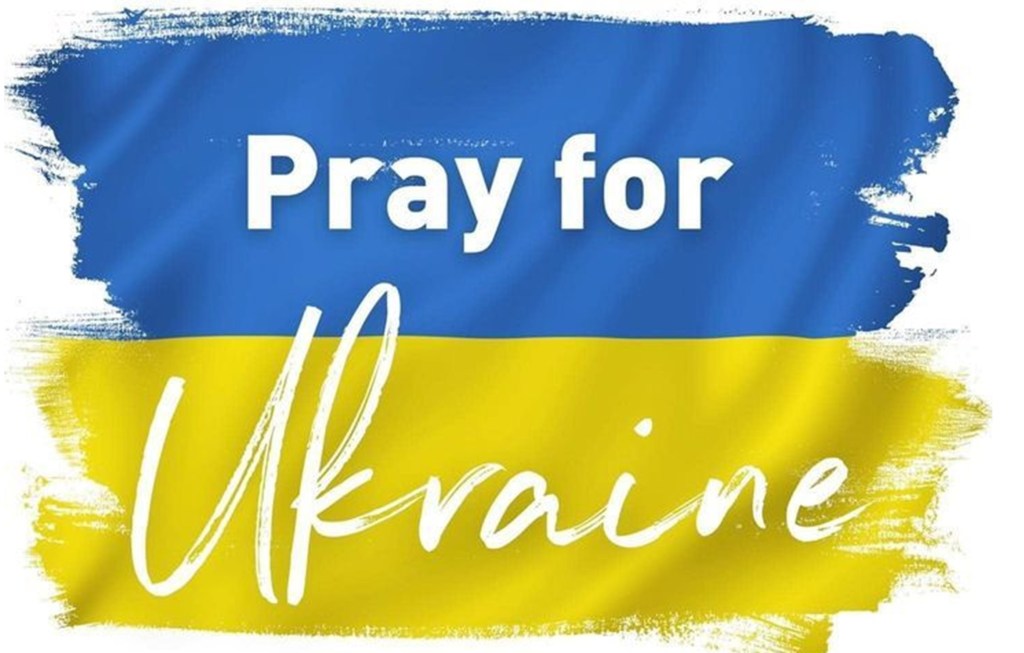
33 years ago on 24th August, Ukraine regained its independence. Today, Ukrainians fight to protect the freedom they conquered and safeguard the independence that they own by undeniable right. For Ukrainians, independence means more than a status.
“Volia” (воля) is a Ukrainian concept that can be translated as “will” or “freedom” and the deliberate choice to be free. On Ukraine’s Independence Day, the country celebrates the volia of the Ukrainian people which resulted in the choice to again become an independent state in 1991. We pray for them as Ukraine continues to proclaim that right.
zelenskyy_official Ukraine. Our land. Given by God. Kissed by the sun. Rocked by the winds. Tempered by fire. Defended by its sons and daughters. It cannot be mistaken for anything else. It can never be given away to anyone. Happy Independence Day of Ukraine!