Tag: Creation

The Flourishing of Creation

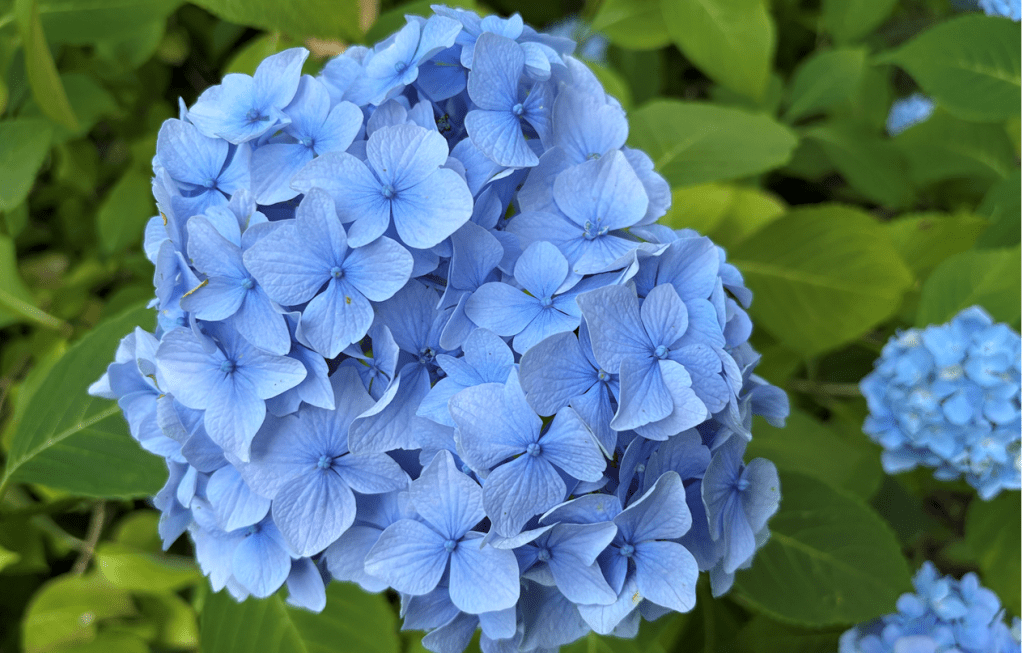
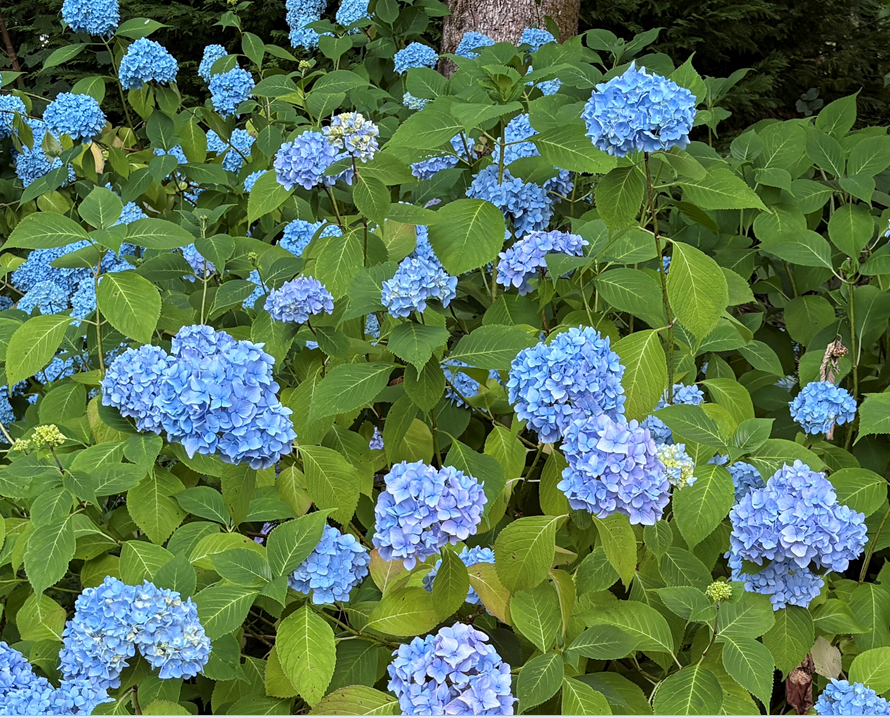
Photo of hydrangea in the Lake District, by Gill Henwood.

A summer pondering from Gill Henwood

Hydrangea : Planted long ago by slate steps leading into a spinney on the edge of a track, the huge shrub now blocks access
but is too beautiful to tame.

Above is a ‘handkerchief’ tree, davidia involucra, also known as the ‘dove’ tree, both from the creamy hanging bracts in the spring, around the small flowers. The tall tree shades the hydrangea which isn’t drooping in the heatwave.
There are underground streams in the spinney, flowing into Black Beck in the vale and on to Esthwaite Water,
our local lake.

The hydrangea suckers, providing new plants to give away. The handkerchief tree sets masses of nutmeg sized seeds, chewed by mice and scattered all over the garden.
Shoots emerge and saplings can be moved and given away too.

Over a century, these plants and trees have made their home in the windswept, rainy Lake District. The spinney shelters them from the western winds and shelters the old farmstead (dating back to at least 1536). People knew where to site their homes, against the slate rock wall, near a spring or stream, and to plant trees for shelter and shade.

We need tall shading trees and shelter today, to learn from our forebears how Creation flourishes despite heat and winds. May we, as stewards in our small ways, pay our part in protecting Creation, not least all creatures great and small.

[Gill Henwood. July 2026]

‘BELTIES’ at rest

My friend, Gill Henwood, has sent me this photograph of cattle resting from the heat near Coniston in the Lake District.
Here’s her short refection.

The Belties (Belted Galloway cows) and their recent calves have chosen deep shade on the felltop, where a cool breeze is lifting from Coniston Water up the hill towards them.

An essay on how to keep cool. A couple of mornings ago, they were down at the water edge of Tarn Hows. They are free range around the National Trust fells, choosing the best resting places for the young calves. As parents do. 

As our heavenly Father does when we listen in Creation to the wind and shade and the weather warnings…

Every blessing,
Gill Henwood

Midsummer Yellow

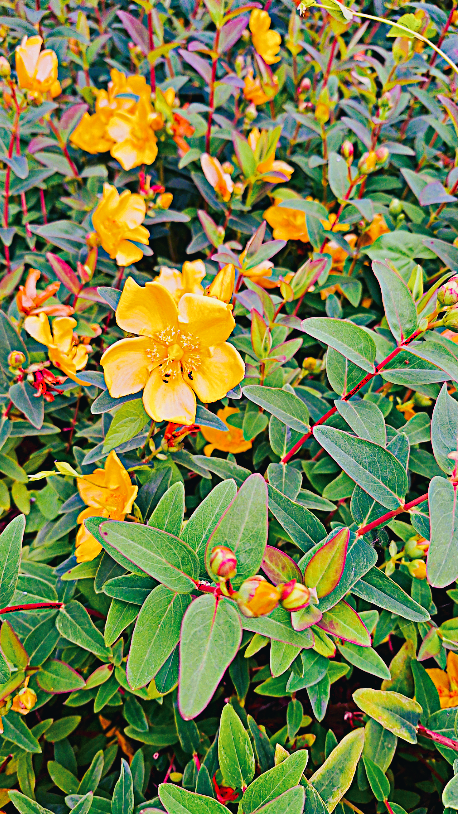
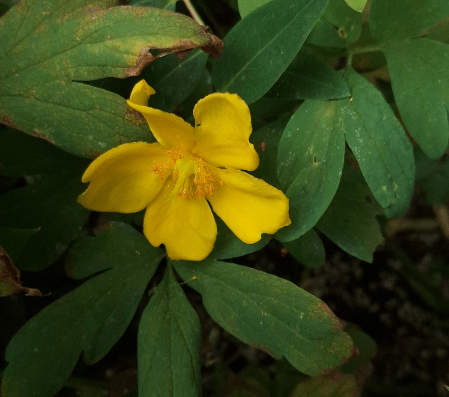
St John’s Wort at Fairacres. Photo by Julia Sheffield.

A few days ago we celebrated the Nativity of St. John the Baptist. (June 24th,) – Midsummer’s Day.
John has two festivals though I suspect the one this week was preferable to him than the other which commemorates his beheading!

Just before celebrating his Nativity, I visited the Convent of the Incarnation, the home of the Sisters of the Love of God at Fairacres in Oxford. By the entrance there was a profusion of yellow flowers filling a bush of welcome.
I was reminded that the birth of St John the Baptist and this flowering bush are connected. In horticultural parlance it is known by the name Hypericum but it also has a name in religion – that of St. John’s Wort. It flowers mainly in June and usually around the time of St. John’s birthday.

The word ’Wort’ comes from the Old English word, ‘Wyrt’, meaning a plant or a herb or root. It is associated by some with folk medicine and is said to have healing properties in the treatment of mild depression. However, it can affect other medicines adversely so it’s always wisest to consult professional people.

Gardeners know it as a herb with woody roots which the Royal Horticultural Society tells of it bearing yellow flowers mark by black glands and leaves that appear perforated due to translucent glands producing copious seed per plant.

From a religious point of view, it is noted that the flowers have five petals which represent a halo. When cut there is red liquid which becomes a symbol of St. John the Baptist’s beheading.

Religious folklore adds that the plant traditionally wards off evil spirits and demons linking this with St John as a spiritual protector. In medieval Europe people hung sprigs of the plant above doorways to protect homes. During midsummer celebrations the plant was placed in fields and burned in bonfires. This was to protect people, livestock, homes and crops against evil forces.

Oddly, in an age when evil and malice prevail more than ever, we neglect these helpful ceremonies and symbols!

That was certainly not true for Saint Columba. According to Gaelic tradition, Columba always carried a piece of St. John’s Wort not only because of his great regard for St. John but also for its protective and healing qualities.

This is one of the many examples how nature and spirituality are intertwined  as God’s great design of Creation of which we are but a part. Living in harmony, care and love for God’s creation which defines us, is something we need to re-discover and put into practice.
May St. John’s Wort remind us of that.

Prayer from Xavier University Cincinnati #Jesuitresource.org is developed by The Center for Mission and Identity at Xavier University with support from the Conway Institute for Jesuit Education. 

[Mr G. 27th June 2026]

Mr Brock introduces himself

Badger in Latton Garden. Photograph by Revd. Lynn Hurry

The badger was a night time visitor in her garden and Introduces herself.

“ I try not to show my face too often. It isn’t always wise or safe.
As you see I have a rather distinctive face. It’s the broad white stripe that gives it away!
I am told that it serves a purpose. It’s a sign of my knowledge and insight into matters not easily accessible to other animals on earth.

One of my special attributes is my strong jaws. This is very useful because it makes it easier to chew and also, when required, to snap and bite at those other animals who like to throw their weight around.
A much more useful thing is that my jaws help me to habit the mysteries of the Word’, which is a pretentious way of saying how I reveal the ‘magic of storytelling.’

When needed, I give away generously to people, a magical word which is the way I guide people who are looking for beauty, encouragement and a more open mind especially when they seek a differing direction and purpose in life which otherwise deludes them.
I use the word, story’ in a sense of helping others to listen to that inner voice whereby God speaks. I am part of that spirit-filled creation which leads people to embrace courage and independence and so cultivate a tenacity which shows the importance of holding on when running away and hiding would feel much safer.

Drawing from my own characteristics and a tendency to dig deeper into the soil of the earth, I am able to show other members of God’s creation how to embrace untapped potential and take that journey all of us must take if we are to become our true selves under God.

I have this story to tell from the heart of my being and it has inspired a number of important people to use me as a character in their writings.
The late eighteenth century  poet, John Clare,  wrote of me in a poem  entitled Badger. At a time when many humans were cruel to animals, he took my tenacious character and wove it into a poem which emphasizes endurance and resistance rather than then being a victim.
Beatrix Potter, in her Tale of Mr Tod, was less kind of me, speaking of my curiously, earthy voice in a dismissive way. She called me Tommy Brock
By then, I was being referred to as Broc which actually was my Celtic Name and really only meant ‘grey.’.
That nice Mr Graham, who wrote the delightful book, Wind in the Willows, called me a “wise and kind badger” though he did say that I could be bossy at times, by which he meant that I was forthright!

Things are not always what they seem and humans are not the be all and end all of creation. Each of us animals have insights, hopes and loves to offer as we share in shaping Creation. Each of us is made by God and we are Icons of His presence in the world. We are all filled with God’s Spirit and signs of the totality of His loving being. Increasingly we need to see that truth and treat Creation and the Created order in a new and more grateful way, all of us as part of God’s story of pure love.

Many the gifts, many the people,
many the hearts that yearn to belong.
Let us be servants to one another,
making your kingdom come.
(Bernadette O’Farrell)

[Mr G, a visiting Badger and The Revd.Lynn Hurry]
30th April 2026