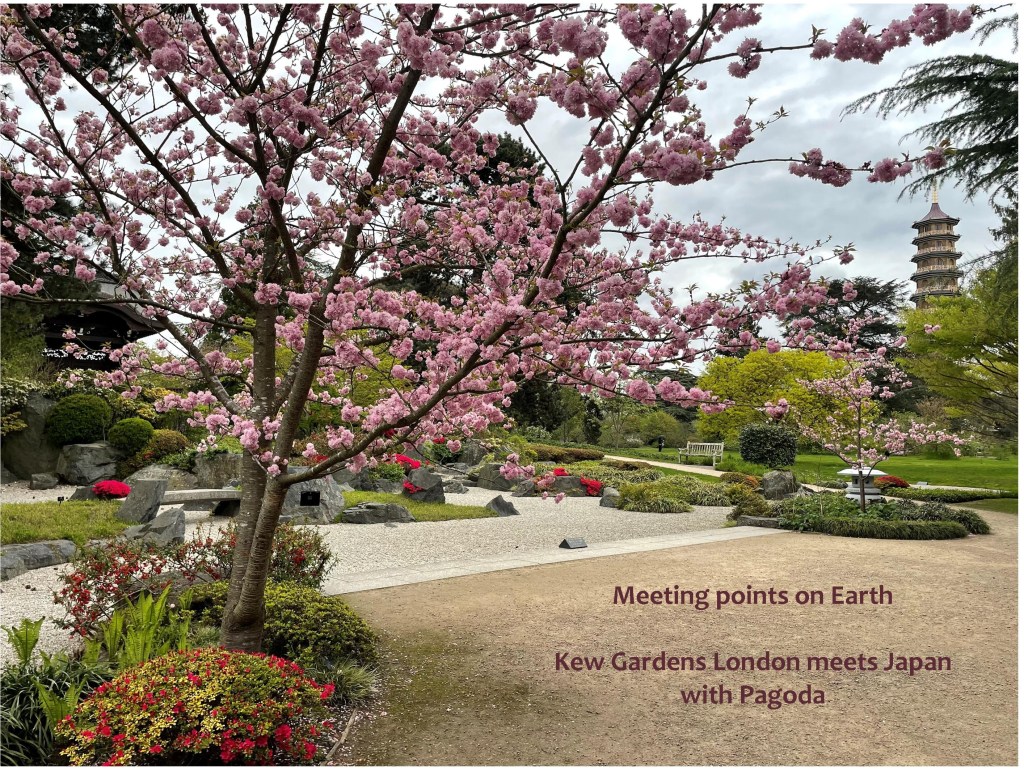
Photo of the Japanese Garden at Kew Gardens, by Gill Henwood.
The photos on this page are are a reminder of the myriad places where our planet bursts forth with joy and in signs of the amazing creation which unites peoples as they share the natural culture of each land.. Beauty is something we share and think about on Earth Day, April 22nd 2023. All that brings us together can become a deeper determination to work together for the Earth as we invest in our Planet.
EARTH DAY PRAYER
O GOD, we thank you for this earth, our home; for the wide sky and the blessed sun, for the ocean and streams, for the towering hills and the whispering wind, for the trees and green grass.
We thank you for our senses by which we hear the songs of birds, and see the splendour of fields of golden wheat, and taste autumn’s fruit, and rejoice in the feel of snow, and smell the breath of spring flowers. Grant us hearts opened wide to all this beauty; and save us from being so blind that we pass unseeing when even the common thorn bush is aflame with your glory.
Amen
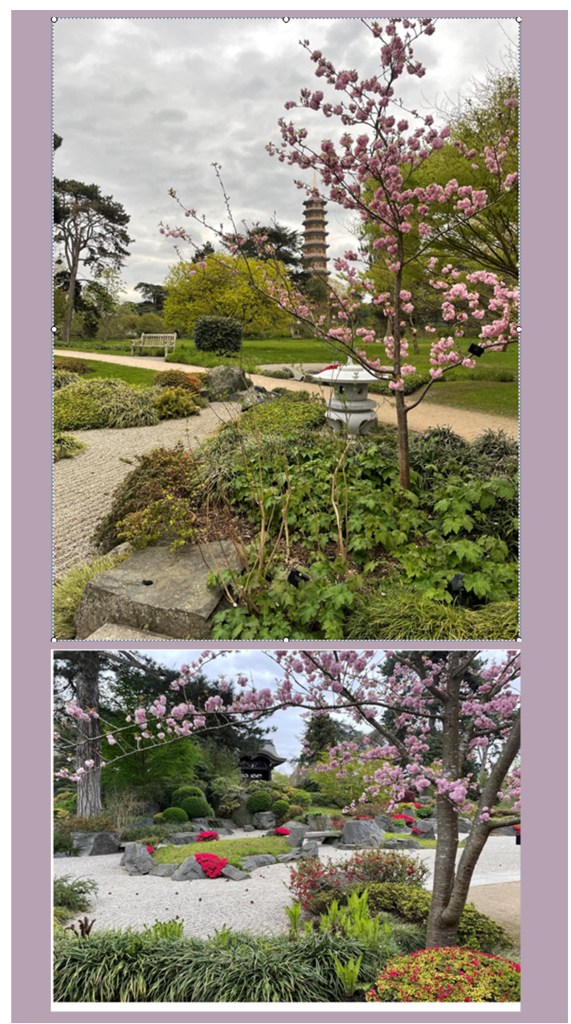
photos of the Japanese Garden and Pagoda at Kew Gardens, London
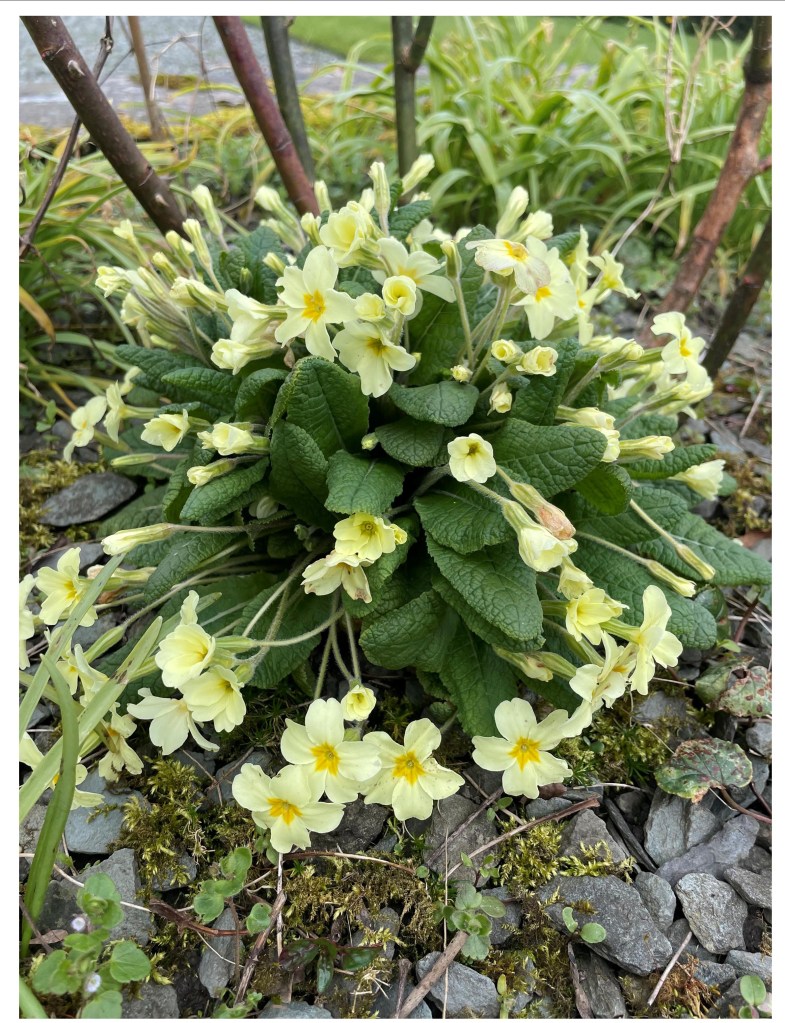
Self-seeded Primrose photographed in the Lake District by my friend Gill Henwood.
These Primrose set the scene for me for Earth Day which the world celebrates on Saturday. We know that the world is in a bit of a mess but there is so much joy to celebrate in God’s Creation. We can change the world if we acknowledge God as our Creator, Redeemer and Sustainer. If we show gratitude along with determination there is much we can achieve. Often it is in little things but with big appreciation that we can turn things towards the good.
God of creation, who loves all he has made and all that has evolved, open the eyes of your people, that your love might be reflected in our care for the planet. Through Jesus Christ, who walked this earth and calls us by name.
Creator God, We acknowledge that as your handiwork, we stand alongside all that you have made. Trees and rivers, mountains and valleys, soaring birds and scuttling creatures, all are held within your care. May we grow in our love and appreciation for the fabulous variety around us; and may our awe and wonder draw us closer to the natural world, and through it to you, the God of all things. We pray in Jesus name, Amen
Revd Cate Williams Environment Officer, Diocese of Gloucester
For the Beauty of the Earth is aChristian hymn byFolliott S Pierpoint (1835-1917).Pierpoint was 29 at the time he wrote this hymn; he was mesmerised by the beauty of the countryside that surrounded him. It first appeared in 1864 in a book of poems entitled “The Sacrifice of Praise.”
For the beauty of the earth For the Glory of the skies, For the love which from our birth Over and around us lies: Refrain:
‘Lord of all, to Thee we raise this our joyful hymn of grateful praise.
For the beauty of each hour Of the day and of the night, Hill and vale and tree and flow’r Sun and Moon and stars of light Refrain
For the joy of human love, Brother, sister, parent, child. Friends on earth and friends above For all gentle thoughts and mild. Refrain
For each perfect gift of Thine To our race so freely given. Graces human and divine Flow’rs of earth and buds of heaven. Refrain
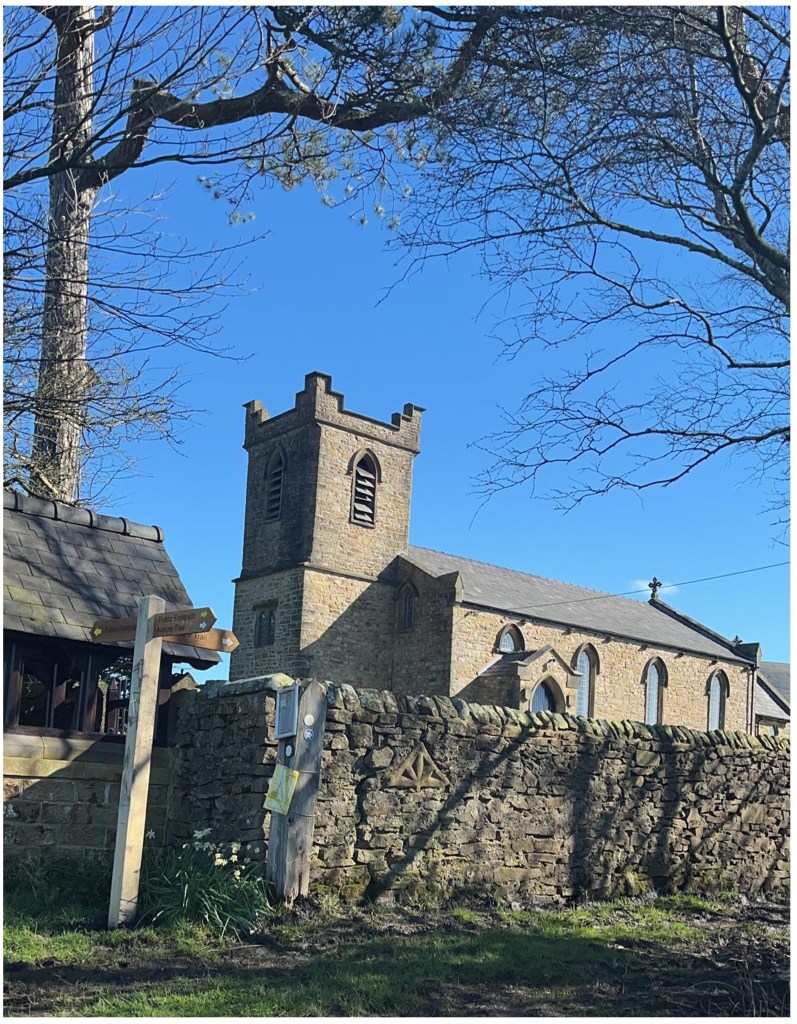
St Eadmer, Admarsh-in-Bleasdale. Photo: Helen Smith
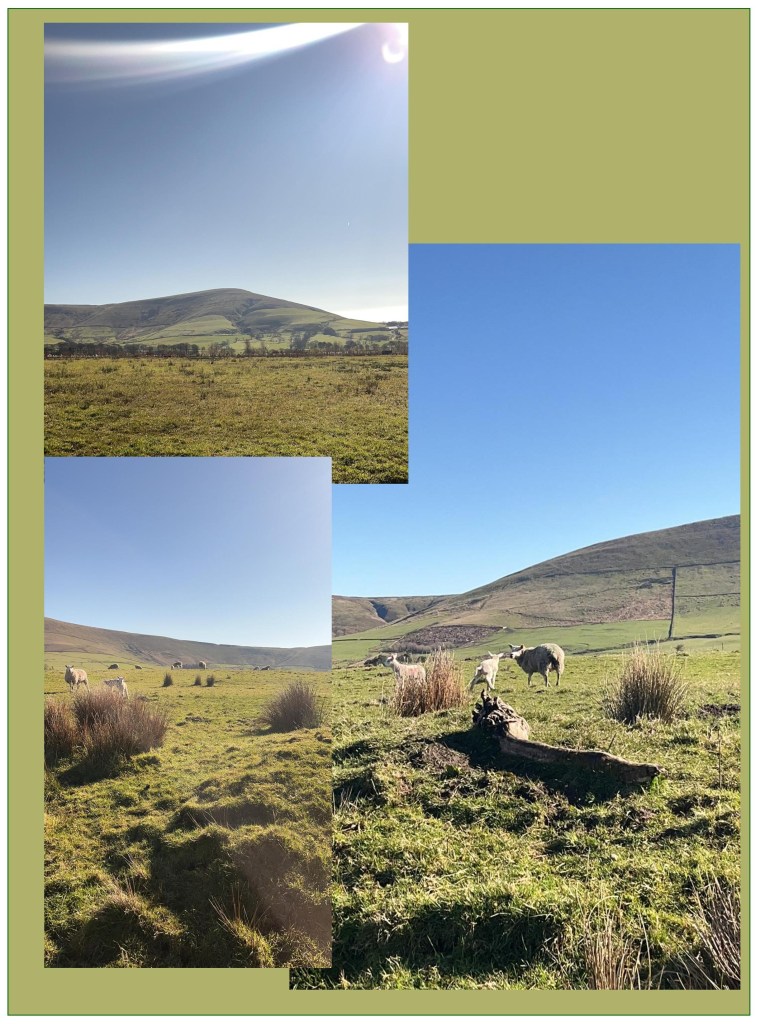
This delightful church at Bleasdale (or to be correct, Admarsh-in-Bleasdale) is overlooked by Parlick and Fairsnape Fells in North Lancashire. Both are in the Bowland Area of Natural Beauty. The Church has a unique dedication – that of St Eadmer.
It has baffled many as to who he was and for a long time it was thought that he was the secretary to St. Anselm of Canterbury.( An Eadmer wrote Anselm’s biography.) Investigations proved inconclusive until another Eadmer was discovered. When the Body of St. Cuthbert was carried by the monks of Lindisfarne to safety from the Vikings, the journey was long and arduous. Indeed, with rests it took a very long time. It involved a stay in Chester-le-Street and a journey over the Cleveland Hills now known as the Lyke Wake Walk or Coffin Walk.
The final part of the journey is to be found in a ‘History of the Church in Durham’ by a medieval monk, Symeon. He describes the arrival of the shrine at a place on the east side of what is now the city of Durham. The vehicle on which it rested could not be moved and the bishop directed his monks “that they should solicit an explanation of this sign from heaven by a fast of three days, which should be spent in watching and prayer, in order that they might discover where they should take their abode along with the holy body of the father”. This was done and Simeon goes on to relate that “a revelation was made to a certain religious person named Eadmer, to the purport that they were required to remove the body to Durham and prepare a suitable resting place for it”. This was done and as a result, ultimately, one of the greatest Norman Cathedrals in the world was built.
What all this has to do with the Church in Bleasdale is sheer conjecture. It may well be bound up with the fortunes of a local family, the Parkinson’s, who came to live at Fairsnape Fell and who were Christian folk. The Chapel at Admarsh fell into decay and it was rescued and restored by the Parkinson family. It was my conjecture that linked Bleasdale with Northumbria and Durham. The Fairsnape Parkinsons claimed descent from the Featherstonehaughs of Featherstone Castle in Northumberland then in the diocese of Durham. When they were looking for a dedication for their renewed church, it is reasonable to suggest that they looked to their Mother Church of Durham which was the last resting place of the remains of St. Cuthbert of Lindisfarne. Possibly the Parkinson family felt that they shared the vision of Eadmer to build a church albeit a small and modest one.
Like so much of our history as a nation, facts are often shrouded in the mists of time and our stories are a mixture of truths, myths, poetic license and reasonable conjecture after sifting and weighing up the evidence. What we do know is that in this beautiful corner of Lancashire, there has stood a church which has been cared for and used for a long time and has fed people with the nourishment of the Gospel. An agricultural community works what is often a harsh land and with a changing lifestyle. Farming is not what it was nor is church life. The local Church of England School which provided an amazing education to children from the area sadly closed its doors in 2019. The village hall, however, still caters for a quaint but satisfying social life. Lancashire Hot Pot Suppers were, in my 10 years ministering there, a treat beyond measure and where else could you end each evening’s entertainment with a rousing rendition of the National Anthem, played lustily on the hall piano!
Worship still takes place in the serene church and placing oneself in God’s hands means lives continue to be consecrated. This morning, my friend Helen send me the photo along with others of the fells. It opened up memories but also I was reading about the state of the Church of England as recorded in The Guardian newspaper. It’s radicalism often tries to engage its readers with negativity about Christianity, when it isn’t busy with its other preoccupation, that of undermining the Monarchy! This isn’t an easy time to keep churches going in small, rural places and logic might well suggest that we should close more of them down and reorganise ourselves into bigger and more manageable units. A large local Scout camp often uses St Eadmer’s as a shelter when their night hikes are interrupted by rain. Where would they go?
For the faithful Christians who find faith and God’s love in their little church, this is more than an act of survival. It is an act of belief and a witness in a God who converted a world with a motley crew and goes on doing so still. Each of our churches are ‘waymarks’ – cairns- on our way to heaven. We lose those pointers and the sharing of discipleship at our peril. We may say that we have to be realistic but thankfully, the Parkinson family of Bleasdale and other places like them, including, and especially, today, didn’t understand a realism which was fatalistic and devoid of hope and determination to claim divine footsteps to heaven. Cairns are built when wayfarers add a stone or a pebble. The Way to Heaven needs not so much stones as visionary people.
Father, as you gave Eadmer the vision to build a church to your glory: and kindled that vision anew in the hearts of those who built the Church in this land, so guide all who meet you in our places of worship, to go on building your Church in the hearts and lives which are wholly dedicated to you. Amen
[Thank you to Helen Smith for sending me the photographs and thus reminding me of the importance of the waymarks of faith in our journey of life]
Almighty God, you call us into a common fellowship of solidarity and love; as we remember the signing of the Belfast / Good Friday Agreement twenty five years ago, and reflect on the hopes and disappointments of the intervening years; draw near to us, and move us to work for peace and justice in the world around us; in the name of him who is the Prince of Peace, Jesus Christ our Lord. Amen.
Almighty God, we long for the time when your kingdom shall come on earth: when people and nations shall acknowledge your sovereignty, seek your glory, and serve your good and righteous will. Help us not only to pray but also to work for that new day; and enable us by your grace to promote the cause of justice and peace, truth and freedom, both in our own society and in the life of the world; for the honour of Christ, our Saviour and our Lord. Amen.
Christ in the heart of the wounded, Christ in the hands of the comforter, Christ in our forgiveness, Christ in our love for the enemy Christ in our carrying for those who harm us Christ in how we live day to day.


 Mr G's Ponderings