Getting it right

Refugees by Brian Bilston

Brian Bilston will be known to many who frequent Instagram and Twitter.
Each day he present a poem or sometimes just a verse, often entertaining and witty. Sometimes pithy. Always with something to say about the human condition.
As well as poems online, he has also published a number of books ; collections of his social media offerings and others.
His first poetry book was entitled, You took the last bus home.

you took
the last bus home

i still don’t know
how you got it through the door

but you’re always doing amazing stuff

like the time
when you caught that train

Since then  he has written a novel Diary of a Somebody (Picador, 2019) was shortlisted for the Costa first novel award. He has also published a collection of football poetry, 50 Ways to Score a Goal (Macmillan, 2021), and his acclaimed poem Refugees (Palazzo, 2019) has been made into an illustrated book for children. A new collection, Days Like These, which features a poem for every day of the year, will be published later this month.

He is described by some as the unofficial Poet Laureat of Twitter. With over 350,000 followers that is a worthy title. He is also a bit reclusive. He is clouded in the pipe smoke of mystery  though unless he has several disguises, he is currently open to discovery as he tours bookshops and venues reading his poetry. He is said to have a thing about tank tops, loves Vimto, and isn’t all that keen on Jeremy Clarkson.

(* Vimto is a strange and popular drink which is bottled in the Manchester area. Hard to describe its taste but for North Easterners and Scots folk, it is nothing like Irn Bru)

My point about introducing his poem to you is partly because without his zany poetry I’m sure your life may be a touch diminished but mainly, because he has a message we need to hear.

His Poem Refugees is, to my mind, something profound and powerful on the subject and I print it below with just a thought: So often we can get things the wrong way round and our judgements are flawed as a result.

REFUGEES

They have no need of our help
So do not tell me
These haggard faces could belong to you or me
Should life have dealt a different hand
We need to see them for who they really are
Chancers and scroungers
Layabouts and loungers
With bombs up their sleeves
Cut-throats and thieves
They are not
Welcome here
We should make them
Go back to where they came from
They cannot
Share our food
Share our homes
Share our countries
Instead let us
Build a wall to keep them out
It is not okay to say
These are people just like us
A place should only belong to those who are born there
Do not be so stupid to think that
The world can be looked at another way

Now read it from top to bottom

poem is (c) copyright, Brian Bilston.

Red Glory

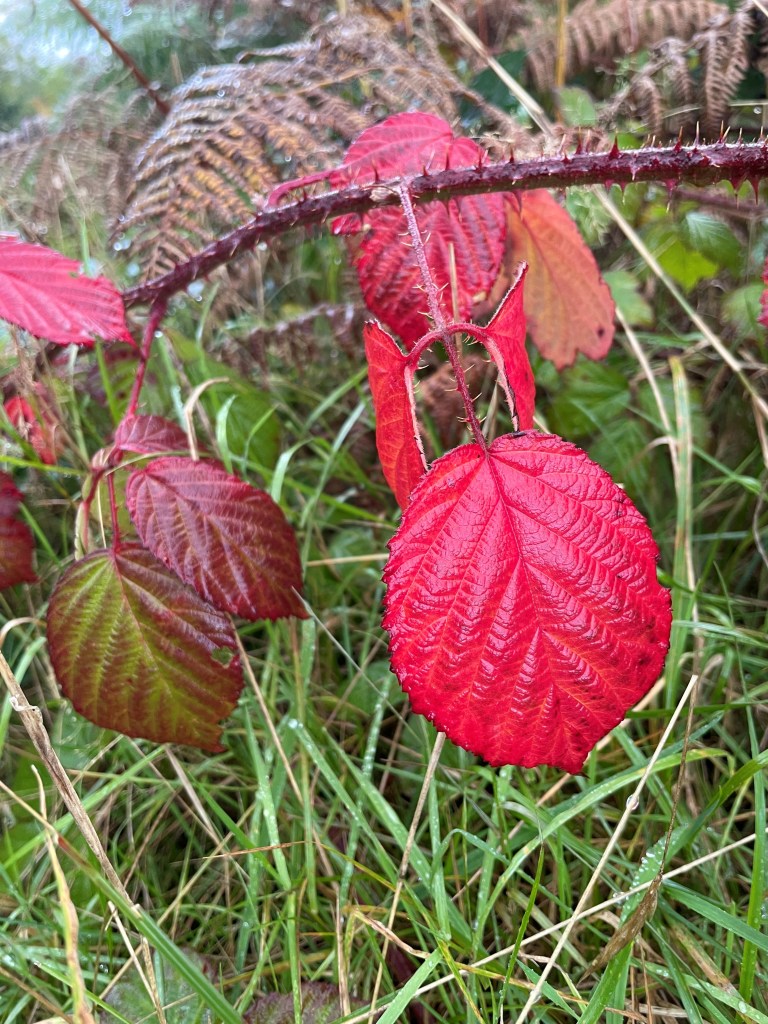
Photo Gill Henwood

Red Glory – Autumn notes from the Lake District.
Photo of Bramble by my Friend, Gill Henwood.

“Brambles here are stunning this year, after a bumper blackberry harvest in the fells
along hedgerows and dry stone wall verges.
More brambles will be seeded everywhere by the birds
… our Labrador has become expert at softly picking the low berries,
without a mouthful of prickles.
No doubt wildlife do the same (or wait till the berries drop). ” [Gill]

Late summer swelling on bramble vine 
feeds jam-makers and pie-bakers
and early winged treat-finders.
Then October rain comes
sliding over reddening leaves,
dripping from purpling boughs 
onto dank grass preparing for sleep.
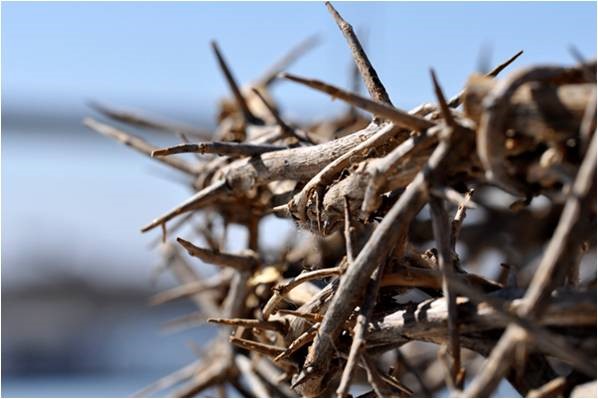
Thorns creep slowly into winter mist
waiting to enfold in silence
until new growth comes.

The work is done.
Or is it!

[Mr G]

“Enlighten the darkness of my heart”

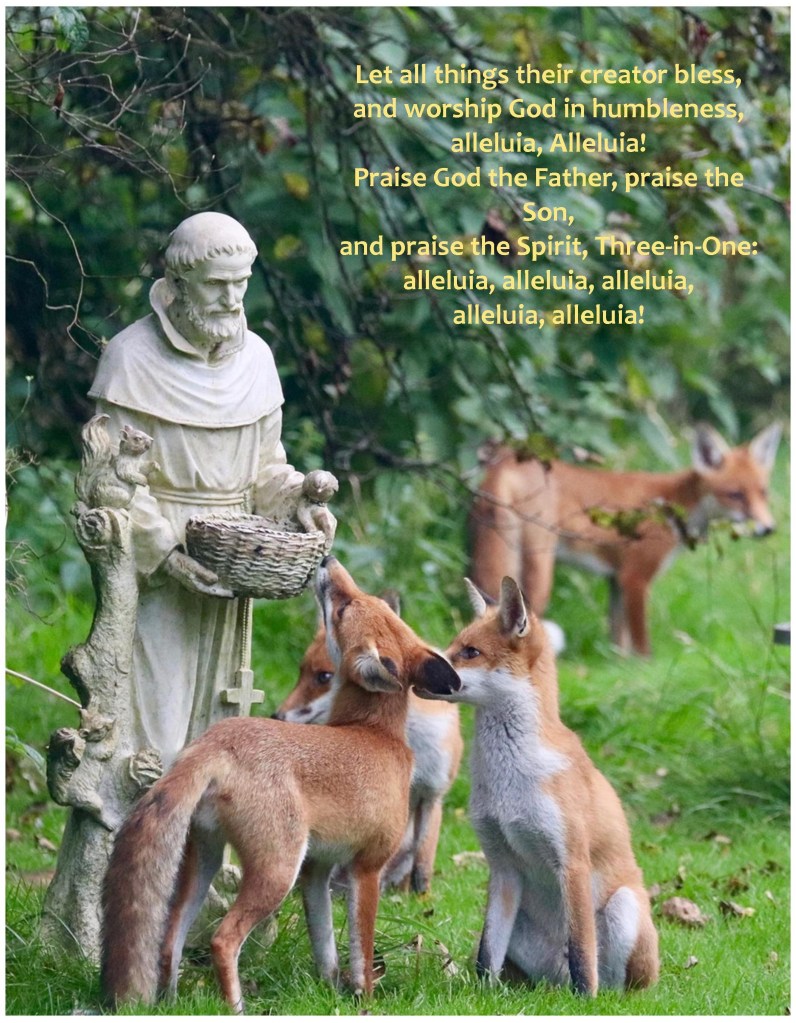
Latton foxes gather around St Francis. Photo by The Revd Lynn Hurry

When St Francis gave up his life as a kind of lad-about in Assisi – when he turned away from drinking, fighting, leading a pack of rebels, it was because he had been brought up sharp by Jesus.
Not for the first time or the last, God had visited the soul of one whose life was going in entirely the wrong direction. Francis’s soul was sick and needed healing.
So God drew him away to a derelict church of St. Damiano on the edge of Assisi. There he knelt in prayer and looked at the faded crucifix still hanging over the altar. Francis insists that the voice of Christ came to him from that crucifix, at that moment. The words he heard were: Francis, rebuild my church, which you see is falling down.
The derelict Church certainly needed repairing, just as Francis’s soul needed rebuilding. Francis was about to begin his ministry and service for God.

First, though, he had to get to know the One who called him to this service and to know the love of God flowing into him and through him to others. Francis opened his heart to God in Holy conversation.
As  he knelt in that place of meeting with Jesus, the first prayer he said was one that was to remain with him throughout the rest of his life.

The Prayer before the Crucifix

Most High, glorious God,
enlighten the darkness of my heart
and give me
true faith,
certain hope,
and perfect charity,
sense and knowledge,
Lord, that I may carry out
Your holy and true command

Another prayer is this which was to become food for his soul, in which he prays that the love of the Lord Jesus should enter his heart and absorb him with its fire and sweetness. It is known as the Absorbeat because God’s loving Spirit possesses him.

May the power of your love, Lord Christ,
fiery and sweet as honey,
so absorb our hearts
as to withdraw them from all that is under heaven.
Grant that we may be ready
to die for love of your love,
as you died for love of our love.
Amen

Francis certainly used this prayer often , and it is characteristic of his spirituality.

A simple, yet deeply profound prayer was one that he is said to have dictated as he lay dying.
It was a prayer which he had used often and wasn’t original, but it was so important to him that it was his deathbed prayer. Many will know it in some form.

We adore you, most holy Lord Jesus Christ,
here, and in all your churches throughout all the world;
and we bless you,
because, by your holy cross,
you have redeemed the world.

Francis grew quickly and deeply in love with God and this spurred on his eagerness and zeal to serve others in God’s Name.

Richard Rohr, a much loved Franciscan brother who lives in America and teaches Franciscan spirituality wrote this week that the only way we can truly know how to love God is to love what God loves. Only then do we love with divine love and allow it to flow through us.

It is not always easy to do that because such love has to be stripped of anything that  makes demands or is tinged with our desire for them to be what we want.
A Franciscan theologian, Duns Scotus, put it this way.

“we are to love things in and as themselves, to love things for what they are, not for what they do for us. That’s when we really begin to love our spouses, our children, our neighbours, and others. When we free them from our agendas, then we can truly love them without concern for what they do for us, or how they make us look, or what they can get us. We begin to love them in themselves and for themselves, as living images of God. Now that takes real work!”

Through Prayer and especially time alone with and for God, this spirituality of loving what God loves, simply because God does so, became central to St Francis’s own spirituality and way of life. It became the driving force for his work with the poor, the sick, the lepers, animals, birds and all of nature.
It was how he came to love and honour God.

So he came to Praise God  above all else.
This he expressed in another Prayer poem

Praises of God.


You alone are holy,
you who work wonders!.
You are strong, you are great,
you are the Most High,
you are the almighty King,
you, holy Father, King of heaven and earth.

Lord God: you are Three and you are One,
you are goodness, all goodness,
you are the highest Good,
Lord God, living and true.

You are love and charity, you are wisdom,
you are humility, you are patience,
you are beauty, you are sweetness,
you are safety, you are rest, you are joy,
you are our hope
and our delight,
you are justice, you are moderation
you are all our wealth
and riches overflowing.

You are beauty, you are gentleness,
you are our shelter, our guard
and our defender,
you are strength, you are refreshment,
you are our hope.
you are our faith.
you are our love,
you are our complete consolation,
you are our life everlasting,
great and wonderful Lord,
all powerful God, merciful Saviour!

Amen.

Of course, we are probably all familiar with the poem/song  Make me a channel of your peace. It is known as the Prayer of St. Francis but it was not written by him. Indeed in was probably written in the 1920’s but who could read, pray or sing it, without acknowledging that it is marinated in St. Francis’s own spirituality.

There is so much in his sayings, these prayers, and canticles I haven’t referred to, but if we are to understand the witness and service of St. Francis, these prayers above are a good place to start.

The San Damiano Cross from Fr. Michael Scanlan

[Mr G]

Mellow Fruitfulness

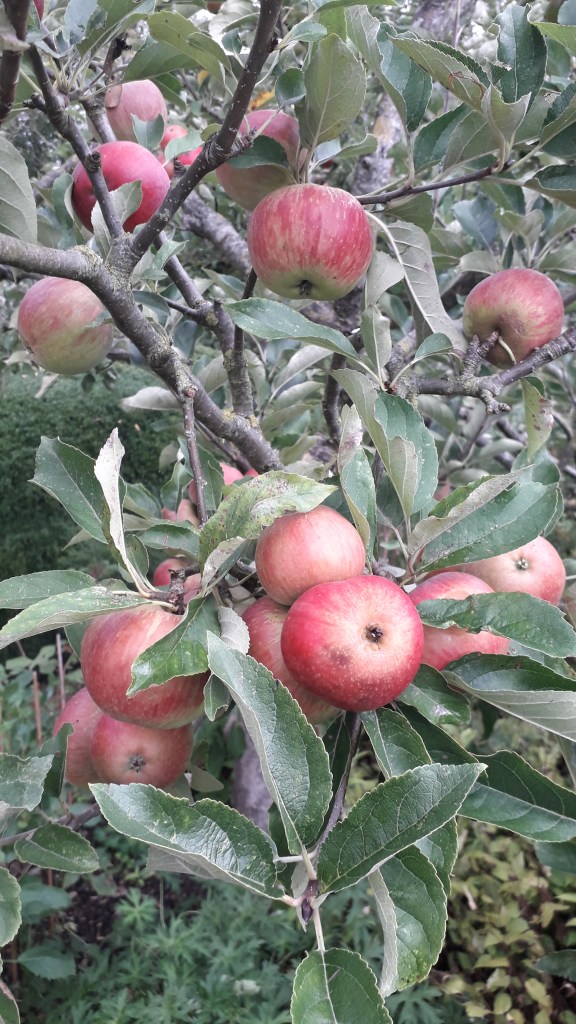
{Autumn apples at Charleston. photograph Mr. G}

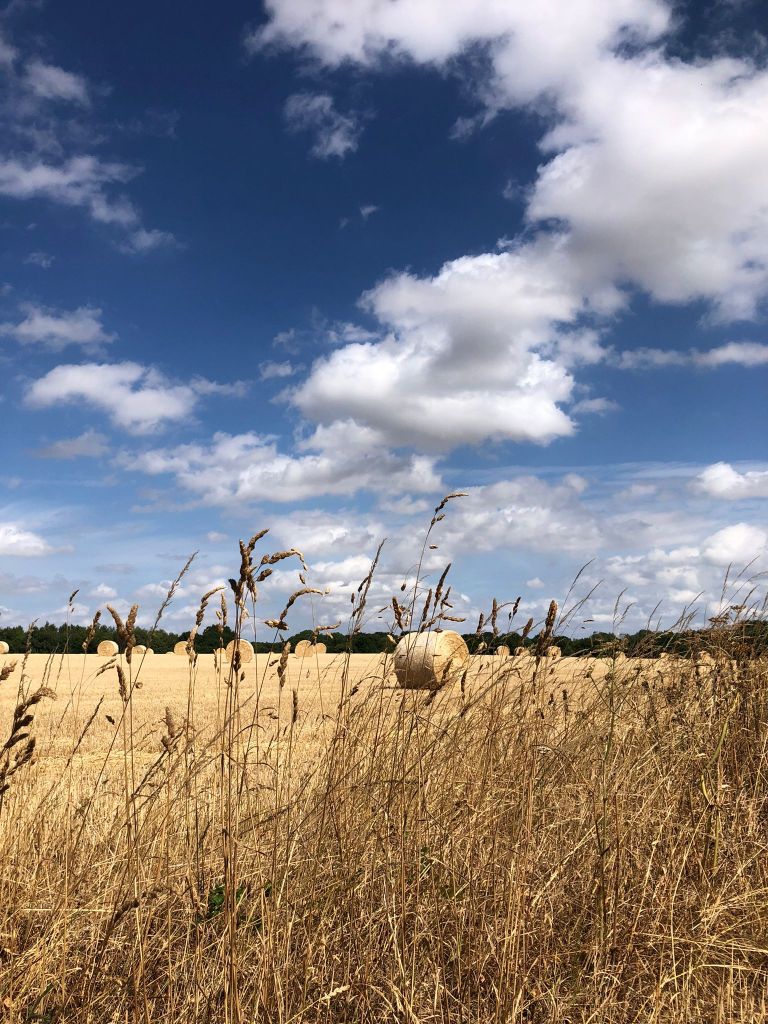
On the last day of September, some thoughts naturally turn to Autumn. This was true this morning as I took a companion to the local railway station. As tends to happen on such occasions, this led to poetry!

Of all the poems about Autumn, the one most well known is probably Ode to Autumn, beginning with the words, Season of mists  and mellow fruitfulness …
It was composed by the English Romantic Poet, John Keats, in 1819 and published first in 1820.
Many can quote the beginning and others know it by heart. Some may know snatches and others simply are just aware of it. For some it may be time to remake its acquaintance!
This beginning of Autumn could be a good time for this. It is such a beautifully descriptive poem which draws people into the depth of its richness and to a delightful meaning.
Though many have written and reflected about this, it really doesn’t need a commentary. Just a walk in the countryside, woods, park or any place where nature reveals herself.

Let the poem quietly and even thrillingly, soak into your being.
My hope is then you will come to appreciate Creation more wonderfully and, of course, that it will lead you to a more thankful blessing of your Creator God in all his loveliness and providence.

[Mr]

Season of mists and mellow fruitfulness,
    Close bosom-friend of the maturing sun;
Conspiring with him how to load and bless
    With fruit the vines that round the thatch-eves run;
To bend with apples the moss’d cottage-trees,
    And fill all fruit with ripeness to the core;
        To swell the gourd, and plump the hazel shells
    With a sweet kernel; to set budding more,
And still more, later flowers for the bees,
Until they think warm days will never cease,
        For Summer has o’er-brimm’d their clammy cells.

Who hath not seen thee oft amid thy store?
    Sometimes whoever seeks abroad may find
Thee sitting careless on a granary floor,
    Thy hair soft-lifted by the winnowing wind;
Or on a half-reap’d furrow sound asleep,
    Drows’d with the fume of poppies, while thy hook
        Spares the next swath and all its twined flowers:
And sometimes like a gleaner thou dost keep
    Steady thy laden head across a brook;
    Or by a cyder-press, with patient look,
        Thou watchest the last oozings hours by hours.

Where are the songs of Spring? Ay, where are they?
    Think not of them, thou hast thy music too,—
While barred clouds bloom the soft-dying day,
    And touch the stubble-plains with rosy hue;
Then in a wailful choir the small gnats mourn
    Among the river sallows, borne aloft
        Or sinking as the light wind lives or dies;
And full-grown lambs loud bleat from hilly bourn;
    Hedge-crickets sing; and now with treble soft
    The red-breast whistles from a garden-croft;
        And gathering swallows twitter in the skies.

Photo: Julia Sheffield

[Mr G]