
UNITED NATIONS DAY
Lord,
Lead us from death to life,
From falsehood to truth.
Lead us from despair to hope,
from fear to trust.
Let peace fill our hearts, our world and our universe.
Let us dream together, pray together and work together,
To build one world of peace and justice for all.
[Author unknown – it is thought to be either an adaptation of a Hindu prayer or of a hymn. The first time that it was known to be publicly spoken was by Mother Teresa in 1981.]
The International prayer of peace speaks to God of our desire for a world which lives in harmony, love and justice. We pray it because of our longing that we who have been given this planet as our home may treat it, and therefore all who live on it, as a pure gift. Too often, and throughout history, humanity has treated life here as a right and our planet as ours to exploit and dominate.
Even so, most of us are subservient to the will of a few. Throughout human history we have been dominated by a those who dictate how we are to live and before whose power we fall down and, not to put too fine a point, worship. How else could they have power over us unless we allow it.
Alongside dictators and despots there are people always willing to serve them. It is usually because they share that power and bask in a self-interest which leads to a sharing of injustice and evil.
The obvious example of this demonic is the Nazi party which grew up around one who had many personality defects but who somehow caught the mood of the moment. Hitler was in many ways a weak and infantile man who happened to touch nerves of those who had been demoralized by circumstances which took away the self-respect of a nation.
Hitler, and fellow dictators, like Stalin, Mussolini, Franco, Emperor Hirohito, exploited a mood of despair and, surrounding themselves by thugs, used evil to corrupt good.
Here we can place what people did to Jesus and go on doing, sometimes outrageously in His name! Today Hitler and his cronies have been replaced by modern day despots because History has a habit of repeating itself.
Because we have often failed to see that our Creator God has allowed us to tenant planet Earth and appointed us to be Stewards – custodians – of all the good and joyful world of nature, the animal kingdom and the birds of the air and fish of the sea, human beings have fallen into a trap. We have fooled ourselves that it’s all ours for the taking. Humanity has tried to replace God. So hell-bent (and that’s a thought!) are some humans on exploiting each other and the earth for personal gain that that whole world is in turmoil.
I recently found this Native American saying from the Ute Tribe, which spoke a truth to my heart:
Treat the earth well.
It was not given to you by your parents,
it was loaned to you by your children.
We do not inherit the Earth from our Ancestors,
we borrow it from our Children.
That feels like a context against which we should live our lives on earth and it’s interesting that those we call Generation X are increasingly taking a view which echoes this.
Maybe there lies our hope. There are always those who not only choose good over evil but who are prepared to work for that goodness to prevail. It is, after all, what is at the heart of the Christian and other faiths.
Each generation who has followed a despot has also produced others who challenge and show us a good and better way, even and perhaps especially, at great cost to themselves. I think instantly of Franklin D. Roosevelt, Winston Churchill, Dietrich Bonhoeffer, Maximillian Kolbe, and in the post war world, Dag Hammarskjold (second General Secretary of the United Nations). He sought to forge a new way of living peaceably, nation with nation, which, though fragile today, is still the force for tremendous hope and goodness.
We celebrate the UN today not just because for the past 80 years it has been a forum for peace but because through many differing ways it works for education, caring, peace-keeping, seeking to eradicate poverty and injustice and in this it represents all of us who try to lived goodly lives (and for many of us, Godly lives) dedicated to shaping a better, more equal, caring, just and liberated world.
Speaking of itself as a symbol of hope for Global Unity, The United Nations maintains that “There is no other global organization with the legitimacy, convening power and normative impact of the United Nations. No other global organization gives hope to so many people for a better world and can deliver the future we want. Today, the urgency for all countries to come together, to fulfil the promise of the nations united, has rarely been greater.
UN Day, celebrated every year, offers the opportunity to amplify our common agenda and reaffirm the purposes and principles of the UN Charter that have guided us for the past 80 years!”
António Guterres, the present UN Secretary, in his message for today, says
The United Nations is more than an institution. It is a living promise – spanning borders, bridging continents, inspiring generations.
For eighty years, we have worked to forge peace, tackle poverty and hunger, advance human rights, and build a more sustainable world – together.
As we look ahead, we confront challenges of staggering scale: escalating conflicts, climate chaos, runaway technologies, and threats to the very fabric of our institution.
This is no time for timidity or retreat.
Now, more than ever, the world must recommit to solving problems no nation can solve alone.
On this UN Day, let’s stand together and fulfil the extraordinary promise of your United Nations. Let’s show the world what is possible when “we the peoples” choose to act as one.
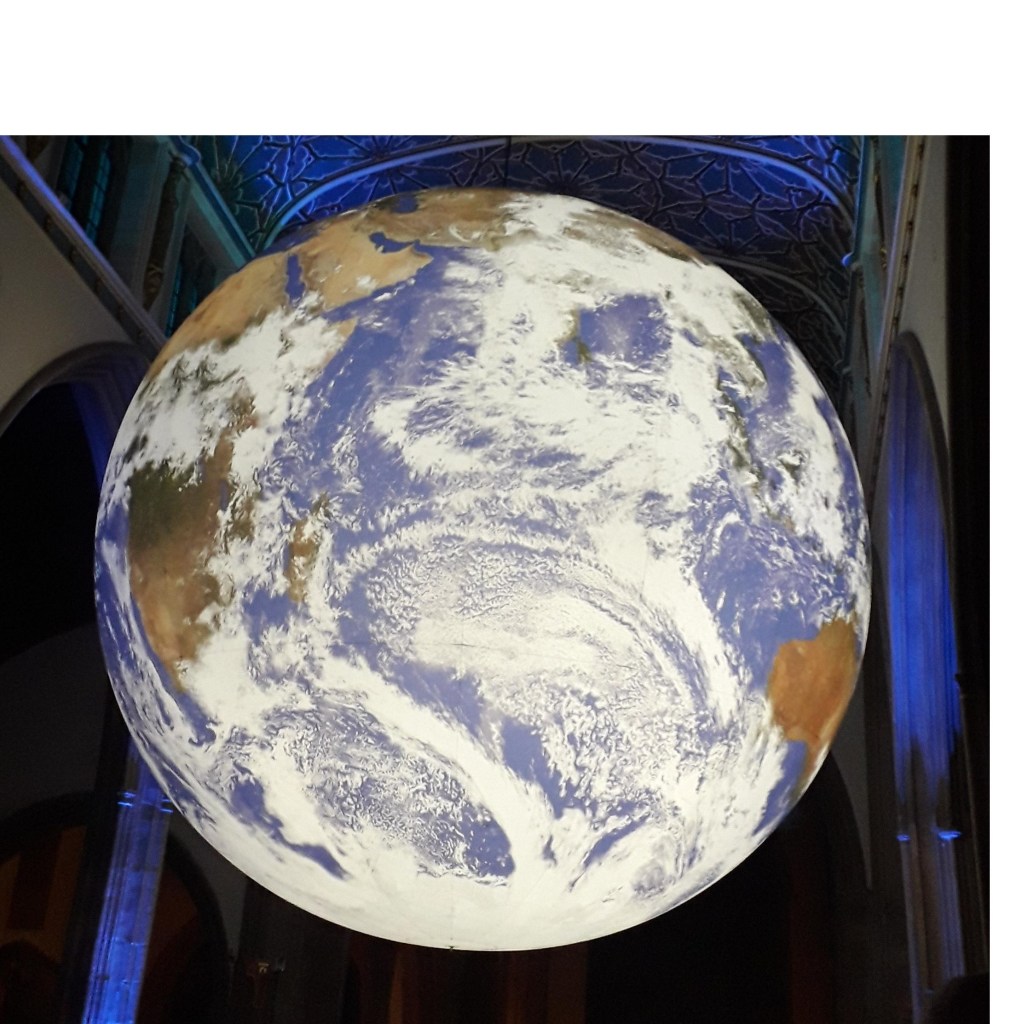
photo by Mr.G.
Prayer for the United Nations Organization.
God of compassion,
walk alongside all of your global stewards who work to create a more just and peaceful world.
Equip the United Nations community with a sense of urgency and humility that lets your will be done.
Each day you give bread enough for all, grant us also the wisdom to ensure that everyone has enough.
Teach the world’s leaders to forgive, to extend welcome across borders.
Show the world a new path beyond greed, oppression, and division.
We pray for a world united.
We pray for the power to save succeeding generations from war.
We pray for a glory that reaffirms the dignity and worth of every person.
We pray that your grace might ensure life in larger freedom forever,
for all of your children.
Amen



 Mr G's Ponderings