Tag: Advent

Seven little ‘O’s

In just over two weeks time we will join the rest of the United Kingdom and possibly some other neighbourhood nations in preparing to celebrate New Year.

As the moment approaches there will be, in some places a Count-Down’. Seven…Six…Five…Four…Three…Two…One… and then a brief second before everyone erupts with excitement; joy; and doubtless, as in most years, hope.

Perhaps this coming year, more than any other in recent memory, Hope will be a stronger desire than at any other time. Maybe some will be thinking that 2023 can’t be worse than this year!  That probably needs a lot more hope than we might feel!

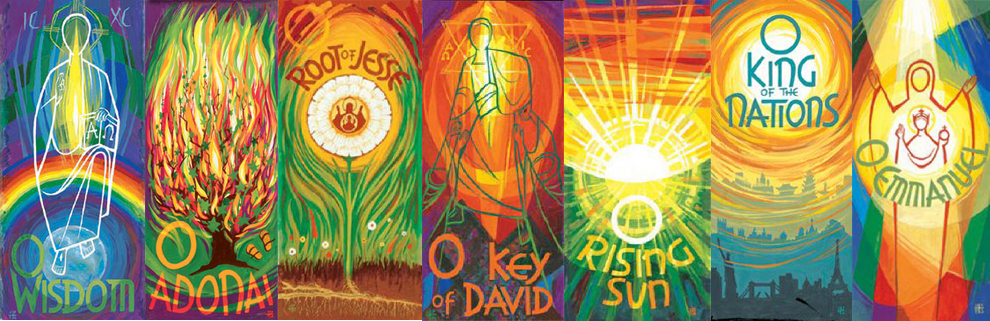
The Church has its own version of a Countdown.  During the week leading up to Christmas, from December 17th there is an ancient custom of reciting what are known as the Advent Antiphons. They have been known since the 8th century.

They mark the final week of the Advent Season and each begins with O (a note of praise).There are  7 of them:

Wisdom (O Sapientia); Ruler of the House of Israel (O Adonai); Root of Jesse (O Radix Jesse) – referring to our Lord as being of the House of King David and therefore the rightful ruler of God’s people; Key of David (O Clavis David); Rising Dawn (O Oriens) reminding us that the birth of Jesus is the dawn of the new age of the New Testament; King of the Nations (O Rex), foretelling that Jesus is for all people, not just Jews; O Emmanuel—God with us, reminding us that Jesus was born as one of us to save us from within our humanity.

I understand that in Latin the initial letters form an acrostic which when read backwards means Tomorrow I will come.  This captures the mood of expectation which is rightly part of the Advent watch of Christians as we move towards the great celebration of Christmas.

They have their origin in Old Testament Scripture, particularly, from the Prophet Isaiah. They are scriptural sentences which top and tail the reciting of a canticle at Evening prayer, which we know of as The Magnificat the song sung by the Blessed Virgin Mary during her visit to her Cousin Elizabeth – as they share the joyful if rather stupendous news that they are both pregnant with rather unexpected babies – Elizabeth with John the Baptist and  Mary, of course, with Jesus.

Today, they are mostly sung at Evensong in these last days of Advent  but they can also be a springboard for personal prayer as we move towards the renewed celebration of the Christ-child.

The ‘O Antiphons’ are little aids to our thinking and praying during Advent.  It is so easy to lose the power of this season to prepare us for the Christ-Child at Christmas that we need all the help we can get!  As the Festive time approaches we shall become more and more embroiled in all the other preparations.  The Antiphons can help to keep us focussed on what is really important in this pre-Christmas season—which is to prepare us spiritually for Christ to be re-born again in our hearts and lives. 

Here is a version of the prayers.

December 17 “O Sapientia…”
O Wisdom, who came from the mouth of the Most High, reaching from end to end and ordering all things mightily and sweetly: come, and teach us the way of prudence. Amen.

December 18 “O Adonai…”
O Lord and ruler of the House of Israel, who appeared to Moses in the flame of the burning bush and gave him the law on Sinai: come, and redeem us with outstretched arms. Amen.

December 19 “O Radix Jesse…”
O Root of Jesse, that stands for an ensign of the people, before whom the kings keep silence and unto whom the Gentiles shall make supplication: come, to deliver us, and tarry not. Amen.

December 20 “O Clavis David…”
O Key of David  and Sceptre of the House of Israel, who opens and no man shuts, who shuts and no man opens: come, and bring forth the captive from his prison, he who sits in darkness and in the shadow of death. Amen.

December 21 “O Oriens…”
O Morning Star, brightness of light eternal, and Sun of Justice: come and enlighten those who sit in darkness and in the shadow of death. Amen.

December 22“O Rex…”
O King of the Nations,  and their desired One, the Cornerstone that makes both one: come, and deliver man, whom you formed out of the dust of the earth. Amen.

December 23 “O Emmanuel…”
O Emmanuel, God with us, Our King and Lawgiver, the expected of the nations and their Saviour: come to save us, O Lord our God. Amen.

Why not pray each one slowly during this time before Christmas?  It will take very little time but it will root you into the meaning of this special time before Christmas as you await the joy of the Christ-child.

Another way of meditating on the Advent Antiphons is in the singing of the Hymn, O come, O come, Emmanuel.  Each of the 7 verses takes one of the antiphons as its theme.

But the hymn begins and ends with the most important antiphon – O Emmanuel, God with us.

O come, O come, Emmanuel,
and ransom captive Israel
that mourns in lonely exile here
until the Son of God appear.
  Rejoice! Rejoice! Emmanuel
  shall come to you, O Israel.

O come, O Wisdom from on high,
who ordered all things mightily;
to us the path of knowledge show
and teach us in its ways to go.
  Rejoice! Rejoice! …

O come, O come, great Lord of might,
who to your tribes on Sinai’s height
in ancient times did give the law
in cloud and majesty and awe.  Rejoice! Rejoice! …

O come, O Branch of Jesse’s stem,
unto your own and rescue them!
From depths of hell your people save,
and give them victory o’er the grave.  Rejoice! Rejoice! …

O come, O Key of David, come
and open wide our heavenly home.
Make safe for us the heavenward road
and bar the way to death’s abode.
  Rejoice! Rejoice! …

O come, O Bright and Morning Star,
and bring us comfort from afar!
Dispel the shadows of the night
and turn our darkness into light.
  Rejoice! Rejoice! …

O come, O King of nations, bind
in one the hearts of all mankind.
Bid all our sad divisions cease
and be yourself our King of Peace.
  Rejoice! Rejoice! …

O come, O come, Emmanuel,
and ransom captive Israel
that mourns in lonely exile here
until the Son of God appear.
  Rejoice! Rejoice! …

(This translation is by John Mason Neale)

(image from Parish of St Ann, Bethany Beach, DE)

[Mr G]
Buds and Dewdrops

One of the joys of the Lake District is the spectacular landscape and, of course, the changing reflections of the seasons.
My friend Gill lives in the heart of it all which is a privilege she recognises.
Her photography provides me with a lot of inspiration for Blog items.
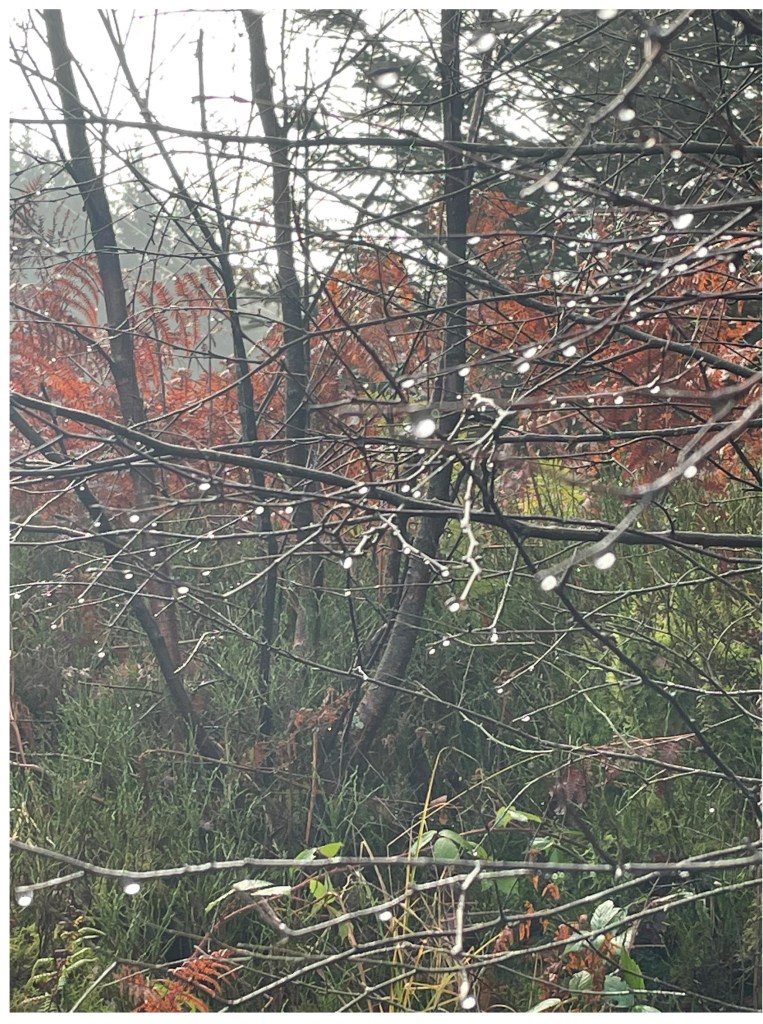
The theme of these two photographs is dewdrops and buds
They also capture something of the change from Autumn to Winter.
There is also a hint of the Advent theme of Light.

Here’s what Gill has to say:

On birch in Grizedale Forest, misty sunlight shines through the dew.
Nature’s Advent with sparkling jewels.
Light dazzling on bare branches above the russet bracken.
Looking closely, each dewdrop hangs from a bud …
There is more…
There is hope, promise, presence, glory – Advent longing ..
The trees and shiny dewdrops call to mind Christmas tree candles, St Lucy’s crown lights and Advent Carol tea lights,
The Advent ring.

The darkness is pinpricked with moments of light as we move through this season towards the glorious light of the Incarnation – the birth of the Christ-child.
The birth which comes with the renewal of our lives through  new hope, joy and expectancy….
In the gloom of our present world we long for the bright presence of God to spring us into a deeper meaning of our humanity.
A meaning  of which Nature shows us signs of being almost here in bud and dewdrop and in Advent waiting.

Photographs by Gill Henwood – Autumn in the Lake District

[Mr G and Gill Henwood]

He has lifted up the lowly

Adapted from an Advent sermon preached by Piers Northam at St Mary-at-Latton.

On this fourth Sunday of Advent we’ve just lit the fourth candle in our Advent Ring – saving the central, white candle for Christmas when we will light it to acknowledge the birth of the Christ-child, the Light of the World. 

Each week through Advent, as we’ve lit the four smaller candles, we’ve remembered figures from Scripture who have pointed to God and to the coming Messiah.  In the first week, we gave thanks for the Patriarchs (the likes of Abraham and Moses) who long ago answered calls from God and drew the people to him.  In the second week it was the Prophets, who point us to God but who also warn us of things to come, who call us to account and have visions and messages for us.  Last week it was the turn of John the Baptist – the voice in the wilderness calling people to prepare the way for the coming Messiah.  And this week it is Mary herself – the God-bearer – who will bring Christ into the world.

As I was thinking about these candles, it struck me that the first two tell us about where we have come from – the heritage that we have in the Patriarchs and the Prophets – whilst the second two, in the persons of John and Mary, point us how we should be. 

John proclaimed the Good News, called people to repent – to turn around so as to come closer to God – and, more than anything else, he pointed to Jesus; led people to Jesus.  Think of this morning’s story of Mary’s visit to her cousin Elizabeth: even before he was born, John was pointing towards Jesus, for didn’t his mother Elizabeth came to understand the importance of the child that Mary was carrying because John leapt in her womb?  And of course we are called to follow John’s example: to share the Good News, to turn ourselves to God and to point people to Jesus…

And then we see Mary, the expectant mother who carried Jesus inside her, filled with the Holy Spirit and speaking prophetically in her great song, the Magnificat.           

But this story is also about two ordinary women called by God to extraordinary things – chosen by God to help play out his plan.  Elizabeth and Zechariah, like Abraham and Sarah so many centuries before, were childless, but in their advancing years, God gives them the surprising gift of a son who is destined for important things.

And then he sends Gabriel to Mary and, in the words of a poem by Denise Levertov,

‘God waited.
She was free to accept or refuse, choice integral to humanness.’  [1]

Mary has the choice – and has sufficient faith and trust in God to say yes.  But for me, the fact that Mary, whilst clearly exceptional, is an ordinary human being – that she’s not some immaculate, semi-divine super-woman – is really important: because it says so much about the way that God involves himself in our lives. God chooses a simple, young girl to be the mother of his Son; to bear God in her womb.  As Mary herself says: ‘The Mighty One has done great things for me, and holy is his name.’ [2]

She affirms that in his Holiness God can do great things for us.  She may be talking of herself, yet what she proclaims can be true for everyone who engages with God.  The Mighty One can do great things for us – and I would want to add that he can do great things, through us…  Mary’s experience is one of working with God so that together they can bring Jesus into the world.  And we see a similar approach in the way that Jesus later entrusts his mission to that motley band of friends and followers: women, tax collectors, fishermen and the like whom he gathers around himself; and how that mission, in turn, is entrusted to us.

Mary’s song begins by telling us how the Mighty Lord has brought blessing on her life, but then she goes on – in the vein of the prophets – to tell us about the nature of God and of his topsy-turvy vision for the world. And this is the radical stuff; the counter-intuitive stuff that normal society wouldn’t recognise as she talks of the values of the Kingdom:
– She speaks of God’s mercy to those who fear him; for those who see their need of God. 
– She speaks of his faithfulness down the generations. 
– She speaks of how he lifts up the lowly, the poor, the dispossessed; the humble and meek – her message is Good News for all those on the margins; those who are excluded and side-lined; but her words are also a warning for those who misuse worldly power; who are proud and rich.  To all those who turn a blind eye to the poverty and struggle that surrounds us.
– She speaks of how he feeds the hungry with good things; and is concerned for those who need protection – this is where his heart is…
– And finally, she speaks of how he keeps his long-held promises; promises made to the people of Israel, but which, in Jesus apply to all humanity…

These powerful, radical words are spoken by a young woman in first century Palestine – not your classic mouthpiece.  I’m guessing that such words, spoken by a young, poor Middle Eastern woman today, wouldn’t get much exposure on the world stage.  Our society seems more set on condemning such people to live in refugee camps or letting them drown in the Channel than listening to what they might have to tell us.  Yet even if they aren’t saying such things in so many words, doesn’t the simple fact that so many live in such fear and misery on our very borders and hidden in our societies shout the message loud and clear?

Mary’s words resonate as an urgent warning:

He has scattered the proud in the thoughts of their hearts.
He has brought down the powerful from their thrones and lifted up the lowly; he has filled the hungry with good things, and sent the rich away empty… [3]

Her words put me in mind of those words from Isaiah which Jesus reads out in the synagogue and which we have taken as our inspiration for the Good News Project here at Latton:

‘The spirit of the Lord God is upon me,
    because the Lord has anointed me;
he has sent me to bring good news to the oppressed,
    to bind up the broken-hearted,
to proclaim liberty to the captives,
    and release to the prisoners’ [4]

This is the promise held in the Christ-child, but also in those who follow him.  These words hold the same challenge to question the values of society and to turn things around.  Powerful stuff…

There’s a danger at Christmas that Mary becomes this sweet, but rather meek, mute, Christmas card figure – all pretty and adoring and dressed in blue; but this morning we see her, filled with the Holy Spirit, proclaiming radical, dangerous, political words… 

This is anything but chocolate-box.  Mary is being both prophet and God-bearer; radical in her speech as she is nurturing in her motherhood. And we need these uncomfortable words to challenge us out of our complacency; to bring us up short and stop us coasting along on autopilot; to help us see beyond our own lives to where God’s concerns lie. 

Mary experienced the mystery of the Incarnation – God becoming human in Jesus – in the most intimate and physical of ways.  But we are each of us called to be God-bearers.  To carry God within ourselves; allowing him to shape our view of the world; giving us the courage to stand up, like Mary, and speak truth to power; to sing her prophetic and radical song and to shine with the light of Christ, so that, with him, we can bring God’s values and vision to bear in the world.

That’s the real challenge – the living gift at the heart of Christmas.

Piers Northam
19 December 2021


[1] Annunciation – Denise Levertov

[2] Luke 1:49

[3] Luke 1:51-52

[4] Isaiah 61:1

Little Gidding & Nicholas Ferrar

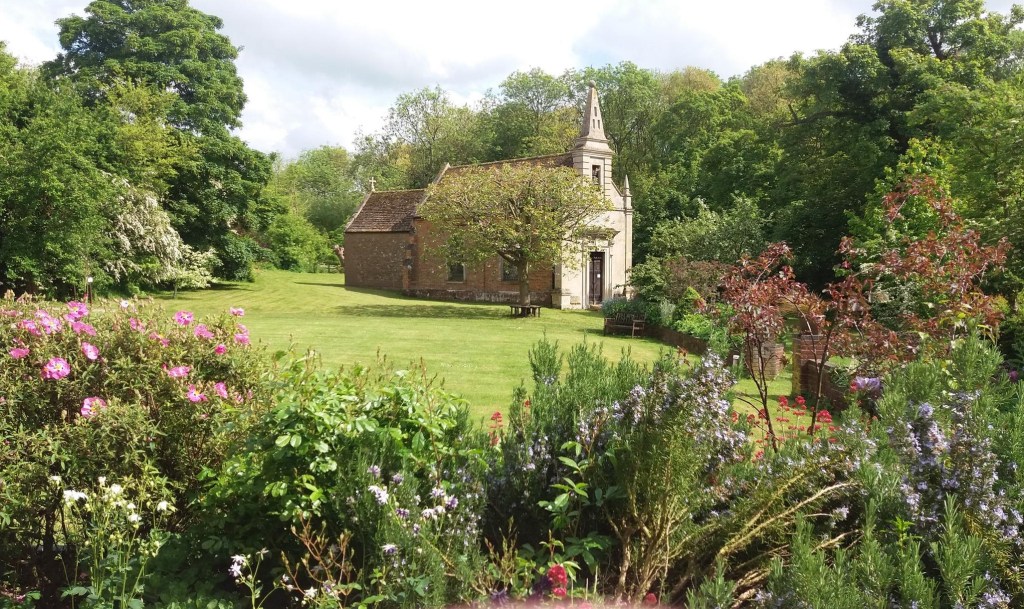
Little Gidding Church. Photo Mr.G.

You are here to kneel
Where prayer has been valid

These often quoted words about Prayer come from a poem by T. S. Eliot in a sequence known as the
Four Quartets.The poem is called Little Gidding  and it takes its name from a hamlet of that name in Cambridgeshire just north of Huntingdon.
It was here in 1625 that Nicholas Ferrar founded a community to live a life of prayer.The Church of England commemorates him this weekend (December 4th)

The community consisted mainly of his family who had lived in London as merchants with mixed success and fortunes. In 1625, an outbreak of the Plague led them to leave the city and move to Little Gidding.
But it wasn’t simply to escape the plague nor to escape bankruptcy.One reason they l;eft London was for the sake of Nicholas’s health.
The family were particularly drawn to a closer  walk with God and along with friends, sought a deeper life with God which was found by devoting themselves to worship and to prayer.
In the words of Isaiah they were waiting on God in order to receive salvation.

Waiting on God is at the heart of the Advent Call to all of us. We are called to be still and  seek to know Him as we prepare again to welcome the Christ Child into our hearts and minds and lives more fully – the surest sign we have of God’s Love for us.

The Ferrar family together with companions numbering about 40 set about creating, at Little Gidding, a Lay Community devoted to this waiting and watching for God and learning to be held and loved  by him.

When they arrived there, they found the church in a sorry state and their first task was to clean and repair the building, to make it fit for the worship of Almighty God.
Together, they then consecrated it with prayer.

This prayer was based on the 1552 Book of Common Prayer, known as the Prayer  Book of Edward the 6th. This had been compiled by Archbishop Cranmer.
From it the community prayed Morning and Evening Prayer together with reciting the Psalms. They also maintained ceaseless intercession.
They also set up a school for local children who, having learned the Psalms came on Sundays to recite those they had learned in church.
This was not quite a display of deep devotion it seems. For each recitation the children received a penny. Today we often ponder how we might grow our congregations.
Well, they always say the old ways are the best ways. Perhaps it’s time to re-introduce the Little Gidding Penny Service!

Nicholas Ferrar was made a Deacon by Bishop Laud but he had no desire or sense of call to be a priest.Those duties were performed by the Vicar of Great Gidding who, once a month came to preach a sermon and celebrate Holy Communion with the community.
He regularly led a round of devotions and taught people how to recite the Gospels.The community flourished in love and zeal, in holiness and kindness to all.

Nicholas died on the day after Advent Sunday 1637, at 1am in the morning, the usual time he rose to pray. He was buried at Little Gidding.
The Community continued for a time but it was in the midst of the political upheaval of the Civil War and whilst King Charles sought refuge at Little Gidding, it became an unsafe place for the Monarch.
The Puritans prevailed in the struggle and amidst sweeping changes in the practice of Anglicanism they eventually broke up a community that they feared was too demonstrative of faith. Yet another example of fear leading people to act irrationally and cruelly.

The Little Gidding community became a memory  but what they did achieve was the consecration of lives making God more accessible and, by their prayers they  made Little Gidding, Holy Ground.
If you visit it today you will sense immediately that this is indeed, as Eliot put it in his poem, a place where prayer has been valid. A place, in fact which touches hearts and raises joyful faith in the lives of the visitors.In simple quietness the little church stands as it has gone on standing as a beacon of prayer.
You cannot fail to sense that this is one of those thin places  as Celtic Christianity liked to call them, where the divide between heaven and earth is paper thin. It is easy to sense God’s presence and to reach out and be touched by him.

One of my criteria for whether a Church is worth joining is whether God can be found there easily. Is it, in other words, showing signs of being a thin place. It was easy to say yes to that at Little Gidding,
There is a stillness and holiness and tranquility which enfolds those who visit.
Over centuries it has borne witness to the love of God meeting the halting love of the human heart which reaches towards the Divine and is held.
Thin  Places are also places with corners to weep in, where filled with whatever need, you can be enfolded in the arms of God.

Thin Places are also places of intersection where, as Mother Mary Clare of the Sisters of the Love of God, put it, you can stand at that intersection where human pain, hurt and conflict meet and are held by the transforming love of God.
They are places of Transfiguration as well as spiritual affirmation.

Holy Places are also therefore,  places of real struggle because in seeking God we seek a reality which is not always peaceful but frequently  demanding.
We are called to walk with God in darkness as well as light; in pain as well as quiet joy; in struggle to make good in a world which constantly seeks to drag us down.

Living out our faith means we are to love and to care; to forgive and to seek forgiveness; to make peace and be made peaceful, and all those things we have to go through  if we are to understand the costly love God pours upon us; a love which though present since God created the world, comes, in Bethlehem, with a blaze of angelic light and a display of sheer glory – even if only a few saw it.

Advent today is not seen by many in its true meaning, but even in the lights and decorations and heightened expectations there is always a glimmer of the true Joy of Christmas.

None of it is bad. It just isn’t as good as it should or could be if focused in the right place.

Which is why we can draw inspiration from Nicholas Ferrar and those who kept God at the heart of things and for whom God in Jesus taught them the one thing we need to keep remembering.
To bring the Holiness of God before people and to light up lives with hope and kindness, love and mercy , there is a cost.

In the poem Little Gidding, T S Eliot coins a phrase,

  • Costing not less than everything,

This is a reminder that people like Nicholas Ferrar in places like Little Gidding, or us in our holy places understand that cost to be  everything.  Nothing is held back and Advent is when once again we take the spiritual pilgrimage through Bethlehem to Calvary.

This reminds us that the cost has already been paid – by God in Jesus Christ!

[Mr G]