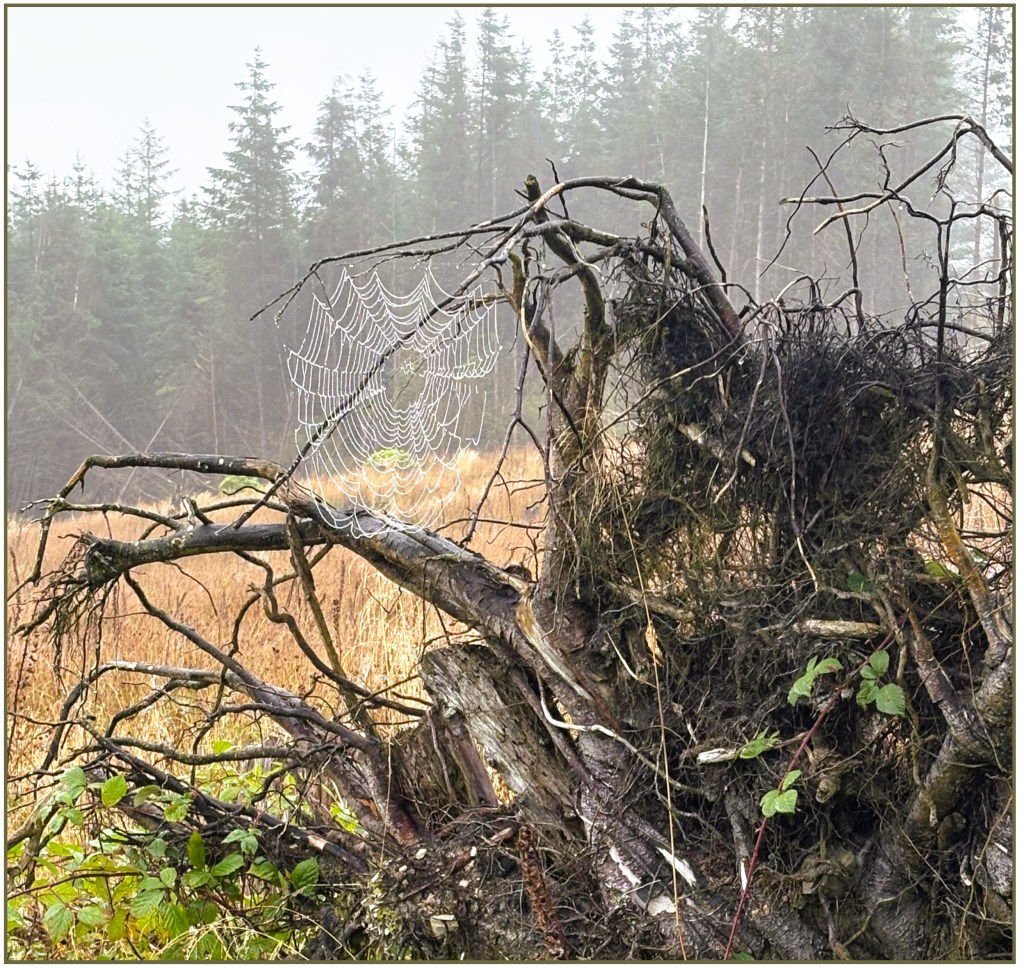
Autumn is the season for spiders both inside the house and also in the countryside and garden.
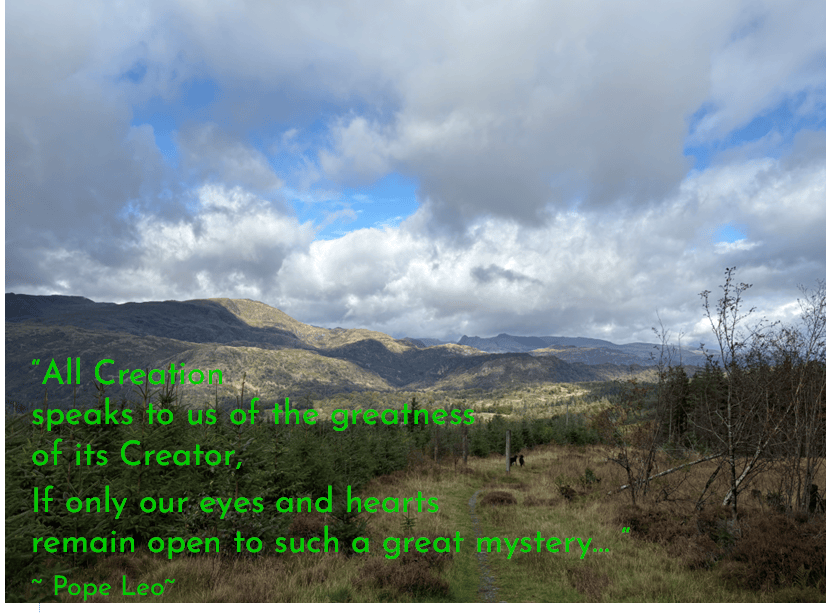
Recently, two medium sized spiders took up residence in my garden and, separately, wove large webs that in the early morning catch the light. Though not quite as spectacular as the one my friend, Gill Henwood, has captured in her photo taken in the Lake District, there is something amazing about the work they do. I’ve been feeling quite protective towards them this week.
Not everyone is a fan of spiders and there are many species, from tiny mites to large, slightly threatening ones. Only a very few tend to bite human beings. According to the Natural History Museum, only about 12 species have been recorded as inflicting a bite on humans and of those, only three have left an unpleasant or painful sensation. As there are over 650 types of spider the risks are minimal. Mind, if you insist on picking them up they will defend themselves!
The evidence of spiders in our gardens and in the fields can be found on a low misty morning when the ground is strewn with gossamer webs, highlighted by frost. These can be found often in their hundreds. This is the work of one species particularly – the Common sheetweb spider or to give its posh name, Linyphia triangularis. It’s a very common species and its presence easily seen – the name sheetweb – may provide a clue!
On Sunday October 4th, many in the UK will be keeping Animal Welfare Sunday. Perhaps we could spare a thought and a prayer for these tiny creatures of God’s creation. I suspect that He had a lot of fun making them!
[Mr G 26th September 2026]
A Christian Prayer for Animal Welfare
by Judy Carman
Almighty God, we come together to thank you
for the beauty and glory of your creation;
to praise you for your holiness and grace;
to acknowledge our responsibility to animals
and for our use of the created world.
But, first of all, we pray for your forgiveness
because of our part in sins of thoughtlessness
and cruelty towards animal life.
Almighty God, you have given us
Temporary lordship of your beautiful creation.
But we have misused our power, turned away
from responsibility and marred your image in us.
Forgive us, true Lord, especially for
our callousness and cruelty to animals.
Help us to follow the way of your Son,
Jesus Christ,
who expressed power in humility
and lordship in loving service.
Enable us, by your Spirit,
to walk in newness of life,
healing injury, avoiding wrong
and making peace with all your creatures.
God of everlasting love, who is eternally forgiving;
in your new creation.
Amen.
From “Peace to All Beings”
by Judy Carman
www.lanternbooks.com