Caring for the Robin in Winter
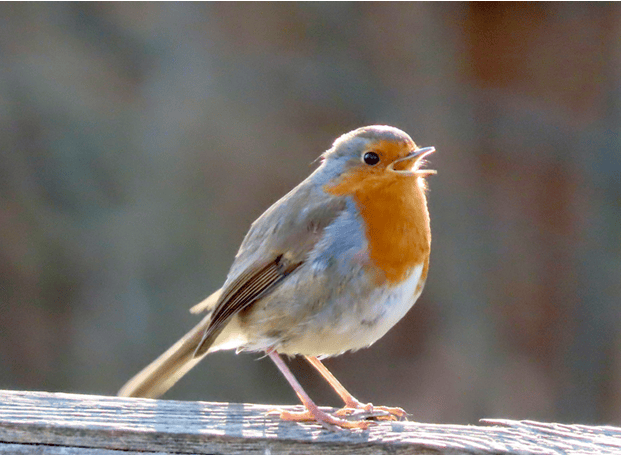
The European Robin (Erithacus rubecula) is probably the most popular bird in the United Kingdom. It has been given the unofficial title as the ‘National bird of Britain’. (It is not to be confused with theAmerican Robin.) The iconic British bird is known (and loved) for its red breast. Though both male and female have similar breasts there are subtle differences. The young Robin has a brown breast with golden flecks.
The name ‘Red breast’ possibly stems from two legends, both oddly related to Christmas. In Victorian times, when Christmas cards became popular, the description became linked to those who delivered such cards – the early postmen wore bright red jackets and waistcoats and were nicknamed ‘Robin’ or ‘Redbreast’ after the bird which often adorned Christmas cards.
The other Christmas connection is with a legend about the birth of Jesus in Bethlehem. The Legend tells that the fire at the stable was burning out and a deep chill was filling the room. The Blessed Virgin Mary, anxious for her baby, asked the various animals to blow on the embers so that the fire might come to life again. Each of them was either asleep or didn’t hear her and she wondered what to do. At this moment, a small brown bird flew into the stall and seeing the predicament the robin went over to the embers and began to flap his wings, like bellows. The fire began to revive and the robin went in search of kindling branches which the bird then dropped onto the fire. Soon the blaze flared and the baby Jesus was warm again. Unfortunately, during the fanning of the fire, the flames caught the little bird’s breast. It turned red. Mary, seeing this, asked God to bless the bird and all robins which followed, with a beautiful red breast as a remembrance of the lovely thing done for Jesus.
(There are various versions of this story including a lovely one to be found in A Christmas Stocking by Louise Betts Egan)
Other legends of the Robin are linked with the Crucifixion. What these stories tell us are of the love people have had, over, the years for this favourite little bird.
As Winter approaches however, there is an important way in which the Robin can be helped too. It concerns feeding. Winter is a season when Robin’s face their greatest threat. Experts say that during winter nights they use up 10% of their body fat to keep warm. If they can’t replenish this fat as quickly as possible when daybreak comes, it is often fatal. Therefore, as in the legend the Robin needs friends to restore its body heat.
Unlike many birds, it will not get food from tubular feeders because it is unable to perch. The feeder is the wrong shape for robins, tits, nuthatches, finches. These need flat surfaces or the ground itself. The Robin in noted for foraging at ground level but if the ground is frozen that proves difficult. A low bowl or tray near shrubs or shelter would help with seed, mealworm, fat balls nuts and fruit as preference. Fat balls could be better crumbled into small pieces. Next to it, a small water bowl could provide against dehydration. It is important that the food should only be put out in portions that the birds can finish in one to two days to avoid attracting pests or letting food rot and the dish cleaned. Some bird-feeders are attracting a parasite called trichomonosis which is transmitted through saliva and which occurs when a number of birds perch together. The motto is therefore: LITTLE-OFTEN-CLEAN. It is important, also, to provide fresh water every day.
Caring for the Robin population in Winter months will always be rewarded. Unlike many birds, the Robin sings its melodious song all throughout the year from the dawn chorus to the evening sunset. That’s worth a small effort on our part
[Mr G with help from various sources 15th November 2026]


