Tag: Gill Henwood

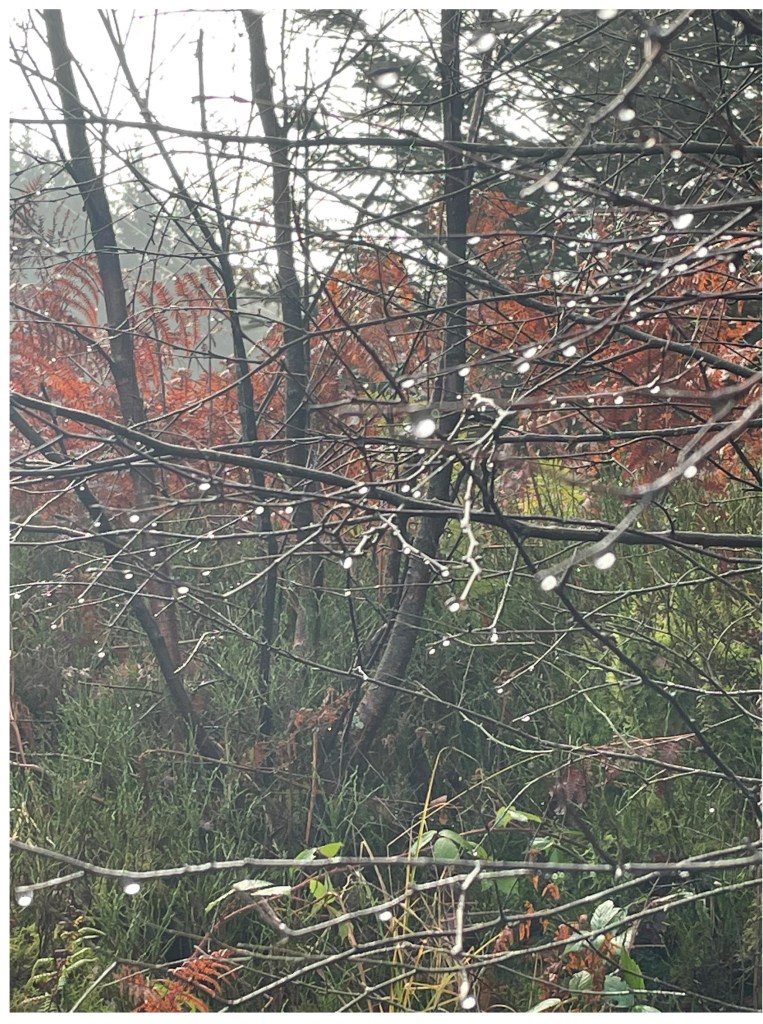
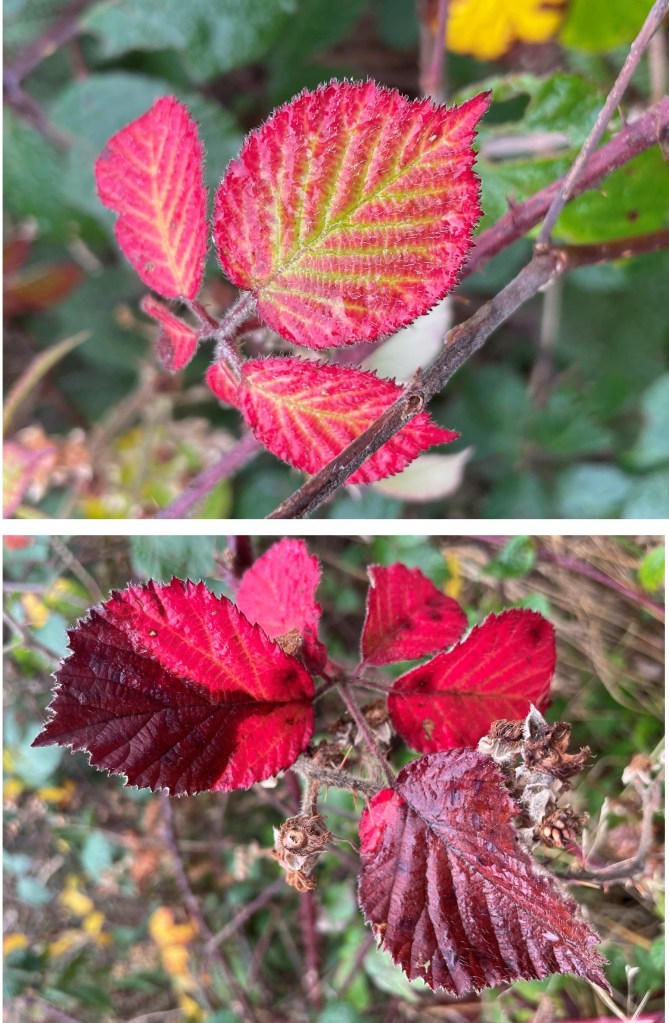
Autumn Confetti

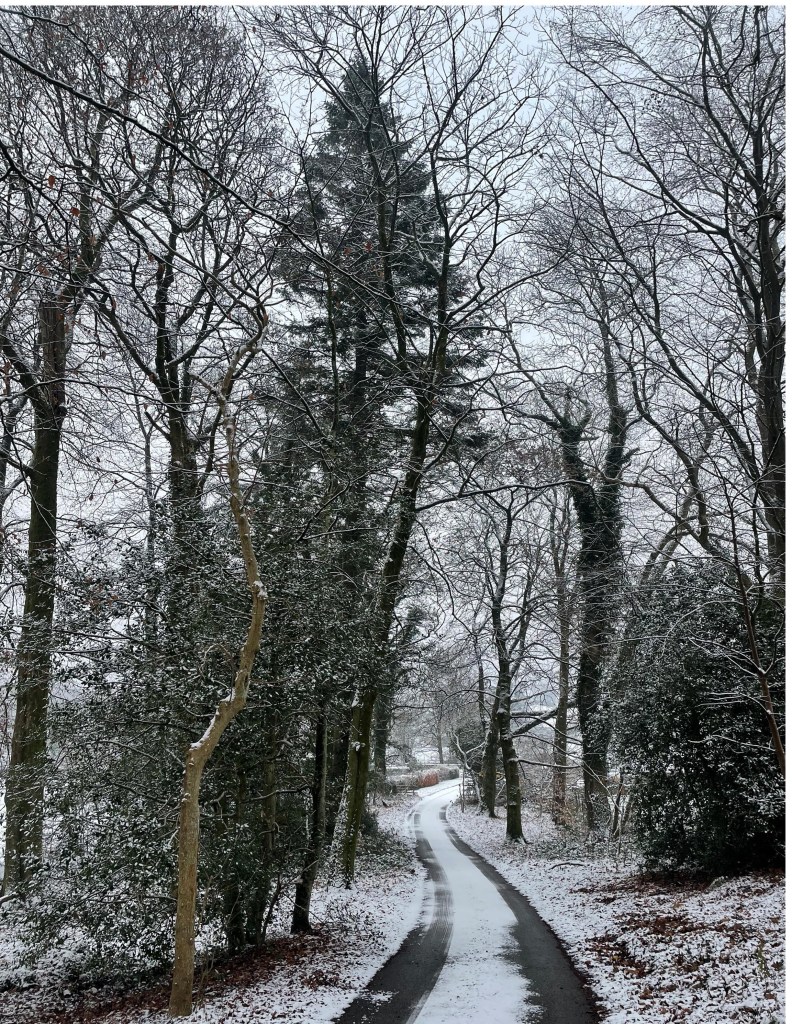
Autumn leaves falling as nature’s confetti, photographed by Gill Henwood.
As the year turns with the adjusting of our time clocks, Gill reflects.

Confetti, as the clocks go back

Scarlet startled me on the step,
Stopped me in my hurried tracks
to shelter from the rain storm.
Summer green hid below the exposed
upper canopy of spreading layers
still warm, still calm, still lush.

Flames ripped along leaves clinging
to the fine slender branches,
Autumn fires engulfed the dancers
spangling gold, orange, vermilion
Overwhelming viridian vigour.
Ruby shining leaves fell in their final
whirl to carpet the cold slate steps.
Clear water washing them away
sprinkled with rose petals

A christening of confetti
For their grave. Yet…
Resurrection will come
with the snowdrops.

[Gill Henwood]

Lindisfarne Lapwing

Photo by Gill Henwood

My friend Gill has just sent me this photo of an amazing willow sculpture on the Holy Island of Lindisfarne. It’s too splendid not to share! Especially as Gill has sent an accompanying reflection:

Holy Island weather cleared by late morning to a beautiful autumn afternoon. From the Heugh and the castle, the lighthouses on the Farne Islands were clearly visible and Bamburgh Castle towered over the sea. 

The willow woven lapwing  surveys the wildlife lough near the viewing centre. Calling birds were all around: overhead hanging on the breeze, feeding in the soft ground and shores, flocking together by the trees.
Seals bobbed up in the channel below the Heugh as the tide swept in, marooning island dwellers and visitors for the day (unless they had a boat, or could fly!)
Bladder wrack floated as the sea lifted its prostrate carpet from the wave cut platforms of rock, the lush seaweed dancing in the swirling currents with airy buoyancy – alive with joy.

In the church, the (renovated) hewn monks still carry St Cuthbert in his coffin, seeking safety and sanctuary, journey’s hasty start fleeing Holy Island, wandering to his final resting place in lofty Durham.
“Who are they?’ My five year old grandson asked, astonished as he looked up by their life-sized embodied presence. Now at the back of the church, as if to process out of the south door. 

The story of Cuthbert lives on, of Aidan before him and Oswald too. Of the Lindisfarne Gospels written in the scriptorium somewhere here, back in the north this autumn to visit again.
It is also our story, as we too seek sanctuary from the dark troubles of our fragile world.

May the lapwing who migrated speak to us of the turning of times, tides and the seasons on Holy Island, a place of fragile peace and sanctuary. May s/he speak to us of the need to fly, to flee, when adversity comes. May s/he reassure us that, in God’s loving economy, there are places of safety when we seek together – even when that resting place is our ‘place of resurrection’, our own graves.

Gill Henwood

Note:

  • The Lapwing was part of a Nature Trail created by Anna and volunteers  under the guidance of Lindisfarne National Nature Reserve.
  • The Lapwing, also known as the peewit in imitation of its display calls, its proper name describes its wavering flight. Its black and white appearance and round-winged shape in flight make it distinctive, even without its splendid crest. This familiar farmland bird has suffered significant declines recently and is now a Red List species.
  • The Heugh (pronounced Hee-uff) is an elevated rocky ridgeoverlooking the village and providing some protection from the wild weather which assails the island village. It was here that St. Aidan set up his monastery in the 7th Century when Lindisfarne became the cradle of Christianity for a vast area of England and Southern Scotland.

A task of hope

photo: Gill Henwood.

A Task of hope.
My friend Gill Henwood has offered us a meditation from the Lake District:

Acer palmatum dissectum
Century old trees that have grown through the pergola, turning vermilion scarlet and glowing with fire across the fields.

Thomas Mawson, garden designer, and his team completed the garden (near Hawkshead in the Lake District) in 1922, after the First World War. When we replaced the pergola we left off the cross pieces in the centre having pruned back rampant rambling and climbing roses that were entangled in the trees. A task for two of us, kitted out with leather gauntlets, thorn proof jackets with hoods up! I seem to recall it was pouring with rain too…

Pruning and cutting back in the autumn is a task of hope, that there will be new growth and new flourishing in the Spring. This autumn, our Japanese maples are singing a Gloria in Excelsis for their light and airy home, facing east in the chilly, wet Lake District but absolutely thriving, 100 years on.

When I feel I’m being ‘pruned’ by life’s ups and downs, challenges and opportunities, I’ll look at the photo and remember the maples’ absolute triumph, giving such joy to those who hike the footpath below – and maybe even to the sheep, safely grazing in the field!

Gill.

A Gardener’s Prayer          

Heavenly Father, creator of all things,
help us to realize that we are custodians of the wonderful heritage
with which you have so generously endowed us.
Give us the minds and the hearts to rejoice in your creation,
and to walk through your beautiful world with seeing eyes.
Help us to save the good earth, the stately trees, the dainty wildflowers,
the birds and all things that have no voice to protest against destruction.
We thank you for your bounty and pray we may be worthy of it.
Amen

A Red Admiral calls

Photo of Red Admiral Butterfly resting on Cedum. (by Gill Henwood)

My friend Gill has sent me the lovely photo of a Red Admiral Butterfly basking on a pink sedum plant.
The Cedum is noted for the bountiful provision of nectar, hence the attraction.  Or is it just that?

A few years ago, a very dear friend died and within a very short period, a Peacock Butterfly had made its way into the home. It wasn’t the most seasonal time of year for such a butterfly but it stayed around.

There is a view in folklore that when someone special dies, a butterfly will come quietly to the home.  It is as if the butterfly touches you with some kind of assurance that your Loved one are OK. It is usually someone who has brought passion or deep love into your life. I’ve read that such a person is often someone who knew how to live life deeply.

This fits in with the colour red. Both the Peacock butterfly and the Red Admiral have touches of Red, though to be accurate, most of the Red Admiral is black and some of the colour splashes are orange.

Because, quite often, the Read Admiral and the Peacock fly close to and even on you, people sometimes talk about being blessed. You are certainly unlikely to miss them with their striking colours! It might be also that thinking about how the Butterfly flight is linked with someone who has died, then there may well be a message to contemplate.

There is a Christian interpretation about the colour red which links life here with life in heaven. Red is the colour the Church uses to convey the dynamism of the Holy Spirit. The tongues of flames at Pentecost are, like flame itself, tinged deeply with red. This is also the colour of love and God pours His love abundantly and freely upon us. This is particularly special when we are hurting and bereft. Red also is the colour of ‘martyrdom’ , witness. That the kind of ‘witness’ that draws its strength from the sacrifice of Jesus Christ on the Cross.

Two of  the things many have been doing over the past week since Our Gracious Sovereign Lady, Queen Elizabeth died is to ‘reflect’ on her guiding principles, faith and character as we ‘give gratitude’ for her life.
It is partly those two things which encourage us to pray for King Charles and all who will share with him in the true leadership of our United Kingdom and Commonwealth.

As we form our hopes for the future so we now entrust Queen Elizabeth into God’s hands,
in the certain hope that she will receive the gift of Eternal Life. That’s the kind of assurance God likes to give so maybe the Butterfly has a calling card to leave!

[Mr.G.]