Tag: Gill Henwood

Cyclamen in the Snow

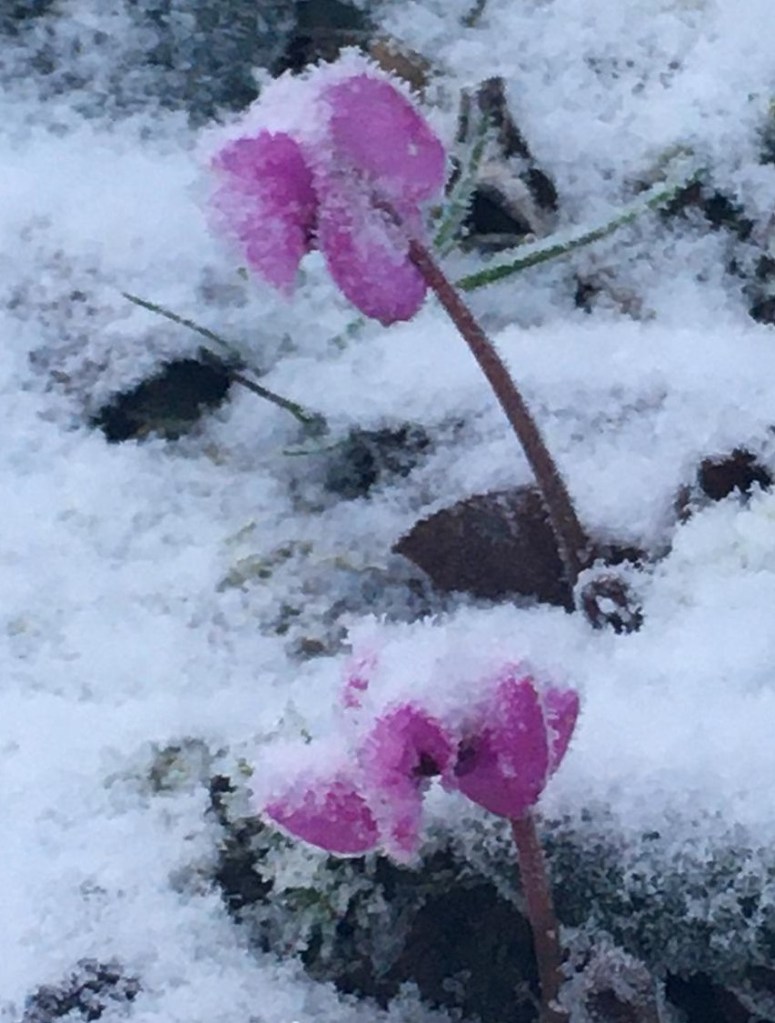
Cyclamen in fresh Snow photographed by my friend Gill Henwood in the Lake District.

Gill sent me this photograph a little while ago. It moved me very much at the darkest time of the year just as we were entering the 3rd Lockdown. At the time I couldn’t decide how to respond to it. There were allusions to lockdown, hope, struggle at a very difficult time for us. Gill used the word endurance.

As I continued to mull over it, I discussed it with my friend Piers and he came up with this reflection:

Initially I looked at this image and thought of the ice and snow as something that was holding the flowers back; through which they had to struggle – and this made me think of feelings thrown up by this current lockdown. But actually, as I thought more and read Geoffrey’s poem, it dawned on me that the ice and snow protect and insulate the seed as it germinates and emerges to flower. The struggle is filled with new hope and possibilities.
We tend to see being in lockdown as a negative, threatening thing but of course it’s a collective act in which we’re protecting each other and ourselves – and looked at that way it feels far more positive. And just as the dormant plant flowers to new life, we can also use it as a time to discover what is truly important: what values and priorities will help to sustain our lives, our society and our planet.
What if the snow and ice of lockdown are allowing us to emerge into really new life?

PN

Here’s a poem I have written on this photograph.
Lockdown wake-up

Earth’s untidy clutter
of hurried hibernation
covered over with scattered flakes
of heaven’s protection.
Opaque cloak of winter
wraps warmly around dormant seed.

Early buds break open crusty ground
scattering melted crystal.
Coloured life announces
Nature’s lockdown ended,
beckoning us to New Beginnings
at last!

Alleluia!

[Mr G]
Photo | Gill Henwood.
Reflection| Piers Northam
In the bleak midwinter

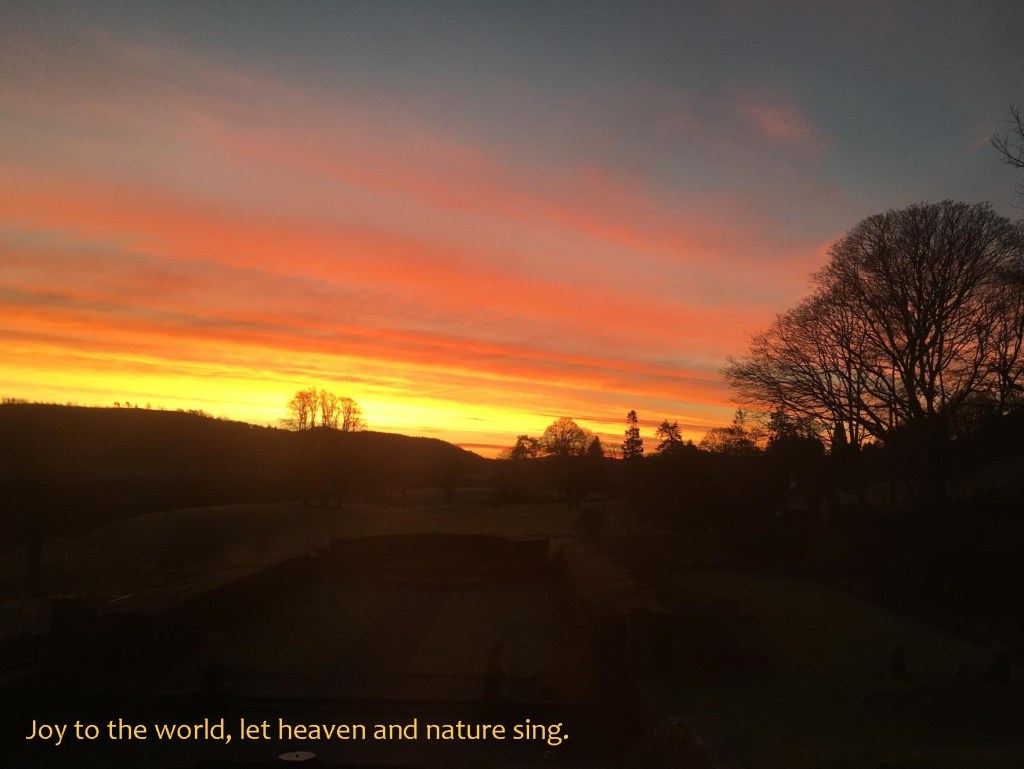
photo \ Gill Henwood

Had we been able to sing carols this year, many of us would inevitably be singing ‘In the bleak midwinter’. It was written by the romantic poet Christina Rossetti who was sister of the artist Dante Gabriel Rossetti.

Its imagery, particularly the first verse, is borrowed from the signs of winter in the Northern Hemisphere. So the frosty winds moaning, begins to paint a picture of a winter which was harsh. The earth was hard as Iron and water was so frozen, it was like stone. Inevitably the ground was also white with snow. Snow had fallen, snow on snow…In the bleak midwinter long ago.

Rossetti, I suspect, drew her description of an earth sleeping in the depth of winter from her own experience of hard winters and dark nights which were part of her lot.  In her early teens, her father had to give up his teaching post because of severe illness. He was plunged into depression. This was something which began to cloud her own life. When she was 14 she had a nervous breakdown and bouts of depression dogged her until she discovered the Anglo-Catholic expression of religion. So, In the bleak midwinter, may well have had an autobiographical foundation but also it reflects the kind of winters that were common in Britain and Northern Europe at the time.

Whilst Rossetti gave Christians of that period something to which they could relate, it was a far cry from the birth of the Christ-child in a Middle Eastern climate.
But it celebrated a Christmas which was not unconnected with the turning of the earth away from darkness towards light and, as such, it captured the essential message, particularly promoted by St. John in his Gospel account that the birth of Jesus was the Light coming into the world  and which the world could not overcome.(something we need to remember and hold on to right now!)

Christmas and the turning of the year back towards the sun are related. One is the physical movement of the earth towards the lighter nights and the movement towards Spring whilst the other expresses a spiritual turning towards the Light of God which Jesus came to bring. A light which includes renewed growth and hope. The world turns in a pivotal way towards the new birth of Spring and the Incarnation turns human destiny toward the new life which becomes our inhertance  through the life, teaching, Passion and Resurrection of our Lord Jesus Christ.

In the birth of the Christ child, the tiny shoots of this new life, hope and love are expressed in the manger and in the Adoration of the Shepherds (not forgetting the animals!)
In the world of nature, the buds are already forming on the trees and tiny shoots appear pushing up through the soil of the earth.
All around us, if we but look, we see nature hard at work as new growth appears, though there are plenty of signs that the beauty of nature never really sleeps.

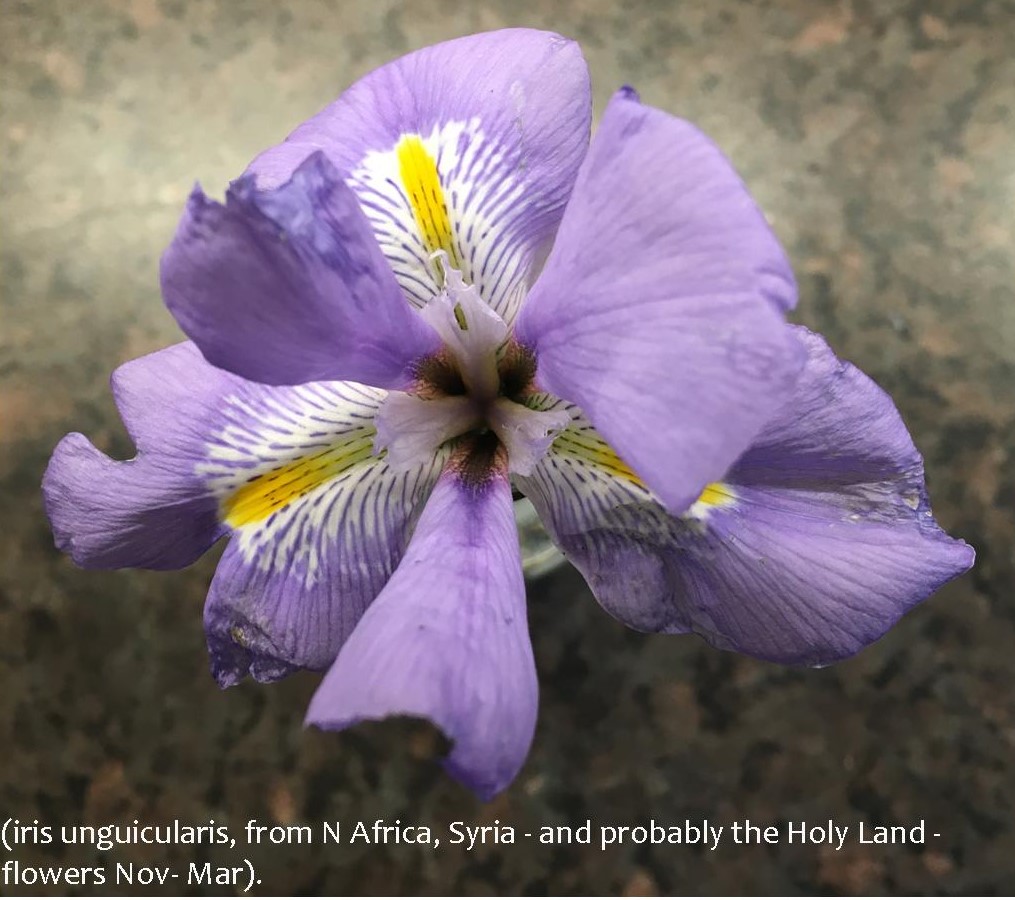
Which is why the photo I have chosen to head this piece is of an Iris unguicularis which originates in North Africa, Syria and possibly the Holy Land, not to mention Cumbria where this photo was taken by my dear friend Gill Henwood. She tells me that it flowers from November to March.

In the bleak midwinter may well be a sign of the phase of the earth near to Christmas but so is the Iris illustrated above. There will plenty of other flowers just around the corner , such as aconites and snowdrops, Hellebores and crocuses.
Christmas follows soon after the shortest day and so becomes another sign that the world is turning in a new direction which brings renewed light, but this time in our hearts. Whatever darkness is dragging us down right now, we need to look up, look out and look around us.

The last line of Rossetti’s poem/hymn says that whilst we can’t give Jesus seemingly very much, we can give him our hearts.
In the midst of the darkest time of our planet with Covid, Global warming, and destruction of nature, it may not seem very much but, in truth, it is enough. It is everything.

[Mr. G]

Big in the eyes of God

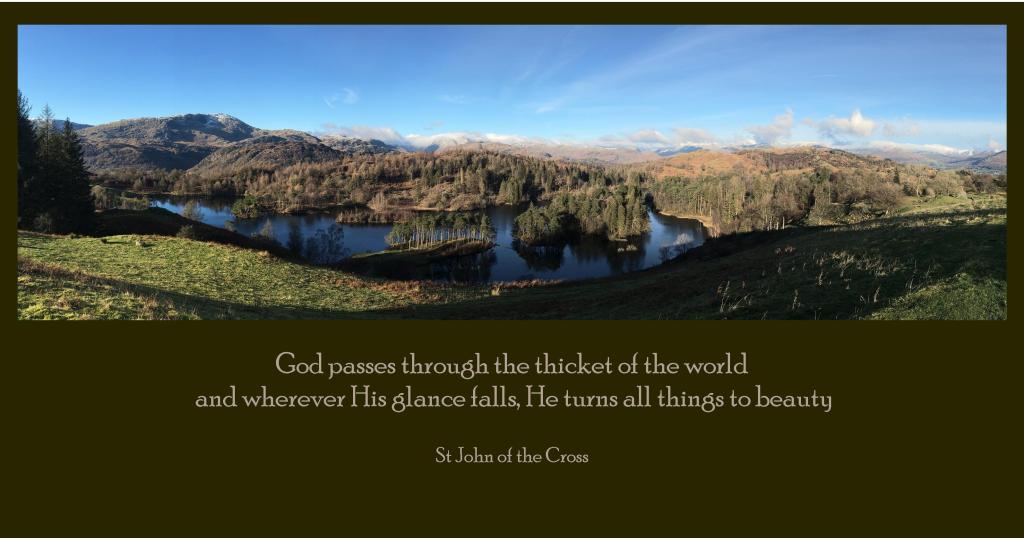
Photo of Tarn Hows and surrounding hills by Gill Henwood

Today, December 14th, is a special day. It’s the day the Church keeps the feast of St. John of the Cross.

Some years ago, towards the end of a visit to Spain, we arrived at Ubeda. It was a wet Sunday afternoon and the town was all but deserted. The one eating and drinking place was the only crowded place. I had gone there, however to see something very important.

We had started the Spanish journey by travelling from Madrid to Avila. There, my companion and I visited the shrine of St. Teresa of Avila. She has been a favourite saint of mine for a long time and I have tried to dig deep into her spirituality. There is something profoundly mystical about her and yet, also, an accessible ordinariness. Teresa tells it as it is! She also tells God what’s on her mind!

Her legacy, for which she was honoured as a Doctor (Teacher) of the Faith, is her teaching on prayer. Yet her writing, done usually on the hoof, had to be encouraged. She was busy at the time reforming the Carmelite order and founding new convents of what became known as the discalced (barefoot) order of the contemplative Carmelites. (when she wasn’t actually shouting at popes, nobles and, at times God!)

In all this activity she had a series of mentors, confessors and encouragers. The chief amonst these, and her very special friend was St John of the Cross. His friendship did so much to help her in guiding others and in leaving us the great spiritual treasure we still have today.

St. John of the Cross was, himself, a man of deep spirituality. His writings and, especially his spiritual poems, established him as a mystic who walked close to God and for whom God’s love was deeply personal. The power of God’s love to touch ALL hearts is expressed by John in something he truly believed. He said, Where there is no love put love in and you will find love. In people and in situations where love is lacking, put the love of God in and you will draw love out. John of the Cross saw this as one of the most important witnesses we can make for God.

Often misunderstood and persecuted, even imprisoned, he found strength from his deep relationship with God. He also found a spiritual home in Teresa’s discalced Carmelites which he joined.

Amongst his writings is ‘The Dark Night of the Soul’, ‘The Ascent of Mount Carmel’ and ‘Spiritual Canticle’. A good introduction to his life and spirituality is by E Allison Peers, available still from good bookshops.

Like Teresa he was made a Doctor of the Church.

That rainy afternoon in Ubeda, our knocking on the door of the museum/monastery was rewarded at precisely 4pm! (When siesta was over). We were led by a quiet but welcoming monk to the shrine of St. John of the Cross. A wonderfully profound moment at the end of our joureying in Spain. In my heart was the link between the beginning of that journey and its end, not least because these two saints, in so many ways, had hearts for God that beat as one. Teresa said of John: “I cannot be in the presence of John without being lifted up into the presence of God.” In each other, they found God’s friendship and company.

But let Teresa have the last word about him on this, his feast day. She said of him, ‘Though he is small in stature, he is Big in God’s eyes.’ What better thing could be said of anyone!

[Mr. G]