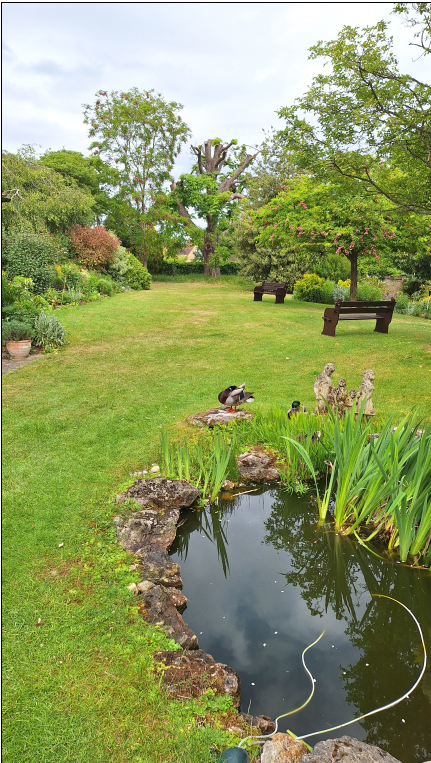
Rosemary’s Quiet Garden at Dunmow, Essex. photo by Mr G.
Quiet Garden
In the Quiet Garden birds sing antiphonally in the monastery of the air.
Ducks murmur gossip across the pond informing prayer[!], as a bee hovers lazily over new mown grass.
Carefully manicured borders teem with joyful colour as plants flower, gratefully supping May-time air fuelling their thirst for new life.
Nearby, a church bell, a single, insistent chime, repeating, marking the moment; calling to prayer. Insects of varying kind respond, their plainchant lifting our souls.
Nature speaks to nature nurturing all Creation within, where God waits to draw us into the Divine heart.
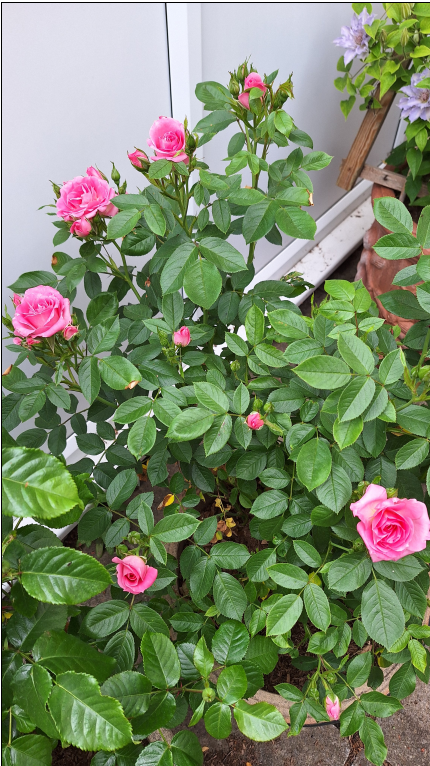
Roses in the Garden at Dunmow. Photo by Mr G.
Mr G. 24th May 2025. [inspired by Rosemary’ Drew’s Garden at Dunmow, Essex, offered as part of the Quiet Garden movement, as a place of spiritual refreshment and re-creation]
Glow sticks and Sticklebacks, Night Swimming. Art by my friend Kay Gibbons.
Abundantly. (a pondering on the Gospel of John Chapter 21: 4- 14)
There were 153 of them! Fish, I mean.
They cast their net in obedience to the familiar stranger. It was a futile gesture towards one whom they vaguely knew from a past now best forgotten.
Wearily, bleary-eyed, minds dulled with a sadness they could not describe, they cast their nets.
Sudden movement beneath the waters the sea swirling and churning with an activity they had not expected. Nets, recently mended after a disuse of three years, strained, grew taut, threatening to burst.
Hard to haul it on board even when arms and minds and hearts instinctively took over. Professional pride in a trade once learned could not be forgotten.
Meanwhile, on the beach the smoke of a fire curled lazily upwards. He bent over the fish, gently cooking, bread crustily browning. How could they not now recognize him?
He called them children. They belonged to him, now more than ever.
The fish were counted, their number recorded. 153.
It would occupy the minds, debates, writings and arguing of theologians down the ages.
Literalists would ponder on so odd a number. Biblical scholars would wonder on the significance and write the odd thesis about symbolism without knowing whatever it meant.
From the beach, he simply said, “Come and have breakfast.” so ordinary, just as often before. but somehow very different. They knew now that they were in God’s presence God was feeding them and loving them.
As he would time and time again in a future where they would touch others with His love. Abundant love, abundantly given and received.
153 ?
The number representing God’s abundance, God’s outpouring of a grace and kindly love for all?
Why not?
[Mr G Eastertide 2025]
{ you can find more of my friend Kay’s art if you go onto Instagram. kaygibbons_art.glass.sculpture}
[][][] The number 153 refers to the number of fish miraculously caught by the disciples in John 21: verse 11.
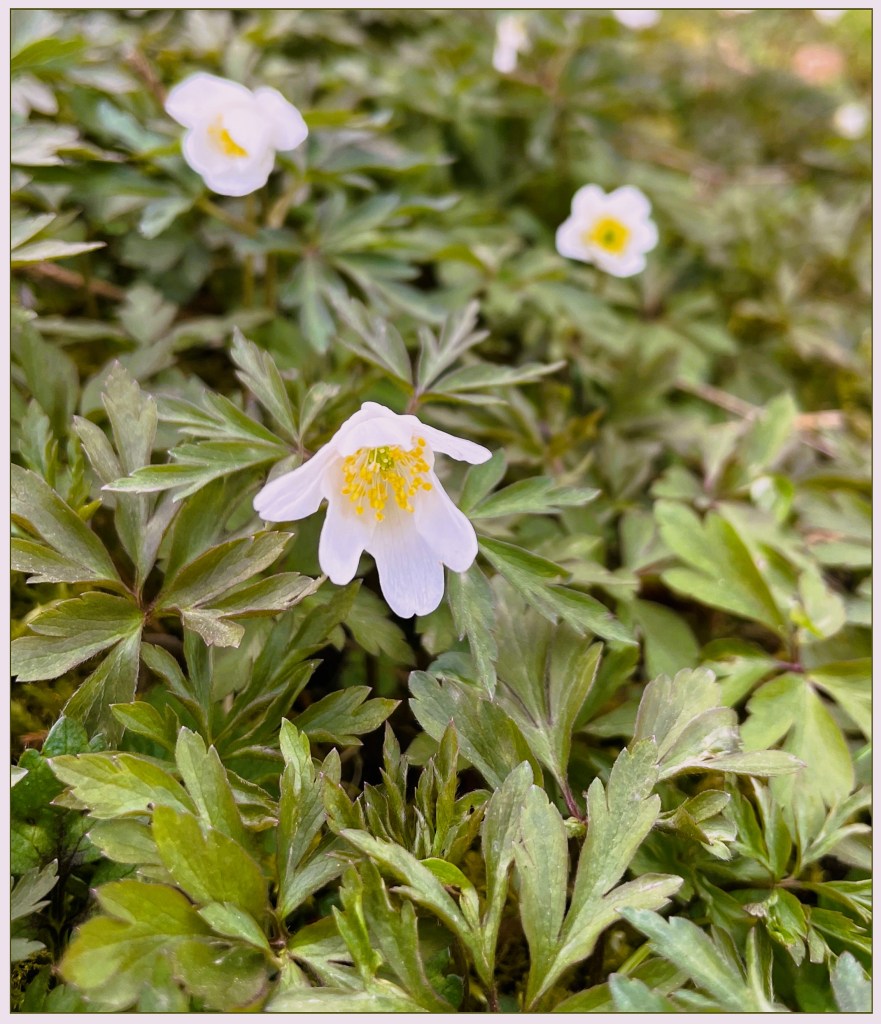
Windflowers photographed in the Lake District by Gill Henwood. Anemone or the windflower. Its name comes from the Greek word ánemos, meaning “wind.”
The Wood Anemone (a.k.a. Windflower),Opens to herald the Spring equinox, the turning of the season from dark to light. This is the time of renewed hope for the world through the Easter journey of Jesus. This journey began when the Angel Gabriel visited God’s chosen Christ-bearer, Mary of Nazareth, in the event the Christian church celebrated earlier this week – The annunciation. It was a momentous encounter. A new beginning. One which Jesus brought to us from God. It was a journey filled with joy, challenge and a ‘Word’ crafted in the heart of heaven and delivered to us as the Good News (Gospel). This ‘Word’ of God’s supreme and total Love for us and all who inhabit the earth, was not only spoken. It was ‘lived’ by Jesus at the very centre of his being because it is what defines him. He knew the power of darkness and unlove and he entered into the darkness and struggles of human life. He also knew what overcomes it. Sheer love of God which St John reminds us, at the beginning of his Gospel account, is the Light shining in darkness and the darkness did not overcome it” (John 1: v5). Nor can it do so.
Even when the darkness tried to destroy Jesus on the Cross, on Good Friday, it failed because in the Crucifixion of Jesus we see and know and inherit the immense and unquenchable Love of God. That love will prevail and has continued to do so over two thousand centuries. We have to accept and receive it and be changed by it. In these globally dark days where some of our number are trying to have absolute power over us and many lives are being destroyed by war or through pain inflicted on them, we need to remind ourselves that it is God who will prevail. He arms us, who are his friends on earth, with simple armour – His Love. The more we use it, the more hatred and misuse of power will be challenged and will not prevail.
The Windflower tells us the time is coming, the wind of the Spirit is rustling away the winter and soon the Light of the World will shine. The little flower has endured the darkness of Winter but it has prevailed. May that be a message to all of us whatever we believe. We conquer evil with love. There is no other way.
[Mr G with inspiration and contribution from Gill Henwood]
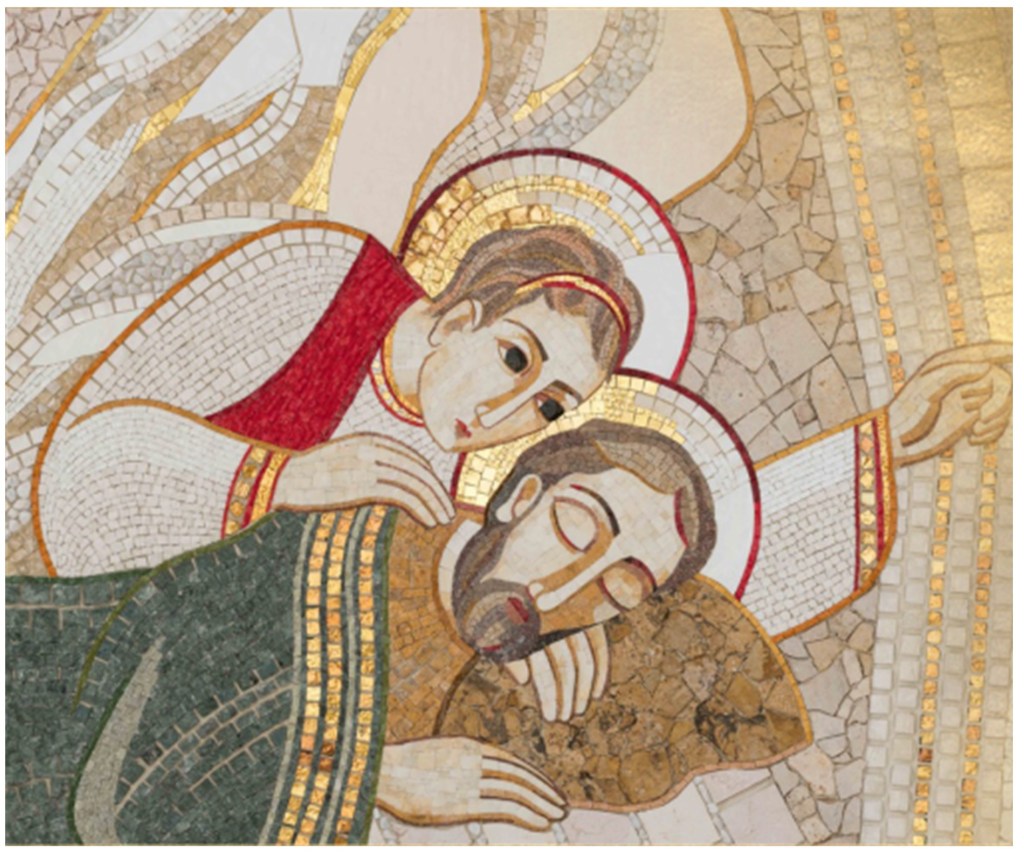
On March 19th, the Church remembered St. Joseph, husband to the Blessed Virgin Mary. Though often rather like the ‘man in background’, Joseph played a vital and significant role in the birth of Jesus and did so in obedience to the will of God. God communicated that will through the message of an angel and did so on 4 occasions. These dreams are all narrated by the writer of St. Matthew’s Gospel. (Chapter 1 verse 18ff, and Chapter 2) In the first dream the angel assures Joseph that, despite his misgivings, it is God who has chosen him to be Mary’s husband and watch over her as she is pregnant with the son of God, Jesus. He is to be the protector, guide and provider of love and security to the Holy Family, to Jesus in his infancy.
The other dreams are instructions from God. In the 2nd dream, Joseph is warned to flee with Mary and Jesus when King Herod ordered the massacre of the innocent babies and young children in order to do away with the one who might be a threat to Herod’s kingdom. Joseph flees to Egypt. The third dream tells Joseph that Herod’s death means it is safe to return home but the 4th dream tells Joseph that there is still some possibility of harm so Joseph must avoid Judea and settle instead in Galilee.
Taking the theme of the first dream, a friend wrote a poem which she gave to me as a special gift. I have her permission to make it known to others, so here it is.
Joseph’s Carol ~ An Angel called my name
Blessed am I, blessed of all men. When dark had quenched the light of day A holy angel came; an angel called my name I am not good, not free from sin, Yet, as I slept and dreaming lay An angel called my name.
A simple artisan, someone Of humble birth, thinks not to see A holy angel bright. An angel came that night Through cool moonlight to sleeping world, From cloud-streaked sky to speak to me, An angel came that night.
Though humble, yet I count as one Whose lineage of David came. The angel seemed so near: the angel voice was clear: “And Mary shall bring forth a Son. God wills that Jesus be his name” The angel voice was clear.
And when that Holy Child was born, In Bethlehem, of David’s line, The angels came to see. The angel melody the dark sky filled. So from that dawn I played my part in God’s design. Oh God. My thanks to Thee.