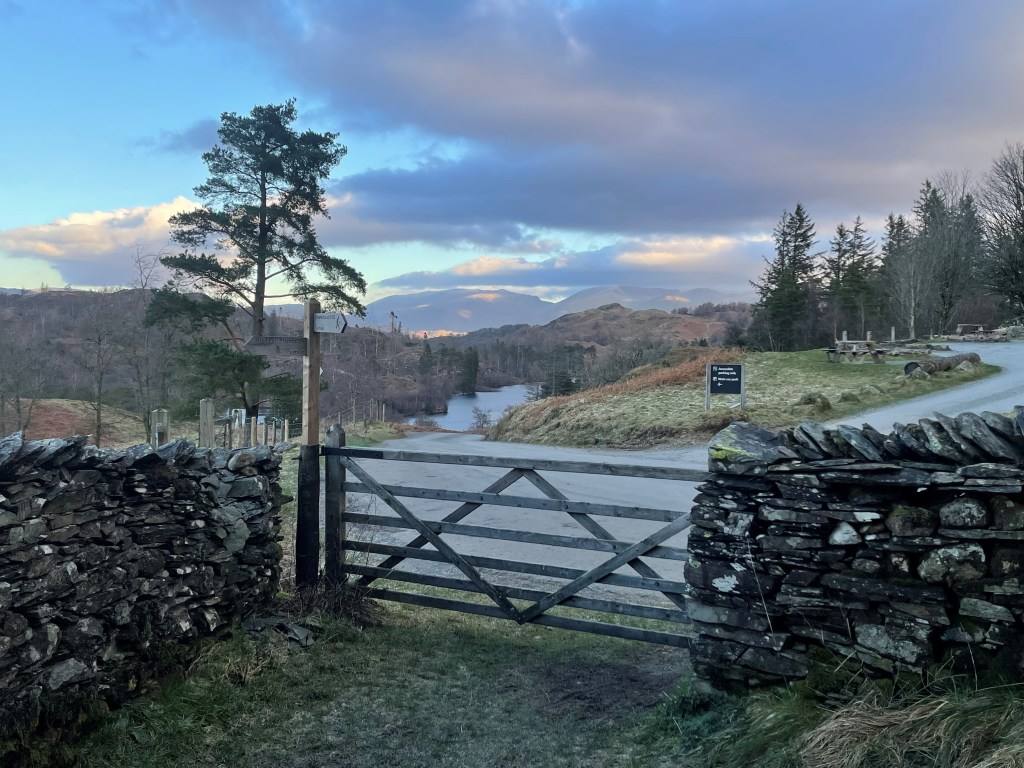
Tarn Hows photographed at the eve of Candlemass/Imbolc by Gill Henwood.
The photo speaks its own message. Very still, chilly breeze, birds singing for Imbolc/Candlemas ….But fallen giant conifer trees from the storms are on slopes exposed and waterlogged ground. After the storms, the birds sing of hope, for Spring, new life, another season to grow. Bittersweet calm, but the low sun rising is warming the cold wet land and her creatures. [Gill]
February tiptoes across a winter landscape, luring us away, from cold depression of dark, dank January.
Weak, shy strengthening Sun, practices dazzling us with brightness; whispering promises of hope about Spring beyond.
Ah! What trembling beauty lays a carpet of expectant joy!
Tarn How Gate, Lake District. Photo by Gill Henwood
The words below are often recited at New Year’s time. They are a poem by Minnie Louise Haskins which she crafted in 1908. She had studied at the London School of Economics where she also later taught. The poem first appeared in a collection published under the title, The Desert. It became particularly well known in 1939 when, in his Christmas Broadcast, King George VI quoted it. It words were particularly apt for a nation facing the darkness and uncertainty of War and in these dark days it remains powerful. It is suggested that Princess Elizabeth brought it to the attention of her father and later, it became a special favourite of Queen Elizabeth the Queen Mother who found comfort from it throughout her life. The poem appears on a plaque in the Royal Chapel at Windsor.
Gill Henwood has drawn the poem to my attention and has supplied a rather lovely photo of Gate to Tarn Hows from the woods above Coniston. Looking towards Fairfield Horseshoe on the Helvellyn range. English Lakes UNESCO World Heritage Site (The Lake District).
THE GATE OF THE YEAR
‘God Knows’
And I said to the man who stood at the gate of the year: “Give me a light that I may tread safely into the unknown”. And he replied: “Go out into the darkness and put your hand into the Hand of God. That shall be to you better than light and safer than a known way”. So I went forth, and finding the Hand of God, trod gladly into the night. And He led me towards the hills and the breaking of day in the lone East.
So heart be still What need our little life Our human life to know, If God hath comprehension? In all the dizzy strife Of things both high and low, God hideth His intention.
God knows. His will Is best. The stretch of years Which wind ahead, so dim To our imperfect vision, Are clear to God. Our fears Are premature; In Him, All time hath full provision.
Then rest: until God moves to lift the veil From our impatient eyes, When, as the sweeter features Of Life’s stern face we hail, Fair beyond all surmise God’s thought around His creatures Our mind shall fill.
[Minnie Louise Haskins]
Gate to Tarn Hows from the woods above Coniston. Looking towards Fairfield Horseshoe on the Helvellyn range. English Lakes UNESCO World Heritage Site (The Lake District).
Photo by Gill Henwood. The old Beech reclothed in finest greenery
After a concentrated time in the heart of a rather wet London (albeit in front of the television screen!) it’s good to move away on the day after King Charles & Queen Camilla’s Coronation into the more tranquil climes of English woodland awakening fresh in the Maytime light.
So when my friend Gill Henwood sent me some more photographs of nature filling all around with beauty and expectation, I exchanged the joyful emotions of pageant and symbol and human pledging of life to a new degree of service, for something rather different.
In the woodlands and countryside of the Northern hills of the Lake District a busy beauty is going on as plants, new-born lambs and birds and creeping things and teeming fish playing joyfully, splashing through waterfalls. We are well into the wonders of new-birth as Eastertide unfolds and spirit-filled life offers a new joy.
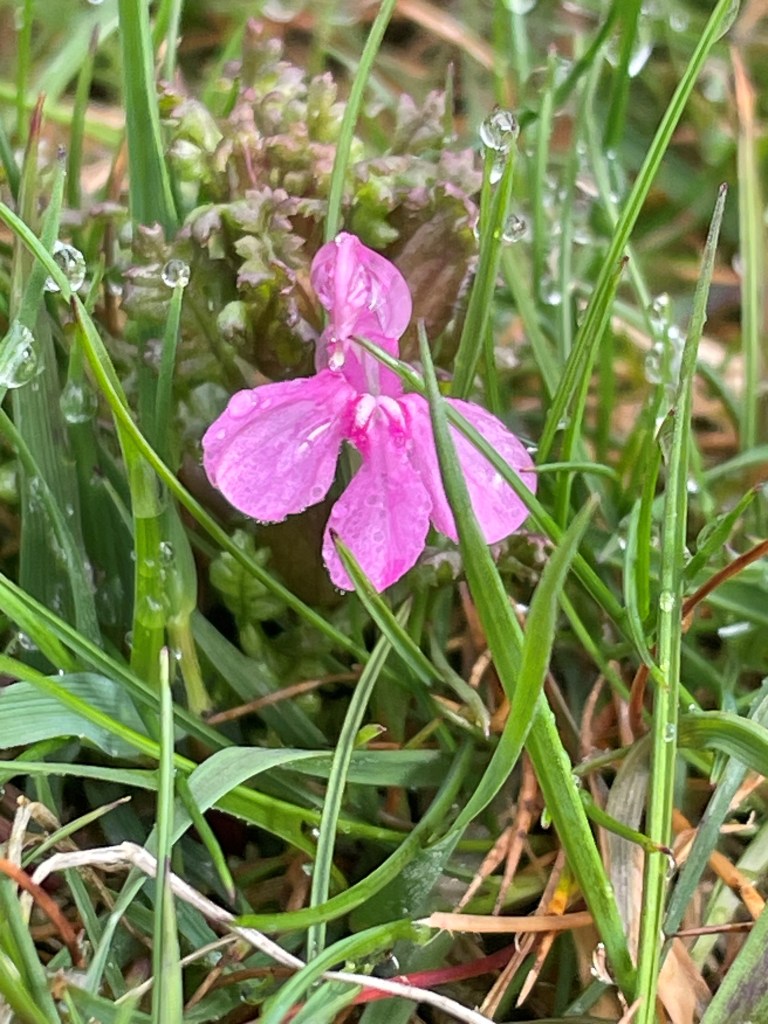
So, Gill speaks of the emergence of the Lousewort and other signs of new growth:
Lousewort flower, photographed by Gill
“Tiny pink heath plant just in flower for the coronation weekend. 5mm across, a sign of the heaths and high meadows coming into growth. No sign yet of the hundreds of orchids that flowered in this field in 2020, during lockdown when no cattle were grazing the field.
A new spring and a new royal era – eastertide hope of renewal after loss and bereavement.
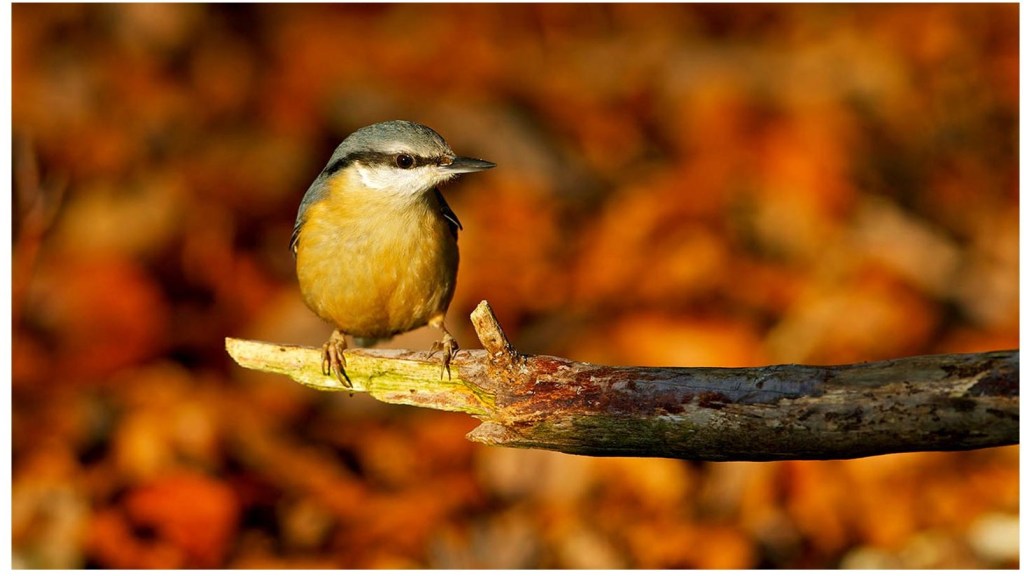
“And the songbirds are singing their choral anthem all around, with a cuckoo punctuation. Now the nuthatch is sounding its single-note call, it’s time to stroll through the newly furnished delicate dewy leaves of the beeches…“
photo of Nuthatch c/o Woodland Trust.
This is also the ancient time of Beltane, of May and summer’s beginning.
“– the dainty woodland floor and hedgerow flowers are all compact and individually almost missed. Primroses, violets, greater stitchwort and even native drooping headed bluebells make their impact growing together. A patterned tapestry on a bank and an unfurling mosaic on a heath or in the woods. Responding to long days of light and the increasing warmth of the sun towards the June solstice.
A parable in nature of Gods love given in and through all creation – if only we stop and notice the myriad glimpses all around us….“
Photo: Gill Henwood
Take a breather.
Breathe, be filled with amazement, purposefulness,
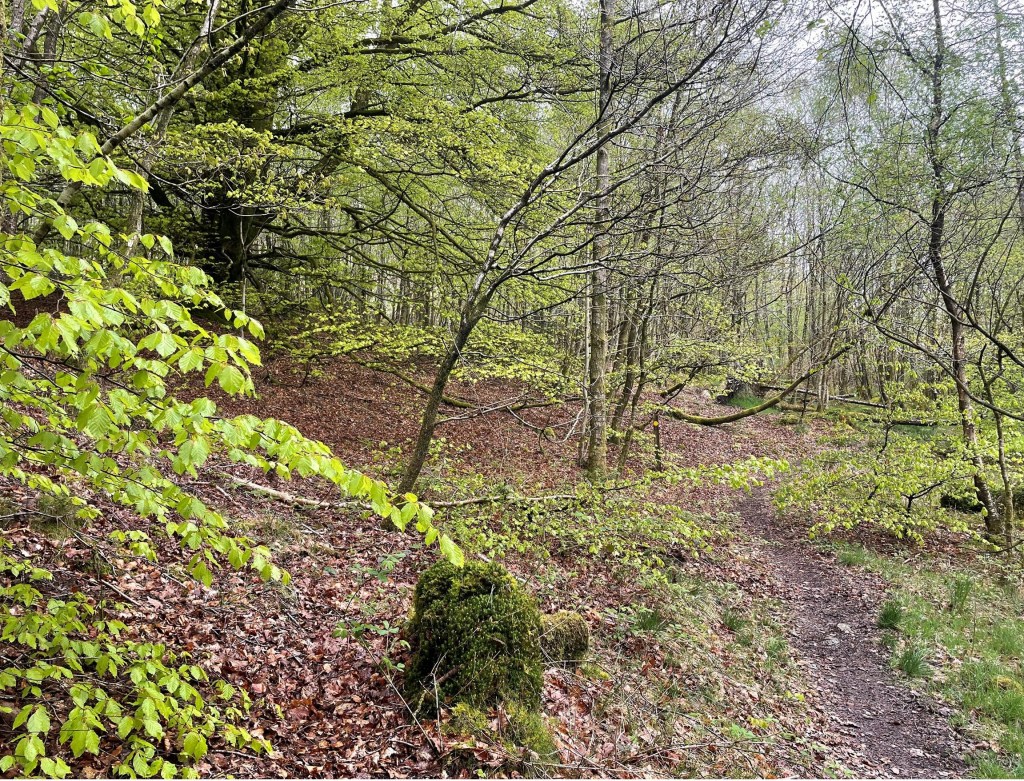
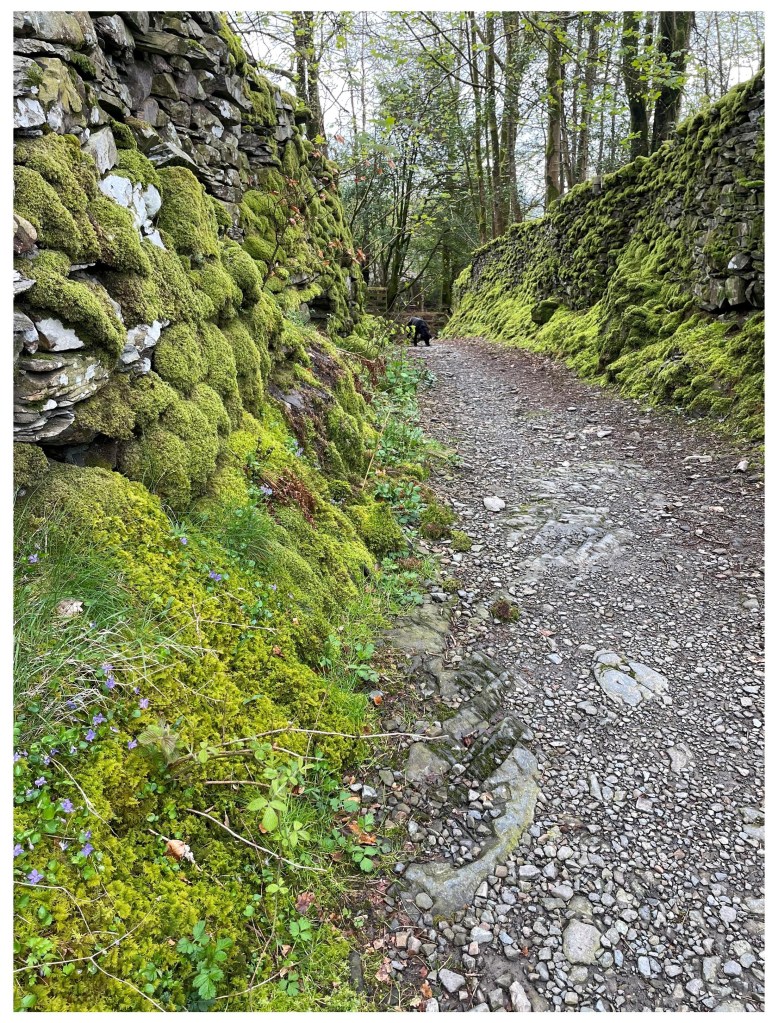
This is a photo taken by my friend Gill Henwood of a Sunken Lane’ in the Lake District.
Gill tells me that this one has dry stone slate walls and floor with mossy banks and ivy. She says that “further up are greater stitchwort, and a huge bramble thicket that promises bramble jelly in the autumn! Happy nesting birds are all around, singing.”
Another name for a Sunken Lane is Holloway or hollow way, which comes from the Old English “hola weg”. It’s a road or track that is significantly lower than the land on either side. Such ways can be found all over the world and they are generally ancient routes for the carriage of trade, travelling and sometimes battle roads along which troops moved. Some date back to Roman times and beyond. Many are overgrown with nettles and briars and most are disused except by local people or country walkers.
Today they can offer a unique and integral look of the English landscape, providing a glimpse into a time and way of life long gone. They give us information about those times, about the way of life then, or geological information and how the paths have evolved into habitats for wildlife. They also bring pleasure and interest to the walker.
Spiritually, they can offer a physical and contemplative meditation about pilgrimage to God and the Heavenly Kingdom as well as a visible lesson of what the Bible teaches us about walking the ‘narrow way’. Whilst they can offer a warning about keeping on the straight and narrow, they also show us the beauty and joy of doing so. There is so much to enrich our lives if we don’t rush headlong by, getting caught up in frantic pace and demands which often come to nothing. It was St John of the Cross who said:
“God passes through the thicket of the world, and wherever His glance falls He turns all things to beauty.”
Walk, breathe, pause, notice, pray, become!
[Mr G]
Hear, my child, and accept my words, that the years of your life may be many. I have taught you the way of wisdom; I have led you in the paths of uprightness. When you walk, your step will not be hampered; and if you run, you will not stumble. Keep hold of instruction; do not let go; guard her, for she is your life. Do not enter the path of the wicked, and do not walk in the way of evildoers. Avoid it; do not go on it; turn away from it and pass on. For they cannot sleep unless they have done wrong; they are robbed of sleep unless they have made someone stumble. For they eat the bread of wickedness and drink the wine of violence. But the path of the righteous is like the light of dawn, which shines brighter and brighter until full day.