Tag: Little Flowers

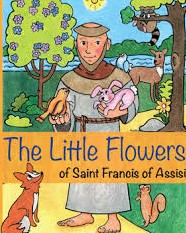
St Francis and the rich man.

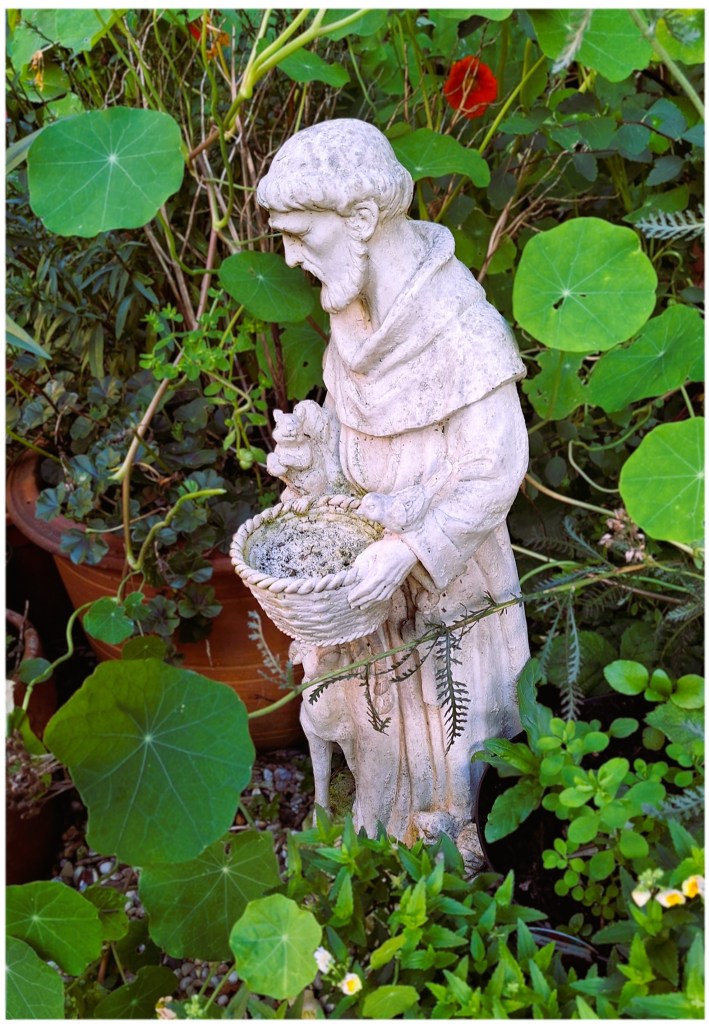
St Francis in the garden of Number 18. Photo, Mr G.

Yesterday, October 4th, Christians remembered St. Francis of Assisi.

Many people know of him and stories about him. There is the famous story about how he cared for a leper who was shunned by everyone because of his disease. Another popular image was of Francis feeding the birds and so he has become synonymous with the care of animals. At this time of year, the Church of England and other groups help us to think about Animal Welfare and, through a Creation Season, Nature generally.
Francis is also famous for his preaching and missionary work, including drawing people to live a more simple and dedicated life in the love and service of God.

One story about his comes from a collection of stories, The Little Flowers of Saint Francis. Collected and published in the Middle Ages, it captures and presents a spirit which is truly Franciscan. It was translated into Italian by an unknown Franciscan friar, from a much larger work. It has 53 short chapters .
The Little Flowers sheds  a light on the way Francis and his Companions (with St.Clare and those who prayed with her), paved the way for an imitation of the Franciscan way of life, witness and spirituality which continues to enrich both church and world today.
Here’s a story from the collection.

Francis and a companion once visited the home of a rich man, late in the evening. The nobleman welcomed them with open arms and, we are told, received them as if they had been angels of God, with courtesy and devotion.
The man embraced them, washed their feet, wiped them and humbly kissed them. He kindled a fire, made ready the table with much food and served it with a joyful countenance.
He then prepared beds and offered many gifts. In the morning, he provided fresh clothing. He told them that if the brothers needed clothing, he would always pay for it. He professed that he was ready to provide for all their needs. He could do this willingly because of all that God had provided him. He willingly would give of this to the poor.
When Francis left him with great rejoicing he held the man in his heart and in his prayers.The man, had done such a lovely thing also rejoiced and prayed for Francis.

Francis knew however that there was more. He had looked into his eyes and had not rested until he saw into his soul.
He said to his companions “He would make a good friar. He is so grateful and thankful to God and so kind and courteous to his neighbour and to the poor.”
He reminded his brother that courtesy is one of the attributes of God who gives us all we need and is courteous and kind and loving towards us. These things he found in the man’s soul – the divine imprint.
Francis determined to return again soon to his house.

When Francis re-visited the area, he called on the man again.
First, he knelt in prayer at the gate.
The man saw him and rushed down the drive to kneel besides Francis.

God was speaking to both their hearts and Francis lifted him up, and ‘in fervour and gladness of heart embraced him and kissed him devoutly giving thanks to God,’ who had brought to him a new friar.
The man asked, ‘what do you command me to do, my father? Lo I am ready to do your bidding and give all that I possess to the poor and thus, no longer held back by worldly things, to follow Christ with you.’
And so he did.

The nobleman had given out of the generosity of his heart and his means when Francis first visited him. He gave so much for the mission of Jesus Christ being carried out by Francis and his companions. But for him, there was something missing. Something he still had to give. The only gift that God truly wants from any and all of us. He gave himself. He joined Francis in his work. He gave his life, heart, his soul.

Make of this story what you will!

[Mr G]
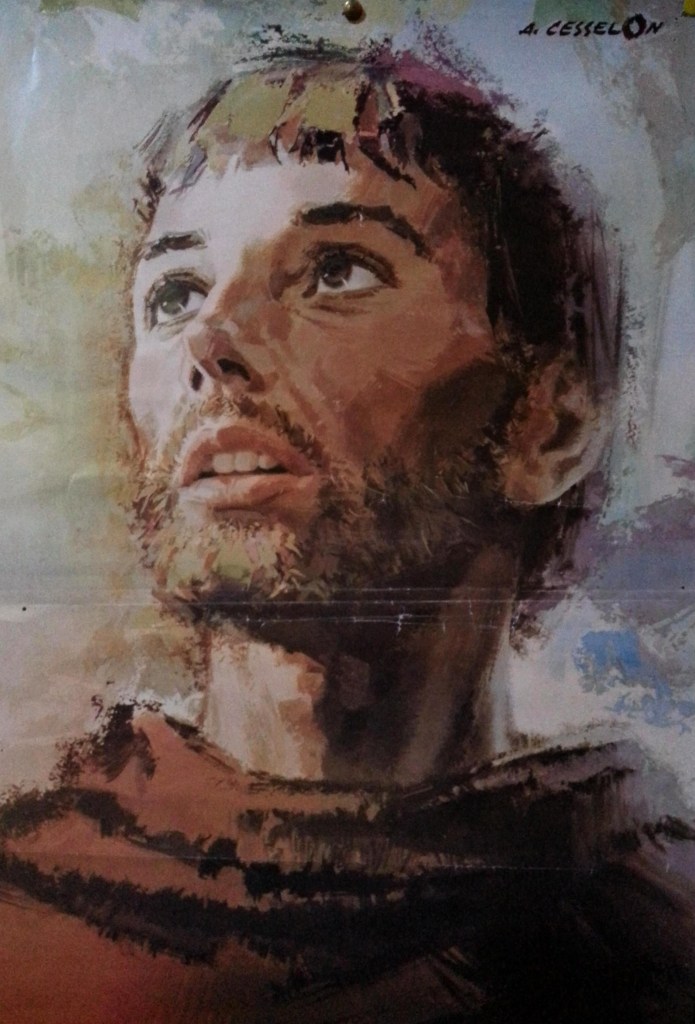
All that I am I give to You

photo: Mr. G. from a poster at Santiago de Compostella

This week I have been reflecting on St. Francis whose feast day was last Monday.

His love of the poor, of creation and those with incurable diseases makes him quite a contemporary saint. In these worrying times about the state of the planet and the way we are treating the poor in Britain as well as in the Third World, Francis has much to say to us as a warning. The prevalence and threat of Covid on a global scale may seem much greater than the people with leprosy but it is the reaching out with compassion and kindness, touching people where people suffer which is part of his great message of love and inclusivity for all.For Frances all creation praises God from Brother Sun to Sister Moon, from all who have little to the very wealthy, from death to eternal life.

He also taught of God with deep simplicity and we are grateful to him for the way he taught the Incarnation not in theological treatise but visually by inventing the Christmas Crib.

One of the most popular images is of him is feeding the birds and his praise of all creation is, for many, embedded in that image.
The fact that we know these stories, along with many other popular anecdotes, miracles, and events  is because they were published as a collection titled, The Little Flowers of St. Francis.
Written or collected quite a while after his death, and therefore not a primary source for his life, it nevertheless captures and presents a spirit which is truly Franciscan.
The collection  became deeply popular and it has been described as one of the most delightful literary works of the Middle Ages.
It was translated into Italian by an unknown Franciscan friar, from a much larger work. It has 53 short chapters and is often printed with The Mirror of Perfection, a reflection from Brother Leo, a special companion of Francis, in which he illustrates the distinctiveness of Franciscan life and spirituality.
Leo draws on the personal experience of life as one of the first of the Friars.

The Little Flowers  sheds  a light on the way Francis and his Companions (with St.Clare and those who prayed with her), paved the way for an imitation of the Franciscan way of life, witness and spirituality which continues to enrich both church and world today.
There are many, many editions of The Little Flower and it is easily available.

 So, I want to end my week of personal reflection with a  story from the Little Flowers.
It has something profound to say to most of us, I suspect:

Francis and a companion once visited the home of a rich man, late in the evening. The nobleman welcomed them with open arms and, we are told, received them as if they had been angels of God, with courtesy and devotion.
The man embraced them, washed their feet, wiped them and humbly kissed them. He kindled a fire, made ready the table with much food and served it with a joyful countenance.
He then  prepared beds and offered many gifts. In the morning, he provided fresh clothing. If the brothers needed clothing, he would always pay for it. He professed that he was ready to provide for all their needs. He could do this because of all that God had provided him. He willingly would give of this to the poor.

The man, having done such a lovely thing also rejoiced and prayed for Francis.When Francis left him with great rejoicing he held the man in his heart and in his prayers.
Francis knew however that there was more. He had looked into his eyes and had not rested until he saw into his soul.
He said to his companion, “He would make a good friar. He is so grateful and thankful to God and so kind and courteous to his neighbour and to the poor.”
He reminded his brother that courtesy is one of the attributes of God who gives us all we need and is courteous and kind and loving towards us. These things he found in the man’s soul – the divine imprint.

Francis determined to return again soon to his house.
When Francis re-visited the area he called on the man again.

First, he knelt in prayer at the gate.
The man saw him and rushed down the drive to kneel besides Francis.
God was speaking to both their hearts and Francis lifted him up, and ‘in fervour and gladness of heart embraced him and kissed him, devoutly giving thanks to God,’ who had brought to him a new friar.
The man asked, ‘what do you command me to do, my father? Lo I am ready to do your bidding and give all I possess to the poor and thus, no longer held back by worldly things, to follow Christ with you.’

And so he did.

The nobleman had given out of the generosity of his heart and his means when Francis first visited him. He gave so much for the mission of Jesus Christ being carried out by Francis and his companions. But for him, there was something missing. Something he still had to give.The only gift that God truly wants from any and all of us. He gave himself. He joined Francis in his work. He gave his heart, his soul.

Make of this story what you will.

[Mr G]