Tag: Mr G

Waymarks of Faith

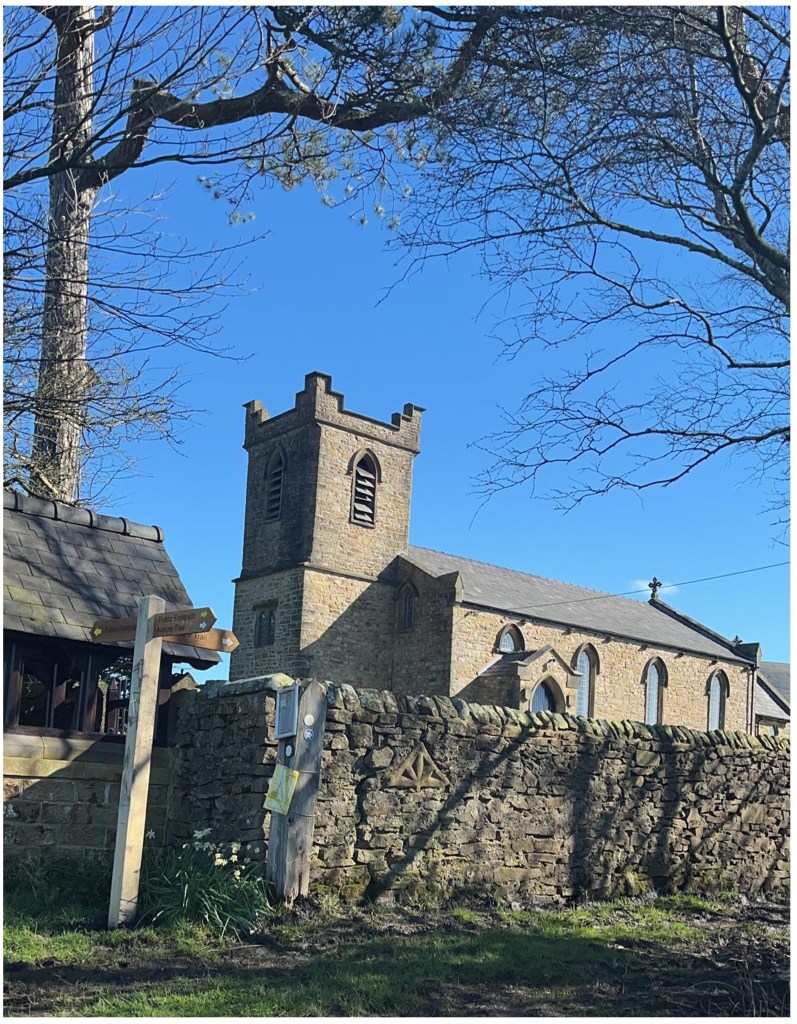
St Eadmer, Admarsh-in-Bleasdale. Photo: Helen Smith

This delightful church at Bleasdale (or to be correct, Admarsh-in-Bleasdale) is overlooked by Parlick and Fairsnape Fells in North Lancashire. Both are in the Bowland Area of Natural Beauty. The Church has a unique dedication – that of St Eadmer.

It has baffled many as to who he was and for a long time it was thought that he was the secretary to St. Anselm of Canterbury.( An Eadmer wrote Anselm’s biography.)
Investigations proved inconclusive until another Eadmer was discovered.
When the Body of St. Cuthbert was carried by the monks of Lindisfarne to safety from the Vikings, the journey was long and arduous. Indeed, with rests it took a very long time. It involved a stay in Chester-le-Street and a journey over the Cleveland Hills now known as the Lyke Wake Walk or Coffin Walk.

The final part of the journey is to be found in a ‘History of the Church in Durham’ by a medieval monk, Symeon.
He describes the arrival of the shrine at a place on the east side of what is now the city of Durham. The vehicle on which it rested could not be moved and the bishop directed his monks “that they should solicit an explanation of this sign from heaven by a fast of three days, which should be spent in watching and prayer, in order that they might discover where they should take their abode along with the holy body of the father”. This was done and Simeon goes on to relate that “a revelation was made to a certain religious person named Eadmer, to the purport that they were required to remove the body to Durham and prepare a suitable resting place for it”.
This was done and as a result, ultimately, one of the greatest Norman Cathedrals in the world was built.

What all this has to do with the Church in Bleasdale is sheer conjecture. It may well be bound up with the fortunes of a local family, the Parkinson’s, who came to live at Fairsnape Fell and who were Christian folk. The Chapel at Admarsh fell into decay and it was rescued and restored by the Parkinson family. It was my conjecture that linked Bleasdale with Northumbria and Durham.
The Fairsnape Parkinsons claimed descent from the Featherstonehaughs of Featherstone Castle in Northumberland then in the diocese of Durham. When they were looking for a dedication for their renewed church, it is reasonable to suggest that they looked to their Mother Church of Durham which was the last resting place of the remains of St. Cuthbert of Lindisfarne.
Possibly the Parkinson family felt that they shared the vision of Eadmer to build a church albeit a small and modest one.

Like so much of our history as a nation, facts are often shrouded in the mists of time and our stories are a mixture of truths, myths, poetic license and reasonable conjecture after sifting and weighing up the evidence.
What we do know is that in this beautiful corner of Lancashire, there has stood a church which has been cared for and used for a long time and has fed people with the nourishment of the Gospel.
An agricultural community works what is often a harsh land and with a changing lifestyle. Farming is not what it was nor is church life. The local Church of England School which provided an amazing education to children from the area sadly closed its doors in 2019. The village hall, however, still caters for a quaint but satisfying social life. Lancashire Hot Pot Suppers were, in my 10 years ministering there, a treat beyond measure and where else could you end each evening’s entertainment with a rousing rendition of the National Anthem, played lustily on the hall piano!

Worship still takes place in the serene church and placing oneself in God’s hands means lives continue to be consecrated.
This morning, my friend Helen send me the photo along with others of the fells. It opened up memories but also I was reading about the state of the Church of England as recorded in The Guardian  newspaper. It’s radicalism often tries to engage its readers with negativity about Christianity, when it isn’t busy with its other preoccupation, that of undermining the Monarchy!
This isn’t an easy time to keep churches going in small, rural places and logic might well suggest that we should close more of them down and reorganise ourselves into bigger and more manageable units. A large local Scout camp often uses St Eadmer’s as a shelter when their night hikes are interrupted by rain. Where would they go?

For the faithful Christians who find faith and God’s love in their little church, this is more than an act of survival. It is an act of belief and a witness in a God who converted a world with a motley crew and goes on doing so still.
Each of our churches are ‘waymarks’ – cairns- on our way to heaven.
We lose those pointers and the sharing of discipleship at our peril.
We may say that we have to be realistic but thankfully, the Parkinson family of Bleasdale and other places like them,  including, and especially, today, didn’t understand a realism which was fatalistic and devoid of hope and determination to claim divine footsteps to heaven. Cairns are built when wayfarers add a stone or a pebble. The Way to Heaven needs not so much stones as visionary people.

Father, as you gave Eadmer the vision to build a church to your glory:
and kindled that vision anew in the hearts of those
who built the Church in this land,
so guide all who meet you in our places of worship,  
to go on building your Church in the hearts and lives
which are wholly dedicated to you. Amen

[Thank you to Helen Smith for sending me the photographs
and thus reminding me of the importance of the waymarks of faith in our journey of life]
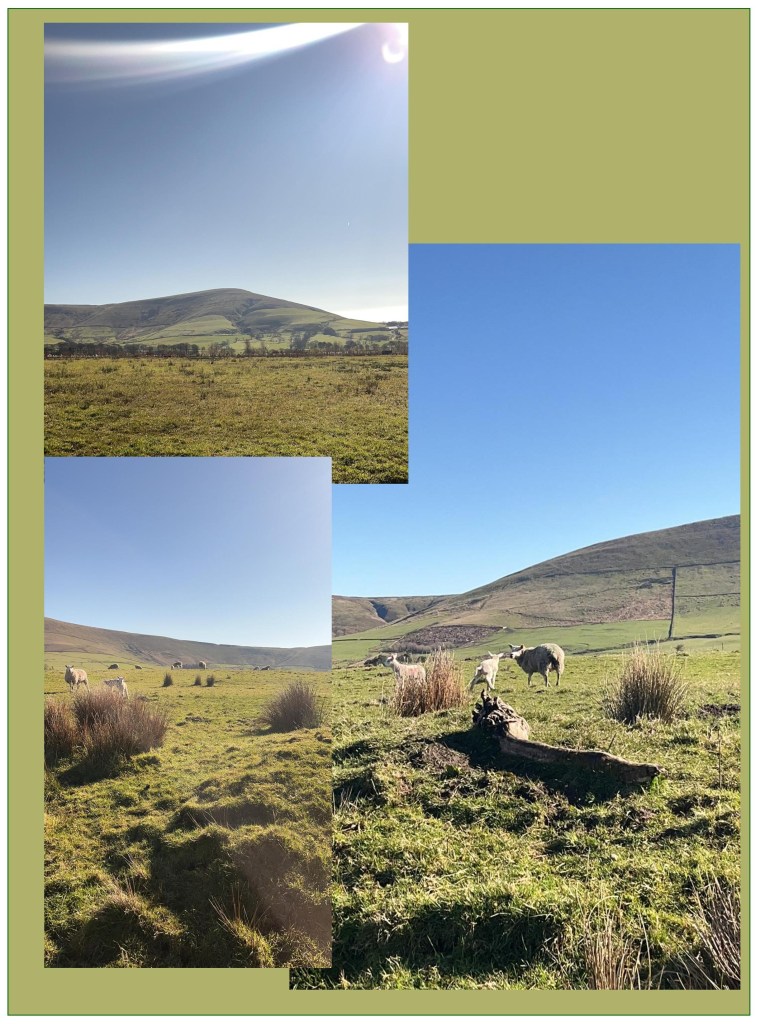
Parlick & Fairsnape Fells – photos by Helen Smith

Living Manuscripts

A long time ago now, I picked up a copy of St. John’s Gospel which had on the cover: Remember, you may be the only copy of the Gospel someone will ever read.
There is such truth in that.
We receive the Good News of God in many ways, but we learn the story, the ‘adventure of God in Jesus’,often by being introduced to it by someone for whom the words of the Gospel have become ‘real’. As the words above suggest, we are copies of that Gospel.
The New Testament is an open-ended book. We are still writing it with our lives.

Christians are just observing, once again, Holy Week, the time when we refresh our lives with all that Jesus means to us and all the love of God he shows to us. It is also a time of re-offering our own lives back to God so that we can be used in the service of the Gospel.
In that re-offering we are, as it were, taking up our pen of faith and dipping it into the love of God.

Manuscripts of the Bible, and especially the Gospel accounts were beautifully produced in the early Church. The Book of Kells in Dublin; the Gospel made at Lindisfarne and so many others are examples of how the Good News of Jesus was celebrated in written form. Missionary monks in Britain would usually travel with a copy of the Gospel. This was their preaching book. The more embellished and wonderfully decorated copies were written because of a deep love of a saint. The Lindisfarne Gospel was made in honour of St. Cuthbert. Of course, most of all, they were signs of a deep love for God, for Jesus.
As with Icon writing, (painting), they were deeply instilled with prayer.
Through prayer and skill the manuscripts became expression of the faith of those who made them.
All acts of love for God are truly genuine when we put our whole being into them.

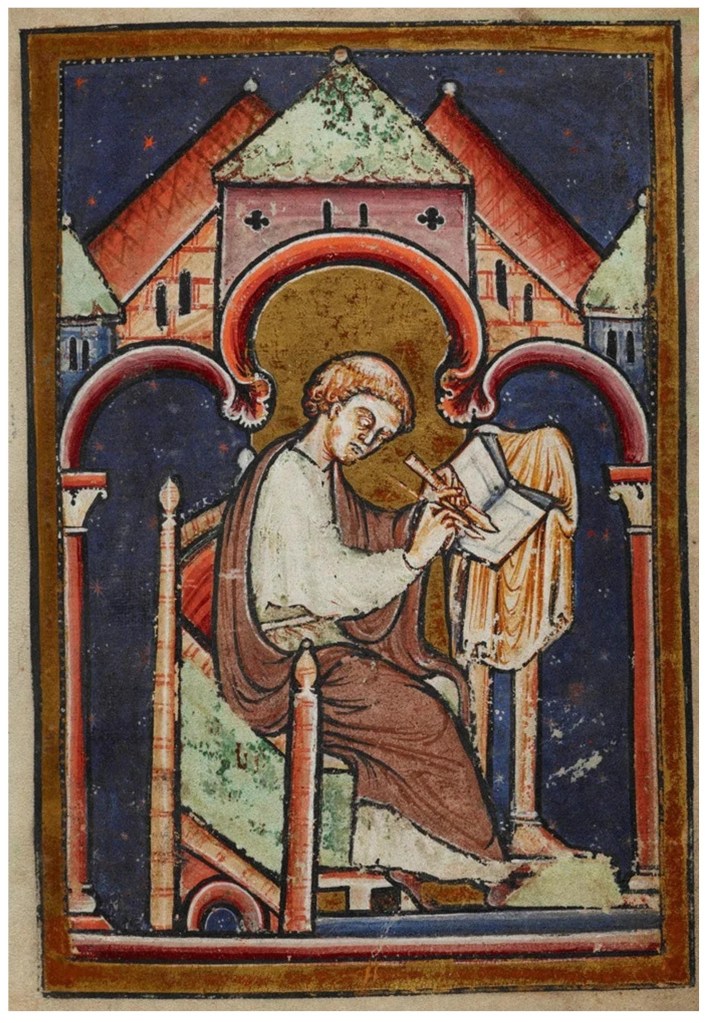
A medieval monk preached a sermon in Durham Cathedral in which he used the tools that are needed to make a manuscript as spiritual aids to help us put ourselves into our witness to God.
This is part of what he said:

“The Parchment on which the manuscripts are written is pure conscience;  The knife that scrapes the skin making it smooth for writing is likened to the love of God, the awe with which we hold him as he, like the knife in the hand of the skilled manuscript writer, scrapes away all that is within us which turns us away from God and prevents us truly loving him.  The pumice that smoothes the skin is the discipline of heavenly desire and the chalk which whitens it signifies an unbroken meditation of holy thoughts.  The ruler for the lines of text is the will of God and the straightedge is devotion to the holy task.  The quill with its end split in two for writing represents the love of God and love of neighbour and the ink is humility itself.  The colours used by the illuminator is a reminder of God’s grace and wisdom which colours our lives. The writing desk is the tranquillity of the heart and the writing place is a contempt of worldly things as the holy work lifts us to a desire for heaven.  The model or exemplar for the work is Jesus Christ.

The monk who wrote this allegory used the everyday things needed to produce a beautiful manuscript for God’s glory as aids for his spiritual journey in copying the Gospel for others to read it.
It is a reminder to us that it is in the ordinary things that we can find God.  Teresa of Avila called this, God walking among the pots and pans.  Making connections between the ordinary things in our lives and Gods  can help us in our praying. 

This prayer written by a lady on a Celtic Retreat I led, makes this connection between the material and spiritual:
 
Vellum, parchment, stone, wood and skin
all marked by the writer to convey the word of God.
Yet God, in mystery, appears to fleshly hearts, made pure,
writing upon these the very word of God,

that they can be read of human –
true icons of Christ.
The Word, made flesh, dwells with us.

The Christian Holy Week pilgrimage brings us closer to the love God shows us through Jesus.
As we pray through our journey we are being invited by God to become living Manuscripts of His love for the World.
It certainly needs to read it.

And all is one Love.

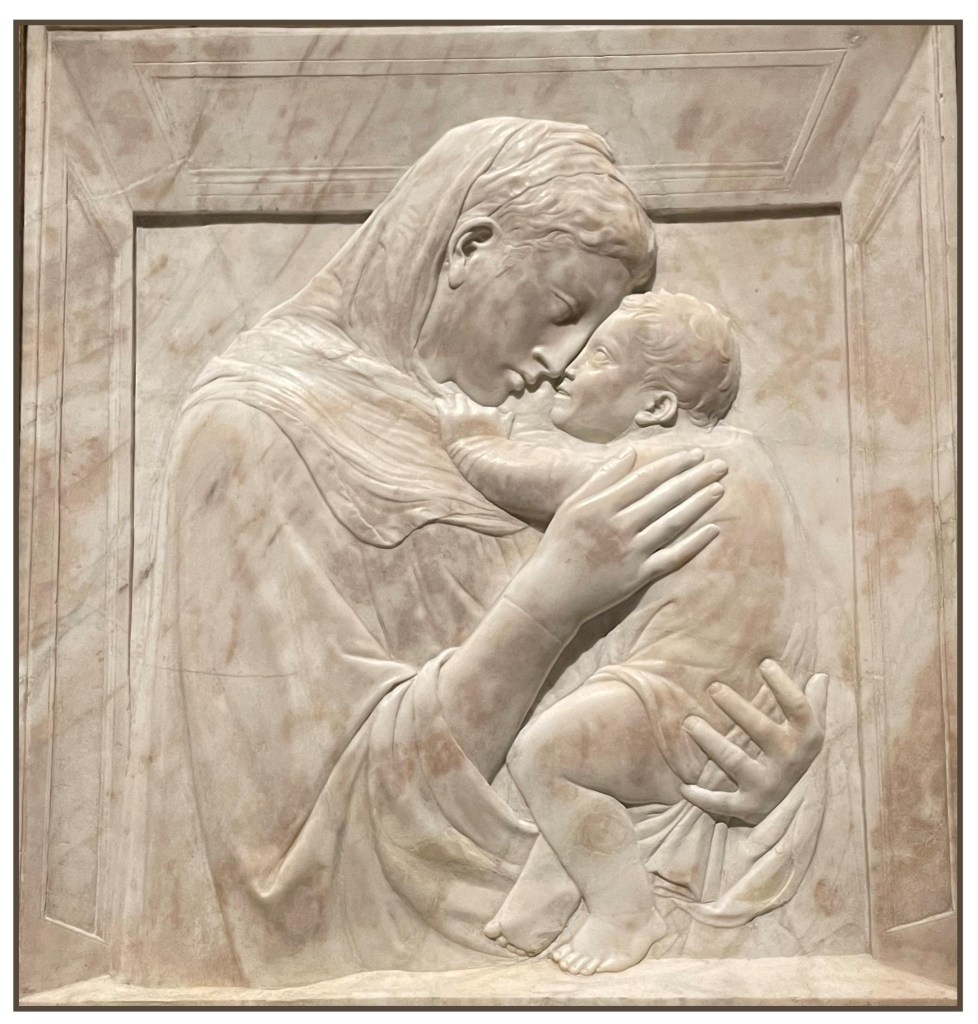
Madonna Pazzi by Donatello. Photographed by Gill Henwood **.

My friend, Gill Henwood visited the major exhibition at the Victoria & Albert Museum recently, featuring the work by sculptor, Donatello. It is entitled, Donatello, Sculpting the Renaissance. It’s the first major UK Exhibition to explore the exceptional talents of this great artist, his vision and his influence.

The Exhibition in at the V & A until Sunday June 11th. (Entry £20)

Gill has sent me some of her photographs including the one above, of Mother & Child, (Madonna Pazzi). Fitting illustration I thought, for Mothering Sunday. There is a beauty and a bond which translates into the closest intimacy.

Motherhood was not easy for Mary. She was young and inexperienced. Her pregnancy was viewed with suspicion. Her baby was born far from home in difficult and dangerous surroundings. When she took her son to the temple, only days old, Simeon’s prophecy for his future was ominous. Jesus’ childhood gave her cause for concern and in adulthood, it was clear that his life would  become increasingly dangerous and he would be marginalised. Mary had to learn to put her own feelings to one side to support him in his mission. Finally, she suffered the worst thing that can happen to a mother. She had to watch her Son die a tortured death.

God the Father’s  part in that suffering was to suffer too. Like Mary he beheld Jesus as a mother her child and to understand that a bit better, we might find help in the writings of the mystic, Julian of Norwich.

In the fourteenth century Julian of Norwich experienced and understood the motherhood of God in her visions. Mothering Sunday is a good day to share this vision and recognise that although we are distinguished by our gender, God is not. Instead God is both mother and father to us . ‘As truly as God is Father, so just as truly is he our mother.’ Said  Julian of Norwich. In both his motherhood and fatherhood, God faces up to his pain

The Theologian, Matthew Fox, muses on what Julian is saying. He says, “God is the true Father and Mother of Nature, and all natures that are made to flow out of God to work the divine will shall be restored and brought again into God.

Julian assures us that “The motherhood of God is a welcome thing on God’s part. Divinity does not consider motherhood a burden to bear for “God feels great delight to be our Mother.”

To recover the motherhood of God is to recover compassion:
Compassion is a kind and gentle property that belongs to a Motherhood in tender love. Compassion protects, increases our sensitivity, gives life, and heals.
Thus we see that the recovery of the theme of the motherhood of God flows naturally from other themes of cosmos, earthiness, blessing or goodness…A motherhood-of-God theology confronts the basic issue of letting go of the one-sided God of patriarchy and learning more about the God whose image we are.
Therefore it is also about learning more about ourselves and about our power for birthing
and creativity. Today it is especially urgent that men learn deeply how all persons, men included, are motherly as well as fatherly.” (Matthew Fox)

In the Donatello sculpture is, as I mentioned, an intimacy which is held by the bond of love, the love which creates a sense of mother and child relating as one. Increasingly, today, that same bond is being celebrated between fathers and their children, and hopefully this is leading to a broadening of the love which is reflective of God’s Trinitarian Love.

In her Revelations, Julian of Norwich said a most powerful thing:

I understood three manners of beholding of Motherhood in God: the first is grounded in our Nature’s making; the second is taking of our nature,—and there beginneth the Motherhood of Grace; the third is Motherhood of working,—and therein is a forthspreading by the same Grace, of length and breadth and height and of deepness without end. And all is one Love.

(Julian of Norwich)

Donatello’s statue opens the door to much thought. Julian of Norwich gently takes our hand and invites us to step through it.

[Mr G and others]

**The Madonna Pazzi, housed today in Berlin’s Staatliche Museen, is rectangular marble relief that dates from c. 1425. It was carved for private devotion during the beginning of the productive collaboration that Donatello formed with Michelozzo (1396-1472), an Italian architect and sculptor.

God paints a picture with snow

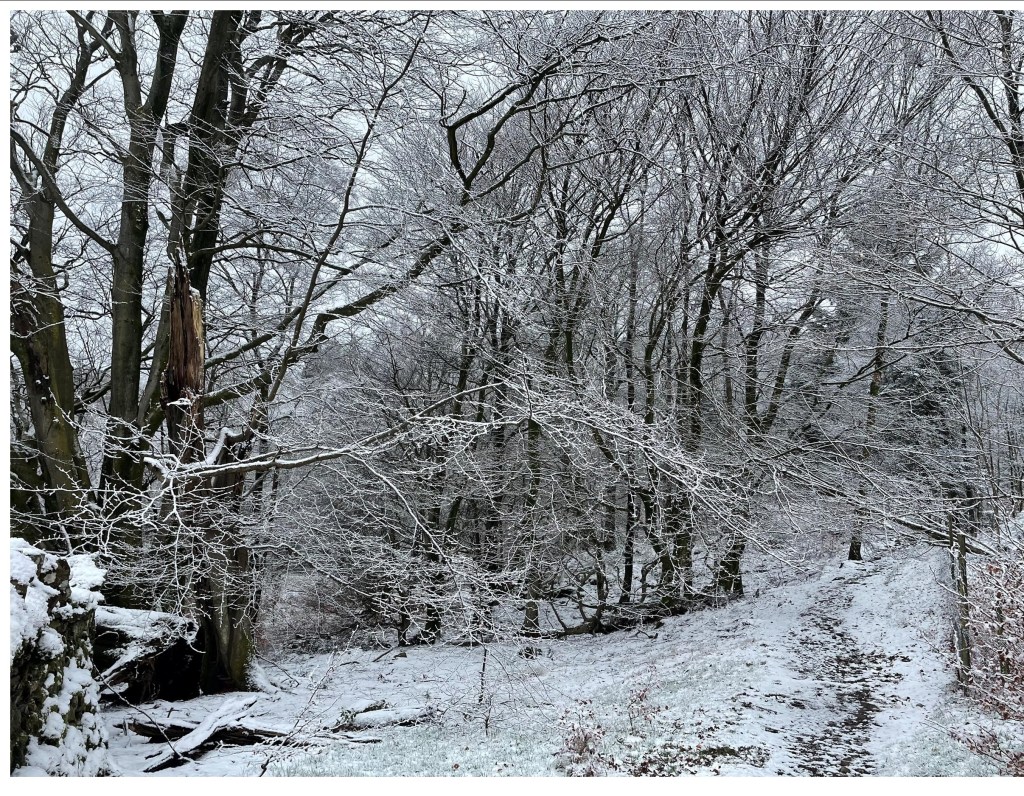
Dark trees magical with snow. Beeches, and old hawthorns by the gate. High Cross, above Coniston, photographed by Gill Henwood

It’s sometimes said to children that when there is thunder in the sky, God is applauding us for something good we’ve done. The alternative, too often said, is that God is angry with us and is stamping his feet.
It all depends if you want God to control or free us. No contest in my opinion. I always respond best to applause!.

I find that linking God and the weather is a kind of reminder that we have little control over how the weather behaves on our planet, except in an all too negative way. I say this as one who, for a brief time, was the Clerk of the Weather, in a highly acclaimed thespian production when I was a junior school. For an all too brief time I had total control over the weather and wore a Top Hat to prove it! So thereI was, throwing around thunderbolts, lightning flashes, howling winds, raindrops and sunshine, as all obeyed my orders. (To be honest, Tom Culshaw was fairly negative in his response so there wasn’t much hail around that day!)
Of course, all too quickly, I had to hand the authority  back to God but I like to think that for a short while after he treated me kindly for doing my best, even though this coincided with a lot of weather!

We’ve been having quite a bit of it lately too, and it came as a shock recently when Spring’s steady progress was rudely interrupted by a sudden return to ice and snow, cold and frost.
Even so, though it could be both inconvenient and treacherous, the dusting of ice and the covering of nature with snow, has a very special effect on our landscape.

I was reminded of this when my friend Gill sent me photos of the Lake District just after God had painted a picture with the snow. God has such a delicate touch and an eye for detail.  Just for a short while we were taken into a glimpse of beauty which if transient is nonetheless breathtaking. Soon we shall move on to look at Nature’s Gallery, where God will hang the Springscapes
For now, we can pause and take in God’s picture painted in snow.

We can say, again, with St. John of the Cross that
God passes through the thicket of this world, and wherever His glance falls, he turns all things to beauty.
I like that truth!

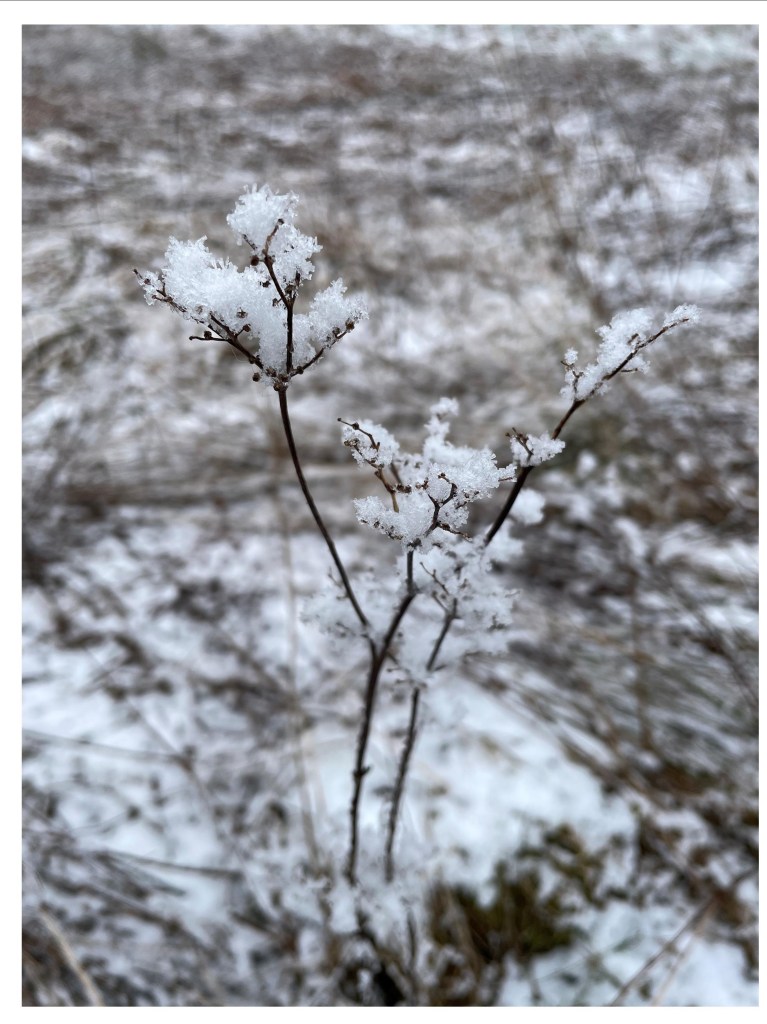
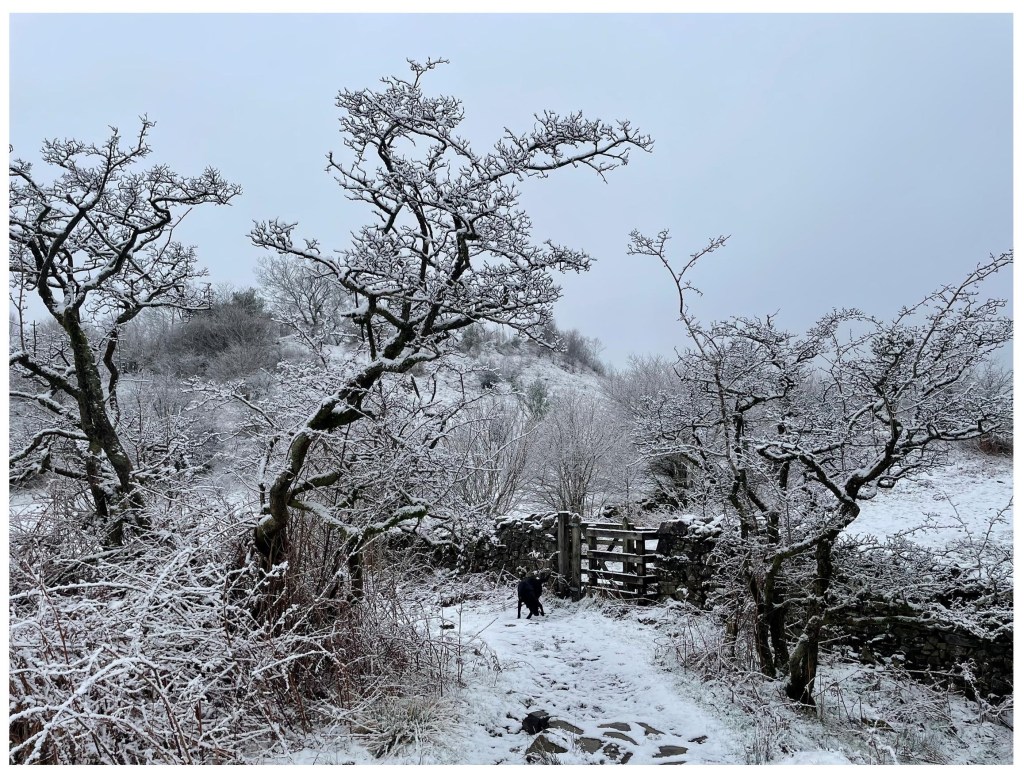
Meanwhile, here’s a reminder of that in the photos Gill has taken.

Meadowsweet. .As never seen before! Seed heads left for the winter on a verge. Photo: Gill Henwood
On the edge of the white wood. Photo by Gill